Key Points
- AI-Native Cloud Email Security establishes a behavioral baseline to detect sophisticated, payload-less Business Email Compromise attacks that bypass legacy gateways.
- Transitioning from MX-record redirection to API-based integration allows security tools to sit directly inside cloud environments for instant, automated threat remediation.
- Modern Advanced Threat Protection utilizes Natural Language Understanding to analyze email intent and prevent catastrophic financial fraud in real-time.
Table of Contents
- The Invisible Threat in Your Inbox
- The Data Behind the Phishing Surge
- Unmasking the Payload-Less Attack
- Scanning for Intent with Smart AI
- The Shift to API-Based Ecosystems
- Preventing Catastrophic Wire Fraud
- Automating Zero-Trust Inbox Privacy
- Predictive Defense for 2026
- Securing the Digital Identity Frontier
The Invisible Threat in Your Inbox
Picture this: your Chief Financial Officer receives a brief, urgent email from your CEO requesting a rapid wire transfer to close a highly confidential acquisition.
The sender address looks perfect, the tone matches the CEO’s usual communication style, and there are no suspicious attachments or links to trigger security alarms.
This is the modern reality of business email compromise, where traditional Secure Email Gateways are completely blind to the threat. Legacy systems act like bouncers looking for known counterfeit IDs, but today’s attackers are walking through the front door with perfectly forged credentials.
These payload-less attacks rely entirely on social engineering and psychological manipulation rather than malicious code.
To combat this invisible threat, organizations are rapidly adopting AI-Native Cloud Email Security (CES) and Advanced Threat Protection.
This modern architecture does not just look for known bad signatures; it understands the context, relationships, and behavioral patterns of your entire organization.
By fundamentally changing how we secure the inbox, businesses can finally stop the sophisticated impersonation attacks that cause devastating financial losses.
The Data Behind the Phishing Surge
Market Intelligence & Data
AI-Enhanced Phishing Increase
According to the 2025 Cloudflare Phishing Threats Report, 82% of organizations saw a surge in highly targeted, AI-crafted phishing attacks that bypassed legacy filters.
Average Breach Cost
The 2025 IBM Cost of a Data Breach Report found that the average cost of a breach initiated via email reached a record $5.1 million.
Cloud-Native API Adoption
By early 2026, 90% of enterprises have migrated from gateway-based email security to API-based protection for M365 and Google Workspace, as reported by Forrester.
SOC Alert Reduction
A 2025 Mimecast benchmark study indicated that AI-native ATP tools reduced manual security operations center (SOC) workloads by 35% through automated remediation.
The sheer volume of sophisticated attacks is currently overwhelming traditional perimeter defenses. As highlighted in the Cloudflare Phishing Threats Report, a staggering 82% of organizations experienced a massive surge in AI-crafted phishing campaigns.
These are not your typical mass-mailed scams with obvious grammatical errors. Instead, they are highly targeted, context-aware messages designed specifically to bypass legacy filters and trick busy employees.
When these advanced threats slip through the cracks, the financial devastation is profound. The IBM Cost of a Data Breach Report reveals that the average cost of a breach originating from an email compromise has skyrocketed to $5.1 million.
This staggering figure encompasses not just the immediate wire fraud losses, but also regulatory fines, prolonged system downtime, and severe reputational damage.
To combat this escalating financial risk, the architectural approach to inbox defense is rapidly changing across the enterprise landscape. Forrester notes that by early 2026, 90% of enterprises will have abandoned cumbersome gateway models in favor of cloud-native API protection.
This shift allows security layers to sit directly inside cloud environments, monitoring internal communications just as rigorously as external traffic.
Beyond catching more threats, this modern architecture drastically reduces the operational burden on overwhelmed IT teams. A recent Mimecast benchmark study demonstrated that AI-native tools cut manual security operations center workloads by 35%.
By automating the remediation of malicious emails, security analysts are freed from the tedious task of chasing down false positives and manually deleting dangerous messages from user inboxes.
Unmasking the Payload-Less Attack

Modern attackers are leveraging Generative AI to craft hyper-personalized emails that perfectly mimic a company’s internal tone and structure.
Employees are increasingly unable to distinguish between legitimate internal requests and these sophisticated, AI-synthesized phishing attempts.
Because these emails contain no malicious links or attachments, traditional security gateways scan them, find nothing technically wrong, and deliver them straight to the user.
To solve this everyday problem, platforms like Abnormal Security and Darktrace utilize behavioral AI to establish a deep pattern of life for every single user in the organization.
This technology acts like a digital handwriting expert, analyzing hundreds of signals including typical login times, communication frequency, and linguistic nuances.
When an email arrives claiming to be from a vendor, but the language patterns deviate slightly from their historical baseline, the system flags the anomaly instantly.
Scanning for Intent with Smart AI
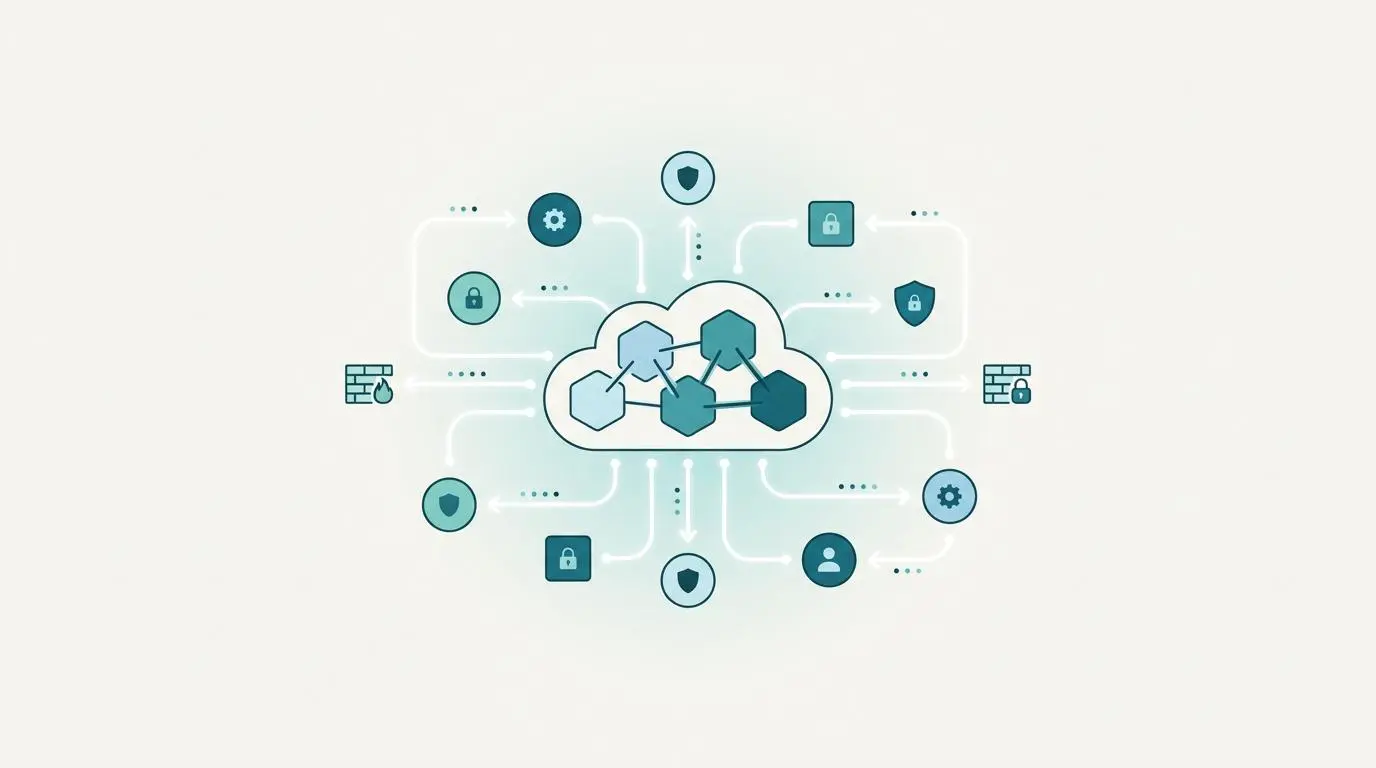
Static filters and blocklists are practically useless against unique, one-off AI-generated emails that possess no known bad reputation.
Advanced Threat Protection has evolved past looking for known signatures and now utilizes Natural Language Understanding to scan for malicious intent.
Tools like Microsoft Defender for Office 365 and Check Point Avanan have deeply integrated large language model analysis directly into their scanning engines.
These smart systems read the context of the message in real-time, looking for subtle psychological triggers like manufactured urgency or unusual financial pressure.
If an email requests a sudden change in payroll routing and uses high-pressure language, the AI recognizes the intent of a business email compromise attack.
This allows the software to quarantine the threat before the user ever sees the deceptive request.
The Shift to API-Based Ecosystems
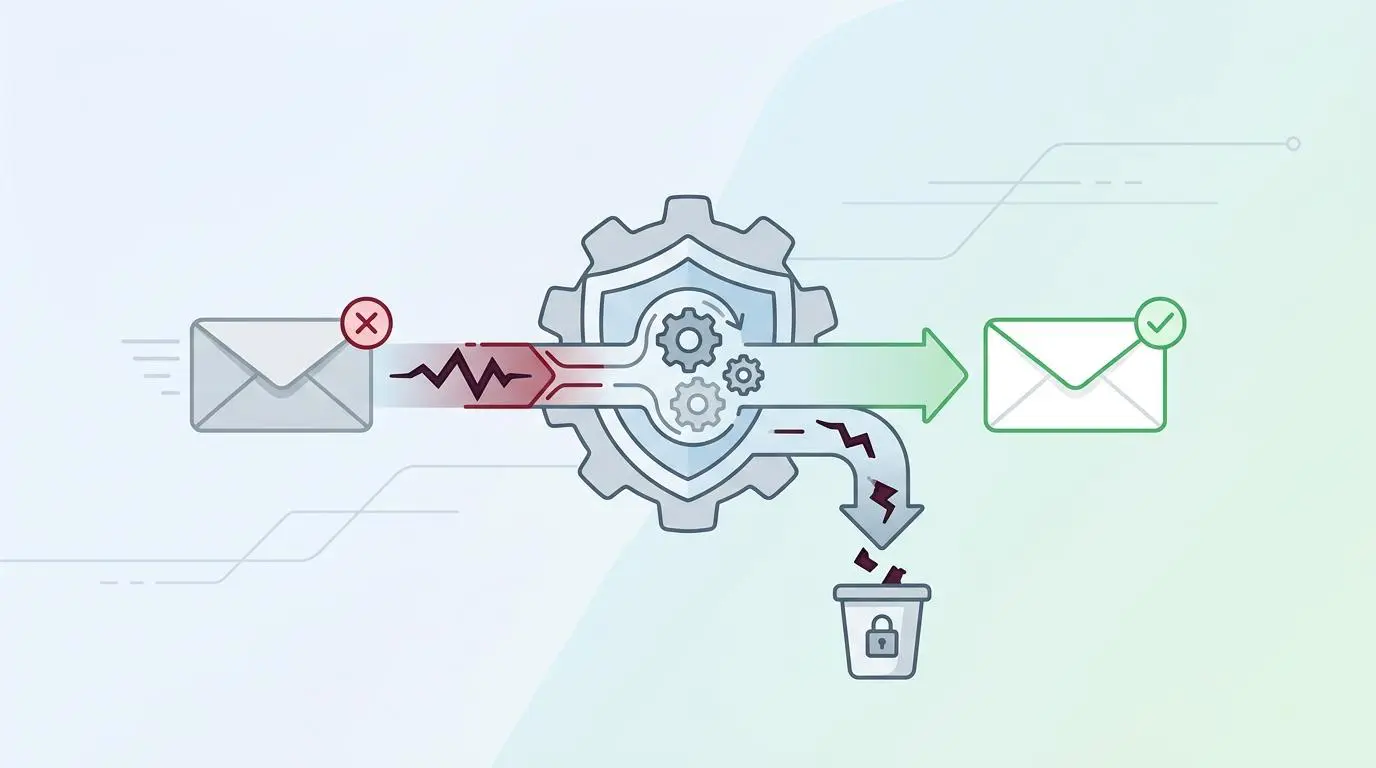
For decades, securing email meant changing MX records to route all incoming traffic through an external gateway before it reached the corporate server.
Legacy gateways required complex mail-routing changes that frequently caused delivery latency and routinely broke essential third-party integrations.
The market has now decisively shifted away from perimeter gateways toward seamless, API-based integration.
This allows modern security layers to sit entirely inside the environment, directly hooking into Microsoft 365 or Google Workspace.
Leading platforms like Ironscales and Proofpoint have simplified deployment to one-click API permissions, eliminating the need for cumbersome network engineering.
Because the tool lives inside the cloud environment, it enables immediate retrospective scanning of historical emails to identify dormant threats.
Preventing Catastrophic Wire Fraud
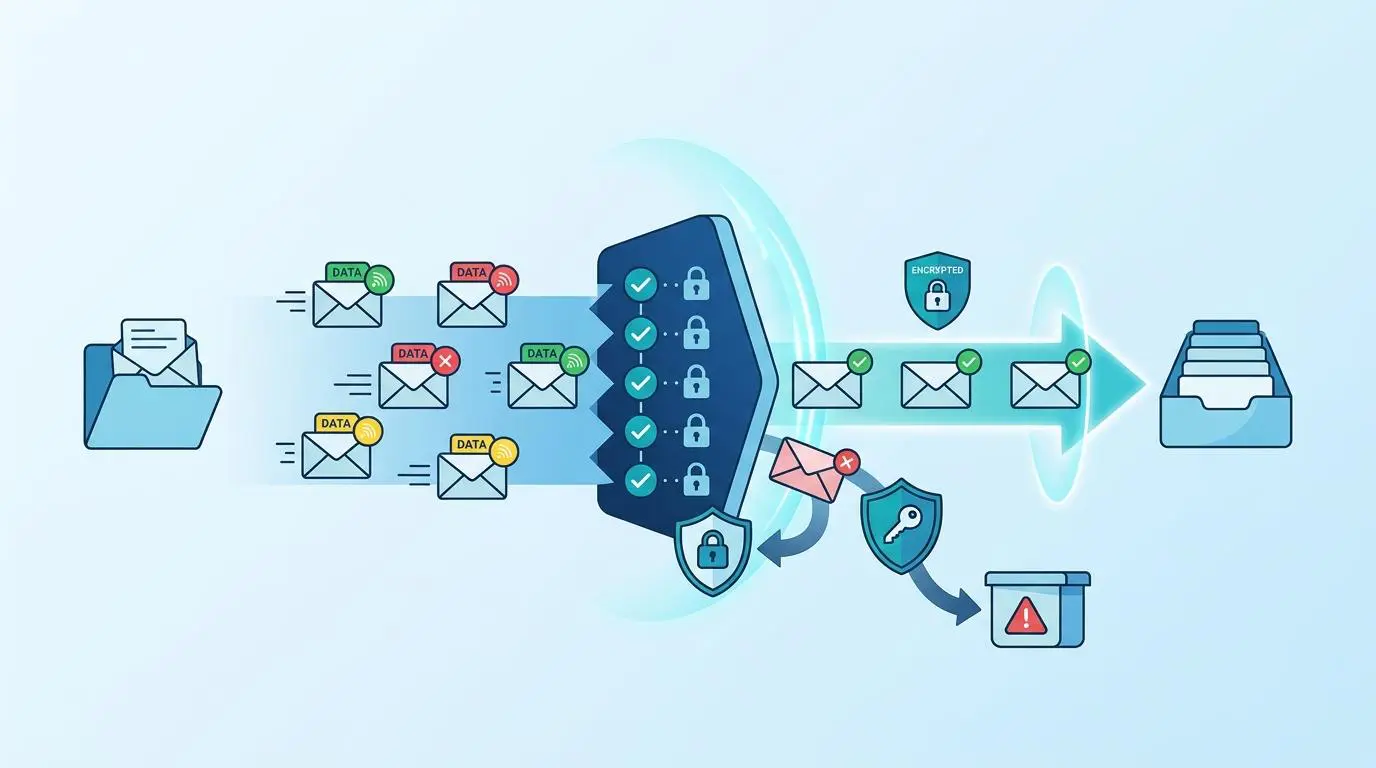
Manual verification of every single financial request is operationally impossible for large, global enterprises.
The return on investment for Advanced Threat Protection is no longer measured just by the volume of spam blocked, but by the prevention of single-event catastrophes.
With business email compromise wire-fraud attempts averaging six-figure losses per incident, the financial stakes have never been higher.
AI-driven security tools essentially pay for themselves the very first time they flag a fraudulent invoice routing change.
By automatically halting unauthorized financial transactions at the communication layer, businesses protect their bottom line from devastating social engineering attacks.
Automating Zero-Trust Inbox Privacy
In traditional setups, delayed response times allow a single phishing email to be opened by multiple users before IT can manually investigate and delete it.
Zero-trust principles are now being aggressively applied directly to the inbox to solve this massive vulnerability.
Modern tools automate the strict enforcement of DMARC, SPF, and DKIM protocols to ensure absolute sender authenticity.
Furthermore, these platforms utilize automated remediation to instantly claw back malicious emails from all user inboxes simultaneously.
If a threat is identified in one department, the system autonomously purges that exact payload from every other inbox across the enterprise in milliseconds.
A 2026 Gartner strategic analysis reveals that lateral phishing, where compromised internal accounts are used to phish other employees, has become a primary attack vector.
This necessitates AI tools that monitor internal-to-internal email traffic with the exact same rigor as external inbound traffic.
Predictive Defense for 2026
Reactive security models are consistently one step behind the rapid, automated evolution of attacker infrastructure.
By late 2026, the industry focus is shifting dramatically toward predictive defense mechanisms.
Advanced Threat Protection tools are now actively monitoring external domain registrations across the web in real-time.
They hunt for typosquatting attempts, preemptively identifying domains that visually resemble a company’s own brand.
Before an attacker even sends their first malicious email from a newly registered spoofed domain, the predictive defense system has already blacklisted it globally.
This proactive posture ensures that businesses are neutralizing threats during the attacker’s setup phase, rather than waiting for the attack to launch.
Securing the Digital Identity Frontier
The future of corporate communication security is moving far beyond the traditional boundaries of the inbox.
The 2026 evolution sees the full convergence of Email Security with Identity Threat Detection and Response.
In this new paradigm, the system doesn’t just scan the text of the email; it verifies the physical and digital context of the sender’s identity.
It cross-references location data, device health, and behavioral biometrics across all SaaS platforms simultaneously to ensure the person typing the email is actually who they claim to be.
This holistic approach transforms email security from a standalone filter into a comprehensive identity verification engine.
Navigating the intersection of modern technology, software architecture, and business growth requires a sharp strategy. To future-proof your tech stack and scale with precision, connect with Andres at Andres SEO Expert.
Frequently Asked Questions
What is a payload-less email attack?
A payload-less attack is a sophisticated phishing method that contains no malicious links or attachments. Instead, it relies on social engineering and psychological manipulation, often using AI-generated text to impersonate executives or vendors to request unauthorized financial transfers or sensitive data.
How does AI-native email security differ from legacy gateways?
Legacy Secure Email Gateways (SEGs) typically look for known signatures and malicious code. AI-native security focuses on context, behavioral patterns, and Natural Language Understanding (NLU) to identify intent and anomalies, allowing it to catch zero-day phishing attacks that have no previous bad reputation.
Why are organizations moving to API-based email security?
Enterprises are shifting to API-based security because it integrates directly into cloud environments like Microsoft 365 and Google Workspace. This eliminates delivery latency, prevents broken integrations common with MX record changes, and allows the system to monitor internal-to-internal communications for lateral phishing.
Can AI-driven security prevent business email compromise (BEC)?
Yes, AI-driven security tools use behavioral biometrics and linguistic analysis to detect impersonation. By recognizing deviations in communication style or unauthorized financial requests in real-time, these systems can quarantine fraudulent messages before a user interacts with them.
How does behavioral AI identify sophisticated phishing attempts?
Behavioral AI creates a pattern of life for every user, tracking typical login times, communication frequencies, and linguistic nuances. When an incoming email deviates from these established historical baselines, the system flags it as a potential threat even if the sender address appears legitimate.
What is the average cost of an email-initiated data breach?
According to the 2025 IBM Cost of a Data Breach Report, the average cost of a breach initiated via email compromise has reached $5.1 million, encompassing immediate wire fraud losses, regulatory fines, and reputational damage.