Key Takeaways
- Lakehouse Federation lets teams join live operational data to cloud billing in one SQL query with zero data movement.
- Branch-level cost attribution transforms infrastructure spending into a measurable productivity metric for engineering teams.
- This convergence of operations and analytics is a key enabler for AI-era FinOps and unified governance.
Table of Contents
- The Thirty-Year Wall Between Operations and Analytics Just Fell
- How Lakehouse Federation Turns Two Worlds Into One Query
- The Federation Auth Gap and Its Workaround
- Branch Cost Visibility Reshapes Engineering Economics
- Why AI Infrastructure Economics Demand This Convergence Now
- The Teams That Move First Will Define the Next Decade
The Thirty-Year Wall Between Operations and Analytics Just Fell
Databricks has published the final installment of a technical series that demonstrates something the data industry has chased for decades: a single SQL query that joins live operational ownership data directly to cloud billing records, with zero ETL pipelines in between.
The proof of concept, built in collaboration with Thoughtworks, integrates the Backstage developer portal with Databricks Lakebase to deliver unified governance and FinOps visibility that crosses the boundary separating platform engineering from data engineering.
A FinOps analyst can now pull a resource name from a live Postgres catalog and join it against Unity Catalog billing rows in one engine, without moving a single byte of data.
That capability has never existed without a pipeline, a ticket queue, or a Slack thread bridging two different teams.
How Lakehouse Federation Turns Two Worlds Into One Query
As outlined in the Databricks blog, the technical foundation rests on Lakebase isolating compute per workload while keeping storage shared.
Backstage receives its own autoscaling compute envelope, with catalog queries running at 55 to 65 milliseconds end-to-end and searches hitting two to four milliseconds.
Because the web application and analytical workloads never contend for the same compute cluster, they can safely inhabit the same data substrate for the first time.
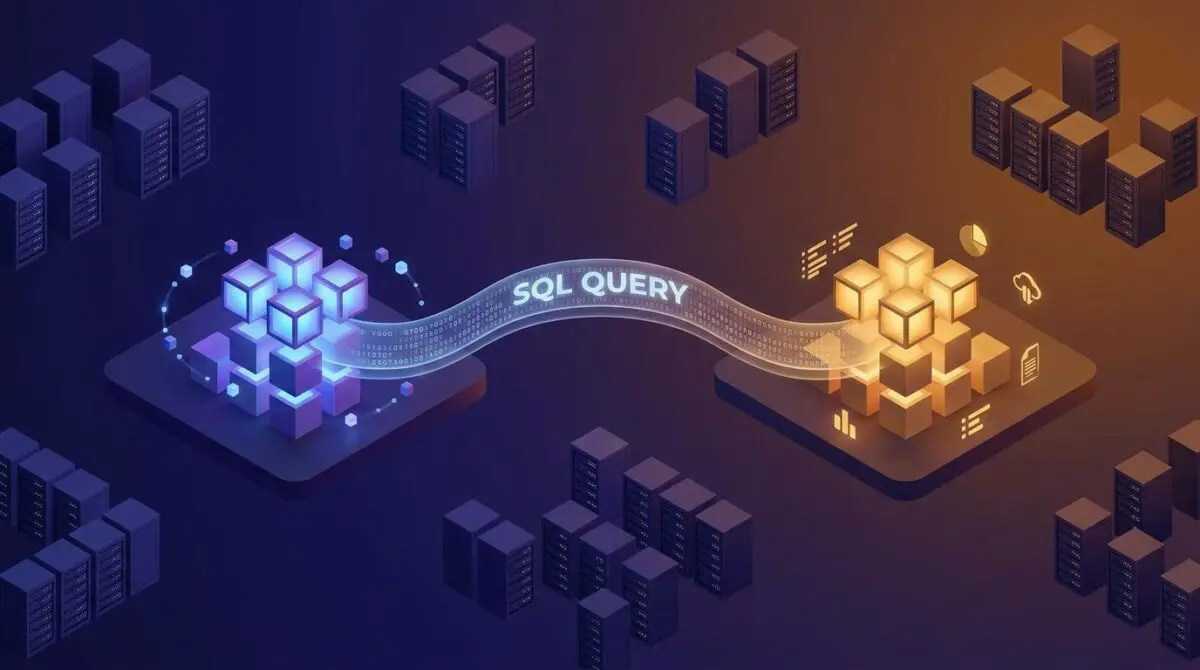
The integration uses Databricks Lakehouse Federation to connect the live Postgres operational data to analytical billing tables inside Unity Catalog.
The FinOps join pulls resource names directly from the operational Postgres table and matches them against billing rows in system.billing.usage, producing a unified cost-ownership view that previously demanded cross-team orchestration.
Those two things have historically never been in the same SQL engine, and now they join with zero data movement.
When a developer creates an ephemeral one-second database clone to test a pull request, its billing and ownership data become instantly queryable the moment the branch exists.
The dropped test branch in this proof of concept was automatically and independently attributed at 0.0107 DBU, with no manual tagging or pipeline configuration required.
The Federation Auth Gap and Its Workaround
Lakehouse Federation currently supports only static user and password credentials for its Postgres connector.
Since Lakebase authenticates application identities through OAuth JWTs, the federation engine needs a parallel authentication path that bypasses the token-based flow entirely.
The workaround involves creating a native Postgres role with SCRAM-SHA-256 authentication, wired to federation separately from the OAuth identity the application uses.
This introduces two authentication paths for the same database, which adds a password rotation responsibility that teams must manage on their own.
However, federation likely should not run as the application user anyway, so the separation carries a genuine security upside.
For teams adopting this pattern, the setup can be packaged into a repeatable script: generate a secure password, create the role with read-only grants, wire the connection, and create the foreign catalog, all in minutes once the pattern is understood.
Native OAuth JWT support in Lakehouse Federation would eliminate this workaround entirely, and that capability is one the engineering community will watch closely.
Branch Cost Visibility Reshapes Engineering Economics
The FinOps join answers the platform-level question of infrastructure cost and ownership, but the same billing data reveals a second story that matters directly to engineering managers: the cost of the development process itself.
Every pull request in the branching workflow creates an ephemeral CI branch, and every developer runs their own feature branch.
These appear as independent line items in system.billing.usage, broken down by branch ID and endpoint ID, giving managers a precise view of how much compute their team consumed in development and testing versus production.
Ephemeral branches must be treated as ephemeral in the billing data too.
CI branches created with a short time-to-live auto-expire if cleanup fails for any reason, but without lifecycle controls, orphaned branches accumulate quietly, each with an active compute endpoint billing against the project.
The test branch cost 0.0107 DBU, which is trivial in isolation.
Thirty orphaned branches running for a month are not trivial.
The real insight is that branching is not an expense to minimize but a productivity investment to measure.
When a team eliminates two days of environment wait time per sprint and stops maintaining 20 to 30 percent of their codebase in mock objects, the 0.0107 DBU per branch becomes the cheapest productivity gain the team has ever made.
And unlike most productivity investments, this one is measurable: the infrastructure reports exactly what it cost, per branch, per developer, per sprint.
Lakebase endpoints scale to zero, meaning a branch that is not being queried suspends its compute and stops billing.
The 0.0107 DBU figure reflects the cost of a branch that ran, not a branch that merely exists; a fleet of ephemeral branches sitting idle between test runs contributes nothing to the bill.
Why AI Infrastructure Economics Demand This Convergence Now
The Databricks and Thoughtworks proof of concept lands at a moment when AI workloads are forcing the industry to rethink infrastructure economics from the ground up.
Training runs, inference endpoints, and agentic workflows generate operational telemetry and cost data at volumes that make traditional ETL-based FinOps pipelines untenable.
The pattern demonstrated here, joining operational metadata to billing data inside a single engine with zero data movement, is not merely elegant engineering.
It is the architectural prerequisite for any organization that wants real-time cost attribution across AI development lifecycles that span ephemeral experimentation and long-running production services.
The governance dimension carries equal weight.
As AI agents increasingly interact with operational databases, the ability to trace exactly which model, which branch, and which developer incurred which cost becomes a compliance requirement rather than a nice-to-have.
Unity Catalog absorbing operational databases into the enterprise governance plane closes a visibility gap that most AI teams currently work around with manual tagging and reconciliation spreadsheets.
Convergence between operational and analytical planes has been promised for years, but this implementation proves it works with real applications, real benchmarks, real governance, and real cost data.
The constraint that kept these two worlds separate for three decades is dissolving, and the teams that build their AI infrastructure on converged platforms will have a structural advantage in cost visibility that their competitors cannot replicate through tooling alone.
Branch-level cost attribution, in particular, changes the conversation between engineering managers and finance teams from annual negotiations over cloud budgets to sprint-level discussions about productivity return on infrastructure investment.
The Teams That Move First Will Define the Next Decade
This three-part series began with a one-second database branch and arrived at a single SQL query that joins operational ownership data to cloud billing records with no pipelines between them.
The infrastructure works, the benchmarks are real, and the governance model is unified.
What remains is operationalization: real development teams, real sprints, and real velocity measurements, which Databricks and Thoughtworks are now pursuing together.
The Monday morning takeaway is concrete: branch your next migration on a real schema, rewrite one mock-heavy test suite against a branch, and join your billing data to your ownership graph.
These are actions that individual engineering teams can take this quarter, not aspirational goals that require organizational transformation.
The same principles that make this convergence possible, isolating compute, sharing storage, and federating queries, apply far beyond the Databricks ecosystem.
Any team managing cloud infrastructure for AI workloads faces the same fragmentation between operational telemetry and cost data, and the same opportunity to collapse them into a single queryable surface.
For organizations looking to apply this kind of architectural thinking to their own digital infrastructure, performance engineering and cloud environment optimization are where convergence delivers the fastest measurable returns. Whether that means streamlining query paths, eliminating unnecessary data movement between services, or rightsizing compute across development and production environments, the technical discipline is the same.
Andres SEO Expert brings this same convergence mindset to web infrastructure, combining deep speed engineering with managed cloud hosting that isolates workloads for predictable performance. Discover how these principles can transform your digital architecture—reach out to Andres.
Frequently Asked Questions
What is Databricks Lakehouse Federation and what does it enable?
Databricks Lakehouse Federation lets you query live operational data sources, like Postgres, together with analytical tables in Unity Catalog using a single SQL engine, without copying data. It enables real-time joins across operational and analytical systems, such as joining resource ownership metadata to cloud billing records with zero data movement.
How did Databricks and Thoughtworks connect Backstage to Databricks Lakebase?
The proof of concept gave Backstage its own autoscaling compute envelope on Lakebase, isolating compute per workload while keeping storage shared. It then used Lakehouse Federation to connect the live Postgres operational data to billing tables in Unity Catalog, allowing a FinOps analyst to query both together as one system.
What is the authentication workaround for Lakehouse Federation Postgres connections?
Lakehouse Federation currently supports static user and password credentials for Postgres. Since Lakebase uses OAuth JWTs for application identities, the federation engine uses a separate native Postgres role with SCRAM-SHA-256 authentication. This adds a password rotation responsibility but also provides a security benefit by avoiding running federation as the application user.
How does branch-level cost visibility work in this architecture?
Every pull request and developer branch creates ephemeral compute endpoints that appear as line items in system.billing.usage, broken down by branch ID and endpoint ID. Managers can then see exactly how much compute development and testing consumed, and idle branches scale to zero so they do not incur costs until actively queried.
Why is zero-ETL FinOps important for AI infrastructure?
AI workloads generate telemetry and cost data at such volume and velocity that traditional ETL pipelines are untenable. Joining operational metadata to billing data inside one engine in real time enables cost attribution across AI lifecycles, and governance through Unity Catalog helps trace which model, branch, or developer incurred which cost.
What practical steps can engineering teams take from this proof of concept?
Teams can branch their next migration on a real schema, rewrite one mock-heavy test suite against a branch, and join billing data to their ownership graph. This requires no organizational transformation and can be done within a quarter using the same compute-isolation, storage-sharing and federated-query principles.