Key Points
- Cognitive Deflation: Utilizing non-invasive neuro-stimulation to rapidly downshift brain waves from Beta to Alpha and Theta states, eliminating the friction of an overactive executive mind.
- Automated Sanctuaries: Deploying closed-loop bio-environments that dynamically adjust ambient lighting and thermal regulation based on real-time biometric data.
- Proactive Recovery: Shifting from reactive sleep tracking to predictive neural priming and digital sedatives to completely bypass executive discipline fatigue.
Table of Contents
The Executive Cognitive Deficit and the Cost of Fragmented Rest
The corporate landscape has historically glorified sleep deprivation as a badge of honor for high-performing founders.
During the rapid-scaling eras of the last decade, operating on four hours of rest was marketed as a competitive advantage.
That outdated paradigm is now universally recognized by smart money as a massive enterprise vulnerability.
According to a 2026 report by Deloitte, sleep-deprived executives are 2.4 times more likely to exhibit poor leadership behaviors, contributing to an estimated $580 billion in lost productivity across the Fortune 500 annually.
This biological bottleneck represents a critical failure in human capital management.
When a chief executive operates on fragmented rest, their neurobiology mimics the erratic performance of an overheating enterprise server.
Decision-making latency increases, emotional volatility spikes, and the capacity for complex risk assessment rapidly deteriorates.
To combat this systemic friction, elite performers are completely rethinking the concept of recovery.
The evening routine of a billionaire for optimal sleep is no longer a quaint collection of analog habits like drinking chamomile tea or reading a paperback.
It has evolved into a highly engineered, data-validated discipline rooted in high-performance sleep-tech and longevity biohacking.
This transition marks a fundamental shift from passive rest to proactive biological optimization, treating the human body as an appreciating corporate asset.
Capitalizing on the Sleep Tech Revolution
The convergence of biotechnology, artificial intelligence, and venture capital has created a massive new asset class.
Founders and investors are realizing that optimizing human performance yields higher compounding returns than almost any other operational efficiency.
This realization has triggered an unprecedented influx of institutional capital into advanced recovery technologies.
Market Intelligence & Data
Global Sleep Tech Market
Grand View Research projects the total addressable market for sleep-tech will reach this valuation by the end of 2026 due to the surge in wearable adoption.
REM Optimization Gains
Clinical trials by Eight Sleep in early 2026 demonstrated that AI-driven thermal regulation increases executive REM sleep by nearly a third.
Biohacking VC Influx
According to PitchBook data for Q1 2026, venture capital investment into longevity-focused consumer tech has hit a record high, surpassing traditional biotech.
Executive Adoption Rate
A McKinsey leadership survey found that 88% of top-performing C-suite executives now use at least two biometric tracking devices to manage their evening recovery.
The data paints a clear picture of an industry moving aggressively from niche consumer gadgets to medical-grade diagnostic platforms.
Pioneering companies like Oura and WHOOP have transcended basic step tracking to offer clinical-level insights into heart rate variability, blood oxygenation, and respiratory efficiency.
However, the sector is dominated by Eight Sleep, a leading player that recently secured major funding to expand its AI-powered sleep technology and integrate predictive cardiovascular scanning into its ‘Pod 5’ cooling systems.
Simultaneously, neuro-technology startups like Kernel and StimScience, the creators of the Somnee headband, are capturing massive market share.
Top-tier venture capital firms, including Khosla Ventures and Founders Fund, are aggressively positioning themselves within this space.
They understand that the enterprise infrastructure of the future requires leaders who are biologically optimized to handle unprecedented levels of stress and market complexity.
Engineering the Closed-Loop Bio-Environment
By 2026, the traditional bedroom has been rendered entirely obsolete by the top one percent of global performers.
It has been replaced by what industry insiders refer to as a closed-loop bio-environment.
This is a meticulously controlled architectural space where artificial intelligence agents synchronize every environmental variable to induce rapid physiological recovery.
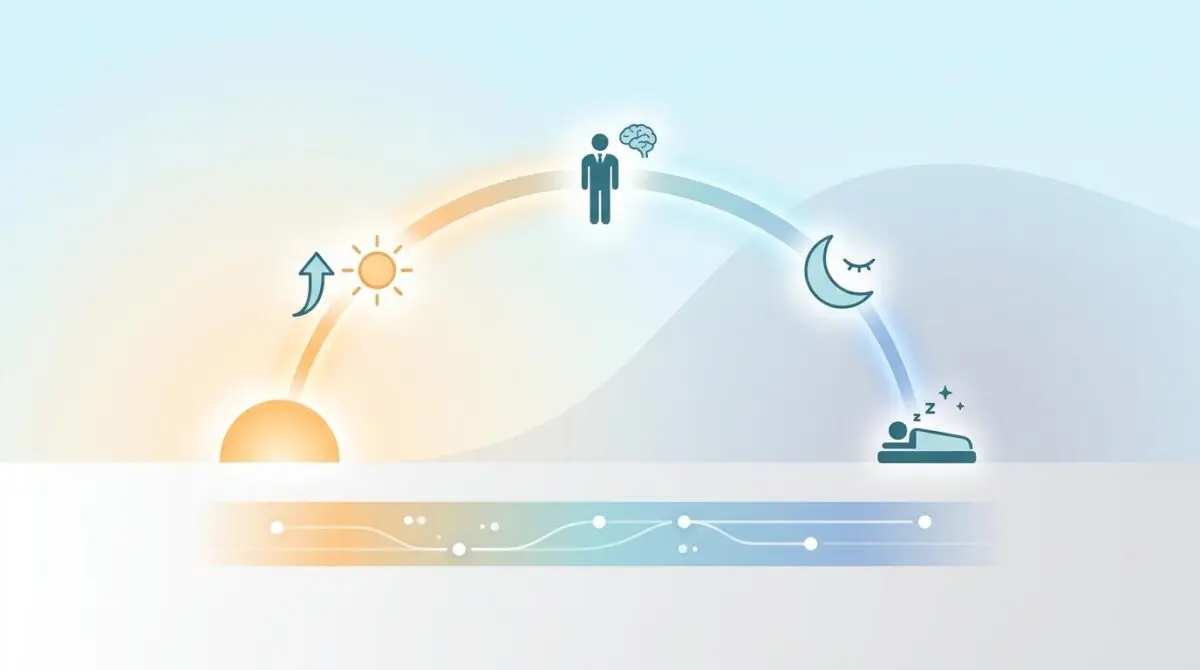
Home lighting systems automatically shift to zero-blue, amber spectrums precisely as the sun sets, triggering a natural cascade of melatonin production.
Core body temperature is actively manipulated via hydro-cooled mattresses that adjust their thermodynamic profile minute by minute throughout the night.
Furthermore, ambient frequency masking systems deploy specific acoustic waves based on the executive’s real-time cortisol and blood glucose levels.
The Psychology of Discipline Fatigue
The true genius of these closed-loop environments lies in their ability to solve a debilitating psychological phenomenon known as discipline fatigue.
After making thousands of high-stakes decisions throughout a grueling workday, a CEO rarely has the cognitive bandwidth to manually track habits or execute complex wind-down routines.
Automating the physical environment completely removes the friction of willpower from the recovery equation.
This addresses the very core of the executive cognitive deficit, where chronic sleep fragmentation leads to poor risk assessment and emotional volatility.
In high-stakes corporate environments, this volatility is a massive liability, contributing to hundreds of billions in lost productivity annually.
For a founder, a mere one percent increase in deep sleep recovery correlates directly to measurable improvements in decision-making speed and high-stress resilience.
The ultimate strategy deployed in these environments is known as cognitive deflation.
This process utilizes non-invasive neuro-stimulation, specifically transcranial alternating current stimulation, to forcefully command the brain to relax.
It rapidly downshifts brain waves from highly active Beta states into restorative Alpha and Theta frequencies in under fifteen minutes.
This ensures the transition from boardroom intensity to deep sleep is immediate, seamless, and entirely data-validated.
Institutional Capital and Longevity Protocols
Beyond external environmental controls, the internal biological landscape of the executive is also being heavily optimized.
Institutional capital is increasingly flowing into elite longevity clinics such as Fountain Life and Human Longevity.
These exclusive medical facilities offer comprehensive memberships that often exceed fifty thousand dollars a year.
In return, executives receive bespoke, pharmaceutical-grade evening supplementation and highly advanced cellular repair protocols.
Data from the 2025 Longevity Summit reveals that a new tier of ‘Ultra-Performers’ is now utilizing micro-dosed GHRH (Growth Hormone Releasing Hormone) during their 9:00 PM wind-down to simulate the physiological recovery levels of an athlete in their early 20s.
This represents a radical departure from traditional reactive healthcare.
It moves the needle toward a model of aggressive, predictive biological maintenance.
By treating the human body as an appreciating asset, these protocols ensure that the executive wakes up biologically younger, cognitively sharper, and ready to scale operations.
Automating the Executive Sanctuary
The trajectory of this industry points squarely toward entirely autonomous recovery ecosystems.
We are moving rapidly past the era of merely tracking poor sleep and entering an age where technology actively prevents it from happening.
Founders and enterprise leaders must understand how to integrate these advancements into their own lives to maintain a definitive competitive edge.
Strategic Trajectory
- Transition from reactive monitoring to proactive ‘Neural Priming’ technology.
- Deployment of ‘Digital Sedatives’ utilizing AI-generated acoustic and haptic patterns to bypass traditional aids.
- Development of ‘Smart Sanctuaries’ where bedroom architecture is engineered for biological optimization.
- Integration of EMF-absorbent drywall and wavelength-filtering windows into residential infrastructure.
- Implementation of a centralized ‘Health OS’ to automate and prioritize circadian rhythm above all other home functions.
The next major evolution in this space is the widespread commercial adoption of neural priming.
This technology proactively prepares the central nervous system for rest hours before the executive actually enters the bedroom.
Innovators in the biohacking space are also preparing for the deployment of digital sedatives.
These are highly personalized, artificial intelligence-generated acoustic and haptic patterns designed to completely bypass the need for traditional chemical sleep aids.
By 2027, the luxury real estate market will see the mainstream emergence of smart sanctuaries.
The very architecture of the bedroom will be engineered specifically for biological recovery.
This includes the integration of drywall that absorbs disruptive electromagnetic fields and windows that dynamically filter out specific light wavelengths.
Every element of the physical space will be managed by a centralized health operating system.
This system will prioritize the CEO’s circadian rhythm above all other smart home functions, ensuring that optimal biology is built directly into the physical infrastructure of their life.
The Future of Biological Optimization
The evening routine has transcended its status as a simple lifestyle choice for the wealthy.
It is now a highly capitalized, technologically advanced protocol designed specifically to protect and enhance human capital.
For the modern billionaire, sleep is no longer viewed as a frustrating period of inactivity.
It is the most critical phase of the daily operational cycle, requiring precision engineering, massive capital investment, and constant data validation.
As these biohacking technologies continue to scale, the competitive advantage will heavily favor those who embrace proactive biological optimization.
Ignoring this massive market shift is akin to running a global enterprise on obsolete, failing hardware.
The leaders who dominate the next decade will be those who engineer their recovery with the exact same ruthless efficiency they apply to their business models.
Navigating the intersection of technology, capital, and market psychology requires a sharp strategy. To future-proof your business architecture and scale with precision, connect with Andres at Andres SEO Expert.
Frequently Asked Questions
What is the executive cognitive deficit and how does it affect leadership?
The executive cognitive deficit is a biological bottleneck caused by fragmented rest, resulting in increased decision-making latency, emotional volatility, and a deteriorated capacity for risk assessment. According to data, sleep-deprived executives are 2.4 times more likely to exhibit poor leadership behaviors, which contributes to significant enterprise vulnerability.
How much does sleep deprivation cost Fortune 500 companies annually?
Research from Deloitte indicates that sleep-deprived executives contribute to an estimated $580 billion in lost productivity across the Fortune 500 every year. This massive economic impact has led institutional investors to view optimized sleep as a critical component of human capital management.
What technologies are used in a closed-loop bio-environment for sleep?
A closed-loop bio-environment utilizes AI-synchronized systems including zero-blue amber lighting, hydro-cooled mattresses for thermodynamic regulation, and ambient frequency masking. These systems automate the physical environment based on real-time biometric data like heart rate variability and blood glucose to maximize physiological recovery.
How does AI-driven thermal regulation improve REM sleep?
Clinical trials have demonstrated that AI-driven thermal regulation, such as the technology found in Eight Sleep systems, can increase executive REM sleep by nearly 32%. By adjusting the mattress temperature minute-by-minute, the technology optimizes the body’s natural sleep cycles and enhances cognitive bandwidth.
What is neural priming and the role of digital sedatives in biohacking?
Neural priming uses non-invasive neuro-stimulation to transition brain waves from active Beta states to restorative Alpha and Theta frequencies. Digital sedatives are AI-generated acoustic and haptic patterns designed to bypass the central nervous system’s resistance to rest, effectively replacing traditional chemical sleep aids with data-validated technology.
Why are venture capital firms aggressively investing in sleep-tech?
Venture capital firms like Khosla Ventures and Founders Fund are investing because they recognize that biological optimization provides a definitive competitive edge. With the sleep-tech market projected to reach $137.5B by 2026, these firms are positioning themselves in an asset class that treats human performance as a compounding corporate asset.