Key Points
- Autonomous agentic finance stacks eliminate the banking weekend by compressing cross-border settlement latency to under 10 milliseconds using private blockchain layers.
- Agentic AI systems are projected to drive a 5.4% annual EBITDA improvement by automating high-frequency capital rebalancing and eliminating manual treasury friction.
- The financial industry is rapidly shifting toward Invisible Finance 2.0, where programmable capital autonomously interacts with IoT telematics for proactive liquidity management.
Table of Contents
The Financial Tech Friction
According to a Q1 2026 report from Bain & Company, embedded finance transaction volumes have surged to a record $7.2 trillion. Autonomous agentic stacks are now the primary interface for executive liquidity management. This staggering liquidity migration signals the definitive end of reactive treasury operations.
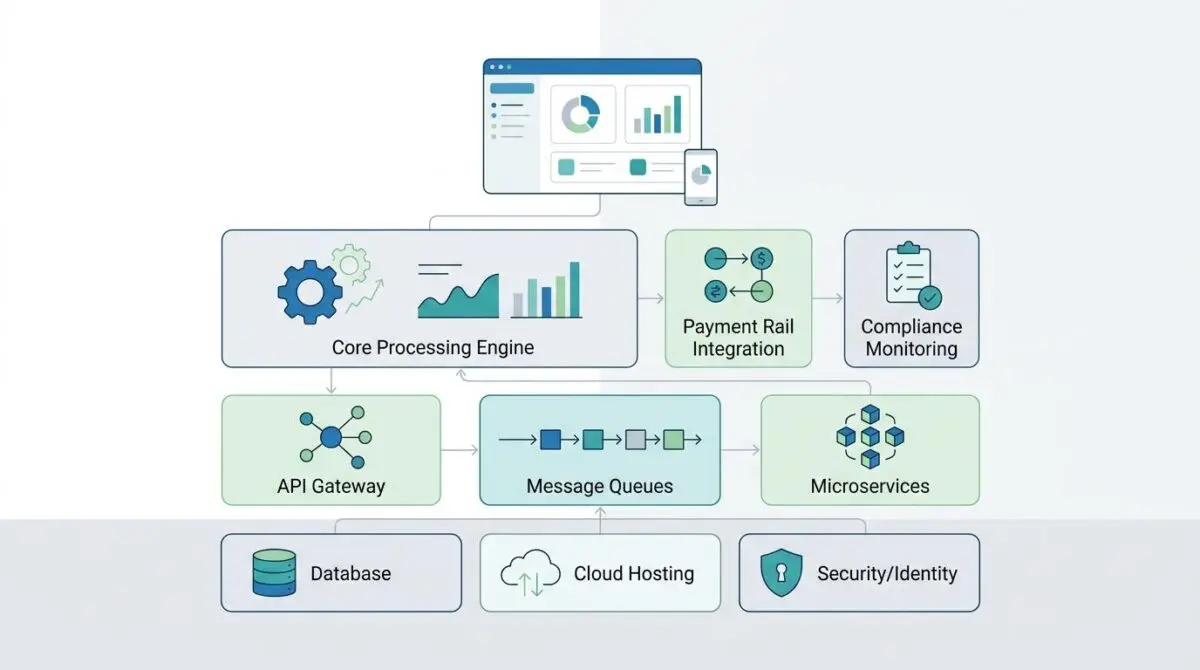
The modern financial technology ecosystem has evolved far beyond traditional software as a service. Today, the ultimate fintech stack requires deploying autonomous agentic finance stacks. These systems operate as a self-driving financial operating system for institutional leaders.
They proactively negotiate yield, manage liquidity gaps, and automate complex workflows. This eliminates the bottleneck of human-in-the-loop delays. For a visionary executive, this is not just an operational upgrade.
It is a fundamental shift toward programmable capital where money moves with algorithmic precision. Legacy platforms that rely on manual reconciliation are rapidly becoming a liability in a hyper-connected global economy.
Market Intelligence & Capital Flow
The transition toward agent-driven capital orchestration is rewriting the rules of corporate finance. We are witnessing a massive reallocation of institutional resources toward invisible banking infrastructure.
Market Intelligence & Data
CFO Agentic Adoption
Gartner’s 2026 FinTech Survey indicates that 84% of visionary CFOs have now deployed autonomous agents for real-time treasury management.
Settlement Latency
Data from J.P. Morgan’s Onyx division shows that private blockchain-based settlement layers have reduced cross-border friction to under 10 milliseconds in 2026.
Implementation Growth
According to Wolters Kluwer, the number of finance teams utilizing agentic AI in 2026 has increased by 600% compared to 2024 levels.
Agentic Market Cap
The specific market for Agentic AI in financial services is valued at $10.8 billion in 2026, as reported by Grand View Research.
This data paints a clear picture of where smart money is flowing. The rapid adoption rate among CFOs proves that autonomous treasury management is no longer an experimental fringe technology. It is the new baseline for competitive corporate finance.
By compressing cross-border settlement latency to mere milliseconds, these stacks unlock billions in previously idle corporate liquidity. The exponential growth in implementation reflects a market hungry for systems that act as proactive financial teammates.
Failing to adopt these intelligent orchestration layers carries a severe opportunity cost. Institutions relying on outdated settlement rails will simply be outmaneuvered by competitors leveraging high-frequency liquidity management.
The FinTech Deep Dive
Orchestrating the Agentic Teammate
The 2026 innovation landscape has definitively pivoted from static software platforms to dynamic agents acting as digital teammates. AI-native orchestration layers are now entirely replacing legacy manual treasury management systems. These sophisticated stacks utilize autonomous agents capable of complex reasoning and multi-step workflow execution.
Integration with global messaging standards like ISO 20022 and real-time payment rails allows these platforms to thrive. Capital becomes programmable, moving instantly across borders to capture fleeting yield opportunities. This interoperability ensures that liquidity is always optimized across disparate global markets.
Research from Neurons Lab in March 2026 reveals that agentic AI systems are projected to drive a 5.4% annual EBITDA improvement for the average enterprise. They achieve this by automating high-frequency capital rebalancing and fraud detection. This remarkable insight proves that autonomous agents are direct drivers of bottom-line profitability.
Solving the Banking Weekend
The primary friction solved by this technology is the archaic concept of the banking weekend. Historically, the multi-day settlement lag inherent in correspondent banking trapped capital in transit and stifled global trade velocity.
By leveraging private blockchain layers and instant-settlement rails, these stacks compress cross-border settlement times from 72 hours to under 10 milliseconds. For a deeper look into this infrastructure, review J.P. Morgan’s Onyx blockchain network which exemplifies this instant settlement reality.
Furthermore, this technology eliminates up to 90 percent of manual reconciliation labor. Solving this massive administrative overhead frees up human capital while ensuring liquidity is never left idle. The opportunity cost of trapped capital is finally eradicated by continuous, around-the-clock settlement capabilities.
From a regulatory standpoint, these autonomous systems dynamically adapt to global compliance frameworks in real-time. Automated know-your-customer protocols and instant audit trails ensure that high-frequency capital movements remain fully compliant without sacrificing execution speed.
Vertical AI and Smart Money
Institutional leaders like J.P. Morgan and BNY Mellon are aggressively dominating the transition to agentic finance. Venture capital is moving away from generalist generative AI wrappers toward highly specialized vertical AI and compute orchestration.
Smart money is currently flowing into sovereign AI stacks that offer localized, high-security financial resilience for global enterprises. Startups providing invisible banking infrastructure are seeing record inflows as they build the plumbing for the next generation of capital markets.
The financial ecosystem is recognizing the immense value of specialized intelligence over generalized chat interfaces. You can explore the trajectory of this specific niche in Grand View Research’s Agentic AI market report.
The Strategic Action Plan
Over the next 12 to 24 months, the industry will evolve into what experts are calling Invisible Finance 2.0. Capital will become a fully programmable entity that autonomously interacts with internet-of-things telematics for just-in-time insurance and credit.
Strategic Trajectory
- Transition infrastructure to support the ‘Invisible Finance 2.0’ evolution over the 12-24 month horizon.
- Re-architect capital assets into fully programmable entities capable of autonomous interaction.
- Integrate IoT telematics for autonomous, just-in-time insurance and credit execution.
- Operationalize for tokenized IPOs managed and settled by autonomous agents on public blockchains by late 2026.
- Shift organizational focus from reactive financial support to proactive, high-frequency execution.
Executives must re-architect their capital assets to support this high-frequency, autonomous execution. We expect the first tokenized initial public offerings to be managed and settled entirely by autonomous agents on public blockchains by late 2026.
Founders and directors need to shift their organizational focus away from reactive financial support. Embracing this strategic trajectory ensures your enterprise remains agile in a hyper-automated global economy. Smart contracts will soon execute complex financial maneuvers faster than any human committee could convene.
Conclusion
The deployment of autonomous agentic finance stacks represents the pinnacle of modern financial technology. For the visionary executive, building this ultimate fintech infrastructure is the key to unlocking unprecedented liquidity and market agility.
The era of manual treasury intervention is over, replaced by a self-driving financial engine. Institutional capital will continue to flow toward enterprises that seamlessly integrate algorithmic intelligence into their core treasury operations.
Those who master this autonomous orchestration will dominate the next decade of digital finance.
Navigating the intersection of financial technology, institutional capital, and market psychology requires a sharp strategy. To future-proof your FinTech architecture and scale with precision, connect with Andres at Andres SEO Expert.
Frequently Asked Questions
What are Autonomous Agentic Finance Stacks?
Autonomous Agentic Finance Stacks are self-driving financial operating systems designed for institutional liquidity management. These stacks utilize autonomous agents to proactively negotiate yield, manage treasury operations, and automate complex workflows with algorithmic precision, removing the delays associated with manual human intervention.
How much can agentic AI improve enterprise EBITDA?
According to 2026 research from Neurons Lab, agentic AI systems are projected to drive a 5.4% annual EBITDA improvement for the average enterprise. This growth is achieved by automating high-frequency capital rebalancing, reducing fraud, and eliminating up to 90% of manual reconciliation labor.
What is the expected settlement latency for agentic financial infrastructure?
By utilizing private blockchain-based settlement layers and real-time payment rails, agentic finance stacks can reduce cross-border settlement latency to under 10 milliseconds. This is a massive reduction from the traditional 72-hour window required by legacy correspondent banking rails.
What does the term Invisible Finance 2.0 refer to?
Invisible Finance 2.0 is the strategic evolution where capital becomes a fully programmable entity. This includes autonomous interactions with IoT telematics for just-in-time credit and insurance, as well as the management of tokenized IPOs on public blockchains by late 2026.
How widely is agentic AI being adopted by CFOs?
Adoption is accelerating rapidly, with Gartner’s 2026 survey showing that 84% of visionary CFOs have deployed autonomous agents for real-time treasury management. The number of finance teams utilizing agentic AI has grown by 600% since 2024.
Can autonomous finance agents handle global compliance?
Yes, autonomous agentic systems are built to dynamically adapt to global compliance frameworks in real-time. They utilize automated know-your-customer (KYC) protocols and instant audit trails to ensure that high-frequency capital movements remain compliant with international standards like ISO 20022.