Executive Summary
- Agentic Infrastructure Integration: The shift from passive automation to Agentic Payments requires EIP-7702 and ePBS to facilitate secure, session-key-based AI transactions.
- Quantum-Resistant Compliance: With 33% of Bitcoin supply vulnerable to HNDL attacks, the 2026 stack must prioritize NIST-finalized PQC standards like Kyber and ML-KEM.
- Regulatory Convergence: Success in the current cycle is dictated by the GENIUS Act and EU AI Act compliance, moving from reactive legal checks to proactive compliance-as-code.
The Evolution of the FinTech Architectural Paradigm
As we navigate the second quarter of 2026, the definition of a FinTech stack has transcended the traditional layers of cloud infrastructure and API connectivity. The current landscape, valued at over $460 billion, demands a sophisticated synthesis of agentic intelligence, modular blockchain architecture, and quantum-resistant security protocols. For the modern founder or C-level executive, the challenge is no longer merely about customer acquisition, but about maintaining operational leverage in an environment where interest rates have stabilized and regulatory clarity has finally arrived through the GENIUS Act and MiCA.
The resurgence of the IPO and M&A markets in early 2026 has highlighted a critical divergence in performance. Organizations like Robinhood have demonstrated that a 42.1% net income margin is achievable through extreme operational efficiency, while others struggle with the tool inflation ROI gap. The ultimate stack for a leader today is one that minimizes technical debt while maximizing the speed of trust.
Market Dynamics and the Shift to Net Income Margins
The global FinTech market has reached a pivotal scale, with North America and the APAC region nearly neck-and-neck in market share. However, the metrics of success have shifted. The era of growth-at-all-costs has been replaced by a focus on unit economics and long-term value. With enterprise CAC reaching as high as $17,000 in high-regulation environments, the focus has shifted toward retention and account expansion.
Current market data indicates that alternative financing in EMEA and digital banking in LATAM are the primary engines of growth. For leaders, this means the stack must be geographically flexible yet centrally governed. The ability to scale into these high-growth niches depends on a modular architecture that can adapt to local regulatory requirements without a total overhaul of the core ledger.
The Regulatory Moat: GENIUS Act and EU AI Act
Regulatory compliance is no longer a back-office function; it is a core component of the product stack. The implementation of the U.S. GENIUS Act on April 10, 2026, has introduced rigorous AML/CFT requirements for payment stablecoin issuers. Simultaneously, the EU AI Act’s August 2026 deadline for high-risk systems—such as credit scoring and fraud profiling—requires a fundamental rethink of how data is processed.
- Compliance-as-Code: Integrating real-time auditing and asset segregation protocols, particularly to meet the UK Safeguarding Instrument 2025 requirements.
- Human-in-the-Loop (HITL): Mandatory documentation of training data and oversight mechanisms for any AI-driven financial decisioning.
- Verification of Payee (VoP): Implementing the technical infrastructure required by PSD3/PSR for wire transfer verification.
Failure to integrate these regulatory requirements into the technical stack results in a bottleneck that can delay production deployment by months, if not years. The most successful leaders are those who view these regulations as a moat, protecting their market share from less-prepared competitors.
Technological Infrastructure: The 2026 Stack Components
The technical core of the 2026 FinTech stack is defined by three major shifts: the rise of Agentic AI, the dominance of Layer 3 (L3) scaling, and the transition to Quantum-Resistant Cryptography (PQC).
Agentic Payments and Ethereum EIPs
We have moved beyond simple chatbots. Agentic AI now manages restricted, session-key-based wallet interactions. This requires the implementation of EIP-7702 and Enshrined Proposer-Builder Separation (ePBS). These technologies allow AI agents to execute transactions within predefined parameters without exposing human private keys, solving the primary security hurdle for autonomous financial agents.
The Rise of Layer 3 Scaling
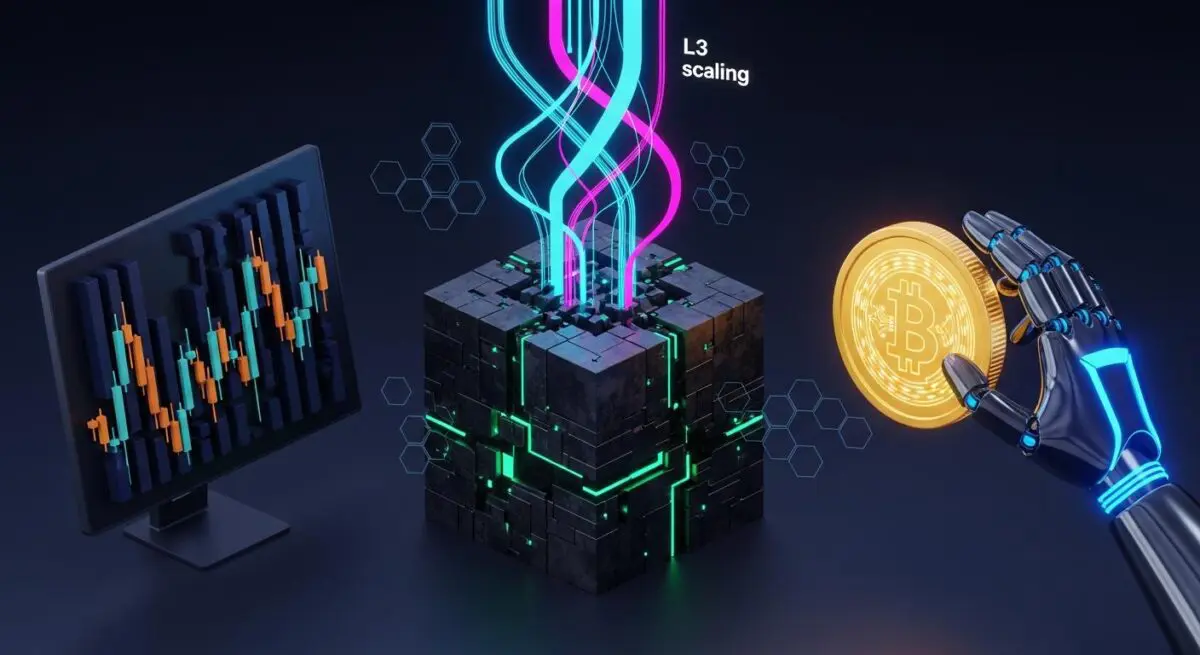
L3 scaling solutions are currently growing at a CAGR of up to 85%. By reducing transaction fees by 70% compared to Layer 1 and supporting over 12,000 transactions per second, L3s provide the throughput necessary for real-world retail environments. This modular approach—separating execution, consensus, and data availability—has become the standard for organizations requiring sub-50ms fraud detection latency.
Quantum-Resistant Cryptography (PQC)
The urgency for PQC accelerated following research that significantly reduced the resource estimates required to break traditional ECDSA. With approximately $6.9 million worth of Bitcoin identified as vulnerable to Harvest Now, Decrypt Later (HNDL) attacks, the 2026 stack must adopt NIST-finalized standards such as Kyber/ML-KEM and Dilithium. This is no longer a theoretical concern; it is a prerequisite for institutional-grade security.
Building a modern FinTech stack without quantum-resistant cryptography is akin to constructing a digital fortress on a shifting sandbank, where the tide of decryption is rising faster than the walls can be reinforced.
Strategic Bottlenecks: The Talent and ROI Gap
Despite the technological advancements, two major bottlenecks remain: the ROI gap caused by tool inflation and a critical shortage of hybrid talent. Organizations managing more than six disparate AI tools often see a 25% drop in ROI. The solution is not more tools, but better integration and a focus on agentic analytics readiness.
Furthermore, the industry is facing a talent intersection crisis. There is a profound shortage of specialists who are proficient in both high-level finance/law and LLM/cryptography. These roles remain vacant for more than double the time of standard DevOps positions, making talent acquisition and retention a primary strategic priority for the C-suite.
Performance Benchmarks and Operational Efficiency
As of April 2026, the target LTV:CAC ratio remains 4:1. However, achieving this requires a heavy reliance on AI-driven operational efficiency. Current benchmarks show that ML-powered alert scoring can reduce AML triage time by 42%, while advanced fraud detection can save mid-tier banks up to €3.8 million annually. These are the metrics that define the winners in the current cycle.
Executive Insight: The Path Ahead
At Andres SEO Expert, we analyze the intersection of financial infrastructure and digital visibility to determine where the next generation of market leaders will emerge. The 2026 landscape proves that technical superiority is no longer just about speed; it is about the resilience of the architecture against both regulatory shifts and emerging cyber threats. The most successful FinTech entities are those that have moved beyond the ‘disruptor’ phase and into the ‘infrastructure’ phase, where they provide the foundational rails for the global economy.
The strategic imperative for the coming year is to consolidate the gains made in AI and blockchain integration while aggressively addressing the quantum threat. Organizations that can bridge the talent gap by fostering hybrid specialists will find themselves with a significant competitive advantage. In a world where only 3% of global banking revenue has been penetrated by new-stack FinTechs, the upside remains immense for those who can execute on a future-proof technical vision.
Securing the Future of Finance
The 2026 FinTech stack is a complex, multi-layered organism that requires constant tuning and strategic foresight. As the boundaries between traditional finance and decentralized technology continue to blur, the leaders who succeed will be those who prioritize architectural integrity and regulatory agility above all else.
Navigating the intersection of generative search and operational efficiency requires more than just tools—it requires a roadmap. If you’re ready to evolve your strategy through specialized SEO, GEO, or AI-driven automation, connect with Andres at Andres SEO Expert. Let’s build a future-proof foundation for your business together.”