Executive Summary
- The Machine Layer represents the computational interface where unstructured content is transformed into high-dimensional vector embeddings for LLM ingestion.
- Effective Generative Engine Optimization (GEO) requires content to be structured for maximum semantic clarity within this layer to ensure accurate retrieval.
- Optimization at this stage focuses on reducing noise and increasing the signal-to-noise ratio for Retrieval-Augmented Generation (RAG) systems.
What is Machine Layer?
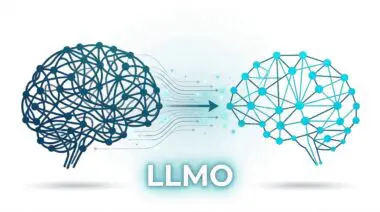
The Machine Layer is the technical abstraction interface where raw, human-readable data is converted into machine-understandable formats, such as vector embeddings, JSON-LD schemas, and knowledge graph entities. In the context of Generative Engine Optimization (GEO), this layer acts as the primary ingestion point for Large Language Models (LLMs) and search algorithms that utilize Retrieval-Augmented Generation (RAG). Unlike the traditional presentation layer designed for human visual consumption, the Machine Layer prioritizes semantic relationships and mathematical proximity.
At its core, the Machine Layer involves the process of tokenization and vectorization. When an AI crawler or indexer encounters a webpage, it strips away stylistic elements to analyze the underlying data structure. This data is then mapped into a multi-dimensional vector space where the “meaning” of the content is defined by its coordinates relative to other known entities. We at Andres SEO Expert define this layer as the critical infrastructure that determines whether a brand’s information is correctly interpreted or discarded by AI models.
The Real-World Analogy
Imagine a massive international library where every book is written in a different language. A human visitor (the traditional user) walks in and looks for a book based on the cover art or the title they recognize. However, the library’s automated sorting system (the Machine Layer) doesn’t look at the covers. Instead, it uses a universal digital blueprint for every book that describes exactly what the book is about, its themes, and its relationship to every other book in the building, regardless of the language it is written in. If a book lacks this blueprint, the automated system cannot categorize it, and it remains invisible to the library’s high-speed retrieval robots, even if the content inside is brilliant.
Why is Machine Layer Important for GEO and LLMs?
The Machine Layer is the foundation of AI Visibility. Modern search engines like Perplexity, ChatGPT (Search), and Google’s Search Generative Experience (SGE) do not simply “rank” pages; they retrieve and synthesize information. If your content is not optimized for the Machine Layer, the LLM may fail to identify your site as a credible source during the retrieval phase of the RAG cycle. This leads to a total loss of Source Attribution.
Furthermore, the Machine Layer influences Entity Authority. By providing clear, structured signals, you allow the AI to connect your brand to specific topics with high confidence. This reduces the likelihood of “hallucinations” regarding your products or services and ensures that the AI’s generated response aligns with your technical specifications and brand messaging.
Best Practices & Implementation
- Deploy Comprehensive Schema Markup: Use advanced JSON-LD to define entities, relationships, and actions. This provides a direct, non-ambiguous map for the Machine Layer.
- Prioritize Semantic HTML5: Use tags like
<article>,<section>, and<aside>to provide structural context that assists in accurate tokenization. - Optimize for Vector Similarity: Ensure that your content uses industry-standard terminology and maintains a logical flow to improve its “closeness” to relevant queries in a vector space.
- Maintain Data Consistency: Ensure that entity facts (e.g., pricing, specifications, addresses) are identical across all digital touchpoints to reinforce the Machine Layer’s confidence score.
Common Mistakes to Avoid
One frequent error is prioritizing visual aesthetics over document structure, which creates “noise” that complicates the vectorization process. Another mistake is the use of “thin” content that lacks the semantic depth required for an LLM to establish a strong vector coordinate. Finally, many brands fail to update their structured data, leading to a mismatch between the human-facing content and the machine-readable signals.
Conclusion
The Machine Layer is the essential bridge between web content and AI comprehension. Mastering this layer through structured data and semantic clarity is the only way to ensure long-term visibility in the era of generative search.