Key Takeaways
- Kernel fusion combines multiple GPU operations into one kernel, reducing global memory traffic and launch overhead.
- Manual fusion offers full control but high maintenance; torch.compile provides automatic fusion; cuda.compute gives predictable, deterministic fusion.
- Real-world tests on an RTX 4090 show a 3x speedup for fused
sum(abs(x))versus naive two-kernel approach. - torch.compile fuses operations but may split reductions unpredictably, while explicit fusion via iterators guarantees behavior.
Table of Contents
The Lede: Kernel Fusion Goes Mainstream
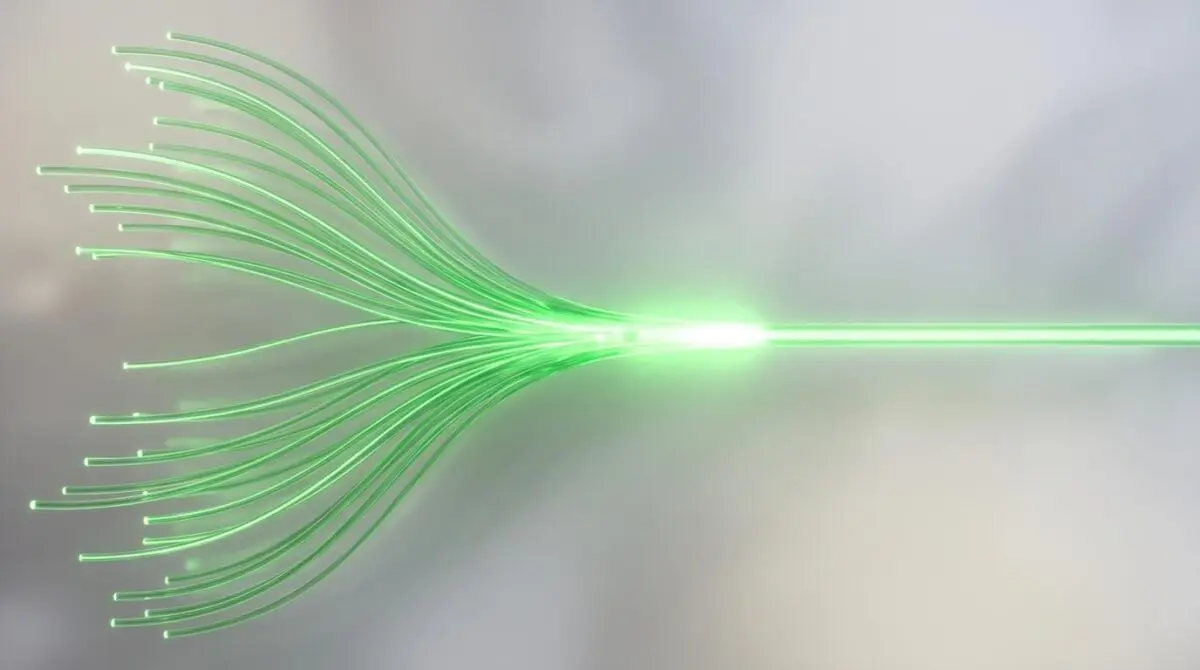
NVIDIA’s latest deep dive into CUDA kernel fusion reveals a straightforward path to 3x performance gains on GPUs by eliminating redundant memory traffic. The core insight: GPU compute is so fast that even high-bandwidth device memory becomes a bottleneck when intermediate results must travel between kernels. Fusion keeps data in registers, slashing global memory round-trips and launch overhead. With tools ranging from hand-written kernels to Python-friendly iterators, developers now have multiple levers to exploit this technique.
The Core Breakdown: Three Approaches to Fusion
The original NVIDIA article demonstrates fusion through the simple operation sum(abs(x)). A naive implementation uses two kernels—one for element-wise absolute value, one for reduction—requiring an intermediate buffer equal to input size. This causes 3 GiB of global memory traffic. Fusion reduces that to 1 GiB and cuts kernel launches from two to one, yielding a measured 3x speedup on an RTX 4090 (2.28 ms + 1.23 ms naive vs. 1.18 ms fused).
Manual Fusion: Full Control at a Cost
Writing a single sum_abs_kernel in CUDA C++ gives maximum performance and predictability. The kernel uses a grid-stride loop, inline fabsf(), block reductions via CUB, and atomic accumulation. It eliminates the intermediate buffer entirely. However, this approach demands intimate knowledge of GPU architecture, high maintenance, and limited portability across hardware generations. Device-side libraries like CUB and libcu++ can ease the burden.
Implicit Fusion with torch.compile
PyTorch’s torch.compile automatic fusion offers productivity. The same operation expressed as t.abs().sum() gets compiled into two Triton kernels: one fuses abs into the reduction, the other aggregates partial sums. While memory traffic drops to 1 GiB, the compiler chose a different strategy than the manual atomics approach. This unpredictability means fusion behavior can change with dtype, shape, or minor code edits—a risk for production pipelines.
Explicit Fusion with cuda.compute
NVIDIA’s cuda.compute Python library provides predictable fusion via iterators. A TransformIterator applies abs lazily; reduce_into then performs a single-device-wide reduction that streams data through the transform without intermediate storage. The result is a single fused kernel, deterministic and portable, backed by CUB. This gives Python developers the performance of hand-tuned kernels with the ergonomics of high-level code.
Strategic Analysis: Market Impact and Developer Choices
The timing of NVIDIA’s kernel fusion guide is no accident. As noted in a recent Reddit discussion on torch.compile speedups, operator fusion is the central idea behind dramatic performance gains in deep learning frameworks. The ability to reduce kernel launches and memory traffic directly translates to faster training and inference—critical for AI workloads where every microsecond counts. An Instagram post from late June highlights how torch.compile combines multiple operations into fewer GPU kernels, a trend that will accelerate as models grow.
As originally reported by NVIDIA Developer Blog, kernel fusion optimizes memory bandwidth and reduces overhead. The real-world benchmark shows a 3x speedup for sum(abs(x)), but the strategic choice is between control (manual), convenience (torch.compile), and deterministic composability (cuda.compute).
For performance-focused teams, the trade-off is clear. Manual fusion remains the gold standard for critical hot paths, but its maintenance burden is unsustainable at scale. torch.compile is a powerful zero-effort option, yet its unpredictable behavior—sometimes producing one kernel, sometimes four—can erode trust in production. Explicit fusion with cuda.compute bridges the gap, offering Python-level simplicity with C++-level guarantees. This aligns with broader industry moves toward composable, deterministic GPU programming.
According to research cited in the Reddit thread (June 2026), torch.compile achieves massive speedups precisely because of operator fusion, but the community notes that fusion strategies vary unpredictably. This reinforces the need for tools like cuda.compute that give developers explicit control without sacrificing productivity. The market is moving toward hybrid approaches where high-level APIs expose lower-level fusion knobs.
Conclusion: The Fusion Revolution
Kernel fusion is no longer an exotic optimization—it’s a fundamental technique for maximizing GPU throughput. Whether you choose manual CUDA C++, automatic torch.compile, or explicit cuda.compute, the payoff is a 3x reduction in memory traffic and launch overhead. As AI and HPC workloads push hardware to its limits, fusion will become a standard practice. The key is to select the approach that matches your need for control, predictability, and maintenance overhead.
Staying ahead in the rapidly shifting landscape of Performance requires precision. To future-proof your digital strategy and scale effortlessly, you need a foundation built on precision. Optimize your site with advanced speed engineering, secure your infrastructure in high-performance hosting environments, and streamline your entire workflow through autonomous AI pipelines. Connect with Andres at Andres SEO Expert to build your ultimate architecture.
Frequently Asked Questions
What is CUDA kernel fusion and why does it improve GPU performance?
CUDA kernel fusion combines multiple GPU kernels into a single kernel to reduce global memory traffic and kernel launch overhead. By keeping intermediate data in registers instead of writing to device memory, it slashes memory round-trips. The article demonstrates a 3x speedup for sum(abs(x)) by fusing two kernels into one, reducing memory traffic from 3 GiB to 1 GiB.
What are the three approaches to kernel fusion described in the NVIDIA article?
The three approaches are manual fusion (hand-written CUDA C++ kernel with full control), implicit fusion with torch.compile (automatic compiler-driven fusion in PyTorch), and explicit fusion with cuda.compute (Python iterators that deterministically compose fused kernels). Each offers different trade-offs between control, convenience, and predictability.
How does manual kernel fusion work in CUDA C++?
Manual fusion involves writing a single CUDA C++ kernel that performs all operations in one grid-stride loop. For sum(abs(x)), it computes the absolute value inline, performs block reduction using CUB, and accumulates results atomically. This eliminates the intermediate buffer entirely, giving maximum performance but requiring deep GPU architecture knowledge and high maintenance.
What is implicit fusion with torch.compile, and what are its limitations?
torch.compile automatically fuses operations like t.abs().sum() into Triton kernels, reducing memory traffic. However, its behavior is unpredictable: it may produce one kernel or multiple depending on dtype, shape, or code changes. This erodes trust in production pipelines, as fusion strategies can vary without developer control.
How does explicit fusion with cuda.compute work?
cuda.compute provides Python iterators like TransformIterator for lazy application of operations (e.g., abs). The reduce_into function then performs a single-device-wide reduction that streams data through the transform without intermediate storage. This results in a single fused kernel that is deterministic and portable, backed by CUB, giving Python developers hand-tuned performance with high-level ergonomics.
What performance gains can be expected from kernel fusion?
The article reports a 3x speedup for sum(abs(x)) on an RTX 4090: naive two-kernel approach took 2.28 ms and 1.23 ms (total 3.51 ms) while the fused kernel took 1.18 ms. The primary gains come from eliminating redundant global memory traffic and reducing kernel launch overhead. For AI workloads, this translates to faster training and inference.
Which kernel fusion approach should developers choose?
The choice depends on priorities: manual fusion is best for critical hot paths where maximum performance is needed, but has high maintenance. torch.compile offers zero-effort fusion but with unpredictable behavior. cuda.compute bridges the gap with Python-level simplicity and deterministic performance. For production pipelines requiring predictability, explicit fusion is recommended, while for rapid prototyping, torch.compile suffices.