Key Points
- Instant Revenue Recognition: Biometric-Triggered Automated Proof-of-Delivery instantly converts physical drop-offs into immutable, real-time digital invoices.
- Fraud Elimination: Integrating passive liveness detection and biometric hashing completely neutralizes delivery fraud while bypassing heavy data privacy liabilities.
- Cash-Flow Acceleration: Real-time synchronization through low-code platforms slashes Days Sales Outstanding (DSO) by an average of 12 to 15 days.
Table of Contents
- The Frozen Invoice Dilemma
- Quantifying the Last-Mile Gap
- Erasing the Daily Reconciliation Grind
- Bridging Scanners and Billing Engines
- Outsmarting Fraud with Liveness Detection
- Navigating the Privacy Minefield
- Unblocking the Cash-Flow Bottleneck
- The Zero-Touch Settlement Horizon
- Beyond the Final Drop-Off
The Frozen Invoice Dilemma
Picture a logistics manager at 4:00 PM on a Friday, staring at a scanned piece of paper where a blurry, illegible scribble is supposed to represent a verified signature.
That single, unreadable ink smudge is not just a minor administrative annoyance. It represents a frozen $50,000 invoice that will now languish in a dispute queue for the next three weeks.
This is the harsh reality of the last-mile recognition gap. It is a systemic flaw where manual signatures are frequently disputed, lost, or claimed as fraudulent.
Logistics firms routinely suffer from 14-to-21-day billing delays. They also bleed an average of 15% in revenue leakage due to these unresolvable delivery conflicts.
The traditional paper-based proof of delivery is a fragile bridge between doing the work and actually getting paid. When that bridge collapses, cash flow grinds to an agonizing halt.
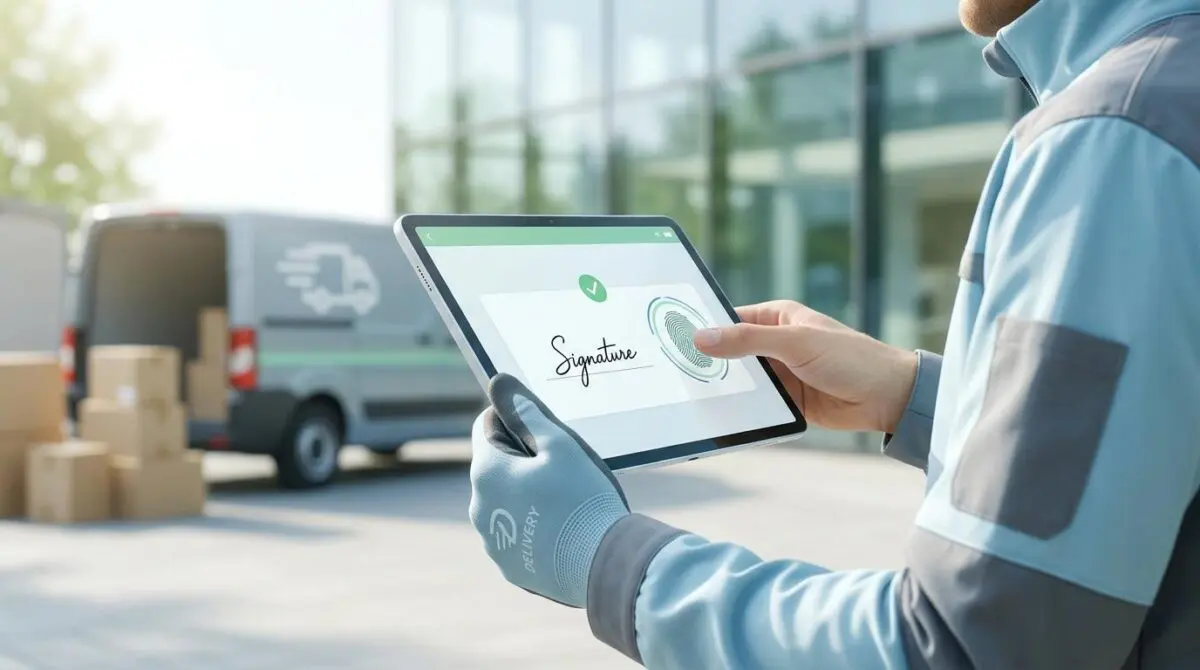
Enter biometric-triggered automated proof-of-delivery generation. This is the ultimate operational upgrade, transforming a vulnerable physical handover into a mathematically undeniable, instantaneous digital event.
By tying the release of a delivery document to a real-time biometric scan, businesses can entirely remove human error from the equation. The result is a frictionless workflow that secures the payload, satisfies the customer, and unlocks trapped revenue before the driver even returns to their truck.
Quantifying the Last-Mile Gap
Market Intelligence & Data
DSO Improvement
Fleets digitizing POD workflows in 2026 report a massive reduction in Days Sales Outstanding (DSO) according to Dashdoc’s logistics benchmark report.
Processing Acceleration
Real-time biometric triggers reduce the window between delivery and backend processing by over half, as verified by LogiNext’s 2025 Last-Mile Study.
Biometric Market Scale
The global biometric system market reached this valuation in 2025, driven by the push for secure authentication in logistics and banking, per MarketsandMarkets.
Billing Cycle Reduction
Automated document generation triggered by mobile delivery apps has slashed the average billing cycle by up to 50% for enterprise fleets in 2026, according to Dashdoc.
Reducing Days Sales Outstanding by 10 to 15 days fundamentally rewrites the financial health of a logistics company. Instead of floating capital to cover operational costs while waiting for dispute resolutions, fleets digitizing their workflows can recognize revenue almost immediately upon delivery.
This financial agility is powered by a staggering 65% acceleration in processing times. Real-time biometric triggers effectively eliminate the dead air between a physical drop-off and back-office validation.
This ensures that the accounting department receives actionable data the very second the cargo changes hands. The massive capital influx into this technology is no accident.
This undeniable operational shift is exactly why the global biometric system market reached this valuation. Logistics and banking sectors demand unshakeable authentication frameworks to protect their margins.
Ultimately, this translates to a massive 30% to 50% reduction in overall billing cycles. By equipping drivers with mobile biometric SDKs (like Identy.io), enterprise fleets have turned a cumbersome administrative chore into an invisible background process that guarantees compliance and speeds up cash flow.
Erasing the Daily Reconciliation Grind
Logistics managers currently spend up to 10 hours every single week playing detective with lost or illegible paper documents. This is a massive drain on human capital and operational momentum.
The core friction here is known as non-repudiation. This occurs when a recipient claims a standard digital signature on a tablet was forged or fraudulent, instantly freezing the associated invoice.
By 2026, real-time triggers move this entire ordeal from a delayed back-office investigation to an instantaneous mobile event. Tools like Dashdoc and LogiNext are leading this charge, turning the delivery confirmation into a seamless digital handshake.
When a biometric scan replaces a stylus scribble, the concept of non-repudiation evaporates. The signature becomes an undeniable biological fact, freeing managers to focus on route optimization rather than chasing down ghost signatures.
Bridging Scanners and Billing Engines
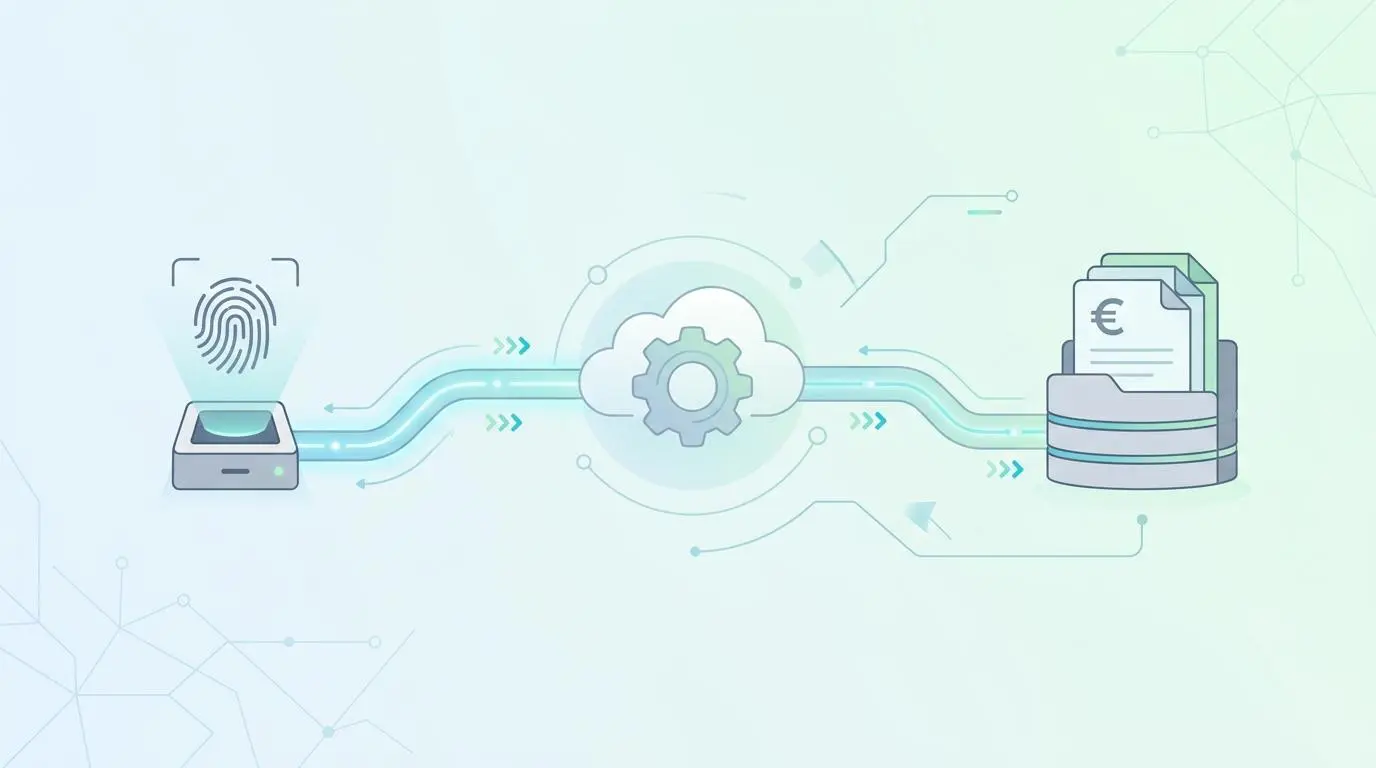
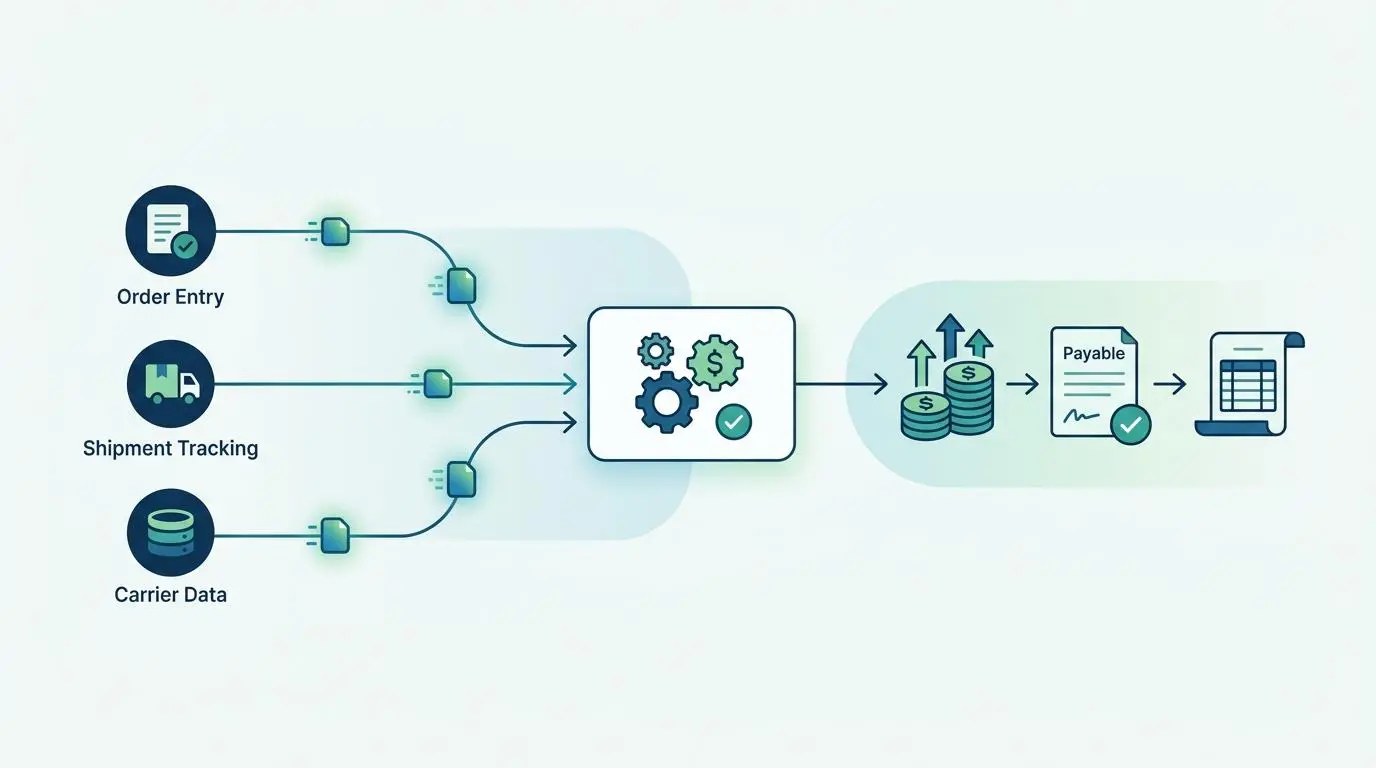
The magic of modern automation lies in its ability to connect completely different software ecosystems without writing thousands of lines of custom code. Modern architects rely on platforms like n8n and Make.com to act as the digital nervous system for these operations.
These platforms bridge mobile biometric SDKs directly with powerful document generation engines like PDFMonkey or Docuo. The moment a driver’s device registers a successful iris or face scan, a webhook is instantly fired across the cloud.
This webhook acts as a digital starting pistol. It auto-populates a legally binding PDF with the delivery metadata, timestamp, and biometric confirmation.
It then instantly syncs the finalized document to enterprise resource planning systems like SAP or NetSuite. This seamless data relay entirely eliminates the multi-day lag between the physical delivery and the availability of the signed document in the billing system.
The invoice is ready to be processed before the delivery truck even shifts out of park.
Outsmarting Fraud with Liveness Detection
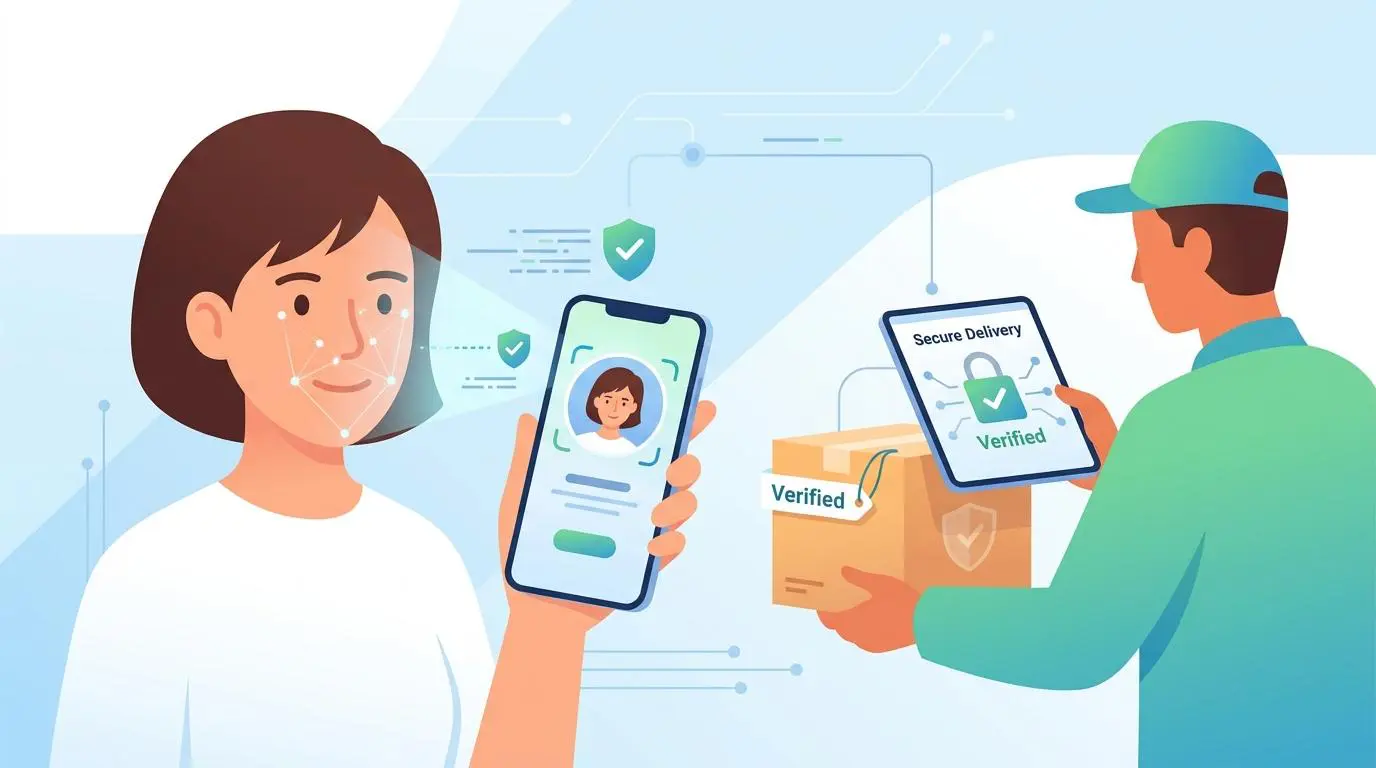
As digital verification becomes standard, bad actors have attempted to game the system using static photos or AI-generated media to spoof delivery confirmations. This is known in the security world as an injection attack.
To combat this, AI agents now perform passive liveness detection during the biometric scan. Systems developed by Entrust and iBeta use advanced artificial intelligence to analyze subtle facial micro-movements and blood flow in the background while the driver completes the drop-off.
In 2026, passive liveness detection has become the global gold standard. It allows biometric verification via a simple background selfie that analyzes sub-surface skin textures.
This increases user completion rates by 72% compared to older active blink or nod requirements. This invisible layer of security completely neutralizes deepfake-based delivery fraud.
It ensures that the person confirming the delivery is a living, breathing human standing at the correct GPS coordinates, locking down the integrity of the supply chain.
Navigating the Privacy Minefield
Collecting biological data comes with massive regulatory responsibilities. Under the 2026 EU AI Act and updated US state privacy laws, storing raw biometric images is an immense legal liability.
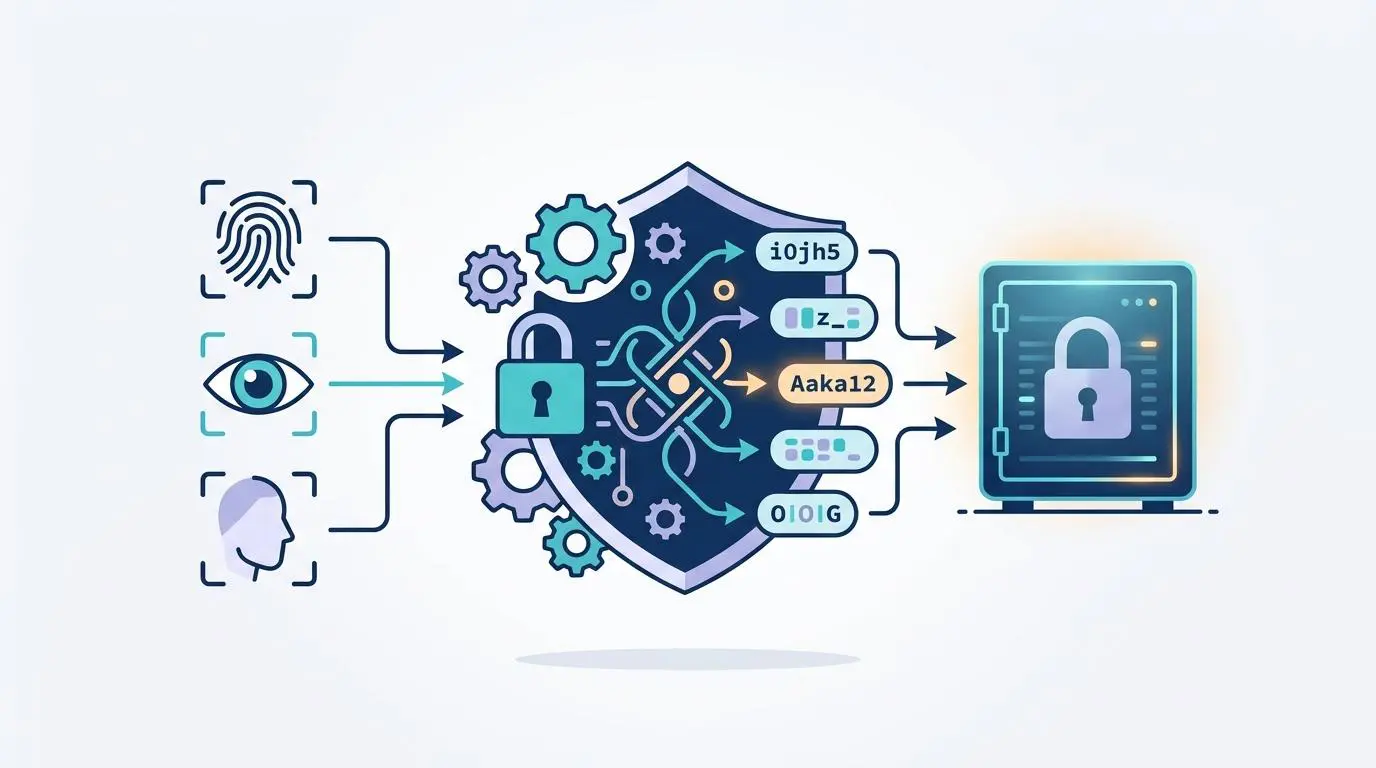
To solve this, modern automation flows utilize a technique called biometric hashing. Instead of saving a picture of a face or an iris, the system instantly converts the scan into a complex, encrypted mathematical string.
This hash is then stored in the delivery metadata. If a hacker breaches the database, they do not find human faces. They only find useless, irreversible strings of numbers.
This brilliant architectural choice bypasses the extreme compliance burden of storing sensitive personally identifiable information. It makes the biometric scan ephemeral, but the mathematical proof of that scan entirely immutable.
Unblocking the Cash-Flow Bottleneck
The ultimate measure of any technological upgrade is its impact on the bottom line. Companies deploying automated biometric delivery confirmations are seeing a staggering 65% reduction in processing time between the physical delivery and invoice issuance.
This speed translates directly to financial health. Implementation of these real-time triggers has shown to improve Days Sales Outstanding by an average of 12 full days.
Historically, logistics firms suffered from a cash-flow bottleneck caused by the batch-processing of delivery documents. Drivers would hoard paperwork in their cabs, turning them in only at the end of a long shift or the end of the week.
By automating the document generation at the exact moment of delivery, businesses smooth out their revenue cycles. Capital flows continuously, rather than arriving in delayed, unpredictable bursts.
The Zero-Touch Settlement Horizon
The next evolutionary leap for logistics is the transition toward zero-touch settlement pipelines. In this future, the biometric signature does not just generate a PDF. It executes a smart contract on a private enterprise blockchain.
This evolution removes the traditional concept of an invoice entirely. The biometric delivery confirmation acts as a cryptographic key that triggers an immediate, automated stablecoin transfer from the buyer to the carrier.
This obliterates the multi-step friction of manual invoicing, mailing, and waiting for archaic Net-30 or Net-60 payment terms. It transforms the supply chain into a hyper-efficient, self-executing financial ecosystem.
By late 2026, the industry will pivot from simple biometric triggers to continuous behavioral authentication. Drivers will be verified via their unique handling and movement patterns throughout the delivery route.
This makes the final proof of delivery a completely passive, automated background event requiring zero explicit user action.
Beyond the Final Drop-Off
The era of treating proof-of-delivery as a manual, paper-bound chore is rapidly closing. The future belongs to organizations that view every physical handover as a data-rich, automated event capable of driving instant financial settlement.
By embracing biometric triggers, liveness detection, and automated document generation, logistics leaders are not just preventing lost paperwork. They are actively engineering a supply chain that is faster, more secure, and financially fluid.
Navigating the intersection of technology, workflows, and operational efficiency requires a sharp strategy. To future-proof your business architecture and scale with precision, connect with Andres at Andres SEO Expert.
Frequently Asked Questions
What is biometric-triggered automated proof of delivery?
Biometric-triggered automated proof of delivery (POD) is a system that uses real-time biometric scans, such as facial or iris recognition, to instantly generate and verify delivery documents. By replacing manual signatures with mathematical authentication, it removes human error and prevents delivery disputes.
How does biometric POD technology improve Days Sales Outstanding (DSO)?
Implementing biometric POD workflows can reduce DSO by an average of 10 to 15 days. By triggering instantaneous document generation at the moment of delivery, it eliminates manual processing delays and ensures the billing engine receives actionable data immediately, accelerating the entire payment cycle.
What is passive liveness detection in delivery verification?
Passive liveness detection is an AI-driven security layer that analyzes facial micro-movements and sub-surface skin textures during a biometric scan. This technology distinguishes between a real human and static photos or deepfakes, preventing injection attacks and fraudulent delivery claims without requiring the user to perform active tasks like blinking.
How do logistics companies comply with biometric privacy laws like the EU AI Act?
To comply with regulations like the EU AI Act and CCPA, modern systems use biometric hashing. Instead of storing raw biological images, the scan is converted into an encrypted, irreversible mathematical string. This makes the data ephemeral for privacy purposes while remaining an immutable proof of delivery for financial records.
What is the benefit of connecting biometric SDKs to document engines like PDFMonkey?
Connecting biometric SDKs to document engines via automation platforms like n8n or Make.com allows for a digital nervous system. This ensures that as soon as a delivery is verified, a legally binding, auto-populated PDF is created and synced to ERP systems like SAP, removing the multi-day lag typical of manual reconciliation.
What is zero-touch settlement in the logistics industry?
Zero-touch settlement is an advanced financial pipeline where a biometric delivery confirmation acts as a cryptographic key that executes a smart contract on a blockchain. This triggers an immediate, automated payment transfer from the buyer to the carrier, bypassing traditional invoicing delays and Net-30 payment terms.