Key Points
- Autonomous AI agents can seamlessly monitor hyper-local weather and event data to instantly trigger regional reorders without human intervention.
- Integrating dynamic API pipelines between forecasting tools and legacy ERP systems completely eliminates the costly delay of manual purchase order approvals.
- Deploying predictive pre-positioning strategies reduces safety stock requirements while ensuring inventory meets localized demand spikes precisely when they happen.
Table of Contents
- The Cost of the Reactive Lag
- Measuring the Impact of Data-Driven Logistics
- Taming the Unpredictable Bullwhip Effect
- Deploying Autonomous Procurement Agents
- Bridging the API Divide for Seamless Execution
- Executing Hyper-Local Micro-Regional Stocking
- Liberating Trapped Working Capital
- The Dawn of Autonomous Edge Warehousing
- The Next Frontier of Predictive Logistics
The Cost of the Reactive Lag
We expect modern supply chains to flow as predictably as water from a tap. Yet, the reality is often a frozen spreadsheet waiting for human approval while a sudden blizzard empties local shelves in minutes. This paradox represents the most frustrating bottleneck in modern retail logistics, especially when consumer behavior shifts instantly due to local events.
Unfortunately, traditional inventory systems rely entirely on historical data and lagging indicators to make decisions. This creates a severe reactive lag between the physical event and the digital response. Retailers often miss out on up to a quarter of potential revenue simply because their systems cannot react to real-time environmental triggers.
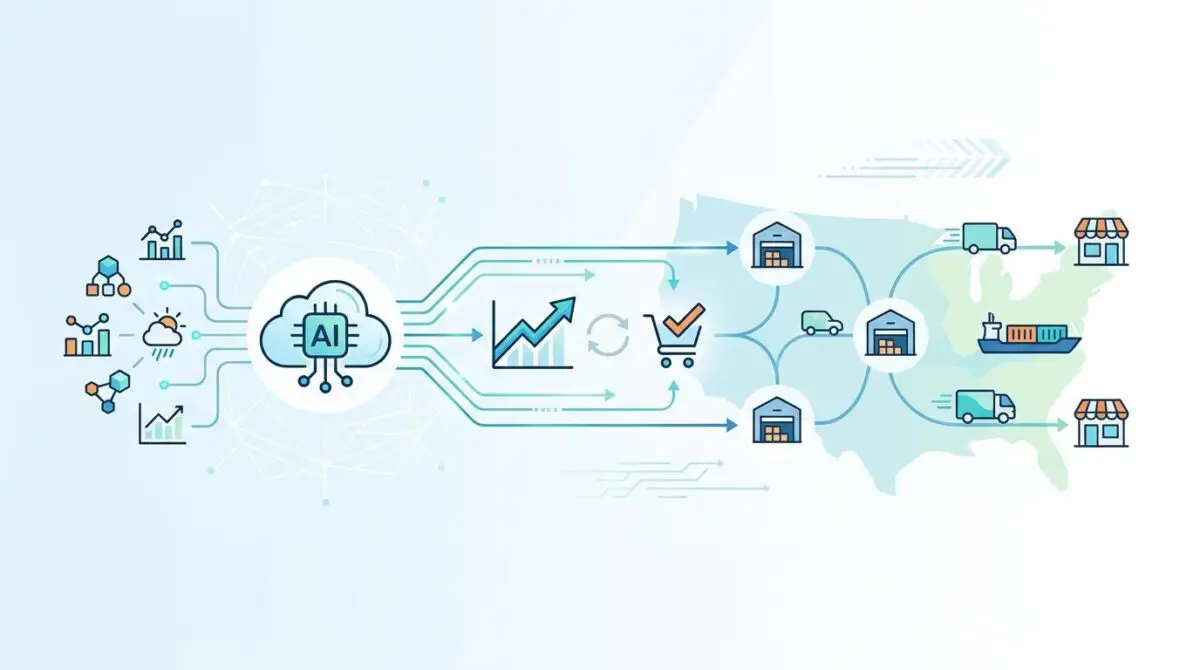
The ultimate solution to this costly friction is predictive event-driven supply chain orchestration. By transforming static databases into living networks that react to the world around them, businesses can completely eliminate the manual approval bottleneck. This approach allows inventory to move seamlessly ahead of the storm, rather than chasing demand after shelves are already bare.
Measuring the Impact of Data-Driven Logistics
Market Intelligence & Data
Reduction in Stockouts
Logistics Management reported in 2025 that predictive event-triggering reduced regional stockouts by 32% for early adopters in the retail sector.
AI Supply Chain Market Size
The IDC Market Forecast for 2026 estimates global spending on AI-enabled supply chain orchestration has reached $21.4 billion.
Inventory Accuracy Improvement
A 2025 study by McKinsey & Company found that AI-driven demand forecasting combined with real-time external data triggers improved inventory accuracy by 45%.
Manual Labor Savings
SupplyChainBrain’s 2026 Digital Transformation Report indicates procurement officers save an average of 18 hours weekly by automating localized event-based reordering.
The reduction in regional stockouts by nearly a third is a massive leap forward for retail logistics. When local events trigger sudden demand spikes, traditional reactive models fail completely. By shifting to predictive event-driven orchestration, retailers can anticipate foot traffic surges before shelves are ever emptied.
The staggering valuation of the AI supply chain orchestration market highlights a fundamental shift in global commerce. Enterprises no longer view automation as an experimental luxury, but as a critical survival mechanism. This capital influx is rapidly accelerating the development of zero-touch workflows and autonomous procurement engines across every industry.
Eliminating the guesswork from demand forecasting completely transforms how regional hubs operate. By feeding real-time external data triggers into machine learning models, companies have improved inventory accuracy by 45% across their networks. This unprecedented precision means goods are deployed exactly when and where they are mathematically guaranteed to sell.
The human cost of manual inventory management has always been the silent killer of operational efficiency. By leveraging advanced forecasting tools like the IBM Environmental Intelligence Suite, procurement officers are reclaiming nearly half of their workweek. This recovered time allows human talent to focus on high-level strategic planning rather than clicking approve on routine purchase orders.
Taming the Unpredictable Bullwhip Effect
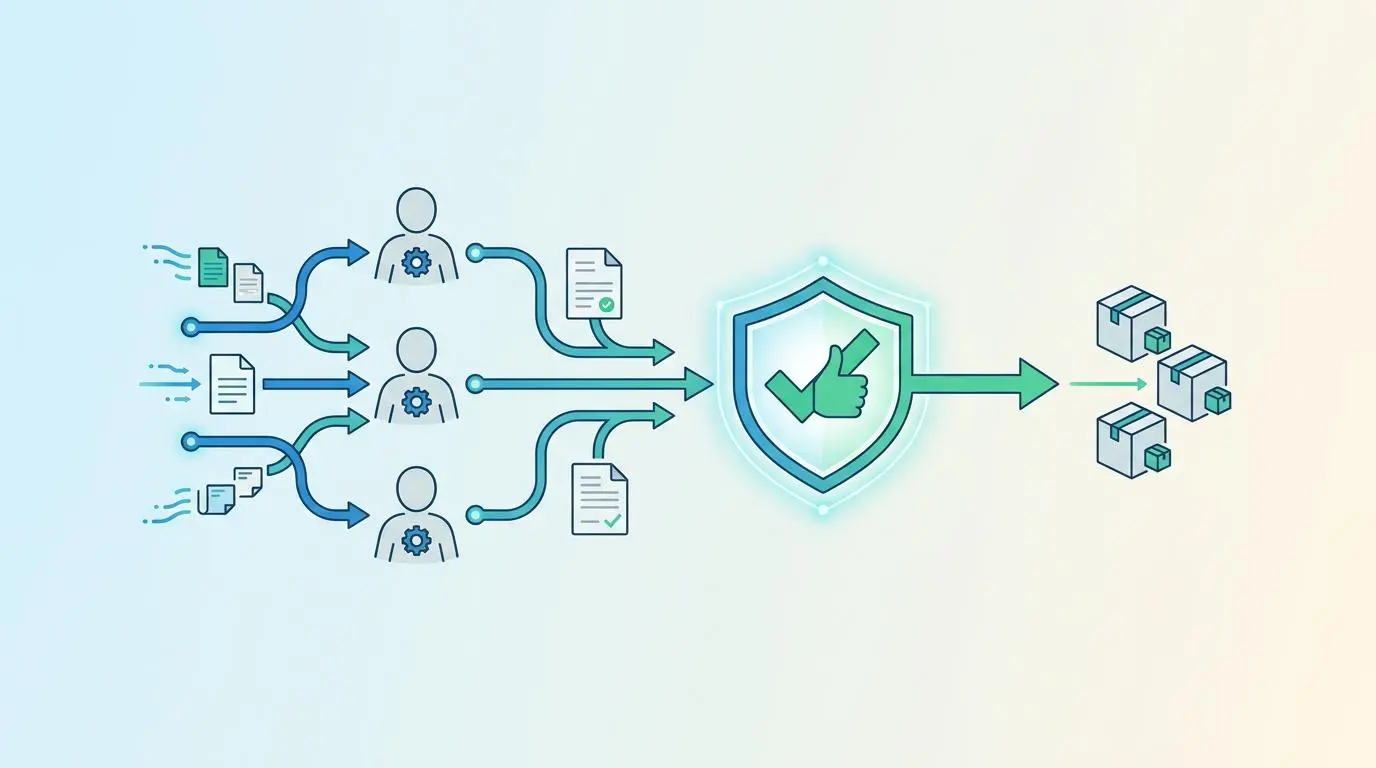
Supply chain managers battle a constant phenomenon known as the bullwhip effect on a daily basis. A sudden local storm in a specific region causes an immediate panic-buying surge that clears out essential supplies. Because the manual purchase order sits unapproved in an ERP system, this delay causes massive disruptions upstream.
To combat this, modern logistics networks are integrating global event data from platforms like PredictHQ directly into their workflows. When paired with granular weather forecasting, these systems create a highly responsive digital nervous system. The moment a local festival or a severe heatwave is confirmed, the system prepares to act instantly.
This effectively bridges the gap between a physical world event and the digital administrative response. By automatically generating and approving purchase orders based on predictive triggers, the supply chain absorbs the shock of sudden demand without breaking a sweat.
Deploying Autonomous Procurement Agents
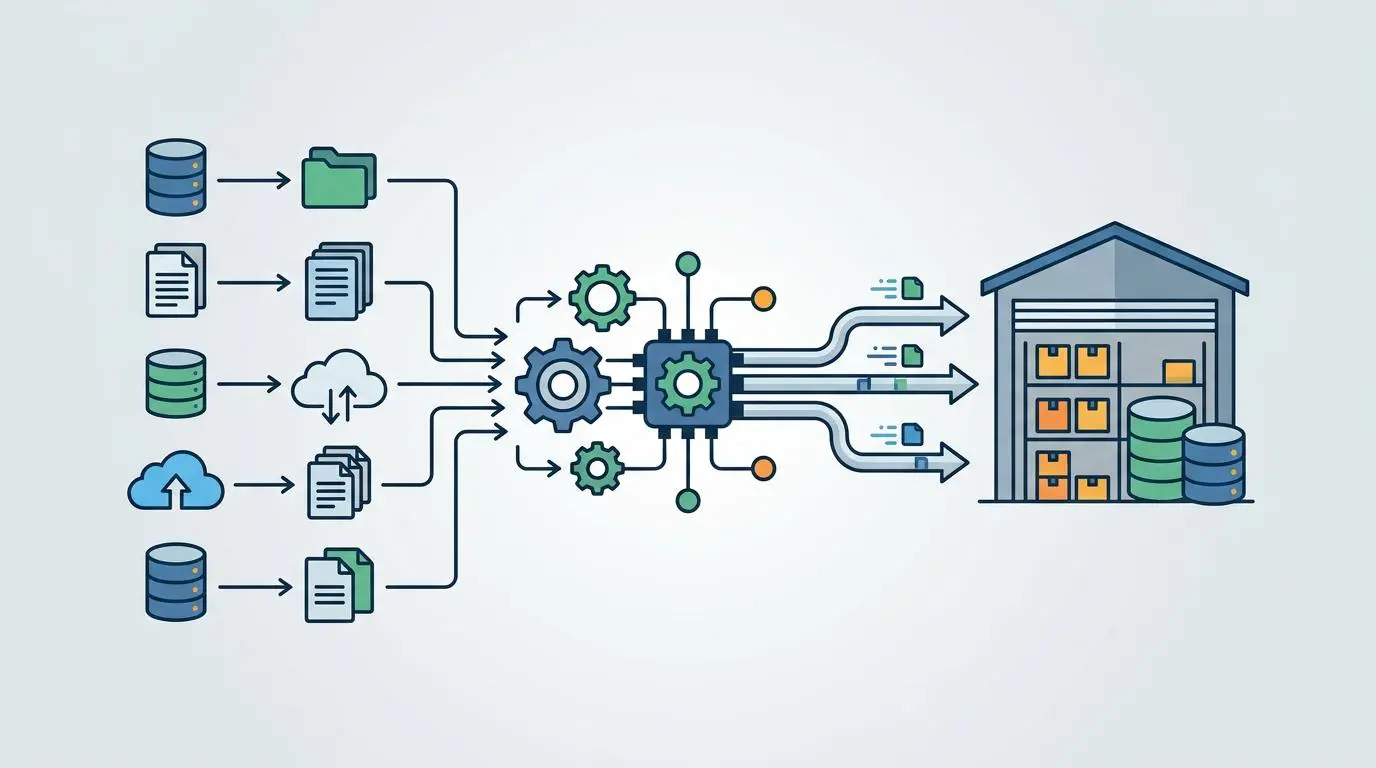
The days of waiting for a human to return from the weekend to approve a critical reorder are rapidly ending. Agentic AI systems, built on advanced frameworks like LangGraph or CrewAI, are now deployed to actively monitor external APIs around the clock. These digital workers do not sleep, take vacations, or miss urgent notifications.
These agents are granted specific agency to execute orders autonomously when high-confidence triggers are met. For example, if a weather API reports a ninety percent probability of heavy snow, the agent cross-references local stock levels instantly. If inventory is low, it can autonomously execute a reorder up to fifty thousand dollars without any human intervention.
This completely removes the human approval bottleneck from time-sensitive scenarios. By trusting the AI agent to handle routine but critical emergency reorders, businesses ensure their local stores are fully stocked before the first snowflake even hits the ground.
Bridging the API Divide for Seamless Execution

The greatest barrier to predictive orchestration has historically been the massive data silos separating different departments. Weather information exists in a meteorologist’s browser tab, while inventory levels are buried deep within a legacy database. Without a communication layer, these two vital pieces of information can never interact.
Modern technology stacks solve this by using automation platforms like n8n or Make as the digital glue connecting these isolated systems. They create real-time data pipelines between external sources like the OpenWeatherMap API and heavy enterprise systems like SAP S/4HANA. The data flows effortlessly from the outside world directly into the warehouse management software.
When this data is processed through unified storage solutions like Snowflake Unistore, the magic truly happens. If a massive local marathon is suddenly scheduled, the pipeline immediately recognizes the event and shifts sports drink inventory to that specific regional hub automatically.
Executing Hyper-Local Micro-Regional Stocking

One of the most wasteful practices in traditional logistics is overstocking an entire state just because of a localized event. A flood warning in one metropolitan area should not trigger a massive shipment of sandbags to stores three hundred miles away. This lack of precision locks up valuable inventory in the wrong places.
Hyper-local triggering introduces the concept of micro-regional stocking to solve this exact problem. By utilizing GeoJSON polygons and Mapbox integrations, companies can draw precise digital fences around specific areas. The automation rules are then configured to only trigger reorders for stores within a tight fifteen-mile radius of the predicted event.
This surgical approach to inventory management ensures that high-demand products are sent exactly where they are needed. It prevents the costly mistake of widespread overstocking while guaranteeing that the affected community has access to the supplies they desperately need.
Liberating Trapped Working Capital
For decades, companies have relied on massive piles of safety stock as a just-in-case measure against unpredictable demand. This stagnant inventory represents millions of dollars in locked-up working capital that could be used for growth and innovation. Predictive event-driven orchestration fundamentally changes this financial equation.
Automated reordering systems utilizing predictive triggers have consistently shown a reduction in safety stock levels by up to twenty percent. Global retail giants like Zara and H&M are already using these predictive models to slash their lead times from several weeks down to mere days. The financial agility gained from this strategy is absolutely transformative.
Furthermore, this technology is evolving into revenue optimization. In 2025, major grocery chains began implementing dynamic atmospheric pricing alongside their reorder triggers. The automation system now increases inventory reorders and seamlessly adjusts retail price points based on real-time barometric pressure sensor data.
The Dawn of Autonomous Edge Warehousing
Even when a digital reorder is instantaneous, the physical reality of moving a box from point A to point B still presents a last-mile delivery lag. The future of predictive logistics is actively working to erase this final physical barrier. The solution lies in pushing the inventory as close to the consumer as geographically possible.
The upcoming frontier involves autonomous edge warehousing, where AI-triggered reorders are fulfilled by regional micro-fulfillment centers. These dark-store logistics hubs operate entirely without human pickers, utilizing robotics to sort and pack the incoming emergency inventory.
When a predictive trigger fires, it does not just place an order with a distant supplier. It simultaneously reserves a priority spot in a localized drone-delivery queue, ensuring that the physical product moves just as fast as the digital data.
The Next Frontier of Predictive Logistics
As we look toward the horizon, the concept of the predictive reorder is rapidly evolving into predictive pre-positioning. By late 2026, goods will be seamlessly routed to autonomous mobile warehouses acting as roving distribution centers. These assets will position themselves directly in the path of a predicted weather event twenty-four hours before it occurs, effectively eliminating shipping time entirely.
This represents a profound shift from reacting to the world to actively anticipating its every move. Supply chains will no longer be static chains at all, but rather fluid, intelligent ecosystems that breathe in sync with global events. The companies that embrace this zero-touch orchestration will simply outpace those still waiting for human approval.
Navigating the intersection of technology, workflows, and operational efficiency requires a sharp strategy. To future-proof your business architecture and scale with precision, connect with Andres at Andres SEO Expert.
Frequently Asked Questions
What is predictive event-driven supply chain orchestration?
Predictive event-driven supply chain orchestration is a logistics framework that transforms static databases into reactive networks. It uses real-time external data triggers, such as weather systems or local events, to automate inventory movement and eliminate manual approval bottlenecks before demand spikes occur.
How does AI impact inventory accuracy and stockout rates?
According to studies by McKinsey and Logistics Management, AI-driven demand forecasting combined with real-time triggers can improve inventory accuracy by 45% and reduce regional stockouts by 32%. This allows retailers to anticipate foot traffic surges and ensure products are available before shelves are emptied.
What are autonomous procurement agents in modern logistics?
Autonomous procurement agents are AI systems built on frameworks like LangGraph or CrewAI that monitor external APIs 24/7. These agents can execute reorders independently when specific high-confidence triggers are met, such as a high probability of severe weather, without waiting for human administrative approval.
How do automation platforms like n8n and Make bridge the API divide?
Automation platforms like n8n and Make act as digital glue, connecting isolated systems like weather APIs and ERP databases (e.g., SAP S/4HANA). They create real-time data pipelines that allow external event data to flow directly into warehouse management software for seamless execution.
What is hyper-local micro-regional stocking?
Hyper-local micro-regional stocking is a precision inventory strategy that uses GeoJSON polygons and Mapbox integrations to draw digital fences around specific areas. Automation rules are configured to trigger reorders only for stores within a tight radius (e.g., fifteen miles) of a predicted event, preventing wasteful widespread overstocking.
Can predictive orchestration help liberate trapped working capital?
Yes, by utilizing predictive triggers, companies can reduce safety stock levels by up to 20%. This strategy liberates millions of dollars in stagnant working capital and allows for greater financial agility, enabling retailers to slash lead times from weeks down to mere days.