Key Takeaways
- Set up a daily Copilot automation to review open Dependabot PRs and group them by risk.
- Get a risk-weighted summary with safe updates separated from major migrations and CI failures.
- Automation history provides auditability while keeping human oversight for high-impact changes.
Table of Contents
Dependabot Pull Requests No Longer Need to Be a Morning Chore
Today, the GitHub engineering team published a practical walkthrough showing how development teams can hand the first round of Dependabot pull request triage to GitHub Copilot app automations.
The core promise is straightforward: instead of manually inspecting every open dependency update, teams can schedule a daily automation that reviews pull requests, groups them by risk, verifies CI status, and delivers a summary before the workday begins.
The underlying pain is familiar to anyone who maintains modern codebases. Dependabot produces a steady stream of pull requests whenever new vulnerabilities, patch releases, or major version bumps surface, and most of those requests demand the same repetitive set of checks.
That repetition, as the GitHub engineering blog notes, makes triage a strong candidate for automation. The work is not especially difficult, but it is constant, and it pulls developer attention away from higher-value decisions.
Inside the Copilot Automation Workflow for Dependabot Triage
The workflow turns a five-step manual routine into a background process.
The first step is to create a new automation from the GitHub Copilot app and give it a descriptive name such as ‘Daily Dependabot Triage’.
The trigger determines when the automation runs. Available options include manual, hourly, daily, weekly, and event-driven execution when an issue is created.
For recurring maintenance tasks, a daily schedule is the recommended starting point because the summary is ready before the team logs in. Teams can also choose whether the automation runs in the cloud or on a local machine.
The second step is to describe the task in natural language. Instead of building a rigid workflow, the team tells Copilot what outcome it wants: review open Dependabot pull requests, group them by risk, identify safe patch and minor version updates, verify CI status, and return a short summary of recommended next steps.
The description can be customized to match different team workflows. That is the entire point of the natural-language interface, which reduces configuration to a statement of intent.
The third step is selecting the repository or project to analyze. A ‘Create and Run’ option lets teams trigger an immediate test instead of waiting for the next scheduled window.
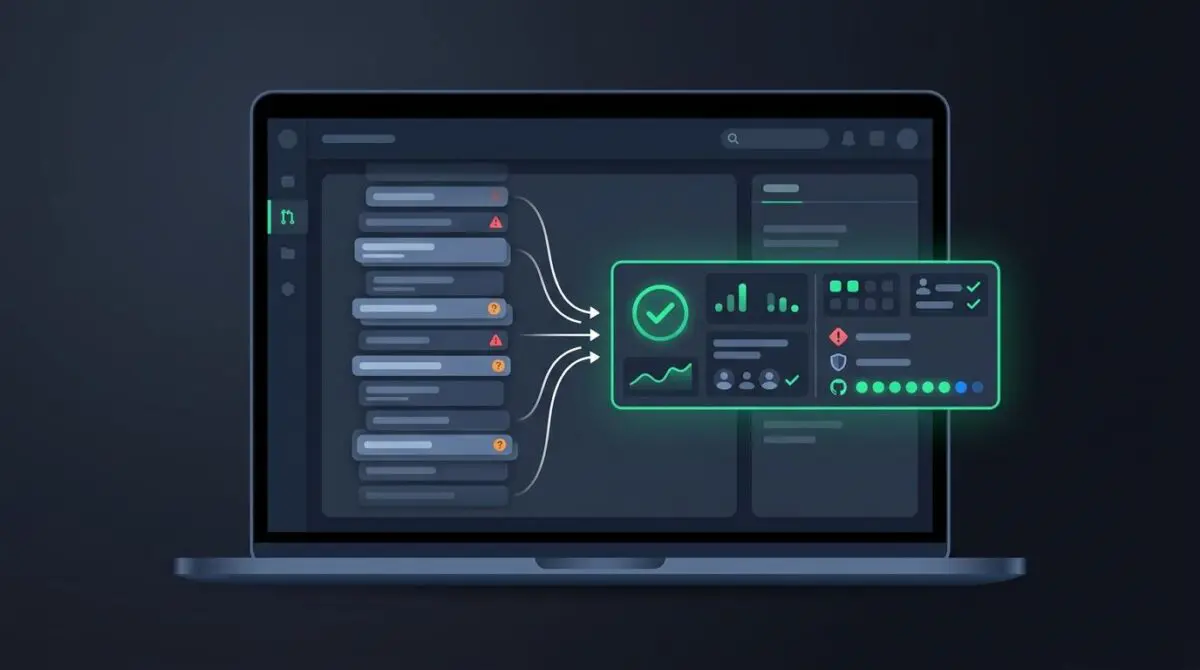
When the automation finishes, Copilot returns a grouped summary rather than a long list of individual pull requests.
Safe patch updates appear together, minor and major version upgrades are separated, and pull requests with passing CI are clearly identified. Dependencies that require additional investigation are highlighted instead of buried in the queue.
If a major framework upgrade appears in the summary, teams can continue directly from the automation results into a new Copilot session.
That session starts with the automation’s context, so the migration work can begin without re-gathering repository state. A developer can ask Copilot to help complete the migration and immediately act on the highest-risk update.
Every automation run is saved with a record of when it ran, what actions it performed, and what results it produced. That history makes automations transparent rather than a black box.
Why Automating Routine Triage Changes the Economics of Dependency Maintenance
The automation is framed as a beginner-friendly workflow, but the strategic value extends well beyond saving a few minutes each morning.
Dependency triage is a high-frequency, low-variance task. Most pull requests are safe, but the minority that are not can introduce breaking changes, security regressions, or architectural drift.
By moving the repetitive first-pass review into Copilot automations, teams reserve human judgment for the updates that genuinely require it: major version upgrades, framework migrations, and failing CI pipelines.
The workflow also changes the developer’s information diet. Instead of starting the day with scattered notifications and a long list of pull requests, a developer sees a risk-weighted summary that separates merge-ready updates from investigation-heavy ones.
That shift matters because context switching is one of the most expensive hidden costs in software maintenance. A short daily summary can compress dozens of small decisions into a single review session.
From an enterprise adoption standpoint, the audit trail of previous automation runs addresses a common concern about agentic AI tools: explainability. Every run records when it executed, what actions it performed, and what results it produced, so teams can inspect the automation instead of trusting it blindly.
Across the broader AI tooling landscape, the emphasis is moving from single-shot completions toward persistent, scheduled, and auditable workflows. This Dependabot example is a practical instance of that transition, with a narrow scope that makes the automation feel safe to adopt.
The lesson for AI practitioners is that useful automation does not need to be fully autonomous end-to-end. A human-in-the-loop triage layer creates immediate value while preserving oversight, which lowers the barrier for teams that are still cautious about turning agents loose on production repositories.
That position is likely to accelerate as organizations look for AI returns that do not require wholesale workflow replacement. A targeted automation that removes one recurring chore can produce measurable relief without disrupting the rest of the development process.
From Manual Review to Supervised Automation
The clearest takeaway from GitHub’s Dependabot automation is that the first wave of AI coding tools replaced typing; the next wave is replacing the routine decisions that surround the typing.
For teams building the same kind of automated decision layers into search and content operations, programmatic SEO AI automation is how Andres SEO Expert removes repetitive discovery work — let us know where your pipeline is stuck.
Frequently Asked Questions
What is Dependabot pull request triage?
Dependabot pull request triage is the process of reviewing dependency update pull requests to determine which ones are safe to merge, which need further investigation, and which require human judgment for major version upgrades or failing CI.
How does GitHub Copilot automate Dependabot triage?
Teams schedule a daily automation using the GitHub Copilot app, describe the desired outcome in natural language, and select the repository. Copilot then reviews open Dependabot pull requests, groups them by risk, verifies CI status, and returns a summary of recommended next steps.
Can I customize the Copilot automation for Dependabot triage?
Yes, the automation is configured through natural language descriptions that can be tailored to team workflows. You can also choose the trigger (manual, hourly, daily, weekly, or event-driven) and whether it runs in the cloud or locally, with an option to create and run immediately for testing.
What does the Copilot automation return after running?
It returns a grouped summary rather than a long list: safe patch updates are grouped together, minor and major version upgrades are separated, PRs with passing CI are identified, and dependencies requiring extra investigation are highlighted.
How does the automation verify CI status?
The automation checks the CI status of each open Dependabot pull request and clearly identifies which ones have passing CI, making it easy to spot merge-ready updates and flagging those with failing CI for further attention.
Is there an audit trail for Copilot automations?
Yes, every automation run is saved with a record of when it ran, what actions it performed, and what results it produced. This history provides transparency and makes the automation explainable rather than a black box.
How does automating Dependabot triage change the economics of dependency maintenance?
Dependency triage is a high-frequency, low-variance task. Automating the repetitive first-pass review saves time, reduces context switching, and reserves human judgment for complex updates. It also provides a risk-weighted summary that compresses dozens of small decisions into one review session, while the audit trail addresses explainability concerns.