Key Takeaways
- Production-grade control: scene extension up to 40 seconds, first/last-frame interpolation, and 4K upscaling.
- Cost efficiency: 360p draft mode is 60% faster and about one-third the price of 720p output.
- Industry adoption: Adobe, Runway, and Figma are integrating Omni 1.1 Flash into their creative platforms.
Table of Contents
Google DeepMind Puts Production-Grade Video Control in Developer Hands
Google DeepMind’s official developer blog has unveiled Gemini Omni 1.1 Flash, a production-grade update that gives builders more precise control over generative video.
The model is rolling out today through Google AI Studio and the Gemini Enterprise Agent Platform.
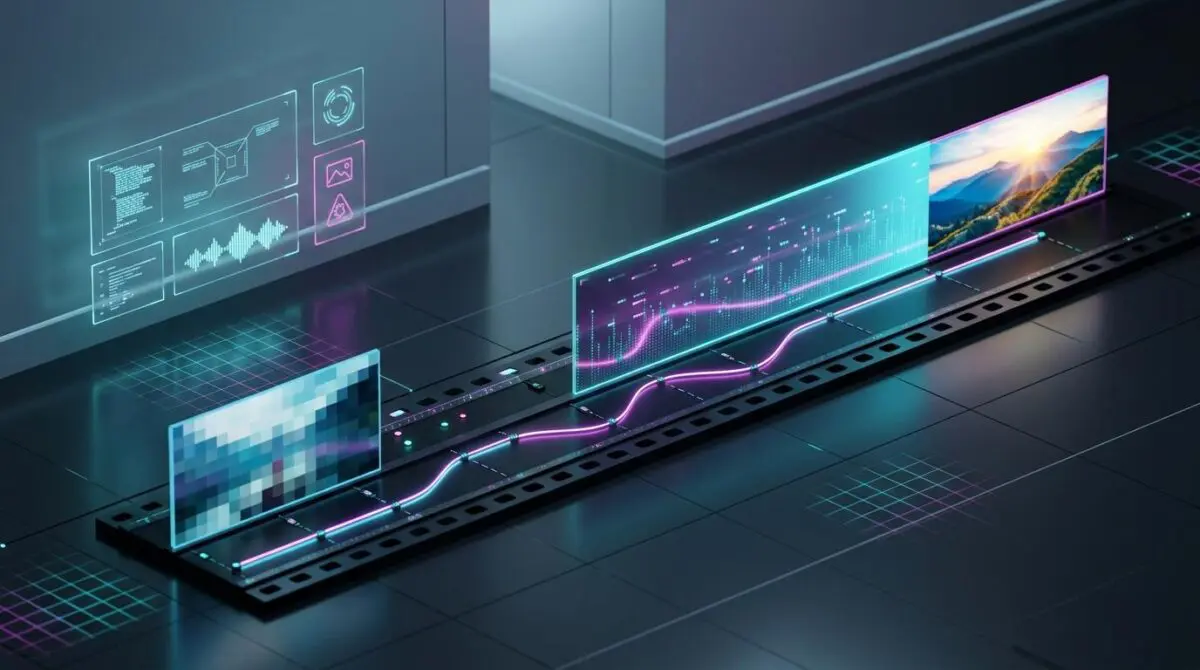
It introduces scene extension, first-and-last-frame interpolation, 360p drafting, and 4K upscaling — capabilities aimed at moving AI video from experimental clips into professional pipelines.
Scene Extension, Keyframe Interpolation, and 4K Upscaling Reshape the Workflow
According to Google DeepMind, the update is less a single model tweak than a toolkit for controlling generative video through the entire production chain.
- Scene extension stretches stories to 40 seconds. Omni 1.1 reads up to 10 seconds of preceding context, compared with one second in earlier models.
- First and last frame interpolation tames camera motion. Developers can specify start and end frames and let the model generate the continuous shot between them.
- Low-resolution drafting cuts iteration costs. 360p previews generate up to 60 percent faster at roughly one-third the cost of 720p output.
- 4K upscaling delivers final polish. Finished projects can be rendered at 1080p or 4K for professional use.
- Video references anchor character consistency. Builders can feed up to three seconds of existing footage into multimodal input to preserve visual context.
Scene extension is built for sustained narrative. The model reads up to 10 seconds of previous footage, a substantial jump from earlier systems that referenced only the final second.
Developers can add 10-second increments until a clip reaches a cumulative 40 seconds. This enables longer sequences, branching directions, and smoother visual continuity across generated cuts.
Keyframe interpolation solves a different problem. By specifying start and end frames, builders can force complex camera orbits, dolly-zoom moves, and seamless looping shots without stitching separate clips together.
Draft mode is the cost lever. The 360p preview path is up to 60 percent faster and roughly one-third the price of standard 720p output, based on internal throughput measurements.
Final renders can be upscaled to 1080p or 4K. Video references allow up to three seconds of footage to anchor visual context and character consistency.
Omni 1.1 is also available to Google AI Plus, Pro, and Ultra subscribers in Google Flow, with scene extension reaching the Gemini app today.
Why Creative Software Vendors Are Already Embedding Omni 1.1 Flash
Adoption signals are already visible across the creative software supply chain. Adobe has integrated Gemini Omni Flash into Firefly, while Runway exposes the model as an option for users moving between prompts, images, and video.
Figma Weave is treating the model as a canvas-native tool for branching ideas and attaching references. GMI Cloud is targeting instructional and educational content where factual accuracy in detail is non-negotiable.
Figma Weave creative director Itay Schiff framed the shift bluntly:
“Gemini Omni Flash is one of the strongest video models available in Figma Weave, where the canvas helps creative teams build on every generation — attaching references, branching different versions, and shaping something unique. With extensions, richer reference material, and 4K resolution, Gemini Omni Flash takes teams beyond generating videos to truly directing them.”
These integrations matter more than raw capability gains. They signal that generative video is moving from isolated model demos into composable production infrastructure where developers assemble tools, not just generate clips.
The larger strategic shift is toward controllable generation. Previous video models optimized for spectacle; Omni 1.1 Flash optimizes for workflow integration, reference fidelity, and cost-conscious iteration.
This aligns with a broader developer ecosystem push this week toward agentic tooling, accelerated inference, and automated workflows.
Still, much of the early evidence is vendor-provided or comes from integration partners. Independent third-party benchmarks for production-scale video workflows have yet to fully validate the speed and consistency claims across varied hardware and use cases.
The New Baseline for Generative Video Infrastructure
Generative video is no longer a prompt-to-clip novelty; it has become a controllable layer inside existing creative infrastructure. For teams building generative video pipelines that need to scale, programmatic SEO and AI automation services are how Andres SEO Expert approaches this shift — contact Andres SEO Expert.
Frequently Asked Questions
What is Google DeepMind’s Gemini Omni 1.1 Flash?
Gemini Omni 1.1 Flash is a production-grade update from Google DeepMind that gives developers more precise control over generative video. It introduces scene extension, first-and-last-frame interpolation, 360p drafting, and 4K upscaling, and is rolling out through Google AI Studio and the Gemini Enterprise Agent Platform.
What are the key new features of Gemini Omni 1.1 Flash for video generation?
The key new features include scene extension to 40 seconds, first-and-last-frame interpolation for controlled camera motion, low-resolution 360p drafting for faster and cheaper iteration, 4K upscaling for final polish, and video references (up to three seconds of footage) to anchor visual context and character consistency.
How does scene extension work in Gemini Omni 1.1 Flash?
Scene extension lets developers add 10-second increments to a clip until it reaches a cumulative 40 seconds. The model reads up to 10 seconds of preceding context, compared with only one second in earlier models, enabling longer sequences, branching directions, and smoother visual continuity across generated cuts.
How does first-and-last-frame keyframe interpolation improve video control?
Keyframe interpolation allows developers to specify start and end frames, and the model generates the continuous shot between them. This forces complex camera orbits, dolly-zoom moves, and seamless looping shots without stitching separate clips together, giving builders precise control over camera motion.
How does 360p drafting reduce iteration costs in video generation?
Draft mode generates 360p previews that are up to 60 percent faster and roughly one-third the cost of standard 720p output. This lets developers iterate quickly and cheaply before committing to final renders, which can be upscaled to 1080p or 4K.
Which creative platforms are integrating Gemini Omni 1.1 Flash?
Adobe has integrated Gemini Omni Flash into Firefly, Runway exposes it as an option, Figma Weave treats it as a canvas-native tool, and GMI Cloud targets instructional and educational content. These integrations signal that generative video is moving into composable production infrastructure.
How does Gemini Omni 1.1 Flash impact generative video production workflows?
It shifts generative video from prompt-to-clip novelty to a controllable layer inside existing creative infrastructure. The model optimizes for workflow integration, reference fidelity, and cost-conscious iteration, enabling longer narratives, precise camera control, and faster, cheaper previewing—making AI video suitable for professional pipelines.