



Executive Summary
- DNS prefetching reduces latency by resolving domain names into IP addresses before resources are explicitly requested.
- It is a non-blocking background operation that minimizes impact on the main thread during the critical rendering path.
- Strategic implementation improves Core Web Vitals, specifically Largest Contentful Paint (LCP), by accelerating third-party asset discovery.
What is DNS Prefetching?
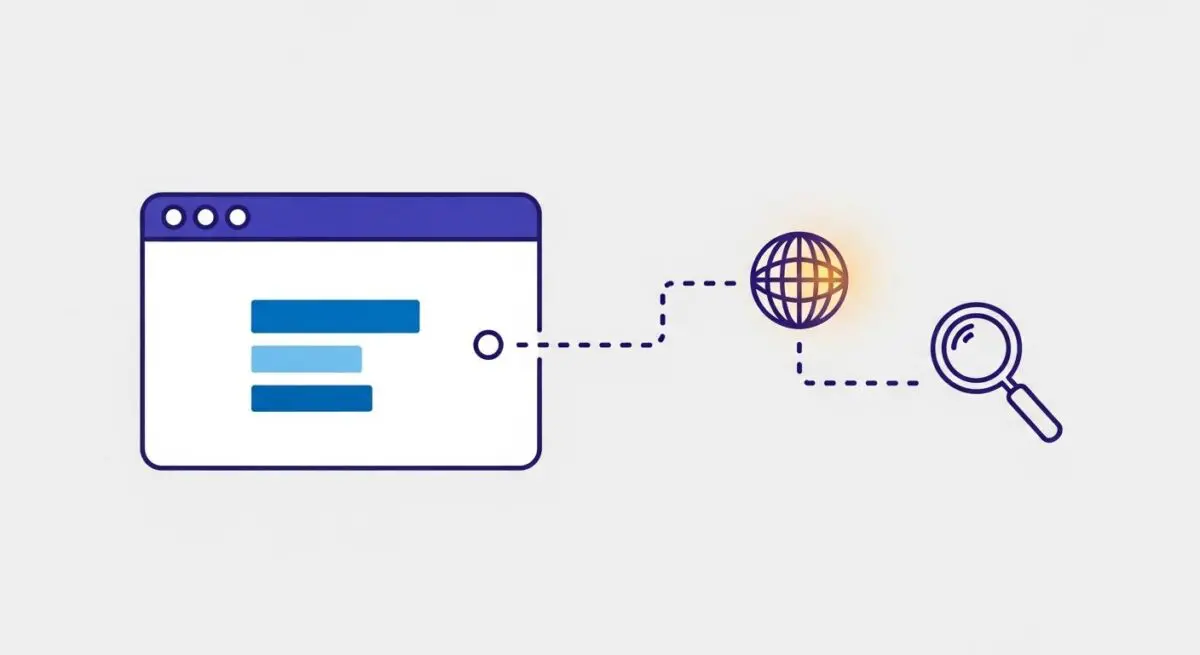
DNS prefetching is a browser-level optimization that resolves domain names into IP addresses before a user explicitly requests a resource from that domain. This process occurs in the background, independent of the main document’s loading flow. When a browser encounters a hostname in the HTML—either in a link or a resource reference—it initiates a DNS lookup and caches the result. This proactive resolution eliminates the latency associated with the DNS lookup phase when the resource is eventually needed.
At Andres SEO Expert, we categorize this as a critical predictive optimization that streamlines the connection phase of the network waterfall. By resolving hostnames early, we ensure that the subsequent TCP handshake and TLS negotiation can begin immediately, significantly reducing the total time spent in the stalled or DNS Lookup phases for external assets.
The Real-World Analogy
Think of DNS prefetching like a professional chef preparing for a dinner service. Before the first customer even orders, the chef has already looked up the specific storage locations for every exotic ingredient in the pantry. When an order for a complex dish finally comes in, the chef doesn’t waste time searching for where the saffron or truffle oil is kept; they already know exactly where to reach. DNS prefetching is that pre-service knowledge that allows the browser to deliver your webpage without stopping to ask for directions.
Why is DNS Prefetching Critical for Website Performance and Speed Engineering?
In modern speed engineering, DNS prefetching is a vital tool for optimizing the Critical Rendering Path. While it does not download the resource itself, it removes one of the primary bottlenecks in the request cycle. For enterprise sites using multiple third-party domains for tracking, ads, and assets, the cumulative DNS resolution time can delay the Largest Contentful Paint (LCP) by several hundred milliseconds.
By offloading DNS resolution to background idle time, we improve the browser’s efficiency in handling concurrent requests. This is especially impactful on mobile networks, where high-latency DNS servers can significantly degrade the user experience. Furthermore, it serves as a low-cost performance hint that provides high ROI with minimal implementation effort, directly contributing to better Core Web Vitals scores and search engine visibility.
Best Practices & Implementation
- Target High-Latency Domains: Focus prefetch hints on third-party domains known to have slower DNS response times or those providing critical-path resources like fonts.
- Implement via Link Tags: Use the
<link rel="dns-prefetch" href="//example.com">syntax within the<head>section for maximum effectiveness. - Use for Predicted Navigation: Prefetch domains for links that a user is highly likely to click, such as the next page in a multi-step checkout process.
- Combine with Preconnect: For the most critical domains, use
rel="preconnect"and providedns-prefetchas a fallback for older browser versions.
Common Mistakes to Avoid
A frequent error is prefetching the site’s own domain; since the browser has already resolved the current domain to load the initial HTML, this provides zero benefit. Another mistake is over-prefetching every external link on a page, which can lead to DNS flooding and consume unnecessary bandwidth on mobile devices. Finally, confusing dns-prefetch with preconnect can lead to suboptimal results, as prefetching only handles the IP resolution while preconnecting handles the full connection handshake.
Conclusion
DNS prefetching is an essential, low-overhead optimization that prepares the network layer for faster resource retrieval. By proactively resolving domain names, speed engineers can shave critical milliseconds off page load times and provide a more seamless user experience.