



Executive Summary
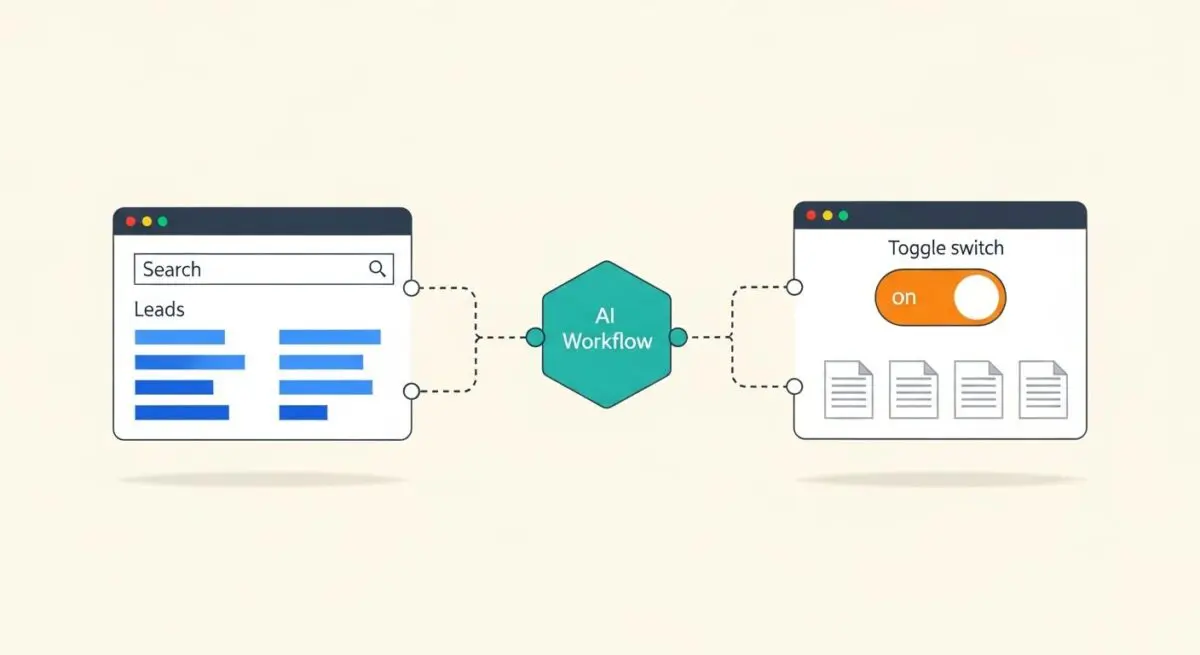
- Lead nurturing is a programmatic framework for managing prospect state transitions through event-driven automation and data-driven triggers.
- Integration with Large Language Models (LLMs) enables hyper-personalized content delivery by processing complex JSON payloads and behavioral telemetry in real-time.
- Scalable nurturing architectures leverage stateless execution and API-first connectivity to maintain high-throughput engagement across the customer lifecycle.
What is Lead Nurturing?
In the context of advanced automation, lead nurturing is the systematic process of moving a prospect through a predefined conversion funnel using programmatic triggers and state management. Unlike manual outreach, automated lead nurturing relies on event-driven architecture where specific user actions—such as API calls, form submissions, or page-view telemetry—act as webhooks to initiate subsequent communication sequences. This process ensures that the prospect receives contextually relevant data payloads at optimal intervals, reducing friction and increasing the probability of a conversion event.
At its core, lead nurturing functions as a series of conditional logic gates (if-this-then-that) integrated with a Centralized Data Platform (CDP) or CRM. We at Andres SEO Expert view lead nurturing as a data pipeline where the input is raw lead information and the output is a qualified, sales-ready entity. This involves lead scoring algorithms that dynamically adjust a prospect’s value based on engagement metrics, allowing AI-driven systems to prioritize high-intent traffic for immediate routing to sales APIs or high-touch workflows.
The Real-World Analogy
Consider an industrial-scale automated irrigation system in a precision vineyard. The system does not simply release water on a fixed timer; instead, it utilizes a network of sensors to monitor soil moisture levels, ambient temperature, and nutrient density. When a specific sensor detects a deficit (a lead showing intent), the central controller (the automation engine) triggers a precise delivery of water and nutrients (the nurturing content) tailored to that specific vine’s needs. If the weather forecast (external market data) changes, the system adjusts its output accordingly. Lead nurturing is the digital equivalent: a sensor-driven, feedback-loop-enabled system that ensures every prospect receives exactly what they need to grow into a customer, without wasting resources on over-saturation or neglect.
Why is Lead Nurturing Critical for Autonomous Workflows and AI Content Ops?
Lead nurturing is the backbone of stateless automation. In high-scale AI content operations, maintaining a persistent connection with thousands of leads is computationally expensive. By utilizing nurturing workflows, we can store the ‘state’ of a lead in a database and use serverless functions to trigger engagement only when specific conditions are met. This maximizes API payload efficiency and ensures that server resources are only utilized when there is a high probability of engagement.
Furthermore, in the era of Programmatic SEO and AI-generated content, lead nurturing allows for the dynamic insertion of personalized variables into content templates. When an AI agent identifies a lead’s specific pain point through natural language processing (NLP) of their initial inquiry, the nurturing workflow can automatically fetch relevant technical documentation or case studies via API and deliver them via email or SMS, creating a seamless, autonomous bridge between top-of-funnel discovery and bottom-of-funnel conversion.
Best Practices & Implementation
- Implement Granular Lead Scoring: Use LLMs to analyze the sentiment and intent of inbound communications, assigning numerical values to leads that trigger different branches of the nurturing workflow.
- Utilize Webhooks for Real-Time State Updates: Ensure your CRM and automation platform are synced via webhooks to prevent data lag, ensuring that nurturing sequences stop or change immediately upon a conversion event.
- Normalize Data Across the Stack: Maintain strict JSON schema standards for all lead data to ensure that personalization tokens and conditional logic function correctly across different platforms (e.g., email, CRM, and analytics).
- A/B Test Logic Branches: Use statistical modeling to determine which automated paths yield the highest conversion rates, rather than just testing subject lines or creative assets.
Common Mistakes to Avoid
One frequent error is the use of static, linear sequences that fail to account for non-linear buyer journeys; if a lead skips a step, the automation must be capable of re-routing them instantly. Another critical mistake is poor data hygiene, such as failing to handle null values in JSON payloads, which results in broken personalization strings (e.g., “Hello [First_Name]”) that degrade brand authority in high-stakes technical environments.
Conclusion
Lead nurturing is a sophisticated engineering discipline that leverages event-driven triggers and AI to optimize the prospect lifecycle. By implementing robust state management and API-first workflows, organizations can scale their conversion efforts with surgical precision.