



Executive Summary
- Tree shaking is a dead-code elimination technique that leverages the static structure of ES2015 module syntax to remove unused JavaScript from production bundles.
- By minimizing the payload size of scripts, tree shaking directly optimizes Core Web Vitals, specifically reducing Total Blocking Time (TBT) and Largest Contentful Paint (LCP).
- Successful implementation requires modern build tools and the avoidance of side-effect-heavy code patterns that prevent bundlers from safely discarding unused exports.
What is Tree Shaking?
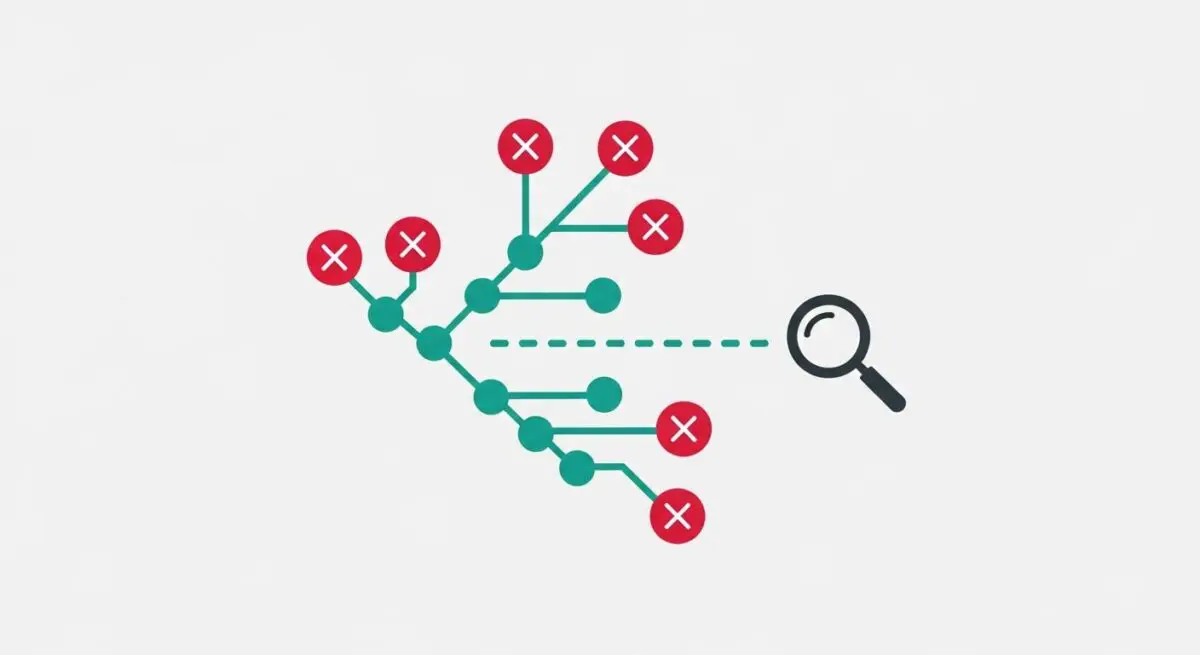
Tree shaking is a sophisticated form of dead-code elimination utilized during the build phase of web application development to optimize JavaScript bundles. Unlike traditional minification, which focuses on reducing the character count of the code, tree shaking analyzes the static dependency graph of an application to identify and exclude exports that are never imported or utilized by the entry point. This process relies fundamentally on the static nature of ES6 modules (import and export), which allows modern bundlers to determine code usage at compile-time rather than during execution.
In modern enterprise web architecture, applications frequently integrate extensive third-party libraries to perform specific tasks. Without tree shaking, the entirety of these libraries would be included in the client-side bundle, regardless of how much of the code is actually used. By “shaking” the dependency tree, developers ensure that only the functional units necessary for the application’s logic are shipped to the browser, significantly streamlining the critical rendering path and reducing resource consumption.
The Real-World Analogy
Imagine you are moving to a new office and hire a professional relocation service. Instead of packing every single item in your current building—including broken furniture, empty boxes, and outdated files—the movers only pack the specific items you have tagged for use in the new location. Tree shaking is that tagging and filtering process: it ensures your “moving truck” (the JavaScript bundle) is not weighed down by unnecessary weight (unused code) that would only slow down the process of setting up and becoming operational in your new space (rendering the webpage).
Why is Tree Shaking Critical for Website Performance and Speed Engineering?
Tree shaking is a fundamental pillar of performance engineering because it directly addresses the computational cost of JavaScript. Large bundles are not merely a network bottleneck; they impose a significant tax on the browser’s main thread during the parse, compile, and execution phases. By stripping away redundant code, tree shaking lowers the Total Blocking Time (TBT) and improves the Interaction to Next Paint (INP) by ensuring the main thread remains available for user interactions. Furthermore, reducing the overall network payload accelerates the Largest Contentful Paint (LCP), as critical resources reach the browser faster and compete less for bandwidth. In the era of AI-Search and mobile-first indexing, lean bundles are essential for maintaining high performance scores across low-power mobile devices.
Best Practices & Implementation
- Utilize ES6 Module Syntax: Ensure all internal code and third-party dependencies use import and export statements rather than CommonJS require(), as the latter is dynamic and prevents static analysis.
- Configure Side Effects: Explicitly define the sideEffects property in your package.json to inform the bundler which files can be safely pruned if their exports are not used.
- Opt for Modular Libraries: Prioritize libraries designed for tree shaking, such as lodash-es instead of the standard lodash, to ensure only the required utility functions are bundled.
- Audit Bundles Regularly: Use visualization tools like Webpack Bundle Analyzer to identify non-shakable dependencies and large modules that are inflating the final output.
Common Mistakes to Avoid
A frequent error is utilizing Babel configurations that transpile ES6 modules into CommonJS before the bundler has the opportunity to perform tree shaking. Another common mistake is the inclusion of libraries that modify global prototypes or contain hidden side effects; these patterns force the bundler to include the entire module to preserve functional integrity, effectively neutralizing the benefits of tree shaking.
Conclusion
Tree shaking is an essential optimization technique that minimizes JavaScript bloat by ensuring only active, necessary code is delivered to the client. Mastering this process is vital for maintaining superior performance metrics and efficient resource allocation in modern web development.