Executive Summary
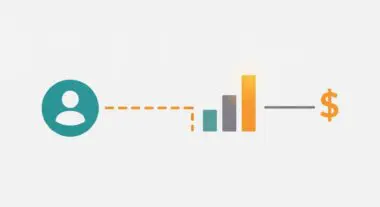
- Leverages supervised machine learning algorithms, such as XGBoost or Random Forest, to calculate the probability of user attrition based on historical behavioral telemetry.
- Facilitates the transition from reactive support to proactive retention by integrating predictive scores into automated API-driven workflows.
- Optimizes AI Content Ops by identifying high-risk segments for the programmatic generation of hyper-personalized re-engagement assets.
What is Churn Prediction?
Churn Prediction is a sophisticated predictive modeling technique used to identify customers or users who are likely to discontinue their relationship with a service or product. In the context of AI Automations and modern data engineering, it involves the deployment of supervised machine learning models that analyze historical datasets—including session logs, transaction history, and engagement metrics—to assign a probability score to each user profile. This process relies heavily on feature engineering, where raw data is transformed into meaningful indicators such as Recency, Frequency, and Monetary (RFM) values.
Technically, Churn Prediction functions as a binary classification problem. The model is trained on labeled data to recognize patterns that precede a “churn event.” Once deployed within an automation stack, these models process real-time data streams via ETL (Extract, Transform, Load) pipelines, allowing systems to flag at-risk accounts before the actual cessation of service occurs. This enables a shift from manual, retrospective analysis to automated, algorithmic intervention.
The Real-World Analogy
Imagine a sophisticated smoke detector installed in a commercial kitchen. It does not wait for a structural fire to consume the building before alerting the authorities. Instead, it continuously monitors the air for specific particulate concentrations and temperature fluctuations that deviate from the norm. When the sensors detect a specific threshold of smoke particles—even if no flame is visible—it automatically triggers the ventilation system and alerts the staff. In this analogy, the smoke particles are the behavioral data points (declining login frequency, reduced API calls), and the automated ventilation is the retention workflow triggered by the prediction model.
Why is Churn Prediction Critical for Autonomous Workflows and AI Content Ops?
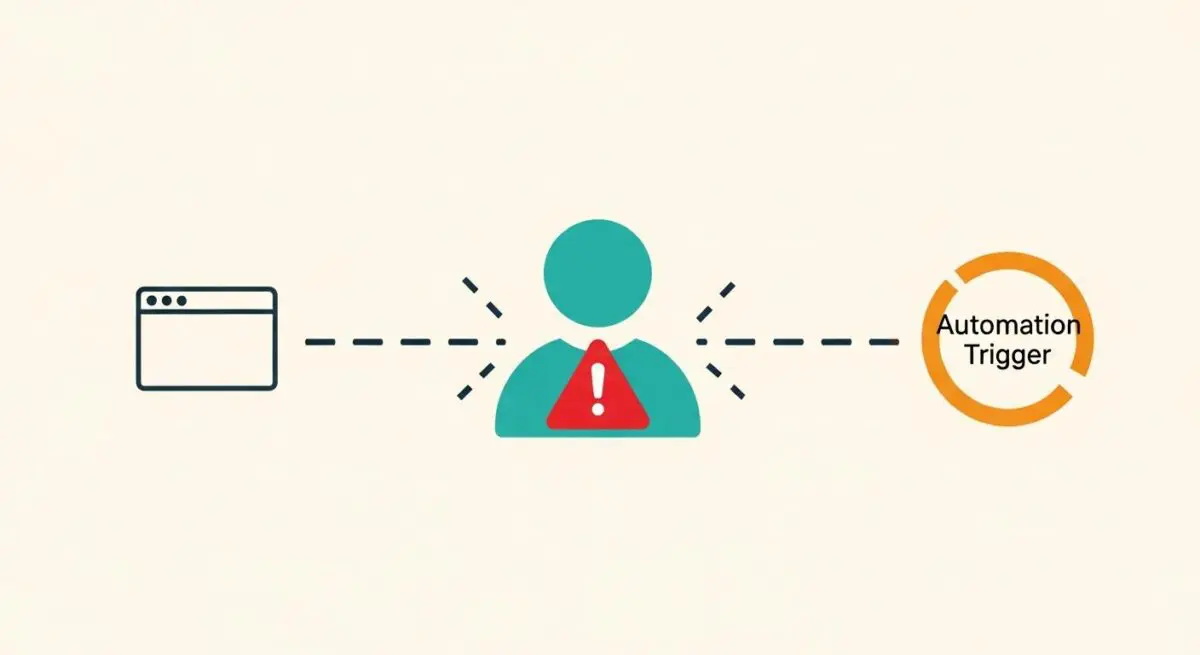
In the era of stateless automation and serverless architectures, Churn Prediction serves as a critical logic gate for resource allocation. By integrating prediction scores into autonomous workflows, organizations can execute high-precision interventions without human oversight. For instance, a high churn probability score can trigger a webhook that initiates a serverless function, which then queries an LLM to generate a personalized discount offer or a custom technical tutorial tailored to the user’s specific friction points.
For AI Content Ops and programmatic SEO, Churn Prediction allows for the dynamic adjustment of content delivery. Instead of serving generic content, the system can prioritize the generation of “sticky” content—such as advanced documentation or case studies—specifically for segments showing signs of disengagement. This maximizes the Lifetime Value (LTV) of the user base by automating the retention loop, ensuring that compute resources are focused on the users most likely to benefit from intervention, thereby optimizing the ROI of the entire automation stack.
Best Practices & Implementation
- Rigorous Feature Engineering: Incorporate non-obvious features such as the rate of change in login frequency (velocity) and the latency between customer support interactions to improve model sensitivity.
- Real-Time API Integration: Deploy models as microservices with RESTful endpoints to allow automation platforms (like Make.com or n8n) to fetch churn scores during active user sessions.
- Closed-Loop Automation: Ensure that every prediction triggers a specific, measurable action, such as updating a CRM property or injecting a personalized block into a dynamic web page.
- Continuous Model Monitoring: Implement automated retraining schedules to account for “data drift,” ensuring the model remains accurate as user behavior evolves over time.
Common Mistakes to Avoid
One frequent error is data leakage, where information from the future (e.g., a cancellation timestamp) is inadvertently included in the training set, leading to artificially high accuracy during testing but failure in production. Another mistake is ignoring class imbalance; since churners are typically a minority of the dataset, models may become biased toward predicting that no one will churn. Finally, many brands fail to automate the response to the prediction, leaving the data siloed in a dashboard rather than using it to drive immediate, programmatic action.
Conclusion
Churn Prediction is the foundational predictive layer that transforms static data into actionable intelligence within an AI-driven ecosystem. By automating the identification of at-risk users, technical teams can build resilient, self-optimizing retention engines that scale with the business.