Executive Summary
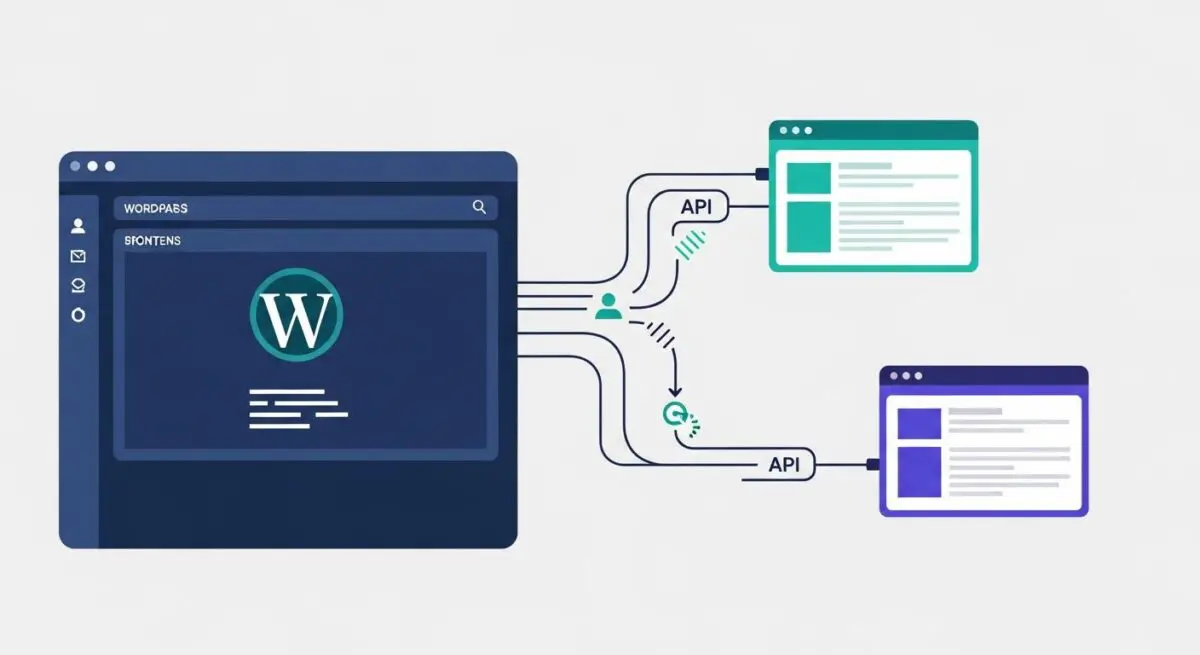
- Decouples the WordPress backend from the frontend presentation layer using REST or GraphQL APIs.
- Enables the use of modern JavaScript frameworks like React, Vue, or Next.js for superior frontend performance and flexibility.
- Enhances security and scalability by isolating the CMS administrative interface from the public-facing web server.
What is Headless WordPress?
Headless WordPress is a decoupled architectural approach where the WordPress core functions strictly as a back-end Content Management System (CMS). In this configuration, the traditional WordPress theme engine and frontend rendering layers are bypassed. Instead, content is authored and managed within the WordPress administrative interface and exposed as structured data via the WordPress REST API or WPGraphQL. This allows developers to utilize any frontend technology stack to consume and display the data, independent of the WordPress PHP-based template system.
By separating the content repository from the presentation layer, enterprise organizations can achieve greater flexibility in how content is distributed across multiple platforms, including high-performance web applications, mobile apps, and IoT devices. This architecture shifts the responsibility of rendering from the WordPress server to the client-side or a dedicated frontend server, facilitating a more modular, secure, and scalable web infrastructure that is not bound by the constraints of the standard WordPress Loop.
The Real-World Analogy
Imagine a high-end restaurant where the kitchen (the WordPress backend) is located in a separate building from the dining room (the frontend). The chefs focus entirely on preparing the food (content) without worrying about the decor, the music, or the table settings. When a customer places an order, the food is sent via a specialized delivery system (the API) to various locations: a formal dining hall, a casual cafe, or even a home delivery service. Each location presents the food differently based on its specific environment, but the source of the food remains the same high-quality kitchen.
How Headless WordPress Impacts Server Performance & Speed Engineering?
Headless architecture significantly alters the performance profile of a WordPress site. By removing the overhead of the WordPress theme hierarchy and template rendering, the server’s primary task becomes serving JSON data. This reduces Time to First Byte (TTFB) and minimizes server-side PHP processing. When paired with Static Site Generation (SSG) or Incremental Static Regeneration (ISR), the frontend can be pre-rendered into static HTML files, which are then served via a Content Delivery Network (CDN) at the edge.
This approach effectively eliminates the need for the server to query the database for every page load, drastically reducing the load on the hosting environment. Furthermore, it allows for independent scaling; the WordPress backend can be hosted on a secure, private server while the frontend scales globally across edge networks, ensuring high availability and rapid content delivery regardless of traffic spikes or complex frontend logic.
Best Practices & Implementation
- Utilize WPGraphQL: Implement GraphQL instead of the standard REST API to reduce over-fetching and under-fetching of data, allowing the frontend to request exactly what it needs in a single query, which optimizes payload sizes.
- Implement Robust Authentication: Use JSON Web Tokens (JWT) or OAuth2 to secure API endpoints, ensuring that sensitive data and administrative functions remain protected in a decoupled environment.
- Optimize for SSR/SSG: Deploy the frontend using frameworks that support Server-Side Rendering (SSR) or Static Site Generation to ensure search engines can crawl the content effectively and to improve Core Web Vitals.
- Decouple Media Handling: Utilize a dedicated Media Delivery Network or an external storage solution like Amazon S3 to handle assets, further reducing the storage and processing burden on the WordPress origin server.
Common Mistakes to Avoid
One frequent error is the loss of native WordPress functionality, such as plugin-driven features like contact forms or SEO metadata that rely on standard theme hooks; these must be manually re-implemented via the API. Another mistake is neglecting Search Engine Optimization (SEO); without proper server-side rendering, client-side only applications may suffer from indexing issues. Finally, over-engineering simple websites into a headless architecture can lead to unnecessary complexity and increased maintenance costs without providing a significant return on investment.
Conclusion
Headless WordPress offers a powerful, scalable solution for enterprise-level applications by decoupling content management from delivery. This architecture enhances security, improves performance through edge-based rendering, and provides developers with the freedom to use modern frontend frameworks.