



Executive Summary
- TBT quantifies the severity of main thread congestion by summing the blocking portions of all Long Tasks between FCP and TTI.
- A task is classified as “blocking” if it exceeds 50ms; TBT measures only the duration exceeding this threshold to reflect user-perceived latency.
- Optimizing TBT is a primary strategy for improving Interaction to Next Paint (INP) scores and ensuring efficient browser resource allocation.
What is Total Blocking Time (TBT)?
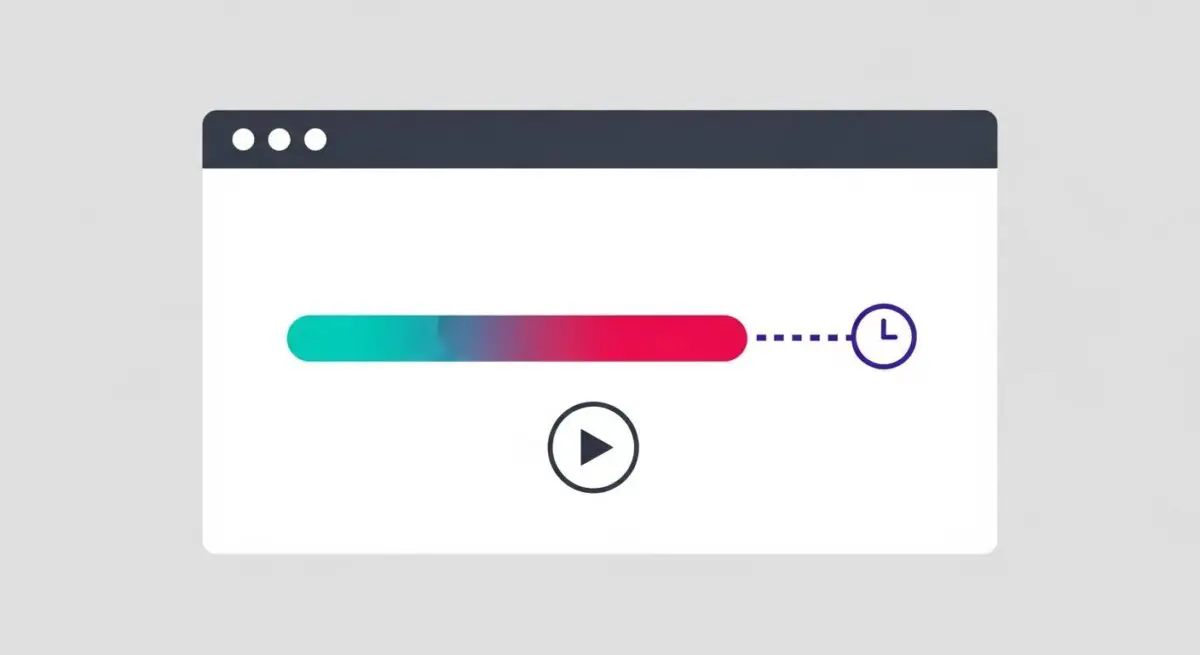
Total Blocking Time (TBT) is a sophisticated lab metric used to quantify the non-responsiveness of a web page during its loading phase. Specifically, it measures the total duration between First Contentful Paint (FCP) and Time to Interactive (TTI) where the main thread was occupied by “Long Tasks” for a period sufficient to prevent the browser from responding to user inputs, such as mouse clicks, screen taps, or keyboard presses.
In technical terms, any JavaScript task that executes for longer than 50 milliseconds is considered a Long Task. TBT is calculated by summing the “blocking” portion of these tasks. For instance, if a task runs for 120ms, the first 50ms are considered a grace period for the browser to maintain responsiveness, while the remaining 70ms contribute to the TBT. By aggregating these excess durations, TBT provides a clear picture of how heavily the main thread is taxed by script execution and rendering processes.
The Real-World Analogy
Imagine a busy bank with a single teller. If the teller is processing a complex mortgage application that takes 30 minutes to complete, any other customer who walks in must wait. Even if a customer only needs a 30-second balance inquiry, they are effectively “blocked” by the long task currently occupying the teller. In this scenario, the 30-minute application is the Long Task, and the time the teller is unavailable to assist new customers represents the Total Blocking Time. To improve service, the bank would need to break that large application into smaller, 5-minute segments, allowing the teller to check for new customers between each segment.
Why is Total Blocking Time (TBT) Important for SEO?
While TBT is not a direct Core Web Vital (CWV) field metric, it serves as the most critical lab proxy for Interaction to Next Paint (INP). Because Google utilizes page experience as a significant ranking signal, a high TBT score indicates a high probability of poor user experience, which can negatively influence organic search performance. High TBT often correlates with high bounce rates, as users perceive the page as frozen or broken when their interactions do not yield immediate visual feedback.
From a technical SEO and crawling perspective, excessive TBT suggests inefficient JavaScript execution. This can lead to rendering bottlenecks where search engine bots may struggle to process the full content of a page within their allocated crawl budget. By reducing TBT, we at Andres SEO Expert ensure that the browser’s main thread remains available for critical rendering paths and user interactions, thereby optimizing both the user journey and the site’s indexability.
Best Practices & Implementation
- Code Splitting and Tree Shaking: Implement granular code splitting to ensure that only the JavaScript necessary for the initial viewport is loaded and executed, reducing the volume of code the main thread must parse.
- Optimize Third-Party Script Execution: Audit all third-party tags (e.g., GTM, analytics, social widgets) and use async or defer attributes, or offload them to a Web Worker using libraries like Partytown.
- Break Up Long Tasks: Use requestIdleCallback or setTimeout to yield the main thread back to the browser, allowing it to handle pending user inputs between heavy execution blocks.
- Minimize Main Thread Work: Reduce the complexity of CSS selectors and avoid large, complex layout shifts that force the browser to perform expensive recalculations during the loading window.
Common Mistakes to Avoid
One of the most frequent errors is the over-reliance on monolithic JavaScript bundles that execute synchronously on page load. Another common mistake is the improper implementation of client-side rendering (CSR) without adequate hydration strategies, which often results in a visually complete page that remains unresponsive for several seconds.
Conclusion
Total Blocking Time is an essential diagnostic metric for identifying and mitigating main thread bottlenecks. By prioritizing the reduction of long tasks, technical teams can significantly enhance page responsiveness and secure a competitive advantage in search engine rankings.