Executive Summary
- URL structure dictates the hierarchical organization of a website, directly influencing how search engine crawlers parse and index content.
- Semantic, keyword-rich URLs improve relevance signals and enhance user trust, leading to higher click-through rates (CTR) in SERPs.
- Optimized pathing and the elimination of excessive dynamic parameters reduce crawl depth and prevent duplicate content issues.
What is URL Structure?
URL structure refers to the syntax and organization of a Uniform Resource Locator (URL), which serves as the unique address for a specific resource on the internet. A technically sound URL is composed of several components: the protocol (e.g., HTTPS), the domain name (including the TLD), and the path, which often includes directories and a specific slug. From a technical SEO perspective, the structure should follow a logical hierarchy that reflects the site’s information architecture, adhering to the standards defined in RFC 3986.
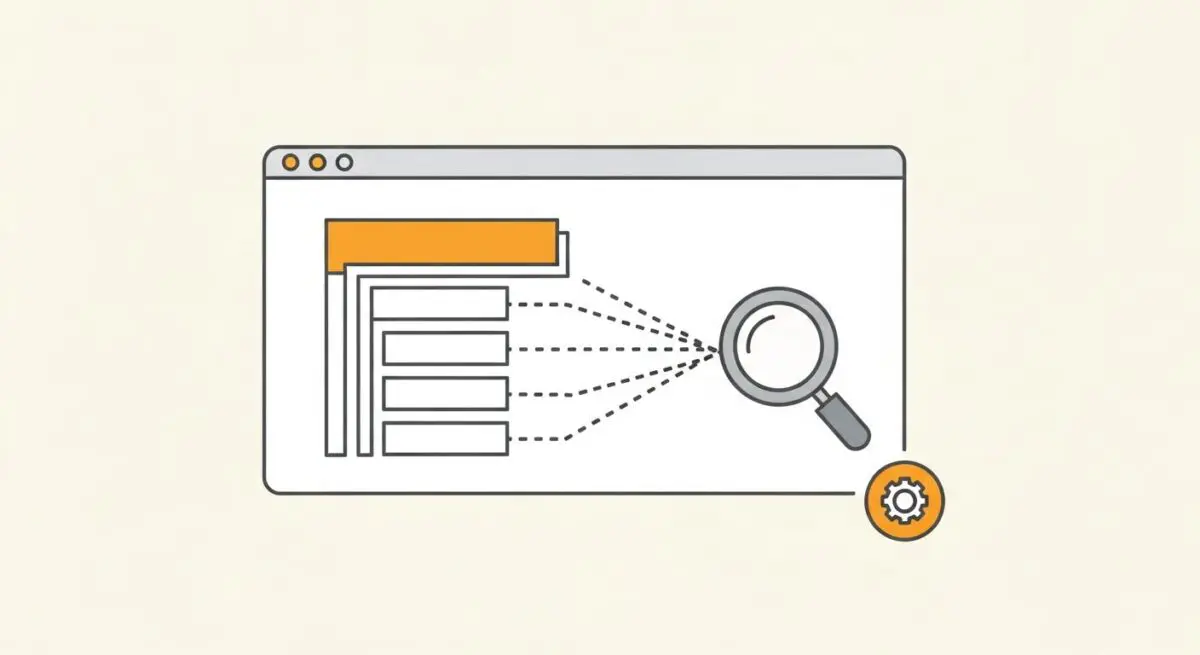
Beyond simple identification, the URL structure provides semantic context to both users and search engines. It acts as a map for the website’s content, where each segment of the path represents a layer of the site’s taxonomy. Effective URL design prioritizes readability, using hyphens to separate words and avoiding complex strings of dynamic parameters that can obscure the content’s purpose and hinder programmatic accessibility.
The Real-World Analogy
Imagine a massive corporate headquarters with thousands of offices. If the building has no clear numbering system and rooms are labeled with random strings of numbers like “Room-8293-XJ-92,” finding a specific department becomes nearly impossible for visitors and mail carriers alike. However, if the building uses a logical structure—such as “Floor 4 / Marketing / Creative Director”—anyone can immediately understand where they are and what happens in that room. In this analogy, the URL structure is the building’s signage and directory system, ensuring that search engine “mail carriers” can efficiently deliver users to the correct destination.
Why is URL Structure Important for SEO?
URL structure is a foundational element of technical SEO because it influences crawlability, indexing, and user experience. Search engine bots use the URL path to understand the relationship between different pages; a clear hierarchy allows crawlers to identify parent-child relationships, which aids in the distribution of link equity (PageRank) across the domain. Furthermore, URLs often appear in the search engine results pages (SERPs) as part of the snippet. A clean, descriptive URL provides a positive UX signal, confirming to the user that the page is relevant to their query, which can significantly improve organic click-through rates.
Additionally, well-structured URLs facilitate easier tracking and data analysis in tools like Google Search Console and Google Analytics. By grouping content into logical subfolders (e.g., /blog/ or /products/), SEO professionals can perform segmented analysis to determine which areas of the site are performing best. Conversely, poor URL structures—such as those with excessive nesting or redundant parameters—can lead to “crawl traps,” where bots waste resources on infinite loops or duplicate versions of the same content, ultimately diluting the site’s ranking potential.
Best Practices & Implementation
- Use Hyphens, Not Underscores: Search engines treat hyphens as word separators, whereas underscores are often treated as alphanumeric characters that join words together, potentially confusing keyword recognition.
- Maintain a Shallow Hierarchy: Aim for a flat URL structure where possible. Excessive subdirectories (e.g., /category/sub-category/item/detail/index.html) increase crawl depth and can signal to search engines that the content is less important.
- Implement Lowercase Strings: URLs are case-sensitive on many server configurations (particularly Linux-based systems). Standardizing all URLs to lowercase prevents 404 errors and duplicate content issues caused by inconsistent casing.
- Incorporate Primary Keywords: Include the target keyword in the slug to provide a clear relevance signal, but avoid keyword stuffing, which can appear spammy and trigger algorithmic filters.
Common Mistakes to Avoid
One frequent error is the inclusion of session IDs or unnecessary dynamic parameters (e.g., ?sessionid=123) in the URL, which creates unique URLs for the same content and leads to massive duplicate content issues. Another common mistake is failing to implement 301 redirects when changing a URL structure; this results in a total loss of accumulated link equity and a surge in 404 errors. Finally, many webmasters neglect to keep URLs concise, creating long, rambling strings that get truncated in search results and discourage user engagement.
Conclusion
A logical and semantic URL structure is essential for maximizing crawl efficiency and enhancing user trust. By prioritizing a clean, hierarchical design, technical SEOs ensure that both search engines and users can navigate and understand the site’s content with precision.