Executive Summary
- Eliminates render-blocking JavaScript by allowing the browser to parse HTML and download scripts in parallel.
- Improves critical Core Web Vitals, specifically First Contentful Paint (FCP) and Largest Contentful Paint (LCP).
- Guarantees script execution order, ensuring dependencies are resolved only after the DOM is fully constructed.
What is Defer Script Loading?
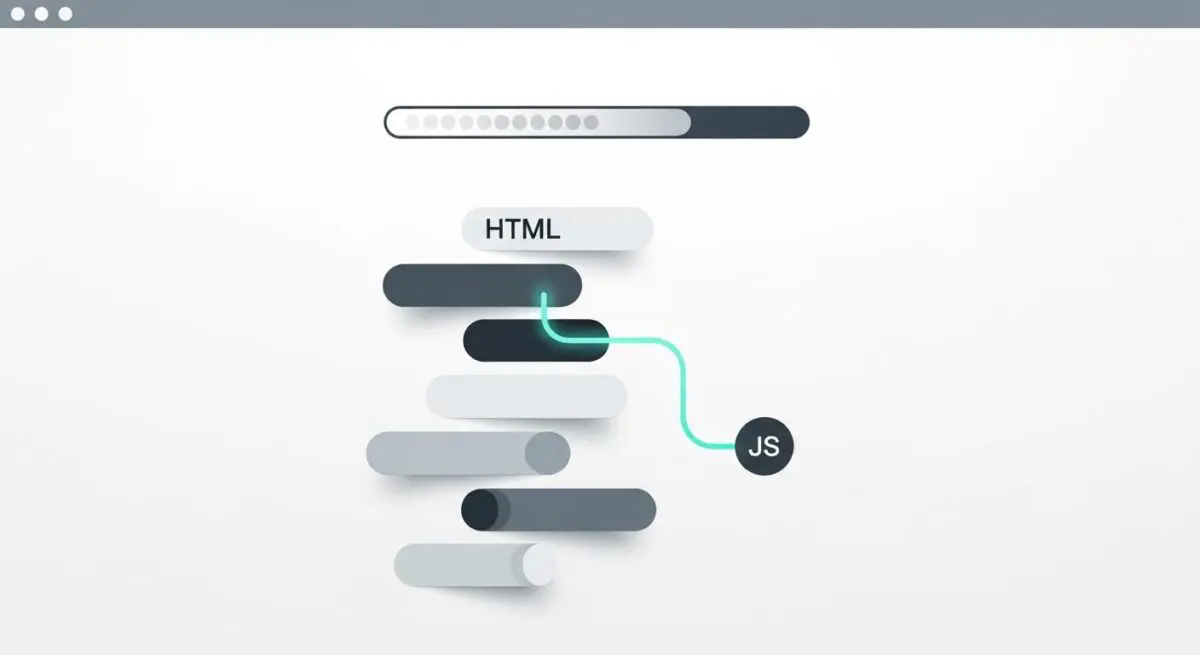
Defer script loading is a browser-level optimization technique implemented via the defer attribute within the HTML <script> tag. When a browser encounters a standard script, it must pause HTML parsing, fetch the script, and execute it before continuing. This synchronous behavior creates a “render-blocking” effect that delays the visual rendering of the page. By applying the defer attribute, the browser is instructed to download the script file in the background while simultaneously continuing to parse the DOM (Document Object Model).
Unlike the async attribute, which executes the script as soon as it is downloaded, defer ensures that the script is only executed after the HTML document has been fully parsed but before the DOMContentLoaded event fires. This mechanism is essential for scripts that require the full DOM to be present or for maintaining a specific execution order among multiple scripts, as deferred scripts execute in the order they appear in the source code.
The Real-World Analogy
Imagine you are assembling a complex piece of furniture using a printed manual. In a standard loading scenario, you reach a step that requires a specialized tool you do not have. You stop everything, leave your house, buy the tool, come back, and only then continue to the next page of the manual. This is render-blocking. Defer script loading is like having an assistant who sees you will need that tool later; they go to the store to get it while you continue following the manual and assembling the frame. By the time you reach the final steps where the tool is actually required, the assistant has returned and the tool is ready for use, allowing the assembly to finish without any idle waiting time.
Why is Defer Script Loading Critical for Website Performance and Speed Engineering?
In modern speed engineering, the primary goal is to minimize the time the main thread is occupied by non-critical tasks. Deferring scripts is critical because it directly influences Core Web Vitals, particularly First Contentful Paint (FCP) and Largest Contentful Paint (LCP). By moving JavaScript execution out of the critical rendering path, the browser can render the visual elements of a page much faster, reducing the perceived load time for the user.
Furthermore, it optimizes Total Blocking Time (TBT). Since the script execution is postponed until the DOM is ready, the main thread remains free to handle user interactions and layout calculations during the initial load phase. For enterprise-level applications with heavy third-party tracking or complex UI logic, deferring these scripts ensures that the functional layer of the site does not impede the visual delivery of content.
Best Practices & Implementation
- Prioritize Non-Critical Scripts: Apply the
deferattribute to all scripts that are not essential for the initial above-the-fold rendering, such as analytics, social media widgets, and secondary UI enhancements. - Placement in the Head: Modern best practices suggest placing deferred scripts in the
<head>section. This allows the browser to discover and begin downloading the resource as early as possible without blocking the subsequent HTML parsing. - Maintain Dependency Order: Use
deferinstead ofasyncwhen you have multiple scripts that depend on each other, asdeferpreserves the sequence defined in the HTML source. - Combine with Resource Hints: Use
rel="preconnect"orrel="dns-prefetch"for third-party scripts to further reduce the latency involved in establishing a connection before the deferred download begins.
Common Mistakes to Avoid
One frequent error is applying the defer attribute to scripts that are required for critical layout calculations or immediate user interactions, which can lead to a flash of unstyled content or broken functionality. Another mistake is using defer on inline scripts; in most modern browsers, the defer attribute is ignored if the src attribute is not present. Finally, developers often confuse defer with async, leading to race conditions where scripts execute out of order and break site dependencies.
Conclusion
Defer script loading is a fundamental pillar of performance architecture that balances resource fetching with rendering efficiency. By strategically delaying script execution, developers can significantly enhance user experience and search engine visibility through optimized Core Web Vitals.