



Executive Summary
- Nameservers function as the authoritative directory within the Domain Name System (DNS), mapping human-readable hostnames to numerical IP addresses.
- The geographic distribution and network topology of nameservers (Anycast vs. Unicast) directly influence the initial Time to First Byte (TTFB) for WordPress sites.
- Correct delegation of nameservers is foundational for implementing Edge Computing, Web Application Firewalls (WAF), and Content Delivery Networks (CDN).
What is Nameservers?
Nameservers are specialized servers within the Domain Name System (DNS) hierarchy that maintain the authoritative records for a specific domain. When a user requests a WordPress site, the nameservers are responsible for providing the IP address of the web server where the site is hosted. They act as the bridge between human-friendly URLs and the machine-readable IP addresses required for network routing. In a managed WordPress environment, nameservers are typically managed by the domain registrar, the hosting provider, or a third-party DNS service.
Technically, nameservers store the DNS zone file, which contains various resource records such as A (Address), AAAA (IPv6), MX (Mail Exchange), and CNAME (Canonical Name). When a recursive DNS resolver queries a domain, the nameservers respond with the necessary data to direct the traffic. This process, known as DNS resolution, is the very first step in any web request and is critical for the connectivity and security of the WordPress ecosystem.
The Real-World Analogy
Imagine a massive international airport with thousands of gates. A traveler (the web browser) arrives at the main terminal and knows they need to find “Flight WP-101” (the domain name). The Nameserver is the high-tech, authoritative information kiosk at the center of the terminal. It doesn’t fly the plane, but it is the only entity that knows exactly which gate (the IP address) that specific flight is parked at. Without the kiosk, the traveler would wander the terminal indefinitely, unable to find their destination, regardless of how fast the airplane itself might be.
How Nameservers Impacts Server Performance & Speed Engineering?
Nameservers are the primary gatekeepers of the “DNS Lookup” phase, which is the initial component of the critical rendering path. If a nameserver is slow to respond or located geographically far from the user, it adds significant latency before a single byte of WordPress data is even requested from the origin server. This delay is often overlooked in standard performance audits but can contribute hundreds of milliseconds to the total load time.
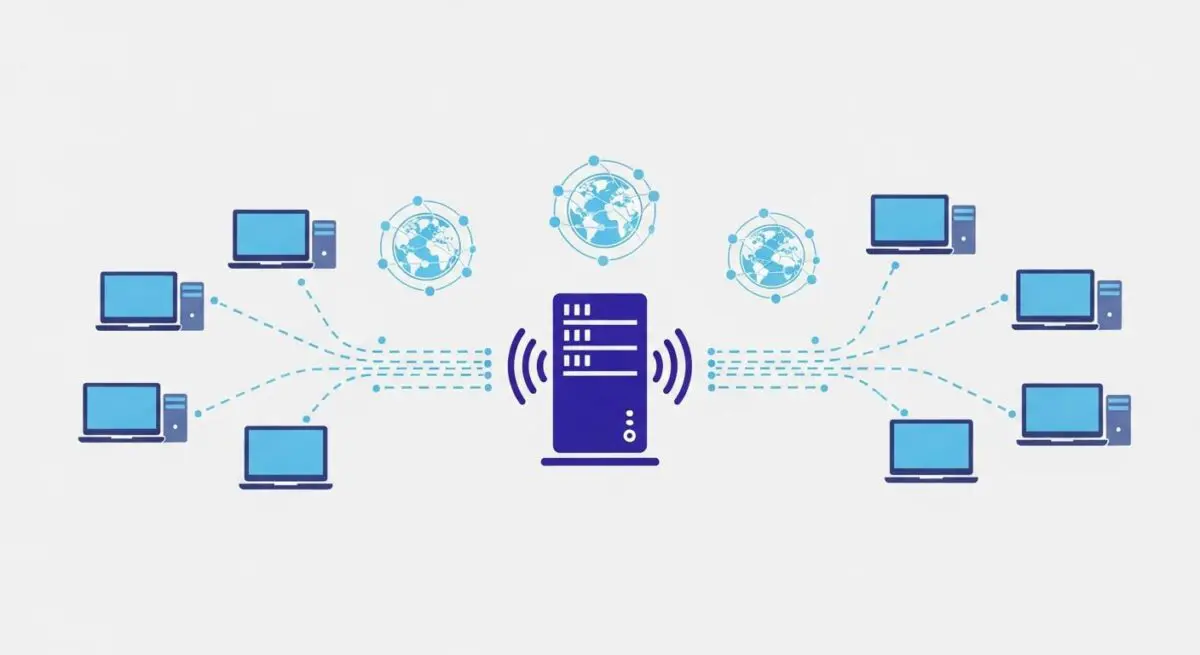
High-performance WordPress architectures utilize Anycast DNS networks. Unlike Unicast, which routes all queries to a single physical server, Anycast announces the same IP address from multiple global nodes. This ensures that the DNS query is handled by the node closest to the user, drastically reducing latency and improving the Time to First Byte (TTFB). Furthermore, efficient nameserver configurations allow for shorter propagation times and better integration with Edge SEO and security layers like Cloudflare or Sucuri.
Best Practices & Implementation
- Utilize Anycast DNS: Deploy third-party authoritative nameservers (e.g., Cloudflare, Amazon Route 53) to ensure global redundancy and sub-30ms resolution times.
- Optimize TTL (Time to Live) Settings: Set higher TTL values (e.g., 86400 seconds) for stable records to maximize browser and ISP caching, while lowering them only during planned migrations.
- Maintain DNS Hygiene: Regularly audit zone files to remove redundant or “orphan” records that can lead to security vulnerabilities or resolution overhead.
- Implement DNSSEC: Enable Domain Name System Security Extensions to protect your WordPress site from DNS spoofing and cache poisoning attacks.
Common Mistakes to Avoid
One frequent error is “Lame Delegation,” where a domain’s registrar points to nameservers that do not actually host the domain’s zone file, resulting in “NXDOMAIN” errors or intermittent connectivity. Another common mistake is using the default, non-optimized nameservers provided by budget registrars, which often lack the global infrastructure needed for enterprise-level WordPress performance. Finally, many administrators fail to account for TTL propagation, leading to extended downtime during server migrations because old IP addresses remain cached in global resolvers.
Conclusion
Nameservers are the foundational infrastructure of DNS resolution, dictating the speed and reliability of the initial connection to a WordPress site. Proper selection and configuration of authoritative nameservers are essential for achieving elite server performance and global scalability.