



Executive Summary
- Data lineage provides a comprehensive map of data movement, documenting its origin, transformations, and final destination across complex automation stacks.
- In AI content operations, it ensures the integrity of LLM inputs by verifying the provenance and freshness of source data.
- Robust lineage tracking is essential for debugging stateless API workflows and maintaining compliance in regulated programmatic SEO environments.
What is Data Lineage?
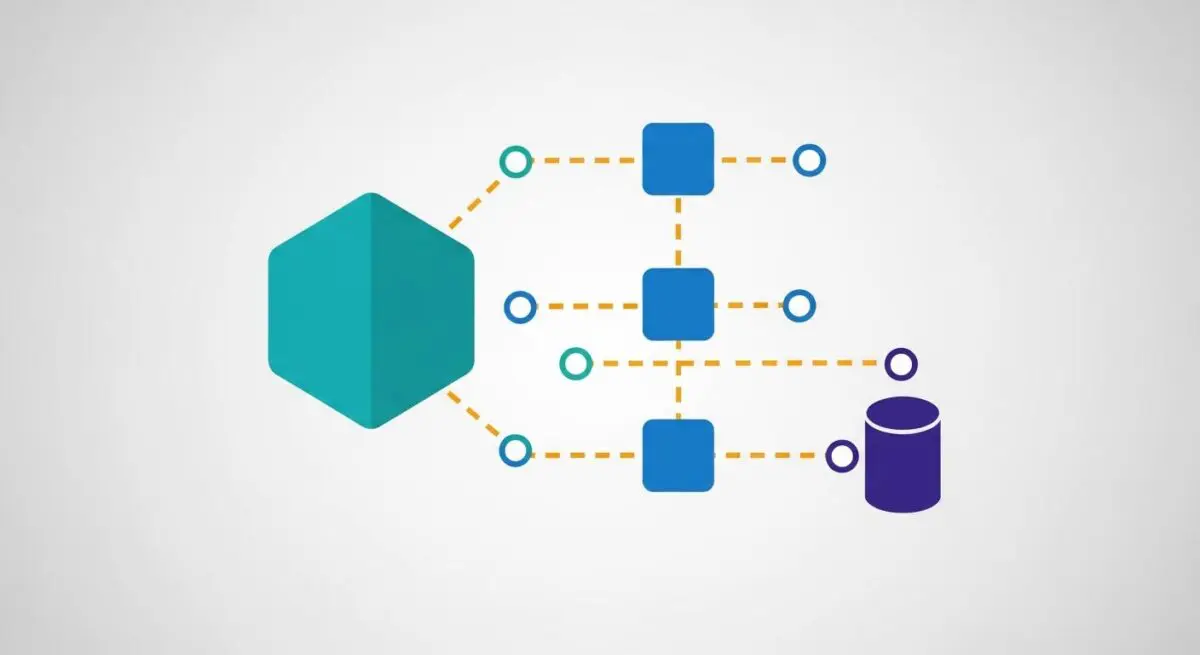
Data lineage refers to the lifecycle of data, encompassing its origin, the specific transformations it undergoes, and its ultimate destination within a technical ecosystem. In the context of AI automations and programmatic SEO, it serves as a metadata-driven audit trail that records how data points move between APIs, databases, and large language models (LLMs). It provides visibility into the why and how of data changes, enabling engineers to trace errors back to specific nodes in a pipeline.
Unlike simple data mapping, lineage focuses on the temporal and functional evolution of data. It involves capturing metadata at every hop—such as timestamp, source ID, transformation logic, and destination schema. This is critical for maintaining a single source of truth in distributed systems where data is frequently mutated by middleware or serverless functions before reaching its final output.
The Real-World Analogy
Imagine a high-end watch manufacturer. To ensure quality and authenticity, every single component—from the smallest gear to the sapphire crystal—is tracked. The manufacturer knows exactly which mine the metal came from, which technician polished the gear, and which assembly line put it together. If a watch fails, they do not just see a broken watch; they can trace the failure back to a specific batch of raw material or a specific machine calibration. Data lineage is that tracking system for your information, ensuring you know exactly where every byte originated before it reached your AI prompt.
Why is Data Lineage Critical for Autonomous Workflows and AI Content Ops?
In autonomous workflows, data is often passed through multiple stateless functions. Without lineage, identifying the root cause of a hallucination or a formatting error becomes nearly impossible. Data lineage allows for the validation of data provenance, ensuring that an AI model is generating content based on verified, high-authority sources rather than corrupted or outdated cached data. Furthermore, it optimizes API payload efficiency by identifying redundant transformations, allowing architects to prune unnecessary steps in the pipeline. For programmatic SEO, it ensures that thousands of generated pages remain consistent with their underlying datasets, facilitating rapid recovery if a source API changes its schema.
Best Practices & Implementation
- Implement automated metadata capture at every API gateway and webhook listener to log the state of the payload.
- Utilize unique Trace IDs across distributed systems to link disparate logs into a cohesive lineage map.
- Maintain a versioned data dictionary to track how schemas evolve over time, preventing silent failures during transformations.
- Integrate lineage visualization tools to allow SEO and Content Ops teams to audit the data flow without manual SQL queries.
Common Mistakes to Avoid
One frequent error is tracking only the start and end points of a workflow while ignoring intermediate transformations, which obscures the logic where most errors occur. Another mistake is relying on manual documentation rather than automated logging, leading to outdated lineage maps that do not reflect the current state of the production environment. Finally, many organizations fail to include data freshness as a lineage attribute, resulting in AI outputs based on stale information.
Conclusion
Data lineage is the foundational infrastructure for reliable, scalable AI automations. By providing a transparent audit trail of data evolution, it ensures technical integrity and operational accountability in complex content pipelines.