Executive Summary
- Iterative Reasoning Loops: Transitioning from single-shot prompting to recursive cycles of planning, execution, and self-correction.
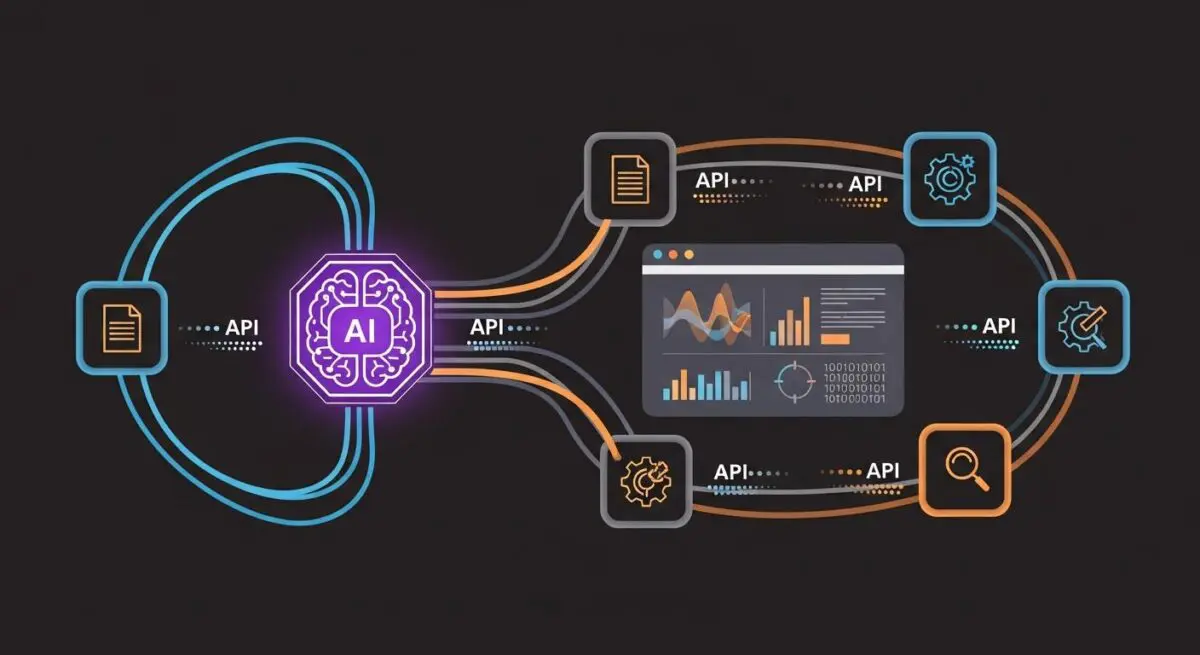
- Autonomous Tool Integration: Enabling AI agents to independently select and execute external APIs, code interpreters, and retrieval systems.
- Multi-Agent Orchestration: Deploying specialized LLM instances that collaborate through defined state machines to solve complex enterprise problems.
What is Agentic Workflow?
An agentic workflow represents a fundamental shift in how Large Language Models (LLMs) are deployed within a technical ecosystem. Unlike traditional zero-shot prompting, where a model generates a response in a single pass, an agentic workflow utilizes iterative loops to refine outputs.
This architecture treats the LLM as a reasoning engine rather than a simple text generator. It incorporates specific design patterns such as reflection, planning, tool use, and multi-agent collaboration to achieve higher levels of accuracy and autonomy.
In a modern tech stack, an agentic workflow functions as a sophisticated orchestration layer. It manages state, handles memory across multiple steps, and integrates with external data sources to ensure that the AI’s output is grounded in real-time information and logical consistency.
The core of this concept lies in the ability of the system to self-correct. By implementing a reflection step, the agent can evaluate its own initial draft against a set of constraints, identify errors, and regenerate a superior version without human intervention.
The Real-World Analogy
Consider the difference between a single-task freelancer and a high-level project management office (PMO). A zero-shot prompt is like sending a one-sentence email to a freelancer and accepting the first draft they return, regardless of errors.
An agentic workflow is the PMO. It receives a high-level objective, breaks it down into a detailed project plan, assigns specific sub-tasks to specialized departments, and subjects every deliverable to a rigorous quality assurance process before final delivery.
Just as a PMO uses specialized tools and iterative feedback to ensure a project meets enterprise standards, an agentic workflow uses specialized agents and recursive loops to ensure AI outputs meet technical requirements.
How Agentic Workflow Drives Strategic Growth & Market Competitiveness?
Agentic workflows significantly reduce the cost of cognitive labor by automating complex, multi-step processes that previously required constant human oversight. This efficiency directly impacts the bottom line by lowering the operational overhead associated with content production, data analysis, and customer support.
From a strategic perspective, these workflows enhance market competitiveness by increasing the speed of execution. Organizations can deploy autonomous agents to monitor market trends, analyze competitor pricing, and adjust marketing strategies in real-time, providing a decisive temporal advantage.
In the realm of customer acquisition, agentic workflows optimize the conversion path by providing hyper-personalized interactions. Agents can navigate complex lead qualification scripts, access CRM data to tailor responses, and schedule meetings, thereby reducing Customer Acquisition Cost (CAC) through higher conversion rates.
Data integrity is another critical area where agentic workflows provide a competitive edge. By utilizing automated verification loops, agents can cross-reference generated insights with internal databases and external APIs, ensuring that strategic decisions are based on validated, high-fidelity data.
Furthermore, the scalability of agentic systems allows enterprise brands to handle massive volumes of complex queries without a linear increase in headcount. This decoupling of output volume from human labor costs is essential for maintaining margins in an AI-driven economy.
Finally, the implementation of these workflows fosters a culture of continuous improvement. As agents log their reasoning paths and reflection steps, developers gain granular visibility into the AI’s decision-making process, allowing for precise tuning and optimization of the entire business logic.
Strategic Implementation & Best Practices
- Implement State Management: Use frameworks like LangGraph or specialized state machines to maintain context and track the progress of multi-step agentic tasks across long-running processes.
- Define Granular Tool Schemas: Provide agents with clearly defined API specifications and tool descriptions to minimize invocation errors and ensure the AI selects the correct utility for each sub-task.
- Incorporate Human-in-the-Loop (HITL): Designate specific checkpoints where a human expert must approve or edit the agent’s plan, especially for high-stakes decisions or external-facing communications.
- Optimize for Latency and Cost: Balance the number of iterative loops with the associated token costs and response times, using smaller models for reflection and larger models for complex reasoning.
- Establish Robust Observability: Deploy monitoring tools to track agent trajectories, identifying where loops fail or where the agentic drift occurs to continuously refine the underlying prompts and logic.
Common Pitfalls & Strategic Mistakes
One frequent error is the creation of infinite loops, where an agent repeatedly fails a reflection step and attempts to correct itself indefinitely. This leads to excessive API costs and system timeouts without producing a viable result.
Another mistake is the lack of strict boundaries for tool use. Without proper sandboxing and permissioning, an autonomous agent might execute unintended actions within a production environment, leading to data corruption or security vulnerabilities.
Enterprise brands also often suffer from over-engineering. Implementing a complex multi-agent system for a task that could be solved with a simple structured prompt or a basic RAG pipeline results in unnecessary latency and maintenance overhead.
Conclusion
Agentic workflows represent the next evolution of AI integration, moving from static interactions to dynamic, self-correcting systems. By mastering these iterative patterns, businesses can achieve unprecedented levels of operational efficiency and data-driven strategic agility.