Executive Summary
- Data clean rooms provide a secure, privacy-safe environment for multi-party data collaboration without exposing raw personally identifiable information (PII).
- They enable deterministic attribution and audience overlap analysis in a post-cookie ecosystem by utilizing secure multi-party computation.
- Implementation ensures compliance with global regulations like GDPR and CCPA through differential privacy and strict query governance.
What is Data Clean Rooms?
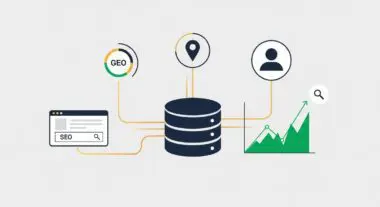
Data Clean Rooms (DCRs) are secure, decentralized data architectures that allow multiple parties—typically advertisers and publishers—to join their first-party datasets for collective analysis under a strictly defined set of permissions. In the modern MarTech stack, we at Andres SEO Expert view DCRs as the primary solution to the signal loss caused by the deprecation of third-party cookies and the rise of privacy-centric operating system updates. By providing a neutral space where data is processed but never shared in its raw form, DCRs facilitate advanced analytics while maintaining the highest standards of data security.
Technically, a Data Clean Room functions by ingesting encrypted or hashed first-party data from various sources. It then applies privacy-enhancing technologies (PETs) such as differential privacy, k-anonymity, and secure multi-party computation (SMPC). These mechanisms ensure that the output of any query is an aggregate insight rather than individual-level data. This allows brands to perform complex operations like reach and frequency analysis, cross-platform attribution, and propensity modeling without ever gaining access to the underlying PII of the partner’s audience.
The Real-World Analogy
To understand a Data Clean Room, imagine two high-security banks that wish to identify how many customers they have in common without revealing their full client lists to each other. They hire a neutral, blindfolded auditor and place their encrypted ledgers into a secure, transparent vault. The auditor, who can only see the mathematical intersections and not the names on the ledgers, performs the count and writes only the final number on a slip of paper. The banks receive the total count of shared customers and their average account balance, but neither bank ever sees a single name or account number from the other’s list. The vault is the Data Clean Room, and the blindfolded auditor is the privacy-preserving algorithm.
How Data Clean Rooms Impacts Marketing ROI & Data Attribution?
Data Clean Rooms directly influence Marketing ROI by restoring the ability to perform closed-loop attribution in an increasingly fragmented digital landscape. As traditional tracking mechanisms fail, DCRs allow brands to match their CRM conversion data with publisher exposure data (e.g., within Google ADH or Amazon Marketing Cloud) to determine the exact impact of specific media buys. This deterministic matching capability eliminates the guesswork inherent in probabilistic modeling, leading to more accurate Customer Acquisition Cost (CAC) calculations and more efficient budget allocation across programmatic channels.
Furthermore, DCRs enhance data integrity by providing a single source of truth for audience overlap. By identifying the specific segments that convert across different platforms, marketers can refine their lookalike modeling and suppression lists. This prevents redundant ad spend on existing customers and focuses the budget on high-propensity prospects, significantly improving the Return on Ad Spend (ROAS). In the era of AI-driven marketing, the high-quality, privacy-compliant data generated within a clean room serves as the foundational input for training predictive models that forecast Lifetime Value (LTV) with high precision.
Strategic Implementation & Best Practices
- Standardize Data Schemas: Before ingestion, ensure that all first-party data sources are normalized and follow a consistent schema to facilitate seamless joins and reduce computational errors within the clean room environment.
- Implement Differential Privacy: Apply mathematical noise to datasets to ensure that individual identities cannot be reverse-engineered from aggregate reports, maintaining compliance with GDPR and CCPA.
- Establish Query Governance: Define strict SQL-based query permissions and “output filters” that automatically block any results where the sample size falls below a specific privacy threshold (e.g., a minimum of 50 users).
- Integrate with the Broader Stack: Ensure the clean room is not a silo; connect the aggregate insights directly into your Customer Data Platform (CDP) or Demand-Side Platform (DSP) to automate audience activation.
Common Pitfalls & Strategic Mistakes
One frequent error enterprise brands make is treating the Data Clean Room as a static storage repository rather than an active analytical layer. Without a clear hypothesis or specific business questions, the cost of maintaining the infrastructure often outweighs the strategic value derived. Another significant mistake is the lack of alignment between legal, privacy, and data engineering teams. If privacy thresholds are set too conservatively without technical justification, the resulting data may be too aggregated to provide actionable insights, leading to inefficient strategic decision-making.
Conclusion
Data Clean Rooms are the cornerstone of a privacy-first marketing architecture, enabling secure data collaboration and high-fidelity attribution. By bridging the gap between data utility and consumer privacy, they provide the technical framework necessary for scalable, data-driven growth in a post-cookie world.