Executive Summary
- First-party data is information collected directly by an organization from its own audience, ensuring maximum accuracy, relevance, and ownership.
- It serves as the primary solution for signal loss in a cookieless environment, enabling robust attribution and personalized customer experiences.
- Strategic integration of first-party data within a Customer Data Platform (CDP) facilitates advanced machine learning applications and predictive analytics.
What is First-Party Data?
First-party data refers to the information an organization collects directly from its own sources, including websites, mobile applications, CRM systems, social media profiles, and offline points of sale. Unlike third-party data, which is aggregated by external entities with no direct relationship to the user, first-party data is characterized by high integrity, transparency, and explicit user consent. In the modern MarTech stack, this data serves as the foundational layer for identity resolution and audience orchestration.
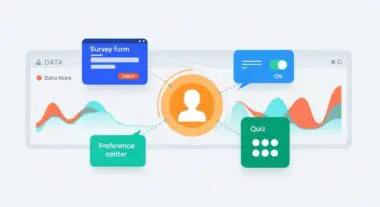
From a technical perspective, first-party data is captured through direct interactions, such as form submissions, transactional history, behavioral signals (clicks, time-on-site), and preference centers. As privacy regulations like GDPR and CCPA tighten and major browsers deprecate third-party cookies, first-party data has become the essential currency for digital marketing. It allows for the creation of a persistent identifier that tracks the customer journey across multiple touchpoints without relying on external tracking mechanisms.
The Real-World Analogy
Consider the difference between a high-end restaurant maintaining a private guest book versus purchasing a generic list of local residents. The guest book contains specific details: which table the guest prefers, their dietary restrictions, and how often they visit. This is first-party data. It is accurate, volunteered by the guest, and allows the restaurant to provide a bespoke experience that increases loyalty. Conversely, a purchased list only provides vague assumptions about potential customers. In the digital landscape, first-party data is that private guest book, providing the precise insights necessary to serve the right content to the right user at the optimal time.
How First-Party Data Impacts Marketing ROI & Data Attribution?
First-party data significantly enhances Marketing ROI by eliminating the inefficiencies associated with broad-match targeting and data decay. By leveraging internal data, organizations can build high-fidelity Lookalike Audiences (LALs) that mirror their most profitable customers, thereby reducing Customer Acquisition Cost (CAC). Furthermore, first-party data is critical for closed-loop attribution. When a user is identified via a unique hash (such as an email address or user ID), marketers can map the entire conversion path from the initial organic search entry to the final purchase, regardless of device switching.
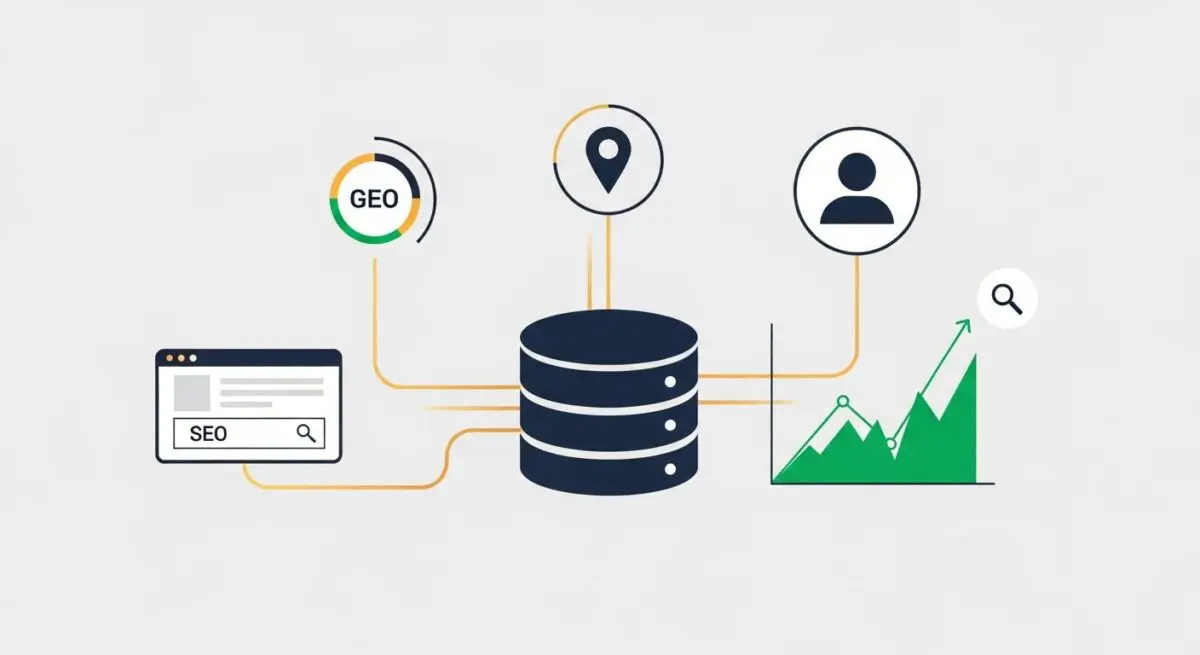
In the realm of Search Engine Optimization (SEO) and Generative Engine Optimization (GEO), first-party data informs content strategy by revealing the exact queries and pain points of the existing user base. This allows for the development of highly relevant, authoritative content that satisfies search intent more effectively than generic keyword research. By aligning marketing spend with actual behavioral data rather than probabilistic models, enterprises can allocate budgets toward high-performing channels with surgical precision.
Strategic Implementation & Best Practices
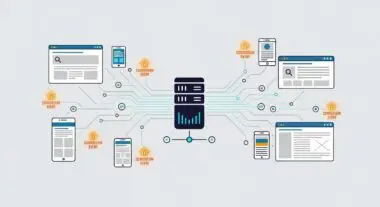
- Deploy a Customer Data Platform (CDP): Centralize data from disparate silos (email, CRM, web analytics) into a single source of truth to enable real-time activation across the marketing stack.
- Implement Server-Side Tagging: Move data collection from the client-side to the server-side to improve data security, bypass ad-blockers, and ensure longer-lasting cookie durations for first-party identifiers.
- Prioritize Value-Exchange: Encourage users to provide data through progressive profiling, offering high-value gated content, loyalty rewards, or personalized tools in exchange for information.
- Maintain Data Hygiene: Establish rigorous data governance protocols to ensure that the collected information is regularly cleaned, updated, and compliant with evolving global privacy standards.
Common Pitfalls & Strategic Mistakes
A frequent error among enterprise brands is the creation of data silos, where the CRM data is disconnected from the advertising platforms, leading to redundant ad spend and fragmented customer experiences. Another significant mistake is the failure to refresh first-party data; behavioral patterns shift rapidly, and relying on stale data can lead to inaccurate predictive modeling. Finally, many organizations neglect the technical infrastructure required for data portability, making it difficult to activate their first-party insights across different programmatic environments or AI-driven search platforms.
Conclusion
First-party data is the cornerstone of a resilient, privacy-compliant marketing architecture that drives long-term growth through superior attribution and customer intelligence. Organizations that master the collection and activation of their own data will maintain a significant competitive advantage in an increasingly decentralized digital ecosystem.