



Executive Summary
- Event-driven architecture provides superior concurrency handling compared to process-based Apache models.
- Server-level LSCache integration enables high-performance dynamic content delivery with minimal PHP overhead.
- Native support for HTTP/3 and QUIC protocols significantly reduces latency and improves mobile Core Web Vitals.
What is LiteSpeed Web Server?
LiteSpeed Web Server (LSWS) is a high-performance, proprietary web server software developed by LiteSpeed Technologies. Designed as a drop-in replacement for Apache, it is fully compatible with common Apache features such as .htaccess, mod_rewrite, and mod_security. However, unlike Apache’s process-based architecture, LiteSpeed utilizes an event-driven approach. This architectural shift allows it to handle thousands of concurrent connections with significantly lower memory and CPU consumption, making it a preferred choice for high-traffic WordPress environments and managed hosting providers.
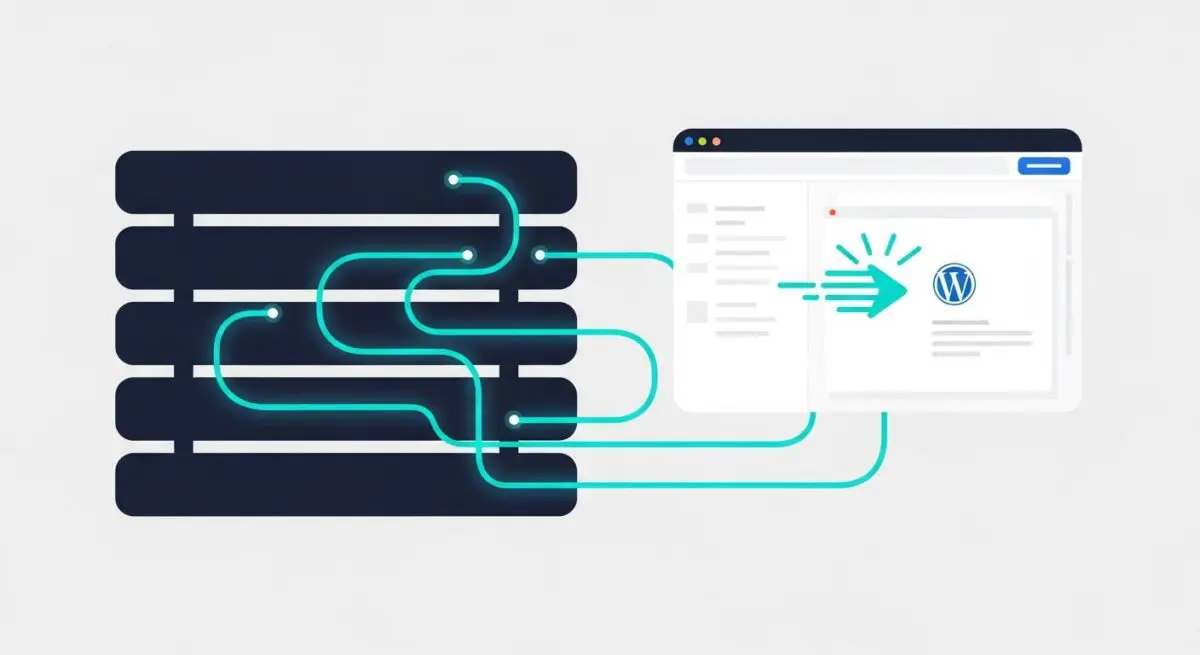
In the WordPress ecosystem, LiteSpeed is recognized for its deep integration through the LiteSpeed Cache (LSCache) engine. This is not merely a plugin-level solution but a server-level module that communicates directly with the web server to manage page caching, object caching, and image optimization. By bypassing the heavy PHP processing typically required for dynamic page generation, LiteSpeed can serve cached WordPress pages at speeds comparable to static HTML files, drastically reducing the Time to First Byte (TTFB) and improving overall server scalability.
The Real-World Analogy
To understand LiteSpeed Web Server, imagine a traditional post office (Apache) where every customer requires a dedicated clerk to handle their entire transaction from start to finish. If the post office has ten clerks and 100 customers arrive, 90 people must wait outside until a clerk becomes free. This is inefficient and leads to long queues during peak hours. LiteSpeed is like a modern, highly automated logistics hub. Instead of one clerk per person, a single high-speed automated system manages multiple tasks simultaneously. It scans a package, moves to the next person to accept a payment, and then returns to the first person to provide a receipt—all in milliseconds. Because the system never sits idle waiting for a human to finish a slow task, it can process thousands of customers in the same time the traditional post office processes ten, using far fewer resources.
How LiteSpeed Web Server Impacts Server Performance & Speed Engineering?
The primary impact of LiteSpeed Web Server on WordPress performance stems from its event-driven architecture. Traditional servers like Apache create a new process or thread for every connection. As traffic increases, the overhead of managing these processes consumes the server’s RAM, eventually leading to a crash or severe slowdown. LiteSpeed, conversely, uses a small number of worker processes to handle all traffic, switching between tasks only when data is ready to be processed. This minimizes context switching and ensures that system resources are dedicated to serving content rather than managing process overhead.
Furthermore, LiteSpeed introduces the LiteSpeed PHP API (LSAPI), which is a highly optimized communication protocol between the web server and PHP. LSAPI is significantly faster than standard FastCGI or PHP-FPM. It allows for persistent connections and intelligent process management, which eliminates the lag often associated with spawning PHP processes for dynamic WordPress requests. When combined with server-level caching, the server can serve dynamic content without even invoking the PHP engine if a valid cache version exists, effectively shielding the database from unnecessary queries.
Another critical performance factor is LiteSpeed’s native support for modern protocols like HTTP/3 and QUIC. These protocols improve upon HTTP/2 by using UDP instead of TCP, which reduces the handshake time and mitigates the effects of packet loss. For WordPress sites with heavy assets (images, scripts, and CSS), this means faster parallel loading and a more resilient connection for users on mobile networks or high-latency connections.
Best Practices & Implementation
- Deploy the LiteSpeed Cache Plugin: To fully leverage the server-level cache, the LSCache plugin must be installed on WordPress. This plugin acts as the bridge, allowing the application to send “purge” commands to the server when content is updated, ensuring users always see the latest version without sacrificing speed.
- Enable Edge Side Includes (ESI): For complex WordPress sites with both public and private content (like WooCommerce), use ESI to “punch holes” in the cache. This allows the server to cache the majority of the page while dynamically generating only the user-specific parts, such as the shopping cart or login status.
- Optimize PHP via LSAPI: Ensure the hosting environment is configured to use LSAPI rather than suPHP or CGI. This ensures that PHP execution is handled with maximum efficiency and minimal resource footprint.
- Utilize Built-in Image Optimization: Leverage LiteSpeed’s built-in image optimization and WebP generation features. Because these processes are handled at the server level, they are often more efficient than third-party WordPress plugins that rely on cron jobs or heavy PHP libraries.
Common Mistakes to Avoid
One frequent error is the implementation of redundant caching layers. Administrators often leave application-level caching plugins (like WP Rocket or W3 Total Cache) active while also using LiteSpeed. This creates a “cache-on-cache” scenario that increases complexity, leads to stale content issues, and consumes more disk space without providing additional speed benefits. Another mistake is neglecting the configuration of the .htaccess file. While LiteSpeed is compatible with Apache rules, certain directives may need optimization to ensure the LSCache engine correctly identifies cacheable vs. non-cacheable requests. Finally, many users fail to enable the Crawler feature in LSCache, which pre-generates the cache for all pages. Without the crawler, the first visitor to a page after a cache purge will experience a slower “cache miss” load time.
Conclusion
LiteSpeed Web Server represents a significant advancement in WordPress hosting infrastructure, offering a high-concurrency, event-driven alternative to traditional server architectures. By integrating server-level caching with optimized PHP handling and modern transport protocols, it provides the technical foundation necessary for enterprise-scale WordPress performance and superior Core Web Vitals.