Executive Summary
- Single Opt-In (SOI) minimizes conversion friction by eliminating the secondary confirmation step, leading to higher immediate lead volume.
- Technical implementation requires robust server-side validation and honeypot integration to mitigate the risk of list bombing and database degradation.
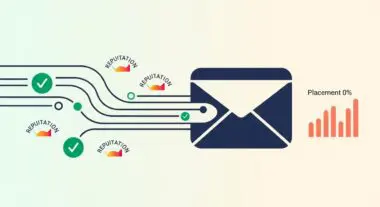
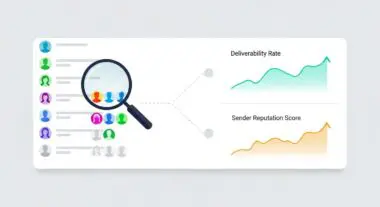
- Strategic use of SOI impacts Sender Reputation and Deliverability, necessitating advanced list hygiene protocols to maintain high inbox placement rates.
What is Single Opt-In?
Single Opt-In (SOI) is a subscription methodology within digital marketing and CRM architecture where a user is added to a distribution list immediately upon submitting their email address through a web form. Unlike Double Opt-In (DOI), which requires a secondary verification via a confirmation email, SOI operates on a single-step protocol. From a technical standpoint, the submission triggers an immediate HTTP POST request that writes the user’s data directly to the database or marketing automation platform (MAP) without an intermediate ‘pending’ state. This process is favored for its ability to maximize conversion rates by reducing the cognitive load and friction associated with multi-step verification loops.
In the context of a modern MarTech stack, SOI serves as a high-velocity entry point for lead acquisition. It is often integrated via APIs between the front-end user interface and back-end systems like Salesforce, HubSpot, or Marketo. Because there is no verification handshake, the integrity of the data relies heavily on front-end validation scripts and real-time email verification services. For enterprise-level organizations, SOI is a strategic choice when the primary objective is rapid list growth or when the user experience (UX) demands an uninterrupted transition from sign-up to content access, such as in gated whitepaper downloads or immediate discount code delivery.
The Real-World Analogy
To understand Single Opt-In, consider the difference between a public library and a high-security research facility. Single Opt-In is like a public library with an ‘Open Door’ policy: as soon as you walk through the entrance and sign the guestbook, you are granted full access to the stacks. There is no security guard checking your credentials or calling your home to verify your address before you can pick up a book. It is efficient, welcoming, and designed to get as many people inside as possible with the least amount of hassle. However, the library must work harder internally to ensure that the people signing the guestbook are providing real names and not just filling the registry with noise. In contrast, a Double Opt-In system would be the research facility where you sign in, but then must wait for a phone call to confirm your identity before the door actually unlocks.
How Single Opt-In Impacts Marketing ROI & Data Attribution?
The impact of Single Opt-In on Marketing ROI is a balance between volume and quality. From a Customer Acquisition Cost (CAC) perspective, SOI typically yields a lower cost per lead because the conversion funnel is shorter. By removing the confirmation email—a step where 20% to 40% of potential subscribers often drop off—marketers can capture a larger percentage of their traffic. This increased volume can lead to a higher absolute number of conversions further down the funnel, assuming the lead quality remains stable. However, the technical downside is the potential for ‘dirty data.’ Without a verification step, bots, typos, and malicious entries can inflate the database, leading to skewed attribution models and wasted spend on non-existent or unengaged users.
From a data attribution and analytics engineering perspective, SOI requires more sophisticated filtering. If a marketing team is measuring the success of a campaign based on raw sign-ups, SOI will always appear superior. However, when looking at Lifetime Value (LTV) and long-term engagement, the metrics may tell a different story. High bounce rates from invalid SOI entries can damage a brand’s Sender Score, which is a reputation score assigned to an IP address by Internet Service Providers (ISPs). A degraded Sender Score leads to emails being filtered into spam folders, which directly reduces the ROI of all subsequent email marketing efforts. Therefore, the strategic implementation of SOI must be coupled with rigorous post-acquisition analytics to ensure that the quantity of leads does not compromise the deliverability of the entire marketing ecosystem.
Strategic Implementation & Best Practices
- Real-Time Email Validation: Implement API-based validation (e.g., Kickbox or ZeroBounce) at the point of entry to check for syntax errors, disposable email addresses, and domain validity before the data is committed to the CRM.
- Advanced Bot Mitigation: Utilize invisible reCAPTCHA v3 or honeypot fields—hidden form fields that only bots can see—to prevent automated scripts from polluting the subscriber list without disrupting the human user experience.
- Aggressive List Hygiene: Establish automated ‘sunset policies’ that identify and remove unengaged subscribers within the first 30 to 60 days of acquisition to protect deliverability and maintain high engagement metrics.
- Immediate Auto-Responders: Trigger an immediate ‘Welcome’ email upon submission. This serves as a soft verification; if the email bounces, the record should be purged immediately to prevent future impact on sender reputation.
Common Pitfalls & Strategic Mistakes
One of the most frequent errors in SOI implementation is the failure to monitor ‘List Bombing’ attacks, where malicious actors use a form to flood an email address with thousands of subscriptions. Without rate-limiting or CAPTCHA, an SOI form can become a tool for cyber-harassment, leading to the brand’s domain being blacklisted by major ISPs. Another common mistake is neglecting the regulatory nuances of GDPR and CCPA. While SOI is not explicitly illegal under these frameworks, the burden of proof for ‘consent’ is higher. If a user claims they never signed up, the lack of a double-opt-in timestamp can make the legal defense of that consent more difficult for the data controller.
Conclusion
Single Opt-In is a powerful mechanism for maximizing lead velocity and reducing acquisition friction, provided it is supported by a robust technical infrastructure for data validation and list hygiene. For the modern data-driven marketer, the choice of SOI must be a calculated trade-off between top-of-funnel volume and the long-term integrity of the brand’s deliverability ecosystem.