Executive Summary
- A hard bounce represents a permanent delivery failure resulting from an invalid recipient address or a non-existent domain.
- High hard bounce rates trigger automated reputation filtering by Internet Service Providers (ISPs), leading to IP blacklisting and reduced deliverability.
- Strategic mitigation requires real-time SMTP validation, automated suppression lists, and strict adherence to double opt-in protocols.
What is Hard Bounce?
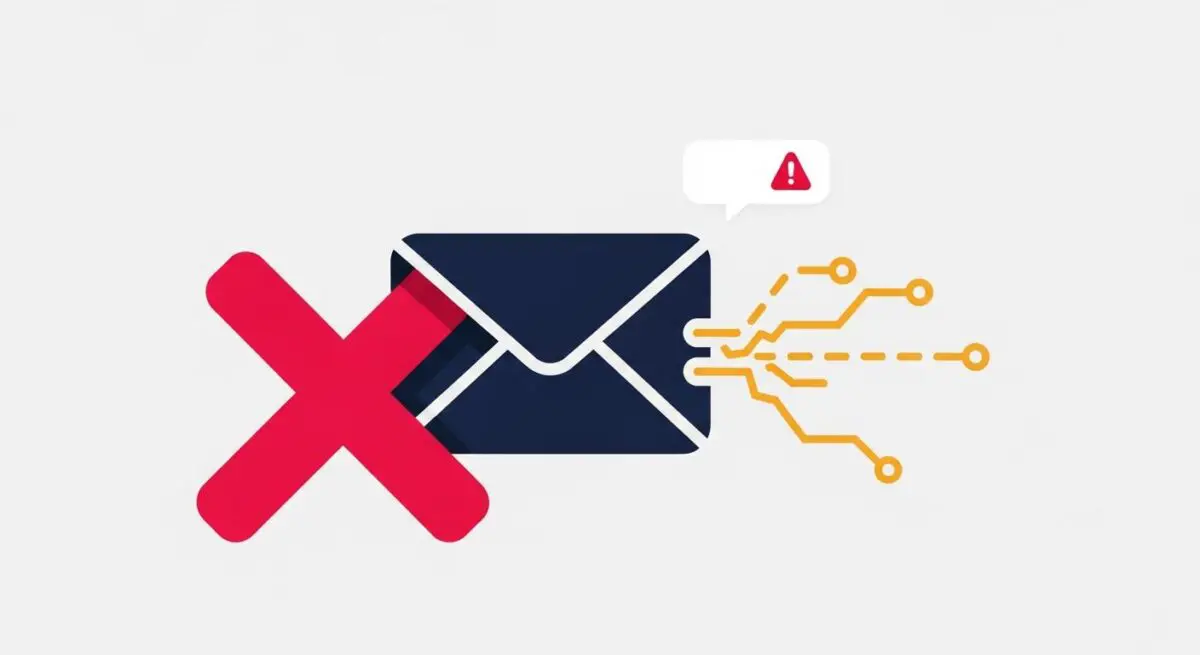
In the context of email engineering and marketing automation, a hard bounce is a critical delivery status notification (DSN) indicating a permanent failure to deliver an email to a recipient’s inbox. Unlike a soft bounce, which suggests a transient issue such as a full mailbox or a temporary server outage, a hard bounce is definitive. Technically, this occurs when the receiving mail transfer agent (MTA) returns a 5xx SMTP (Simple Mail Transfer Protocol) error code. Common triggers include the recipient’s email address being syntactically incorrect, the domain name not existing, or the recipient’s mail server blocking the sender’s IP address or domain entirely.
From a MarTech stack perspective, hard bounces are primary indicators of database decay and poor lead acquisition hygiene. Modern Email Service Providers (ESPs) and Customer Data Platforms (CDPs) utilize hard bounce telemetry to assess the health of a sender’s infrastructure. If a sender consistently attempts to transmit data to non-existent endpoints, ISPs like Gmail, Outlook, and Yahoo categorize the traffic as spam. This results in a degradation of the sender’s reputation score, which can lead to all subsequent communications—even those to valid addresses—being diverted to spam folders or rejected at the gateway level.
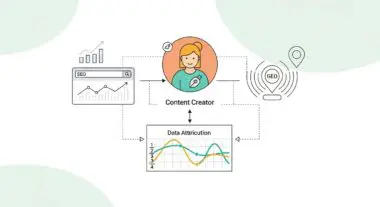
Furthermore, hard bounces play a significant role in the broader ecosystem of Search Engine Optimization (SEO) and Generative Engine Optimization (GEO). While email metrics do not directly influence organic search rankings, the behavioral data derived from email engagement—such as click-through rates (CTR) and dwell time on landing pages—informs the machine learning models used by search engines to understand brand authority and user intent. A high hard bounce rate effectively chokes the top of the funnel, preventing the accumulation of the high-quality traffic signals necessary for robust data attribution and cross-channel optimization.
The Real-World Analogy
To understand a hard bounce, consider the logistics of a high-stakes corporate courier service. If a courier is tasked with delivering a sensitive contract to a specific office suite, a soft bounce is equivalent to finding the office door locked for a lunch break; the courier can return later and successfully complete the delivery. A hard bounce, however, is equivalent to arriving at the coordinates only to find that the building has been demolished or that the address never existed in the first place. No amount of waiting or retrying will result in a successful delivery. In a business context, continuing to send couriers to a non-existent building is not only a waste of resources but also alerts the municipal authorities that your logistics operation is disorganized and potentially fraudulent, leading to a revocation of your operating license.
How Hard Bounce Impacts Marketing ROI & Data Attribution?
The technical impact of hard bounces on Marketing ROI is multifaceted, primarily manifesting through the degradation of deliverability and the distortion of performance analytics. When a marketing department calculates the Return on Ad Spend (ROAS) or Customer Acquisition Cost (CAC), the integrity of the underlying data is paramount. Hard bounces introduce noise into the dataset; they inflate the number of ‘sent’ messages while simultaneously depressing the ‘open’ and ‘click’ rates. This leads to an artificial deflation of conversion metrics, making it difficult for data scientists to accurately model the customer journey or assign value via multi-touch attribution frameworks.
Moreover, the financial implications are direct. Most enterprise ESPs charge based on the volume of emails sent or the number of contacts stored in the database. Maintaining a list riddled with hard bounces means the organization is paying a premium to store and attempt delivery to non-existent entities. Beyond the direct costs, the long-term damage to the sender’s IP and domain reputation can be catastrophic. Once a domain is flagged for high bounce rates, the ‘deliverability tax’ increases—meaning more effort and budget must be spent on IP warming and reputation repair services to regain access to the primary inbox. This shift in resources from growth-oriented activities to infrastructure maintenance represents a significant opportunity cost for any data-driven marketing organization.
Strategic Implementation & Best Practices
- Implement Real-Time SMTP Validation: Integrate API-based validation at the point of data entry (e.g., lead capture forms) to verify the existence of an email address before it enters the CRM, preventing hard bounces before they occur.
- Automated Suppression Logic: Configure your Marketing Automation Platform (MAP) to immediately move any address that returns a 5xx error code to a global suppression list, ensuring no further delivery attempts are made.
- Adopt Double Opt-In (DOI) Protocols: Utilize a confirmation email to verify the recipient’s intent and address validity, which serves as a technical filter against bot-generated or mistyped email addresses.
- Monitor DNS Health: Regularly audit SPF, DKIM, and DMARC records to ensure that legitimate emails are not being misidentified as hard bounces due to authentication failures.
- List Scrubbing Cycles: Execute quarterly database hygiene procedures using third-party tools to identify and remove dormant domains or addresses that have transitioned into ‘spam traps’ or invalid states.
Common Pitfalls & Strategic Mistakes
One of the most prevalent mistakes in enterprise marketing is the failure to distinguish between hard and soft bounces in reporting. Treating all bounces as temporary leads to repeated delivery attempts to invalid addresses, which rapidly erodes sender reputation. Another critical error is the use of purchased or legacy lists without prior verification. These lists are often saturated with ‘dead’ addresses and recycled spam traps designed specifically to catch and blacklist irresponsible senders. Finally, many organizations neglect the technical alignment between their sales and marketing departments, allowing sales teams to manually enter unverified addresses into outbound sequences, bypassing the automated hygiene filters established by the marketing operations team.
Conclusion
Managing hard bounces is a fundamental requirement for maintaining the technical integrity of a modern MarTech stack. By prioritizing data hygiene and infrastructure reputation, organizations ensure that their marketing signals reach the intended audience, thereby maximizing ROI and ensuring accurate data attribution across all digital channels.