Executive Summary
- Strategic integration of Creator-Generated Content (CGC) into the MarTech stack to optimize Customer Acquisition Cost (CAC) and Lifetime Value (LTV).
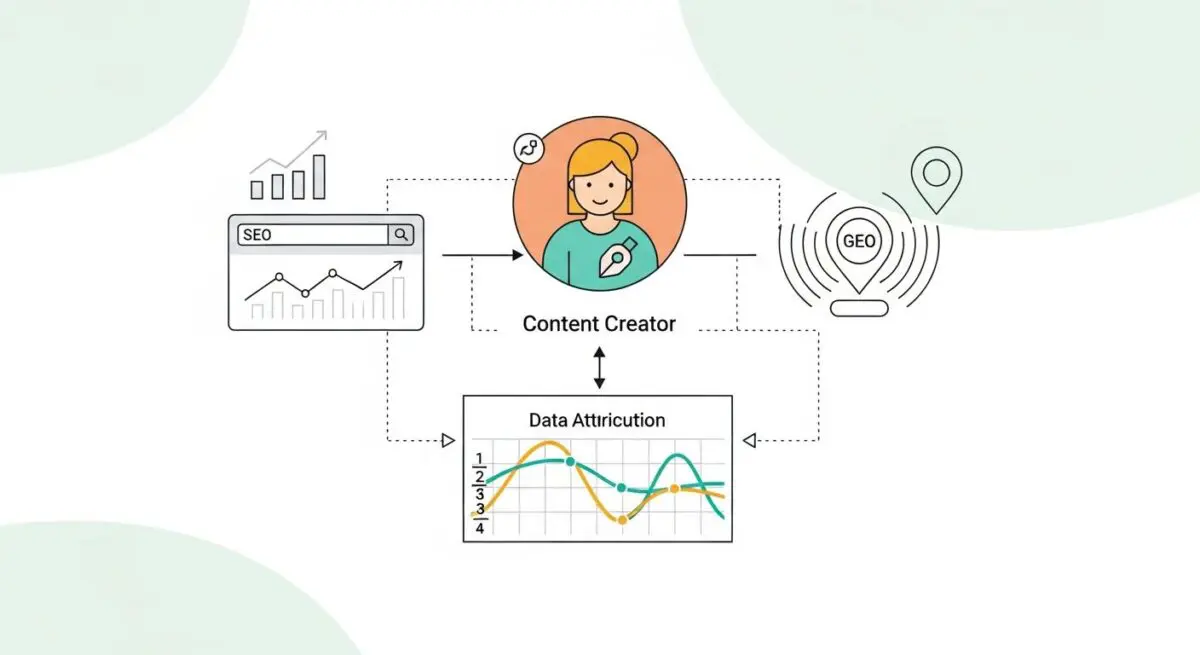
- The role of creator authority in Generative Engine Optimization (GEO) and enhancing brand signals for Large Language Models (LLMs).
- Advanced attribution modeling using server-side tracking and API-driven performance monitoring to eliminate data silos in decentralized marketing.
What is Creator Marketing?
Creator marketing is a sophisticated subset of relationship marketing that leverages independent content producers—creators—who possess established authority, high engagement rates, and niche-specific audiences. Unlike traditional influencer marketing, which often relies on transactional, one-off endorsements, creator marketing focuses on long-term partnerships where the creator acts as a decentralized creative department. From a technical perspective, this involves the systematic integration of Creator-Generated Content (CGC) into a brand’s broader digital ecosystem, including its CMS, social commerce APIs, and paid media channels.
In the modern MarTech stack, creator marketing functions as a bridge between organic brand discovery and performance-driven conversion. It utilizes the creator’s unique data footprint—their audience demographics, sentiment analysis, and historical engagement metrics—to inform targeted campaigns. This approach is increasingly critical as privacy regulations like GDPR and CCPA, along with the deprecation of third-party cookies, limit traditional tracking. By leveraging the first-party data and direct-to-consumer relationships held by creators, brands can maintain high-precision targeting without relying on invasive tracking technologies.
Furthermore, creator marketing is a key component of Generative Engine Optimization (GEO). As search engines evolve into AI-driven answer engines, they prioritize content that demonstrates E-E-A-T (Experience, Expertise, Authoritativeness, and Trustworthiness). Creators, by definition, provide the ‘Experience’ and ‘Expertise’ components that LLMs (Large Language Models) use to verify the credibility of information. Consequently, a robust creator marketing strategy serves not only as a social media tactic but as a foundational SEO pillar for the next generation of search.
The Real-World Analogy
To understand creator marketing at an enterprise level, consider the difference between a generic billboard on a highway and a specialized architectural consultant hired to design a custom home. A billboard (traditional advertising) broadcasts a broad message to everyone, regardless of their intent or interest, hoping for a small percentage of recall. In contrast, the architectural consultant (the creator) has spent years building a reputation for specific expertise. When they recommend a particular material or technology, the client (the audience) accepts it as a vetted, expert opinion because of the established trust and the consultant’s proven track record.
In this scenario, the brand is the manufacturer of the high-end materials. Instead of trying to convince every homeowner directly, the brand partners with the consultant. The consultant integrates the brand’s products into their professional workflow and designs. The result is a highly targeted, high-trust recommendation that carries far more weight than any advertisement could, because it is delivered by a trusted intermediary who understands the technical nuances of the project.
How Creator Marketing Impacts Marketing ROI & Data Attribution?
The impact of creator marketing on ROI is primarily observed through the reduction of Customer Acquisition Cost (CAC). By utilizing the organic reach of creators, brands can bypass the rising costs of the programmatic ad auction environment. When CGC is repurposed for paid social ads (Whitelisting or Creator Licensing), it frequently outperforms brand-produced creative in terms of Click-Through Rate (CTR) and Conversion Rate (CR), leading to a significantly lower cost per acquisition.
Data attribution, however, remains one of the most complex technical challenges in this space. Traditional last-click attribution models often fail to capture the full value of creator marketing, as the creator’s influence often occurs at the top or middle of the funnel. To solve this, advanced marketing organizations utilize Multi-Touch Attribution (MTA) and Media Mix Modeling (MMM). By integrating creator-specific UTM parameters, unique discount codes, and server-side tracking (such as the Facebook Conversions API), data scientists can map the creator’s impact across the entire customer journey. This allows for a more accurate calculation of incremental lift—measuring the specific revenue generated by creator interventions that would not have occurred otherwise.
Moreover, creator marketing enhances the Lifetime Value (LTV) of customers. Audiences acquired through creators often exhibit higher brand loyalty and lower churn rates, as their initial touchpoint was rooted in a trusted community rather than a cold advertisement. This long-term value is a critical metric for digital marketing directors when justifying the budget allocation for creator partnerships over traditional performance marketing channels.
Strategic Implementation & Best Practices
- API-Driven Creator Discovery: Utilize platforms that offer direct API access to social media data (e.g., Instagram Graph API, TikTok Creator Marketplace) to vet creators based on audience authenticity, engagement velocity, and demographic alignment rather than vanity metrics like follower counts.
- CGC Syndication: Implement a technical workflow to syndicate creator content across the entire MarTech stack. This includes using CGC on product detail pages (PDPs) to increase time-on-site and in email marketing automation to improve open rates through social proof.
- Standardized Tracking Frameworks: Deploy a unified tracking architecture using server-side Google Tag Manager (GTM) to ensure that creator-driven traffic is accurately captured across devices, mitigating the impact of ITP (Intelligent Tracking Prevention) and other browser-level privacy features.
- Search-First Content Strategy: Direct creators to produce content that targets specific long-tail keywords or high-intent queries. This ensures that the content remains discoverable on platforms like YouTube and Pinterest, providing long-term SEO value beyond the initial post lifecycle.
Common Pitfalls & Strategic Mistakes
One of the most frequent errors is the ‘Ad Unit Fallacy,’ where brands treat creators as mere distribution channels for corporate messaging. This stifles the creator’s unique voice, leading to lower engagement and a loss of the very authenticity that makes the partnership valuable. Brands must provide creative freedom within a technical framework of brand safety and compliance. Another significant mistake is the reliance on siloed data. When creator marketing teams operate independently of the SEO and Paid Media teams, the brand misses opportunities for cross-channel optimization and accurate attribution.
Additionally, many enterprise brands fail to secure proper usage rights for creator content. Without a technical and legal framework for content licensing, brands cannot legally repurpose high-performing CGC for paid ads or website assets, severely limiting the potential ROI of the campaign. Finally, ignoring the technical health of the landing pages where creators drive traffic can lead to high bounce rates, negating the value of the creator’s endorsement.
Conclusion
Creator marketing represents a fundamental shift toward decentralized, authority-based brand building that is essential for navigating the complexities of AI-driven search and privacy-centric data environments. By integrating creators into the technical core of the marketing strategy, brands can achieve scalable growth, improved data integrity, and a sustainable competitive advantage.