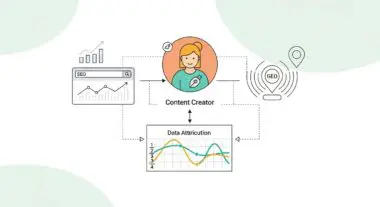
Executive Summary
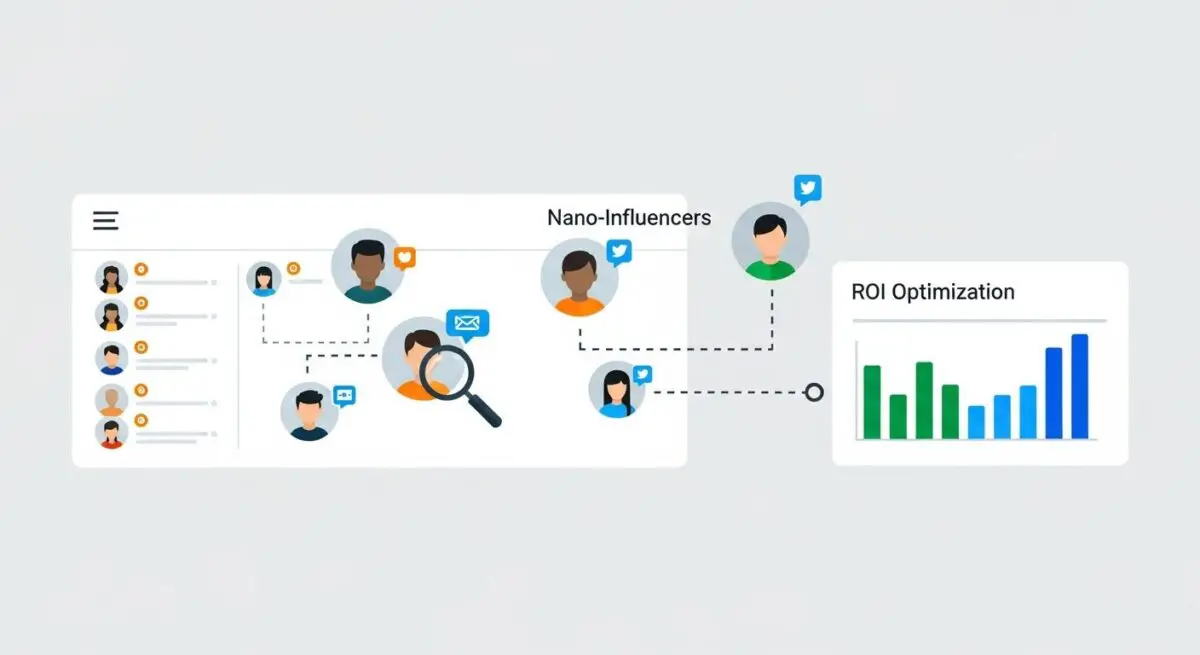
- Nano-influencers (1,000–10,000 followers) provide a high signal-to-noise ratio, yielding engagement rates (ER) significantly higher than macro-influencers.
- Integration into the MarTech stack allows for decentralized content nodes that enhance brand authority within niche audience clusters and AI-driven search graphs.
- Strategic deployment reduces Customer Acquisition Cost (CAC) by leveraging high-fidelity social proof and improving conversion path efficiency.
What is Nano-Influencers?
In the contemporary digital marketing ecosystem, Nano-Influencers are defined as social media content creators who maintain a following typically ranging from 1,000 to 10,000 users. Unlike their macro or celebrity counterparts, nano-influencers are characterized by their hyper-niche focus and high degree of topical authority within specific interest clusters. From a technical perspective, these creators function as high-fidelity nodes within a social graph, where the proximity between the creator and the audience results in a compressed feedback loop and significantly higher engagement metrics. In a modern MarTech stack, nano-influencers are increasingly utilized as decentralized content production units that generate authentic, user-generated content (UGC) which can be programmatically repurposed across various marketing channels.
The technical significance of nano-influencers lies in their Signal-to-Noise Ratio. While larger influencers offer broad reach, their audience is often heterogeneous, leading to diluted messaging and lower conversion probabilities. Nano-influencers, conversely, operate within homogeneous audience segments where the trust factor is maximized. This homogeneity allows for precise targeting and higher data integrity in attribution models, as the intent of the audience is more clearly defined by the niche content they consume. Furthermore, as search engines evolve toward Generative Engine Optimization (GEO), the authentic mentions and contextual backlinks generated by these creators serve as critical trust signals for Large Language Models (LLMs) and traditional search algorithms, enhancing the brand’s overall digital footprint and authority.
The Real-World Analogy
To understand the strategic value of nano-influencers, consider the difference between a national television broadcast and a highly specialized local consultant. A national broadcast (the macro-influencer) reaches millions but lacks the personal connection or specific expertise required to solve a niche problem for every viewer. In contrast, the local consultant (the nano-influencer) may only be known by a few hundred people in a specific industry, but their recommendation carries immense weight because of their proven expertise and personal relationship with their clients. When the consultant speaks, the audience listens with high intent. In marketing terms, the macro-influencer provides the broadcast of awareness, while the nano-influencer provides the narrowcast of conversion and trust.
How Nano-Influencers Impacts Marketing ROI & Data Attribution?
Nano-influencers exert a profound impact on Marketing ROI by optimizing the efficiency of the middle and bottom of the sales funnel. Because their cost of entry is significantly lower than that of higher-tier influencers, brands can achieve a lower Cost Per Engagement (CPE) and Cost Per Acquisition (CAC). The high engagement rates (ER)—often exceeding 7-10% compared to the sub-2% average of macro-influencers—mean that every dollar spent on a nano-influencer campaign generates a higher volume of meaningful interactions. This efficiency is particularly evident in Lifetime Value (LTV) modeling, as customers acquired through nano-influencer recommendations often exhibit higher retention rates due to the initial trust-based acquisition.
From a Data Attribution perspective, nano-influencers present both opportunities and challenges. Their impact is often felt in “dark social” channels—private messages, niche forums, and direct shares—which are notoriously difficult to track via traditional cookies. However, by utilizing unique UTM parameters, dedicated landing pages, and performance-based discount codes, marketers can isolate the impact of these creators within a multi-touch attribution model. Furthermore, the content generated by nano-influencers provides a rich dataset for Sentiment Analysis and Natural Language Processing (NLP), allowing brands to understand how their products are being discussed in granular, high-intent communities. This data can then be used to refine broader SEO and content strategies, ensuring that the brand’s messaging aligns with the actual vocabulary and pain points of its most loyal customers.
Strategic Implementation & Best Practices
- API-Driven Discovery: Utilize influencer relationship management (IRM) platforms that leverage APIs to filter creators based on engagement-to-follower ratios, audience demographics, and historical performance metrics rather than raw follower counts.
- Automated Workflow Integration: Implement automated contracting and digital rights management (DRM) systems to handle the high volume of creators required for a scalable nano-influencer campaign, ensuring all content is legally cleared for repurposing.
- Performance-Based Compensation: Shift from flat-fee models to hybrid models that include performance incentives based on trackable conversions or high-value micro-conversions, aligning the creator’s interests with the brand’s ROI goals.
- Content Syndication: Programmatically repurpose high-performing nano-influencer content into paid social advertisements. This “whitelisting” approach often yields higher click-through rates (CTR) than brand-produced creative due to its inherent authenticity.
- First-Party Data Collection: Use nano-influencer campaigns to drive traffic to gated content or newsletter sign-ups, converting third-party social engagement into valuable first-party data for future CRM marketing.
Common Pitfalls & Strategic Mistakes
One frequent error is the Over-Scripting of nano-influencer content. Brands often attempt to impose rigid brand guidelines that strip the content of the very authenticity that makes the nano-influencer effective. This results in a “corporate” feel that the creator’s audience will likely reject. Another common mistake is the Lack of Scalability; managing 100 nano-influencers requires significantly more operational overhead than managing one celebrity. Without automated systems for communication and reporting, the management costs can quickly erode the ROI gains. Finally, many brands fail to account for Measurement Silos, treating influencer marketing as a separate entity rather than integrating its data into the broader SEO and performance marketing ecosystem.
Conclusion
Nano-influencers represent a critical shift toward decentralized, high-trust marketing architectures that prioritize engagement and niche authority over raw reach. By integrating these creators into a data-driven MarTech stack, enterprise brands can achieve superior ROI, enhanced SEO signals, and more accurate customer attribution in an increasingly fragmented digital landscape.