



Executive Summary
- Lead qualification utilizes multi-dimensional scoring models (MQL, SQL, PQL) to prioritize prospects based on firmographic data and behavioral signals.
- Integration with CRM and CDP systems via REST APIs allows for real-time data enrichment and automated routing, significantly reducing the sales cycle.
- Effective qualification frameworks directly optimize Customer Acquisition Cost (CAC) by aligning marketing spend with high-propensity conversion paths.
What is Lead Qualification?
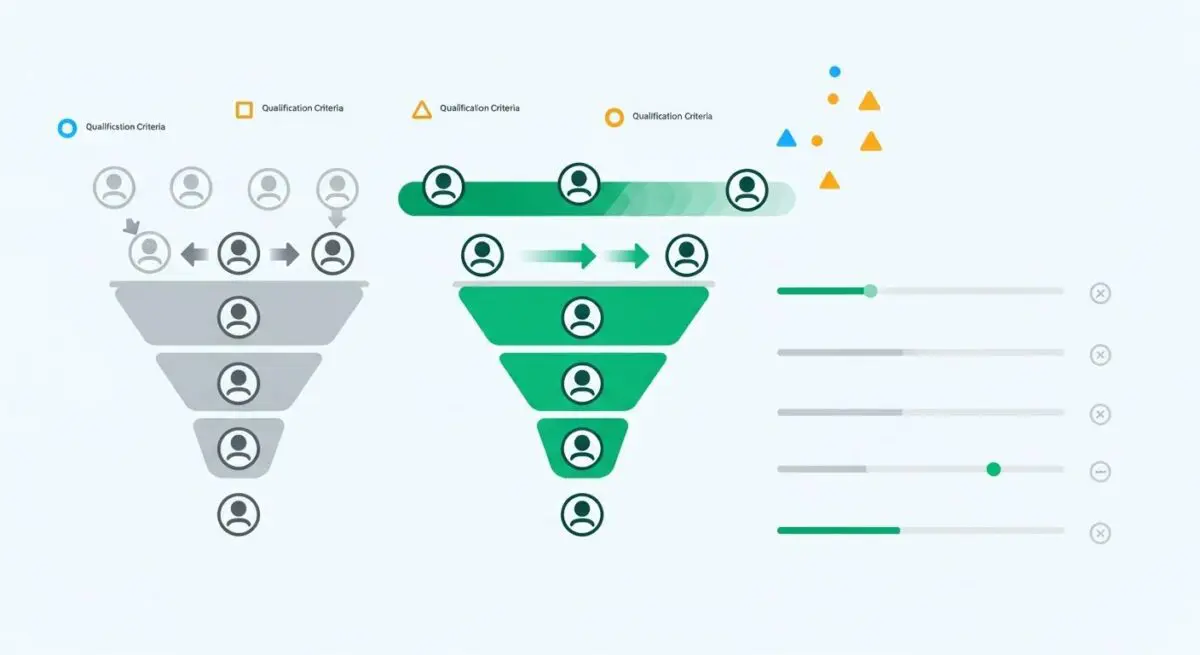
Lead qualification is the systematic process of evaluating prospective customers to determine their likelihood of converting into a revenue-generating account. In the context of a modern MarTech stack, this involves the deployment of algorithmic scoring models that weigh various data points, including firmographics (company size, industry, revenue), technographics (current software stack), and behavioral intent (webinar attendance, whitepaper downloads, or repeated visits to pricing pages). By categorizing leads into stages such as Marketing Qualified Leads (MQL), Sales Qualified Leads (SQL), and Product Qualified Leads (PQL), organizations can ensure that high-value human resources are only deployed toward prospects with a high probability of closing.
From a technical standpoint, lead qualification is increasingly driven by machine learning and predictive analytics. Rather than relying solely on static frameworks like BANT (Budget, Authority, Need, Timeline), enterprise-level systems now utilize propensity modeling to identify patterns in historical conversion data. This allows for dynamic lead scoring where a prospect’s score fluctuates in real-time based on their interaction with digital assets. Integration via APIs between the Content Management System (CMS), Customer Relationship Management (CRM) software, and Marketing Automation Platforms (MAP) is essential to maintain data integrity and prevent the formation of data silos that could obscure the customer journey.
The Real-World Analogy
To understand lead qualification, consider the triage system in a high-volume emergency room. Not every patient who enters the waiting room requires immediate surgery; some have life-threatening conditions, while others have minor ailments that can be addressed later. The triage nurse acts as the lead qualification engine, using standardized metrics (heart rate, blood pressure, symptoms) to categorize patients. If the hospital treated every patient in the exact order they arrived without qualification, critical resources would be wasted on minor issues while high-priority cases deteriorated. In marketing, lead qualification ensures your ‘surgeons’ (the sales team) are only operating on the ‘patients’ (prospects) who are ready and require their specific expertise to survive the competitive landscape.
How Lead Qualification Impacts Marketing ROI & Data Attribution?
Lead qualification is a critical lever for optimizing Marketing ROI because it directly influences the efficiency of the sales funnel. When a marketing department focuses on lead volume over lead quality, the resulting ‘noise’ forces the sales team to spend a disproportionate amount of time on low-intent prospects. This inefficiency inflates the Customer Acquisition Cost (CAC) and extends the payback period. By implementing a rigorous qualification framework, we at Andres SEO Expert observe that organizations can achieve a higher ‘win rate’ from fewer leads, effectively lowering the cost per acquisition while increasing the Lifetime Value (LTV) of the customers who do convert.
Furthermore, lead qualification plays a pivotal role in multi-touch attribution modeling. By identifying which specific touchpoints—such as a technical SEO-driven blog post or a targeted LinkedIn ad—resulted in a qualified lead versus a non-qualified one, marketers can reallocate budget toward high-performance channels. This granular level of data attribution allows for ‘closed-loop’ reporting, where the value of an SEO campaign is measured not just by organic traffic or raw lead count, but by the total pipeline value generated. In the era of AI-Search and Generative Engine Optimization (GEO), understanding the intent behind the query is paramount to qualifying the user before they even reach the landing page.
Strategic Implementation & Best Practices
- Implement Automated Lead Scoring: Utilize your Marketing Automation Platform to assign numerical values to specific actions. For example, a visit to a ‘Request a Demo’ page should carry a higher weight than a visit to a ‘Careers’ page. Incorporate negative scoring for indicators of low intent, such as competitors or students.
- Deploy Progressive Profiling: Instead of overwhelming users with long forms, use progressive profiling to gather data over multiple interactions. This reduces friction and increases conversion rates while gradually building a comprehensive technical profile of the lead.
- Integrate Third-Party Data Enrichment: Use APIs from providers like Clearbit, ZoomInfo, or Apollo to automatically append firmographic data to a lead’s record. This ensures your qualification engine has the necessary data points (e.g., annual revenue, employee count) without requiring the user to manually input them.
- Establish a Service Level Agreement (SLA) between Sales and Marketing: Define exactly what constitutes an MQL and an SQL. This ‘Smarketing’ alignment ensures that both teams are working toward the same revenue goals and that the feedback loop regarding lead quality is constant and data-driven.
Common Pitfalls & Strategic Mistakes
One of the most frequent errors in enterprise marketing is the reliance on outdated, static qualification models that do not account for the modern, non-linear buyer’s journey. Many brands fail to implement ‘lead decay’ logic; a lead that was highly qualified six months ago but has had zero engagement since should not be treated with the same priority as a fresh prospect. Another common pitfall is the failure to integrate the CRM with the analytics layer, leading to misattribution where the marketing team claims credit for leads that the sales team deems ‘unqualified’ upon first contact.
Conclusion
Lead qualification is the technical bridge between raw data acquisition and revenue generation, requiring a sophisticated blend of behavioral analytics and cross-platform integration. By refining this process, organizations can maximize their MarTech ROI and ensure sustainable, scalable growth in an increasingly competitive digital ecosystem.