Executive Summary
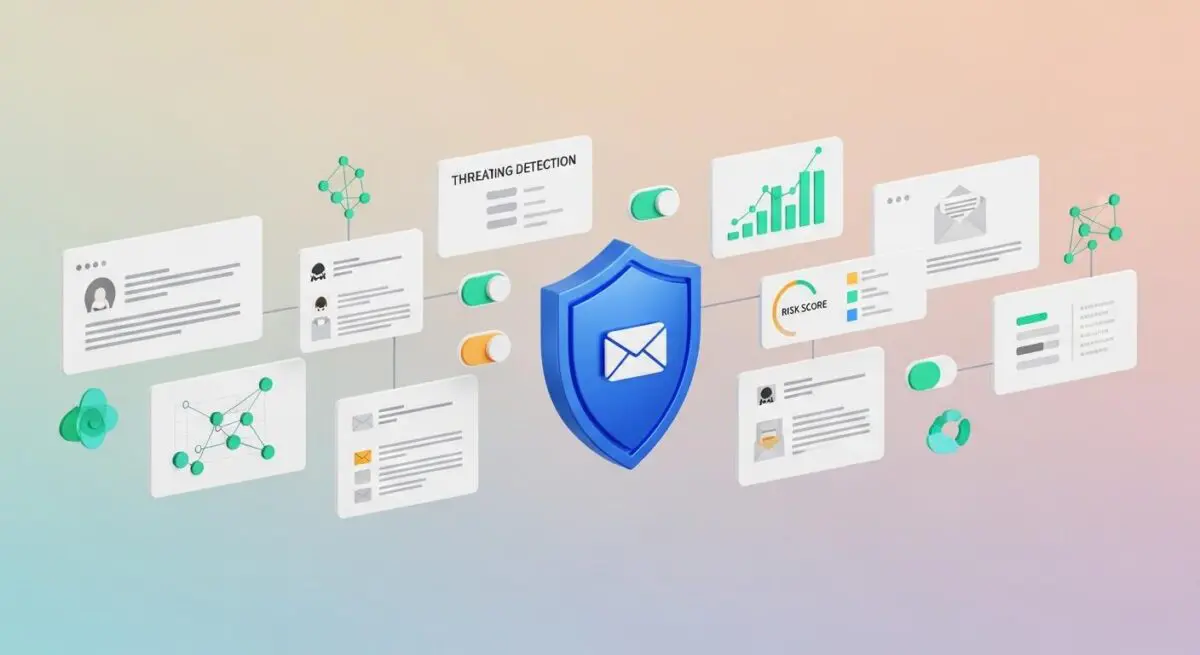
- Shift to Human Risk Management (HRM): The market has moved beyond static click-rates toward predictive risk scoring and behavior analytics.
- Agentic AI Orchestration: Modern infrastructure utilizes autonomous agents to generate hyper-personalized lures, significantly increasing the realism of simulations.
- Economic ROI: High-performing programs yield up to 18% discounts on cyber liability premiums and a 45% reduction in administrative overhead.
The Evolution of Human Risk Management
In the current economic and digital ecosystem, the methodology behind using phishing simulations to test your employees has undergone a fundamental transformation. What was once a compliance-driven exercise—often referred to as Security Awareness Training (SAT)—has matured into a sophisticated discipline known as Human Risk Management (HRM). This shift represents a move from reactive education to proactive, data-driven behavioral analysis. For the modern executive, the goal is no longer to simply ‘catch’ an employee clicking a link, but to build a resilient human firewall that integrates seamlessly with the broader security stack.
Market leaders such as KnowBe4 and Proofpoint have pivoted their entire business models toward this HRM paradigm. By acquiring behavior-analytics firms, these platforms now offer predictive risk scoring that allows organizations to identify vulnerable cohorts before a real-world breach occurs. This strategic consolidation is mirrored in the M&A space, where major players like CrowdStrike are integrating human detection and response (HDR) directly into extended detection and response (XDR) flows. The valuation of these platforms is now driven by their API-first integration density—their ability to correlate simulation data with real-world security alerts to lower insurance premiums and operational risk.
Infrastructure and Agentic AI Orchestration
The technical backbone of modern phishing simulations has moved away from static templates. Today’s infrastructure leverages Agentic AI orchestration, utilizing frameworks like LangChain to scrape public and corporate data. This allows for the generation of hyper-personalized spear-phishing lures in real-time. These autonomous agents can mimic the tone, style, and context of internal communications, making the simulations indistinguishable from sophisticated state-sponsored attacks.
Furthermore, the deployment of these simulations has expanded beyond traditional email. Modern stacks utilize edge-based sandboxing to deliver omnichannel simulations via Slack, Microsoft Teams, and even WhatsApp. This reflects the reality of the modern workplace, where communication is fragmented across multiple platforms. To maintain compliance and data privacy, enterprise leaders are increasingly opting for proprietary Large Language Models (LLMs) that ensure zero-data retention, while smaller firms leverage open-source alternatives for cost-efficiency.
Defining Human Risk Management (HRM)
Human Risk Management is a strategic framework that quantifies and mitigates the security risks posed by human behavior through continuous monitoring, personalized simulations, and automated intervention. Unlike traditional training, which treats all employees as a monolithic group, HRM uses data from various touchpoints—such as email interactions, login patterns, and simulation performance—to create a dynamic risk profile for every individual. This allows security teams to allocate resources where they are most needed, transforming the workforce from a liability into a strategic asset.
The Metrics of Success: Beyond the Click-Through Rate
For years, the primary metric for phishing success was the Click-Through Rate (CTR). However, in a sophisticated HRM environment, the gold standard has shifted to the Reporting Rate (RR). The objective is to measure how quickly and consistently employees use the ‘Report Fish’ button. High-performing organizations aim for a Reporting Rate of over 70%. This metric is a much more accurate indicator of a healthy security culture than a low click rate, which can often be skewed by simulation fatigue or overly simple lures.
Another critical performance indicator is the Mean Time to Report (MTTRp). Leading enterprises now target an MTTRp of under 180 seconds from the moment a simulated lure is delivered. Achieving this level of responsiveness requires not just technical tools, but a psychological shift within the organization. When employees feel empowered rather than ‘tricked,’ they become active participants in the company’s defense strategy.
Think of a modern phishing simulation not as a pop quiz designed to fail a student, but as a high-fidelity flight simulator for a pilot. It is a safe environment to experience extreme turbulence, ensuring that when the real storm hits, the muscle memory for a safe landing is already ingrained.
Scalability Friction and Technical Debt
Despite the advancements, scaling these programs introduces significant friction. Simulation fatigue is a real phenomenon; over-testing can lead to security apathy or resentment toward the IT department. This psychological friction can result in a measurable decrease in productivity. Additionally, the rise of deepfake technology—including audio and video simulations (Vishing and Quishing)—requires substantial compute overhead and specialized GPU clusters, creating a bottleneck for global enterprises attempting to scale these advanced tests.
Data silos also remain a persistent challenge. Bridging the gap between phishing simulation platforms and HR performance software often requires custom middleware. The goal is to sync risk scores with employee records to provide a holistic view of organizational health, but the technical debt associated with legacy HR systems can make this integration difficult and costly.
Regulatory Constraints and the EU AI Act
The regulatory landscape is also tightening, particularly with the implementation of the EU AI Act. This legislation categorizes AI-driven employee monitoring and behavioral analysis as high-risk systems. For organizations using AI to generate and track phishing simulations, this means a mandatory requirement for transparency, logging, and human-in-the-loop overrides. Companies must now implement Explainable AI (XAI) to justify why certain lures were generated and how employee data is being processed. Failure to comply can result in massive fines, forcing providers to prioritize auditability alongside efficacy.
Andres’ Strategic Verdict: The Big Picture
From our perspective at the strategy room, using phishing simulations to test your employees is no longer an IT task; it is a capital allocation decision. The transition from simple training to Human Risk Management represents a significant opportunity to build a competitive moat. Organizations that successfully integrate these simulations into their broader risk management strategy are seeing tangible economic benefits, including 12–18% discounts on cyber liability premiums. This is not just about security; it is about operational efficiency and protecting the long-term valuation of the firm.
We believe the real winners in this space will be the companies that move beyond ‘gotcha’ tactics and focus on the Reporting Rate as a cultural KPI. By treating employees as sophisticated sensors rather than weak links, you create a resilient infrastructure that can adapt to emerging threats like LLM prompt injection and deepfake social engineering. The investment in high-fidelity, AI-driven simulations is a prerequisite for any firm looking to maintain trust in an increasingly automated and deceptive digital economy.
Building a Resilient Human Firewall
The future of organizational security lies in the seamless integration of human intuition and machine intelligence. By leveraging advanced phishing simulations within an HRM framework, businesses can quantify their risk, optimize their insurance spend, and foster a culture of vigilance. The transition may be complex, but the strategic ROI of a prepared workforce is incomparable.
Navigating the intersection of generative search and operational efficiency requires more than just tools—it requires a roadmap. If you’re ready to evolve your strategy through specialized SEO, GEO, Adavanced Hosting Environments, or AI-driven automation, connect with Andres at Andres SEO Expert. Let’s build a future-proof foundation for your business together.”