




Executive Summary
- Agentic AI Orchestration: The market is shifting from static APIs to autonomous systems capable of 85% straight-through processing for claims.
- Prevention-First Infrastructure: IoT and Digital Twin data are moving insurance from indemnity to proactive risk mitigation, reducing loss ratios by up to 20%.
- Massive Market Expansion: From a $188 billion valuation in 2026, the sector is projected to reach $1.46 trillion by 2034 as insurance becomes an invisible layer in every transaction.
The Death of the Grudge Purchase
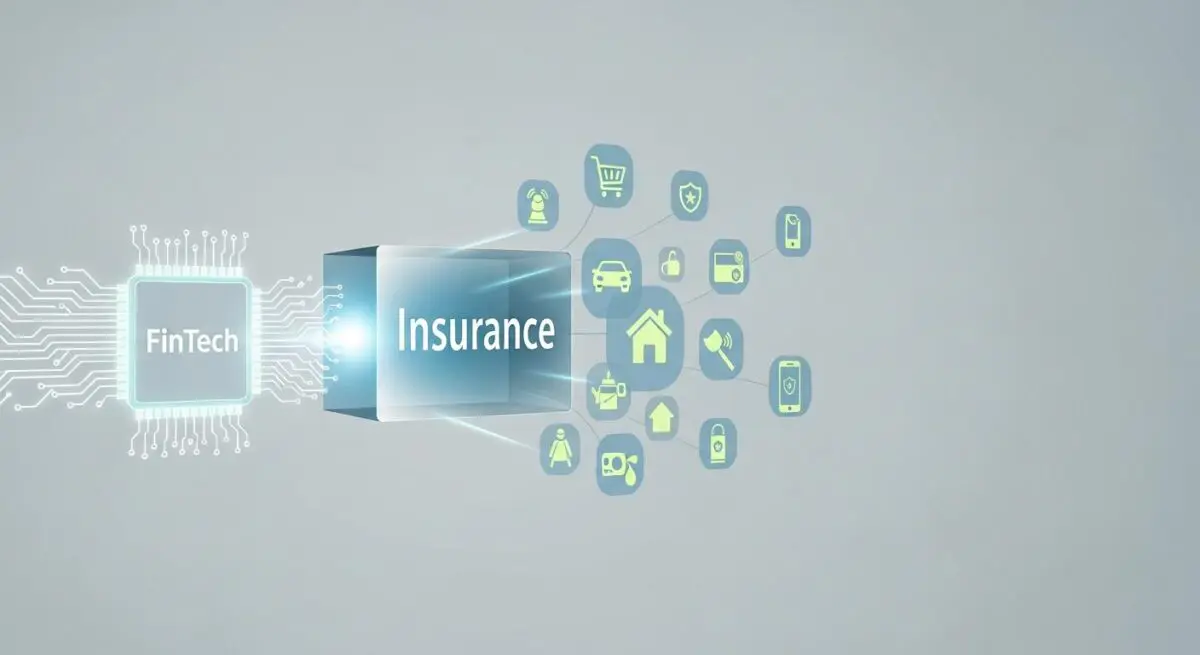
For decades, insurance has been the ultimate grudge purchase. It was a friction-filled odyssey of dense paperwork, confusing jargon, and the lingering sense that you were paying for something you hoped to never use. But as of mid-2026, we are witnessing the final stages of a quiet revolution. Insurance is no longer a standalone product sold by a man in a suit; it has become a persistent, invisible infrastructure layer woven into the very fabric of the digital economy.
This is the era of embedded insurance, a sector that has matured from a simple checkout add-on into a sophisticated ecosystem valued at approximately $188 billion. With a staggering compound annual growth rate of over 30%, experts project this market will balloon to $1.46 trillion by 2034. The catalyst for this explosion isn’t just better software—it is the convergence of FinTech infrastructure, agentic AI, and a fundamental shift in how we perceive risk. We are moving toward a world where the safety net is deployed before you even realize you are falling.
From Static APIs to Agentic Orchestration
In the early days of InsurTech, embedding insurance meant placing a checkbox at the end of a flight booking. It was transactional, rigid, and often frustrating for the consumer. Today, the landscape is defined by Agentic AI Orchestration. Leading platforms like Qover and bolttech have moved beyond simple data exchange to autonomous decision-making engines. These systems now achieve over 85% Straight-Through Processing (STP) for low-complexity claims.
Imagine a scenario in travel or electronics where a human never touches the claim. Through parametric triggers—such as a flight being delayed by exactly 61 minutes or a smart sensor detecting a micro-leak in a kitchen—the system initiates an instant payout to a digital wallet. There is no claim form to fill out because the data itself is the proof. This shift from reactive filing to proactive resolution is fundamentally altering the customer relationship, turning a moment of stress into a moment of brand loyalty.
The Democratization of Integration
Perhaps the most significant business-side development is the rise of no-code and low-code integration tools. Previously, a non-insurance brand looking to offer coverage faced an eighteen-month integration nightmare. Now, platforms like Kayna and Gangkhar have reduced this time-to-market by 90%. Vertical SaaS providers can now embed sophisticated commercial coverage into payroll or ERP systems in a matter of days. This allows a software company serving plumbers or freelance designers to offer specialized professional liability insurance as a native feature of their platform, creating new revenue streams without the overhead of becoming a licensed carrier.
Think of embedded insurance as the modern electrical grid. In the early 20th century, if you wanted power, you needed a localized generator and a specialized engineer. Today, you simply plug a device into the wall and the utility is there, silent and reliable. Embedded insurance is the socket in the digital wall, allowing any business to draw on a global reservoir of protection without needing to understand the complexity of the power plant behind it.
The Shift to Prevention-First Products
We are also seeing a pivot from indemnity—paying for loss—to prevention. Companies like Hippo and Parsyl are utilizing IoT sensors and satellite data to create Digital Twins of physical assets. In the world of cold-chain logistics, Parsyl’s sensors monitor the temperature of perishables in real-time. If a cargo container exceeds a thermal threshold, the system doesn’t just wait for the food to spoil and pay a claim; it triggers a proactive alert to the carrier to fix the refrigeration. This approach has been shown to reduce loss ratios by 15-20%, making the entire supply chain more resilient and profitable.
The AI-Native Surge and Smart Capital
The venture capital landscape reflects this technological maturity. Investors are no longer interested in digital brokers who simply put a pretty interface on top of old legacy systems. The smart money is chasing AI-native full-stack carriers and infrastructure orchestrators. In the first quarter of 2026 alone, nearly 78% of InsurTech funding—roughly $1.31 billion—flowed into AI-centered enterprises.
High-profile rounds like Corgi Insurance’s $108 million Series A and Shepherd’s $42 million Series B highlight the appetite for AI-native underwriting. Even legacy giants are feeling the pressure. Willis Towers Watson’s acquisition of Newfront for $1.3 billion signals a desperate race to acquire the technology stack necessary for insight-based recommendations. The industry is moving away from simple commissions and toward resolution-based pricing, where partners are paid based on successful outcomes and claims resolution rather than just policy volume.
Big Tech and the Internalization of Risk
We cannot ignore the role of the tech titans. Amazon has already mastered the two-minute sign-up for auto insurance in the Indian market via Amazon Pay. Meanwhile, Tesla continues to leverage its massive trove of real-time driving data to internalize its insurance stack. Elon Musk has projected that insurance could eventually constitute 30-40% of Tesla’s total valuation. When a company owns the hardware, the software, and the data, they become the most efficient underwriter of the risk associated with that asset.
Closing the Global Protection Gap
Beyond the spreadsheets and valuations, embedded insurance is solving a massive societal problem: the $1.8 trillion protection gap. This is the delta between total economic loss and what is actually covered by insurance. In many emerging markets, traditional insurance distribution is too expensive to be viable. However, by embedding life insurance into digital banking apps, NuBank in Brazil reached 2 million policies, with half of those buyers being first-time insurance owners.
The gig economy is another prime beneficiary. For the 40% of the US workforce that now operates as freelancers, traditional annual policies are often a poor fit. Companies like Zego and BIMA are leveraging pay-as-you-go models that provide micro-policies—sometimes for as little as four hours of delivery work. This level of granularity was impossible five years ago, but today it is a standard feature of the freelance economy.
The Sovereign AI Era: What Lies Ahead
As we look toward the next 24 months, several pivotal shifts will redefine the industry. We are entering the era of Sovereign AI, where insurance becomes a dynamic, real-time participant in our digital lives. One of the most exciting frontiers is Embedded Cyber-as-a-Service. Instead of a static annual cyber policy, we will see cyber-hygiene tools like Coalition embedded directly into productivity suites. Your premiums will fluctuate in real-time based on your active security posture—if you enable multi-factor authentication across your organization, your premium drops instantly.
Furthermore, the convergence of Open Banking and insurance will allow for affordability-adaptive premiums. As insurers gain access to real-time cash-flow data via PSD3-compliant APIs, they can adjust monthly costs based on a customer’s liquid assets. This ensures that protection remains active even during lean months, preventing the lapses in coverage that often trap vulnerable populations in cycles of debt.
The Andres SEO Expert Perspective
From my vantage point, the transition to invisible insurance is not just a technical upgrade; it is a fundamental shift in the digital business model. For founders and strategists, the message is clear: if you are building a platform that facilitates transactions, risk management must be part of your core product roadmap. We are moving toward an opt-out world where insurance is included in the base price of car-sharing, appliance rentals, and professional services by default.
The winners in this new era will be those who prioritize digital accessibility and data integrity. It is no longer enough to have a great API; you must have an AI orchestrator that can handle human variability and diverse datasets to ensure equitable outcomes. The complexity of the backend is increasing, but the user experience must remain deceptively simple. Businesses that fail to embed protection into their user journey will find themselves at a significant disadvantage against competitors who offer a