



Executive Summary
- Normalized Revenue Metric: ARR functions as a standardized calculation of predictable subscription-based revenue, excluding one-time fees and variable service charges.
- Valuation Foundation: This metric serves as the primary baseline for SaaS valuation multiples and long-term financial forecasting in recurring revenue models.
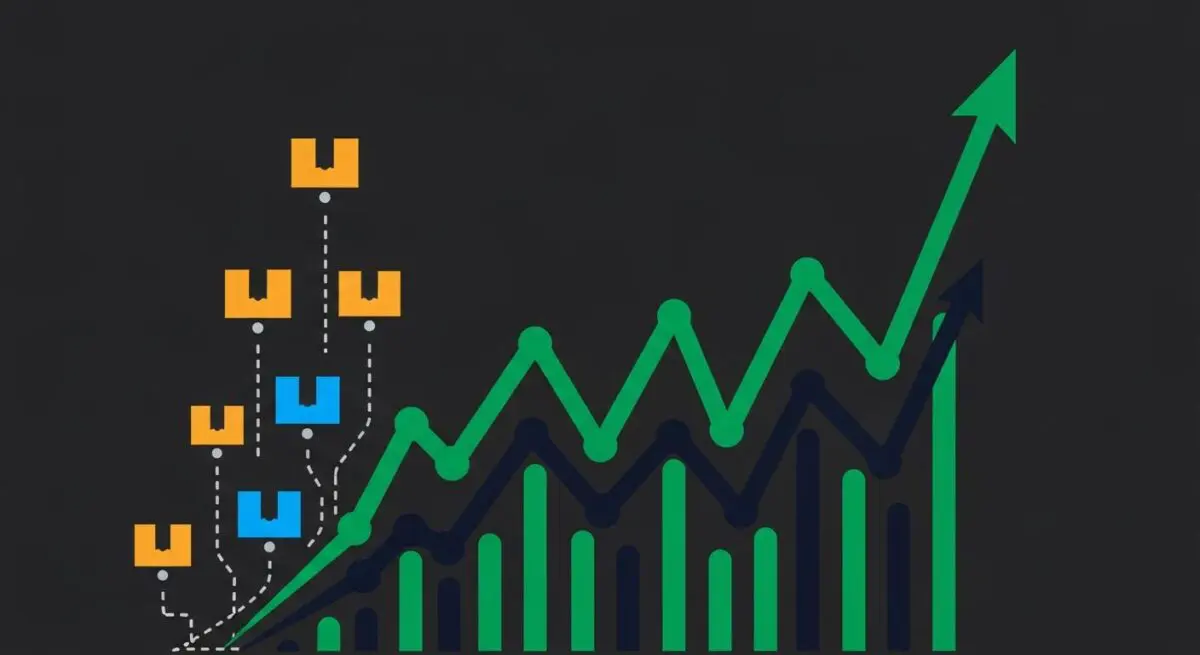
- Operational Momentum Indicator: ARR tracks the net impact of new customer acquisition, expansion within existing accounts, and revenue lost through churn.
What is Annual Recurring Revenue (ARR)?
Annual Recurring Revenue (ARR) is a critical performance indicator used by subscription-based businesses to quantify the total amount of predictable revenue expected from customers over a fiscal year. It represents the value of the recurring components of a company’s term subscriptions normalized to a single calendar year.
Unlike traditional accounting revenue, ARR is a forward-looking momentum metric rather than a historical record of cash received. It specifically excludes non-recurring items such as professional services fees, hardware sales, setup costs, and one-time training expenses that do not repeat annually.
In the context of modern data architecture and financial modeling, ARR provides a smoothed view of growth that accounts for varying contract lengths. By converting all active contracts into an annualized value, organizations can compare performance across different customer segments and time periods with high precision.
The Real-World Analogy
Consider a high-speed rail network that operates on a subscription model for daily commuters. While the network might occasionally sell one-time tickets for tourists or special events, these sales are volatile and depend on external factors like seasonal travel trends.
The annual commuter passes represent the ARR of the rail system. These passes provide a guaranteed, predictable stream of income that allows the operators to plan infrastructure maintenance, hire staff, and invest in new train cars with confidence.
Just as the rail operator focuses on the number of active annual passes to determine the health of the business, a tech company uses ARR to understand the core stability of its revenue engine without the noise of temporary, one-time transactions.
How Annual Recurring Revenue (ARR) Drives Strategic Growth & Market Competitiveness?
ARR is the primary driver of enterprise value in the Software-as-a-Service (SaaS) sector. Investors and venture capitalists utilize ARR as the denominator for calculating valuation multiples, as it demonstrates the scalability and sustainability of the underlying business model.
From a strategic growth perspective, a high ARR-to-churn ratio indicates strong product-market fit. This predictability allows management to calculate the LTV to CAC ratio (Lifetime Value to Customer Acquisition Cost) more accurately, which informs how aggressively the company can spend on marketing and sales to capture market share.
Furthermore, ARR enables sophisticated cohort analysis. By tracking how ARR evolves within specific customer groups over time, businesses can identify which features or service tiers drive expansion revenue. This data-driven approach allows for the optimization of pricing strategies and product development roadmaps.
In a competitive landscape, ARR serves as a benchmark for the “Rule of 40,” a principle stating that a software company’s combined growth rate and profit margin should exceed 40%. Companies with high ARR growth can often operate at a temporary loss to prioritize market dominance, knowing the recurring nature of the revenue will eventually lead to high profitability.
The metric also influences debt financing capabilities. Lenders are more likely to provide favorable terms to organizations with significant ARR, as the predictable cash flow reduces the risk of default compared to businesses relying on sporadic, large-scale enterprise sales.
Strategic Implementation & Best Practices
- Normalize Contract Data: Ensure all multi-year and monthly contracts are mathematically converted to a 12-month basis to maintain a consistent ARR baseline across the entire customer portfolio.
- Segment Revenue Components: Categorize ARR into New ARR, Expansion ARR (upgrades), Resurrected ARR (returning customers), and Contraction ARR (downgrades) to gain granular visibility into growth drivers.
- Automate Data Ingestion: Integrate CRM platforms like Salesforce or HubSpot directly with billing engines such as Stripe or Chargebee to eliminate manual entry errors and ensure real-time ARR reporting.
- Exclude Non-Recurring Revenue: Maintain strict data hygiene by filtering out one-time implementation fees, pilot projects, and variable usage charges that do not have a contractual guarantee of renewal.
- Align with GAAP Revenue: While ARR is a non-GAAP metric, it should be periodically reconciled with recognized revenue to ensure that the momentum tracked in sales matches the financial reality of the balance sheet.
Common Pitfalls & Strategic Mistakes
One frequent error is the inclusion of “Committed ARR” (CARR) in standard ARR reports without clear distinction. Including revenue from contracts that have been signed but not yet implemented can lead to an inflated sense of current liquidity and operational capacity.
Another significant mistake is failing to account for churn timing. If a customer cancels their subscription mid-year, the ARR should be adjusted immediately to reflect the loss of future predictable revenue, rather than waiting until the end of the fiscal period to update the dashboard.
Data silos between sales and finance departments often result in inconsistent ARR definitions. If the sales team counts gross contract value while finance counts net revenue after discounts, the resulting discrepancy can lead to poor strategic decisions and misallocated marketing budgets.
Conclusion
Annual Recurring Revenue is the fundamental metric for assessing the health and trajectory of subscription-based enterprises. Its proper implementation ensures that strategic decisions are based on predictable, scalable data rather than volatile, one-time financial events.