Executive Summary
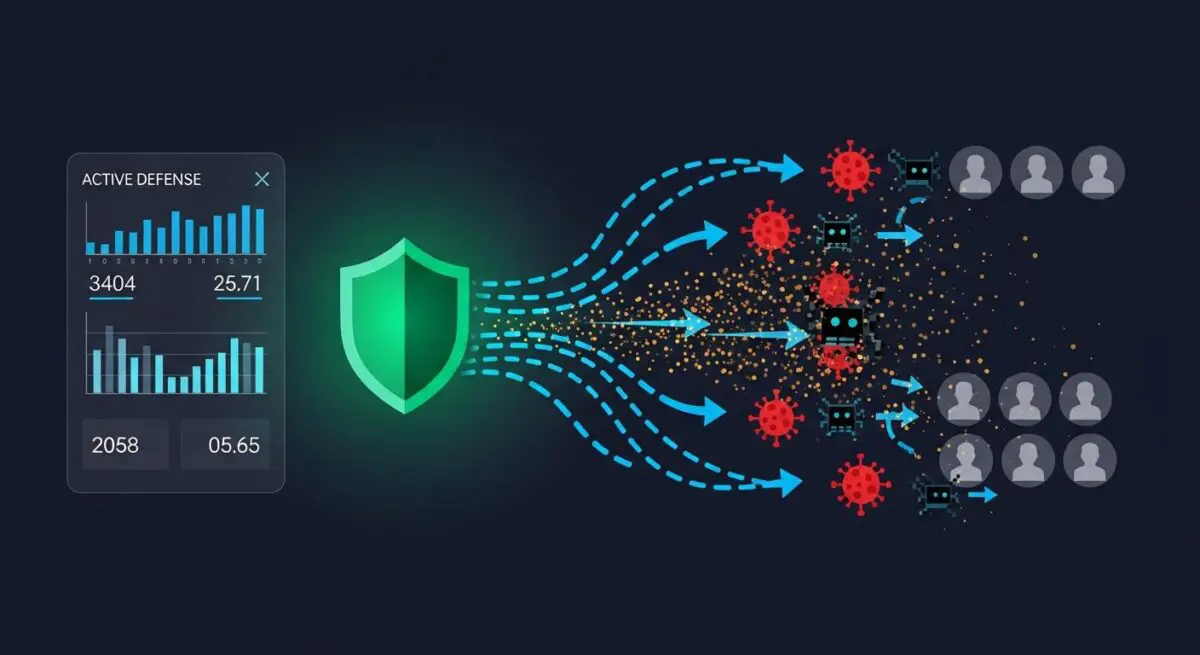
- Proactive Engagement: Active defense shifts the security paradigm from passive perimeter monitoring to the active disruption of adversary activities within the network.
- Deception Mechanisms: The strategy heavily utilizes deception technology, such as honeypots and honeytokens, to mislead attackers and gather intelligence on their methodologies.
- Operational Resilience: By reducing attacker dwell time through real-time intervention, organizations can maintain high levels of data integrity and system availability.
What is Active Defense?
Active defense is a proactive cybersecurity strategy that involves the use of offensive actions and counter-measures to disrupt an adversary’s progress within a network. Unlike passive defense, which relies on static barriers like firewalls, active defense seeks to engage the attacker directly through technical manipulation and strategic intervention.
This methodology is often defined by the OODA loop—Observe, Orient, Decide, and Act. It allows security teams to move beyond simple detection and toward a state of active engagement where the defender dictates the terms of the conflict within their own infrastructure.
In the context of a modern enterprise tech stack, active defense integrates threat hunting, deception technology, and automated response protocols. It is designed to increase the cost of an attack for the adversary while simultaneously decreasing the time it takes for the organization to identify and neutralize a breach.
The Real-World Analogy
Imagine a high-end jewelry store that does not just rely on a locked vault and a security camera. Instead, the store employs undercover security personnel who actively watch for suspicious behavior and set up decoy displays containing worthless replicas.
When a sophisticated thief attempts to steal a decoy, the security team immediately identifies their presence, tracks their movements, and blocks their exit before they can reach the actual vault. The thief is not just blocked by a door; they are actively misled and trapped by a system that was waiting for them to make a move.
How Active Defense Drives Strategic Growth & Market Competitiveness?
Active defense directly influences a company’s bottom line by safeguarding intellectual property and maintaining the integrity of data used for AI-driven decision-making. In an era where data poisoning can ruin machine learning models, active defense ensures that the information feeding your growth engines remains untainted and reliable.
From a market competitiveness standpoint, organizations that implement active defense often see a significant reduction in cyber insurance premiums and a lower total cost of ownership for their security infrastructure. By neutralizing threats early, companies avoid the catastrophic financial and reputational costs associated with large-scale data breaches.
Furthermore, active defense enhances customer trust, which is a critical component of customer acquisition and retention. When clients know that a firm uses advanced, proactive measures to protect their sensitive data, it creates a competitive advantage that passive-only firms cannot match.
Strategic Implementation & Best Practices
- Deploy Deception Technology: Implement honeypots and honeytokens across the network to create a minefield for attackers, allowing for early detection of lateral movement.
- Integrate Threat Hunting: Move beyond automated alerts by employing security analysts to proactively search for indicators of compromise (IoCs) that may have bypassed initial filters.
- Automate Incident Response: Use Security Orchestration, Automation, and Response (SOAR) platforms to execute pre-defined playbooks that can isolate compromised segments in milliseconds.
- Leverage Intelligence Sharing: Participate in industry-specific Information Sharing and Analysis Centers (ISACs) to gain real-time data on emerging threats and adjust active defense postures accordingly.
- Continuous Red Teaming: Regularly employ offensive security experts to test the effectiveness of active defense measures, ensuring the system evolves alongside attacker tactics.
Common Pitfalls & Strategic Mistakes
One of the most frequent errors is the “hacking back” fallacy, where organizations attempt to strike back at an attacker’s external infrastructure. This can lead to severe legal repercussions and unintended escalation, as it often violates international laws and domestic regulations.
Another common mistake is failing to manage the volume of data generated by active defense tools, leading to significant alert fatigue. Without proper filtering and automation, security teams can become overwhelmed by the very intelligence meant to protect them, resulting in missed critical signals.
Finally, many enterprise brands treat active defense as a standalone product rather than a strategic framework. This leads to fragmented implementations where deception tools are not integrated with the broader security operations center, creating silos that attackers can exploit.
Conclusion
Active defense is an essential component of a modern, resilient digital architecture that prioritizes proactive engagement over passive observation. By implementing these strategies, organizations can protect their strategic assets and ensure long-term operational stability in an increasingly hostile digital landscape.