




Key Points
- Instant Liquidity Engines: AI-driven platforms are eliminating the 60-to-90-day cash flow gap by offering real-time AdSense factoring and predictive receivables.
- Algorithmic Underwriting: Institutional lenders are abandoning legacy FICO scores in favor of deep-learning models that evaluate audience retention and engagement velocity.
- Autonomous Treasuries: The next frontier includes ‘Algorithmic CFOs’ and channel tokenization, allowing creators to sell micro-equity via DeFi rails.
Table of Contents
The Dawn of Creator Financial Infrastructure
According to a May 2026 report from Goldman Sachs, the creator economy has reached a valuation of $520 billion. Specialized FinTech services designed for these digital entrepreneurs are now growing at a compound annual growth rate of 32% year-over-year. This explosive growth signals a massive paradigm shift in how global markets value digital intellectual property and human capital.
At the absolute center of this financial revolution is Creator Financial Infrastructure (CFI). This is no longer just a collection of basic neobanking applications with sleek mobile interfaces. CFI has evolved into a sophisticated, institutional-grade liquidity engine designed to hyper-scale the modern YouTuber.
By treating audience attention as a highly liquid, investable asset class, CFI platforms are entirely rewiring the global financial tech stack. We have officially moved past the era of simple invoice tracking and entered the age of Autonomous Creator Treasuries. For founders and institutional investors, this represents one of the most lucrative technological disruptions of the decade.
Smart Money and Liquidity Velocity
Market Intelligence & Data
VC Flow into CFI
Total venture capital investment into Creator Financial Infrastructure startups in 2025, according to data from PitchBook.
AI Underwriting Adoption
The percentage of creator-specific lenders now using neural networks instead of FICO scores for risk assessment, as reported by the 2026 FinTech Insider Report.
Liquidity Velocity
The increase in capital turnover for creators using instant-payout brand deal platforms compared to traditional invoicing, per a 2026 McKinsey analysis.
IP-Backed Loan Volume
Total volume of loans issued globally where YouTube video libraries served as the primary collateral in Q1 2026, according to the SEC.
The data from the market intelligence grid reveals a clear and undeniable mandate. Institutional capital is aggressively hunting for yield within the creator economy, bypassing traditional corporate debt markets. We are witnessing a historic transition where venture capital investment continues to flow into Creator Financial Infrastructure startups at an unprecedented rate.
This massive influx of smart money is actively dismantling legacy financial bottlenecks that previously choked digital entrepreneurs. The concept of liquidity velocity has become the defining metric for top-tier creators. By accelerating capital turnover by 4.2x, YouTubers can reinvest in high-end production instantly, creating a compounding growth loop that traditional media companies cannot match.
Furthermore, the explosion of IP-backed loan volume proves that Wall Street now views YouTube video libraries as securitized, cash-flowing assets. This is not speculative funding; it is calculated, data-driven asset management. The financialization of the creator economy is fundamentally altering how digital empires are capitalized.
Algorithmic Underwriting and IP-Backed Assets
Traditional banking models fundamentally misunderstand the modern digital enterprise. Legacy underwriters look at a YouTuber’s volatile monthly AdSense revenue and see high-risk instability. However, disruptive platforms like Karat and Creative Juice have evolved into full-scale asset managers that understand the intrinsic value of digital intellectual property.
By leveraging deep-learning underwriting, these FinTech disruptors evaluate a channel’s retention metrics and engagement velocity rather than outdated consumer credit profiles. In fact, Stripe’s infrastructure enables Karat to underwrite creators using social media metrics rather than legacy credit scores. This technological leap allows creators to access institutional-grade capital based entirely on their audience loyalty and algorithmic momentum.
Decoding the Audience-as-Collateral Model
Newcomers to the financial technology space, such as FlowState, are securing massive $100M+ Series B rounds to pioneer Audience-as-Collateral loans. This establishes an entirely new asset class where digital attention can be accurately measured, borrowed against, and securitized for institutional portfolios. Macro-economic analysts are paying very close attention, as Goldman Sachs projects the creator economy could approach half-a-trillion dollars in the near future.
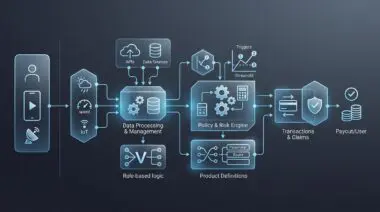
This innovative collateralization model requires a robust underlying tech stack to function properly. The architecture typically involves three core pillars:
- Real-Time API Integration: Direct connections to YouTube Studio analytics to monitor daily viewer retention and click-through rates.
- Predictive Revenue Modeling: Machine learning algorithms that forecast future brand deal conversions based on historical audience demographics.
- Automated Risk Mitigation: Dynamic credit limits that expand or contract automatically based on the channel’s 30-day algorithmic performance.
By relying on these technical pillars, FinTech lenders can deploy capital with a level of precision that makes traditional commercial banking look archaic. The risk is minimized not by looking at past tax returns, but by analyzing real-time digital behavior.
Solving the Cash Flow Gap with AI
The most critical friction point for any scaling YouTuber is the notorious Cash Flow Gap. This is the agonizing 60-to-90-day delay between funding content production and actually receiving brand deal or AdSense payouts. Modern CFI technology solves this massive inefficiency by providing instant liquidity through AI-predicted receivables.
These intelligent liquidity engines allow creators to scale their production value immediately without taking on high-interest personal debt. A 2026 study by Forrester Research highlights that 68% of creators earning over $100,000 annually now utilize Predictive Tax Harvesting tools. These advanced systems automatically adjust quarterly estimated payments based on real-time viewership spikes and dip cycles.
Furthermore, managing the complex web of global multi-currency compliance is no longer a barrier to international expansion. Integrated AI Tax Engines seamlessly handle these cross-border regulatory complexities in real-time. This automated compliance layer ensures that creators can monetize global audiences without facing crippling tax penalties or administrative gridlock.
Programmatic Revenue Splits and Smart Contracts
Beyond lending and tax optimization, the internal treasury management of a YouTube channel is undergoing a radical transformation. Disruptive infrastructure now includes Programmatic Revenue Splits powered by blockchain-agnostic smart contracts. This allows YouTubers to automate complex payment waterfalls to their production teams.
The moment a video generates revenue, the underlying code instantly routes fractional payments to editors, thumbnail artists, agents, and collaborators. This entirely bypasses traditional payroll cycles and eliminates the need for manual invoicing. It is a zero-friction financial ecosystem that operates continuously in the background.
By removing the administrative burden of human resources and accounts payable, creators can focus entirely on audience growth and content strategy. The smart contract infrastructure guarantees trustless, immediate compensation for all creative stakeholders involved in a project.
The Future Trajectory of Autonomous Treasuries
Strategic Trajectory
- Capitalize on the 24-month rise of ‘Channel Tokenization’ and ‘Creator-Led ETFs’.
- Enable micro-equity sales in future earnings via decentralized finance (DeFi) rails.
- Standardize the deployment of ‘Algorithmic CFOs’ for autonomous cash management.
- Utilize AI agents to shift reserves between high-yield assets and production reinvestment.
- Integrate real-time CPM volatility and platform algorithm trends into financial workflows.
The next 24 months will radically transform how digital creators interact with capital markets and decentralized finance. We are rapidly approaching the era of Channel Tokenization and Creator-Led ETFs. This decentralized infrastructure will allow YouTubers to bypass traditional venture capital entirely and sell micro-equity directly to their audience.
By utilizing DeFi rails, a creator can issue revenue-sharing tokens that pay dividends based on a video’s lifetime AdSense performance. This turns passive subscribers into active financial stakeholders, creating an unprecedented alignment of incentives. The audience essentially becomes the channel’s primary liquidity provider.
Simultaneously, we expect Algorithmic CFOs to become the standard operating system for digital treasuries. These AI agents will proactively shift a creator’s cash reserves between high-yield institutional assets and immediate production reinvestment. By analyzing real-time CPM volatility and platform algorithm trends, the Algorithmic CFO will optimize capital allocation with mathematical precision.
Architecting the Next Era of Digital Wealth
The evolution of Creator Financial Infrastructure is not merely a passing trend; it is the absolute financialization of human attention. As AI-driven underwriting, predictive liquidity engines, and tokenized IP become mainstream, the barrier between digital content and institutional capital will completely dissolve. YouTubers are no longer just entertainers; they are highly autonomous, algorithmic treasuries.
For financial technology architects and venture capitalists, the mandate is clear. The platforms that successfully integrate real-time social metrics with decentralized treasury management will capture the lion’s share of this $520 billion market. Building for the creator economy now requires a deep understanding of both algorithmic momentum and institutional risk management.
Navigating the intersection of financial technology, institutional capital, and market psychology requires a sharp strategy. To future-proof your FinTech architecture and scale with precision, connect with Andres at Andres SEO Expert.
Frequently Asked Questions
What is Creator Financial Infrastructure (CFI)?
Creator Financial Infrastructure (CFI) is a specialized suite of institutional-grade financial services designed to treat digital audience attention as a liquid, investable asset class. It moves beyond simple banking to provide sophisticated liquidity engines, autonomous treasuries, and capital scaling tools for digital entrepreneurs.
How does algorithmic underwriting differ from traditional credit scores?
Traditional underwriting relies on FICO scores and historical tax returns, which often fail to capture the value of digital assets. Algorithmic underwriting uses deep-learning to evaluate real-time performance data, such as viewer retention, engagement velocity, and YouTube Studio analytics, to assess a creator’s creditworthiness.
What is the “Audience-as-Collateral” lending model?
The Audience-as-Collateral model allows creators to secure loans by using their digital intellectual property and audience loyalty as collateral. This system securitizes YouTube video libraries and historical performance data to provide institutional-grade capital for scaling production.
How do AI liquidity engines solve the cash flow gap for creators?
AI liquidity engines analyze predicted receivables from brand deals and AdSense to provide instant payouts. This eliminates the traditional 60-to-90-day waiting period for payments, allowing creators to reinvest in their business immediately and maintain high liquidity velocity.
What role do smart contracts play in creator revenue management?
Smart contracts enable programmatic revenue splits, which automate payments to production teams, editors, and collaborators. By executing payments the moment revenue is generated, these systems eliminate the need for manual invoicing and traditional payroll cycles.
What are Algorithmic CFOs in the context of digital treasuries?
Algorithmic CFOs are AI agents that autonomously manage a creator’s treasury. They shift cash reserves between high-yield assets and content production based on real-time data, such as CPM volatility and platform algorithm trends, to maximize financial efficiency.
What is the projected market value of the creator economy?
According to Goldman Sachs, the creator economy reached a valuation of approximately $520 billion by 2026. This growth is supported by a 32% year-over-year increase in specialized FinTech services designed for digital entrepreneurs.