



Executive Summary
- Omnichannel Synchronization: Requires real-time API integration between Order Management Systems (OMS), Warehouse Management Systems (WMS), and Point of Sale (POS) terminals to ensure inventory accuracy.
- Logistical Efficiency: Drastically reduces last-mile delivery costs by leveraging existing brick-and-mortar locations as micro-fulfillment centers.
- Conversion Optimization: Enhances customer lifetime value (CLV) by bridging digital intent with physical foot traffic, facilitating immediate product acquisition and incremental in-store sales.
What is BOPIS (Buy Online, Pick Up In Store)?
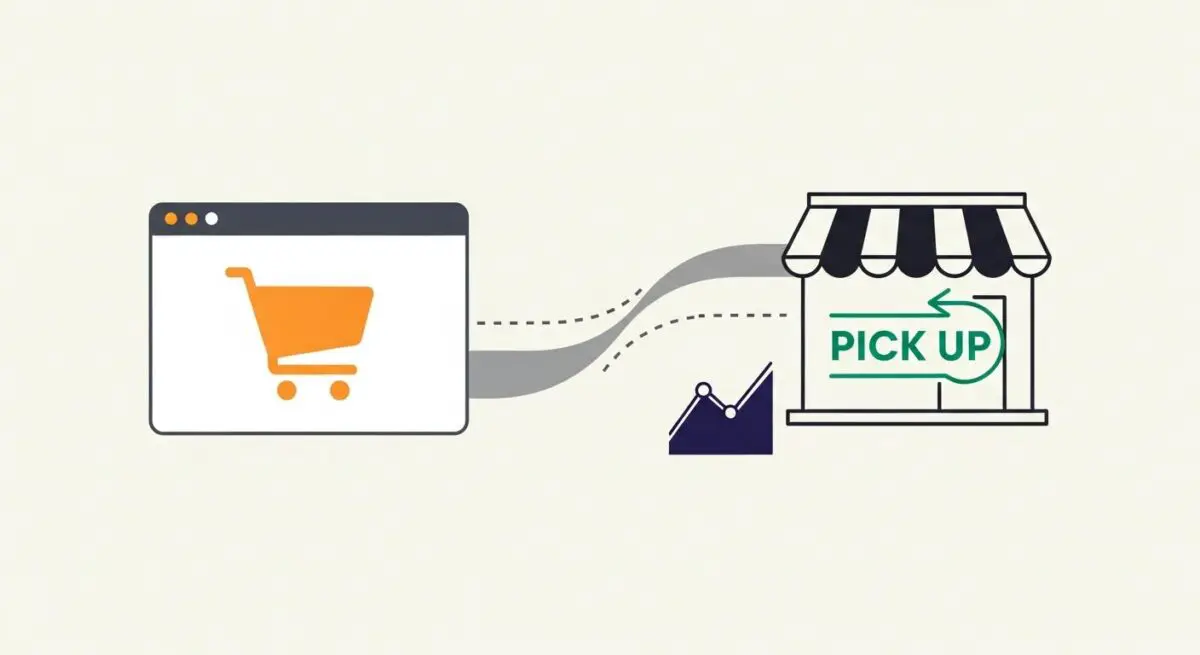
BOPIS, an acronym for Buy Online, Pick Up In Store, represents a sophisticated hybrid retail model that merges the convenience of digital commerce with the immediate fulfillment capabilities of physical retail locations. At its core, BOPIS is a technical framework that requires a unified commerce architecture where the digital storefront and physical inventory databases operate in a state of continuous synchronization.
In a modern enterprise tech stack, BOPIS is powered by an integrated Order Management System (OMS) that acts as the central nervous system for all transactions. This system must communicate via low-latency APIs with the Enterprise Resource Planning (ERP) software and the in-store Point of Sale (POS) systems to provide a single source of truth for inventory levels across multiple nodes.
From a technical perspective, the implementation of BOPIS involves complex logic for order routing and inventory allocation. When a customer initiates a BOPIS transaction, the system must perform a real-time check of the local store’s ‘Available to Promise’ (ATP) inventory, accounting for safety stock buffers and pending in-store sales that may not yet be reflected in the digital ledger.
The Real-World Analogy
Imagine a high-end digital concierge service at an exclusive restaurant where you pre-order and pay for your meal via a mobile application before leaving your home. Instead of waiting for a delivery driver who might get stuck in traffic or arriving at the restaurant only to find your desired dish is sold out, the kitchen receives your order the moment you confirm it.
The chefs begin preparation based on your GPS proximity, ensuring the meal is at peak quality the exact second you walk through the door. You bypass the queue, avoid the delivery fee, and ensure the product meets your standards immediately, while the restaurant optimizes its kitchen workflow and inventory usage based on your pre-confirmed data.
How BOPIS (Buy Online, Pick Up In Store) Drives Strategic Growth & Market Competitiveness?
BOPIS is a critical driver of strategic growth because it directly addresses the ‘last-mile’ problem, which is often the most expensive and inefficient segment of the supply chain. By shifting the fulfillment responsibility to the consumer, enterprises can significantly reduce shipping overhead and packaging waste, thereby improving the net margin on every unit sold.
Furthermore, BOPIS serves as a powerful tool for Customer Acquisition Cost (CAC) optimization. When a customer chooses to pick up an item in-store, the brand gains a high-intent physical touchpoint that is often lost in pure-play e-commerce. Data suggests that a significant percentage of BOPIS customers engage in ‘incremental purchasing’ once they enter the physical environment, effectively increasing the Average Order Value (AOV) without additional digital ad spend.
From a data integrity standpoint, BOPIS provides invaluable insights into the omnichannel customer journey. It allows marketers to link digital identifiers (such as cookies or device IDs) with physical purchase behavior, enabling more accurate attribution modeling. This closed-loop data is essential for training AI-driven recommendation engines and optimizing local SEO strategies through Generative Engine Optimization (GEO).
In the era of AI-search, having real-time local inventory data available via Schema.org markup is a competitive necessity. Search engines increasingly prioritize retailers who can guarantee immediate local availability, making BOPIS a foundational element of a modern search visibility strategy. This technical alignment ensures that a brand appears in ‘near me’ queries, which carry significantly higher conversion intent than broad informational searches.
Strategic Implementation & Best Practices
- Real-Time Inventory Accuracy: Implement Radio Frequency Identification (RFID) technology and automated cycle counting to ensure that the digital inventory reflected on the website matches the physical reality of the store shelves with 99% accuracy.
- Unified Order Management: Deploy a headless commerce architecture that allows the OMS to communicate seamlessly with disparate legacy systems, ensuring that order status updates (e.g., ‘Ready for Pickup’) are triggered via webhooks in real-time.
- Geofencing and Proximity Alerts: Utilize mobile app geofencing to notify store associates when a customer is approaching the premises, allowing for ‘curbside’ readiness and reducing the customer’s wait time to near zero.
- Dedicated Fulfillment Workflows: Establish Standard Operating Procedures (SOPs) for in-store staff that prioritize BOPIS picking and packing, utilizing dedicated handheld devices that provide optimal walking paths through the store to maximize efficiency.
- Feedback Loop Integration: Automate post-pickup surveys to capture data on the physical experience, feeding this information back into the CRM to refine customer segments and personalized marketing efforts.
Common Pitfalls & Strategic Mistakes
One of the most frequent errors in BOPIS implementation is ‘Inventory Latency,’ where the digital storefront fails to account for items currently in a physical shopper’s basket. This leads to ‘ghost inventory’ issues where an online customer orders an item that is sold out seconds before the order is processed, resulting in high cancellation rates and brand erosion.
Another strategic mistake is the failure to break down data silos between the e-commerce team and the physical retail operations. If the store staff views BOPIS as an additional burden rather than a primary sales channel, the customer experience will suffer due to slow fulfillment times or disorganized pickup areas, negating the convenience factor that drives the model.
Finally, many enterprise brands fail to properly attribute BOPIS revenue, often leading to internal conflicts over budget allocation. Without a robust omnichannel attribution model, the digital team may not receive credit for driving physical foot traffic, leading to underinvestment in the very technologies that facilitate the BOPIS ecosystem.
Conclusion
BOPIS is no longer an optional feature but a technical requirement for any retailer seeking to survive in an omnichannel environment. By integrating real-time data streams and physical infrastructure, brands can create a frictionless commerce loop that optimizes both operational costs and customer satisfaction.