Key Points
- Agentic Workflows: Transition from static marketing to dynamic, autonomous AI agents capable of recursive prospect research.
- RAG Integration: Utilize Retrieval-Augmented Generation to ensure all personalized outreach is grounded in factual company data.
- Predictive Attribution: Leverage machine learning to analyze successful touchpoints and mathematically optimize revenue forecasting.
Table of Contents
The AI Landscape
By 2026, experts project that 80% of the B2B sales cycle will happen through digital, AI-driven channels. Human-to-human interaction is quickly becoming a premium luxury reserved for the final closing stages.
The enterprise revenue engine is undergoing a massive shift driven by large language models and neural networks. Static marketing automation is rapidly giving way to dynamic workflows capable of independent reasoning.
The speed of innovation in generative AI is forcing organizations to completely rethink their sales strategies. Traditional outbound methods, which rely heavily on manual list building and generic email blasts, are losing their effectiveness.
Decision-makers are flooded with automated noise every single day. This saturation makes it incredibly difficult to capture their attention through conventional channels, demanding a much smarter approach to digital engagement.
This transition introduces Autonomous B2B Lead Orchestration as the new standard for outbound engagement. It moves far beyond simple merge tags to deploy smart agents capable of deep, contextual prospect research.
These intelligent systems analyze complex financial filings, social sentiment, and technology stacks in real time. The result is the automated creation of highly personalized pitches that resonate deeply with top executives.
The impact on AI Overviews and Search Generative Experience is particularly profound. Modern B2B buyers now routinely use AI assistants to conduct their initial vendor screenings and market research.
To remain visible in this new landscape, companies must aggressively optimize their digital footprint for AI-to-AI discovery. This transition fundamentally changes the human role from a manual prospector to an executive supervisor.
The primary task of revenue leaders is now managing a fleet of autonomous agents that handle top-of-funnel discovery. These systems manage qualification and meeting coordination at a scale that is mathematically impossible for human teams.
Core Concepts & Capabilities
Core Architecture & Pillars
Autonomous Prospecting Swarms
This involves deploying decentralized AI agents that utilize recursive task decomposition to identify high-intent accounts. These agents use LLMs to interpret unstructured data from news cycles and job boards to predict a company’s immediate needs before they are officially tendered.
Dynamic Contextual Personalization
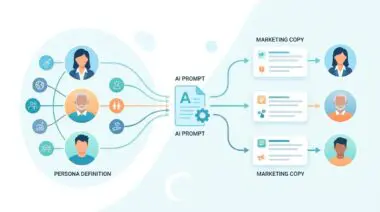
Unlike traditional merge tags, this pillar uses transformer models to synthesize disparate data points into a cohesive narrative. The AI analyzes the prospect’s recent interviews or whitepapers to mirror their professional tone and address specific pain points identified through semantic analysis.
Agentic Multi-Channel Orchestration
This refers to the synchronization of outreach across LinkedIn, email, and voice synthesized via AI agents. The technical layer involves a state-machine architecture that tracks prospect engagement and switches channels or messaging strategies in real-time based on sentiment analysis of the prospect’s responses.
Predictive Revenue Attribution
This pillar utilizes machine learning models to assign a probability score to lead sequences. By analyzing the ‘latent space’ of successful historical interactions, the AI identifies which specific sequences of AI-generated touchpoints lead to a closed-won status.
Autonomous B2B Lead Orchestration represents a massive departure from the rigid drip campaigns of the past decade. It relies on decentralized swarms of AI agents that break down complex tasks to identify high-intent accounts.
These agents constantly scan unstructured data across global news cycles, financial reports, and specialized job boards. They use advanced natural language processing to anticipate a prospect’s immediate needs long before a formal request is drafted.
This recursive task decomposition allows AI swarms to break down complex research objectives into manageable micro-tasks. One agent might analyze a company’s recent funding round, while another investigates their current engineering job postings.
This distributed cognitive processing mimics the workflow of an entire team of senior sales representatives. The speed and comprehensive nature of this research provide an insurmountable advantage over manual prospecting methods.
To maintain absolute relevance and factual accuracy, these sophisticated systems utilize Retrieval-Augmented Generation (RAG) to ensure that every outbound communication is grounded in real-time market intelligence. This architectural choice effectively eliminates hallucination risks while maximizing contextual alignment.
Recent industry studies reveal that B2B organizations utilizing agentic lead flows have seen a massive reduction in customer acquisition costs. This efficiency stems from AI agents nurturing lukewarm leads for months at zero marginal cost until they are ready to buy.
Furthermore, transformer models synthesize disparate data points to match the exact professional tone of the individual prospect. Semantic analysis identifies precise operational pain points, allowing the reasoning engine to deploy the perfect case study.
Vector similarity searches further enhance this capability by mathematically matching a prospect’s profile with the most relevant internal company data. This ensures that the AI always selects the most persuasive narrative framework for each unique interaction.
This level of dynamic contextual personalization ensures that every touchpoint feels bespoke and highly researched. The AI evaluates recent podcast interviews or technical publications authored by the prospect to mirror their specific industry vocabulary.
Agentic multi-channel orchestration then synchronizes this highly tailored outreach across LinkedIn, email, and synthesized voice platforms. The technical layer involves a complex architecture that tracks prospect engagement with granular precision.
This system can autonomously switch communication channels or alter messaging strategies in real time based on the prospect’s replies. It reacts instantly to invisible signals, such as a high-value prospect spending extended time on a specific technical documentation page.
Strategic Implementation
Implementation Roadmap
Knowledge Base Vectorization
Ingest all product documentation, successful sales transcripts, and case studies into a Vector Database (like Pinecone or Milvus). Implement a RAG pipeline to ensure AI agents have ‘ground truth’ data for lead engagement.
Agentic Workflow Configuration
Deploy a multi-agent framework (such as LangGraph or CrewAI) where ‘Researcher Agents’ find leads, ‘Writer Agents’ draft personalized content, and ‘Compliance Agents’ ensure all messaging adheres to brand guidelines and GDPR/CCPA standards.
API-Driven CRM Integration
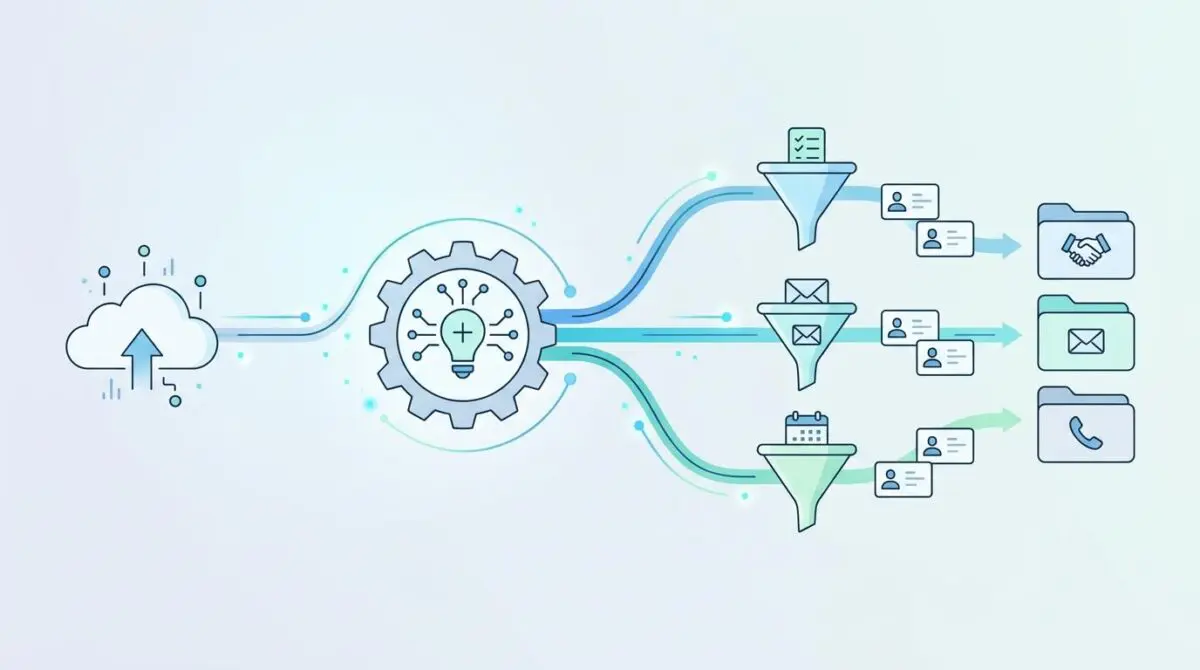
Connect the AI orchestration layer to Salesforce or HubSpot via REST APIs. Configure webhooks to trigger agent actions based on prospect activity, such as a lead downloading a whitepaper or visiting a pricing page.
Human-in-the-Loop (HITL) Refinement
Establish a review dashboard where sales leaders can ‘rate’ agent interactions. Use this feedback to fine-tune the LLM parameters (Temperature, Top-P) and prompt engineering to align with high-conversion communication styles.
Transitioning to an autonomous orchestration model requires a rigorous and highly technical architectural foundation. Enterprises must first vectorize their entire knowledge base, ingesting product documentation and successful sales transcripts into scalable databases.
This critical vectorization process feeds the RAG pipeline, establishing the absolute ground truth for all agentic interactions. Without this foundational data layer, large language models cannot generate the hyper-specific narratives required for complex enterprise sales.
Next, organizations must deploy a robust multi-agent framework (such as LangGraph or CrewAI) to orchestrate distinct cognitive roles within the workflow. Specialized researcher agents hunt for buying signals, while dedicated writer agents draft compelling narratives.
The selection of the underlying large language model is also a critical architectural decision for these workflows. Enterprises must balance the reasoning capabilities of frontier models with the speed and cost-efficiency of smaller, specialized models.
Many organizations are adopting a routing architecture, where complex reasoning tasks are sent to advanced models, while routine formatting is handled by faster alternatives. This optimization ensures that the workflow remains both highly capable and economically viable at scale.
Simultaneously, compliance agents operate in the background to enforce strict brand guidelines and ensure adherence to privacy standards. These orchestration layers are then connected via REST APIs to central CRM hubs like Salesforce or HubSpot.
Security and access controls must also be tightly integrated into the API layer to prevent unauthorized data leaks. Role-based access control ensures that AI agents only interact with approved datasets and CRM fields.
Engineers configure complex webhooks to trigger immediate agent actions based on subtle prospect activities across the digital ecosystem. For example, a lead downloading a specific technical whitepaper instantly initiates a customized workflow tailored to that exact topic.
The system cross-references third-party intent data with historical customer profiles to ensure the search for leads is constrained by successful conversion parameters. This API-driven integration ensures that the CRM remains the single source of truth while the AI handles execution.
Finally, human-in-the-loop refinement remains an essential component for continuous model optimization and safety. Revenue leaders utilize dedicated review dashboards to rate agent interactions and monitor overall campaign sentiment.
Engineers use this qualitative feedback to fine-tune critical LLM parameters, adjusting temperature and top-p settings for peak conversion. This continuous feedback loop aligns the AI’s prompt engineering with the most successful communication styles.
Real-World Impact & Use Cases
The real-world impact of autonomous orchestration on the modern sales organization is both immediate and disruptive. Human capital is now freed from the tedious, repetitive tasks of list building and initial cold outreach.
Sales professionals are evolving into strategic governors, focusing exclusively on complex negotiations, relationship building, and final contract structuring. This division of labor maximizes the return on investment of expensive human talent while scaling top-of-funnel volume exponentially.
In practice, an autonomous agent might detect a target enterprise hiring three new senior cloud security architects. The agent instantly cross-references this external signal with its internal database regarding proprietary cloud security solutions.
Within seconds, the system crafts a highly specific outreach sequence addressing the exact challenges of scaling secure cloud infrastructure. It then initiates a synchronized, multi-channel engagement strategy designed to capture the attention of key decision-makers.
Industry analysts note that 80% of the B2B sales cycle will occur through digital, AI-mediated channels as these technologies mature. The sheer volume and quality of AI-generated outreach are making traditional manual prospecting mathematically uncompetitive.
The integration of autonomous agents also fundamentally transforms the concept of lead scoring and pipeline forecasting. Traditional lead scoring relies on arbitrary point values assigned to basic actions like email opens or webinar attendances.
Predictive revenue attribution, powered by machine learning, replaces this guesswork with rigorous statistical probability models. The AI analyzes the entire lifecycle of thousands of closed-won deals to identify the hidden patterns of successful engagement.
This allows revenue operations teams to forecast pipeline velocity with unprecedented mathematical accuracy. It also highlights specific bottlenecks in the outreach sequence where prospect engagement typically drops off, enabling rapid strategic adjustments.
Enterprises feed the output of their AI agents back into centralized data warehouses for continuous learning. This allows the language model to autonomously refine its own targeting logic based on hard revenue outcomes rather than superficial click-through rates.
Ultimately, organizations that master this technology will dominate their respective markets through sheer operational velocity. The ability to nurture thousands of accounts simultaneously with bespoke, hyper-relevant messaging is the ultimate competitive advantage.
Best Practices & Future Outlook
Strategic Best Practices
- Prioritize ‘Zero-Party Data’ strategies to ensure AI agents are using information provided directly by the user, minimizing privacy risks.
- Maintain a ‘Human-in-the-Loop’ protocol for all high-value account interactions to prevent AI hallucinations from damaging key relationships.
- Implement strict rate-limiting and ‘Identity Verification’ protocols for AI agents to prevent your domain from being flagged as a spam source by next-generation AI-powered email filters.
Navigating this new frontier of autonomous orchestration requires strict adherence to data privacy and deliverability protocols. Organizations must prioritize zero-party data strategies to ensure AI agents utilize information provided directly by the user.
Relying on zero-party data minimizes compliance risks and builds foundational trust with enterprise prospects. Implementing strict rate-limiting and identity verification protocols for all AI agents is absolutely non-negotiable in this environment.
Next-generation AI-powered email filters will aggressively penalize and blacklist domains that exhibit uncalibrated, high-volume automated behavior. Outreach must be carefully paced and authenticated to maintain pristine domain reputation scores.
Furthermore, maintaining a strict human-in-the-loop protocol for all tier-one enterprise accounts is critical for risk mitigation. This oversight prevents catastrophic AI hallucinations from damaging key industry relationships or misrepresenting complex product capabilities.
Continuous auditing of the AI’s output is necessary to ensure long-term alignment with evolving brand messaging. Regular prompt engineering reviews help mitigate model drift and maintain the desired tone of voice across all automated channels.
Companies should establish a dedicated AI operations council to oversee the ethical and strategic deployment of these orchestration frameworks. This cross-functional team ensures that the technology serves the broader business objectives without compromising corporate integrity.
High-value strategic relationships require the nuanced oversight and emotional intelligence that only experienced human operators can provide. The AI should serve as a powerful exoskeleton for the sales team, not a complete replacement for human judgment.
As we look to the future, the integration of autonomous agents with advanced predictive analytics will become increasingly sophisticated. Machine learning models will continuously refine their own communication styles, adapting instantly to subtle shifts in market dynamics.
The organizations that thrive will be those that seamlessly blend artificial intelligence with strategic human oversight. The era of autonomous revenue generation is no longer a theoretical concept; it is a present-day operational reality.
Navigating the rapid evolution of Large Language Models and AI infrastructure requires a precise strategy. To stay ahead of the AI revolution and optimize your digital presence, connect with Andres at Andres SEO Expert.
Frequently Asked Questions
What is Autonomous B2B Lead Orchestration (ABLO)?
Autonomous B2B Lead Orchestration (ABLO) is a modern outbound standard that utilizes cognitive AI agents to conduct deep, contextual prospect research. Unlike static automation, ABLO agents analyze unstructured data like SEC filings and social sentiment to generate hyper-personalized value propositions that resonate with high-level decision-makers.
How do agentic lead flows impact Customer Acquisition Cost (CAC)?
According to research, organizations utilizing agentic lead flows have seen a 45% reduction in CAC. This efficiency gain is driven by AI agents nurturing leads for months at zero marginal cost, ensuring human sales talent only intervenes when a lead reaches a high-intent threshold.
Why is Retrieval-Augmented Generation (RAG) important for AI sales outreach?
RAG is a critical architectural component that grounds AI interactions in real-time market intelligence and internal company data. By connecting LLMs to a vectorized knowledge base, RAG eliminates the risk of AI hallucinations and ensures that all outbound communications are factually accurate and contextually relevant.
How do autonomous prospecting swarms identify high-intent accounts?
Prospecting swarms utilize recursive task decomposition to identify accounts by monitoring global news cycles, financial reports, and job boards. These decentralized agents use natural language processing to anticipate a prospect’s needs before a formal request for proposal (RFP) is even created.
What is the purpose of Human-in-the-Loop (HITL) in an AI-driven sales model?
HITL provides a necessary layer of strategic governance and quality control. Sales leaders use review dashboards to rate agent interactions and fine-tune LLM parameters, ensuring that the AI maintains the desired brand tone and does not damage high-value relationships during complex negotiations.
How does ABLO prepare companies for AI-to-AI discovery and SGE?
As B2B buyers increasingly use AI assistants for vendor screenings, companies must optimize their digital footprint for AI-to-AI discovery. ABLO facilitates this by vectorizing internal product data and sales transcripts, making the organization’s value proposition readily available and persuasive to AI-mediated search engines and assistants.