Executive Summary
- Visibility and Governance: CASBs provide deep visibility into Shadow IT by identifying unsanctioned cloud applications and monitoring user activity across SaaS, PaaS, and IaaS environments.
- Data Loss Prevention (DLP): These brokers enforce sophisticated data protection policies, including encryption, tokenization, and access control, to prevent unauthorized data exfiltration in the cloud.
- Adaptive Threat Protection: By utilizing User and Entity Behavior Analytics (UEBA), CASBs detect anomalous patterns and block malware or compromised accounts in real-time.
What is CASB (Cloud Access Security Broker)?
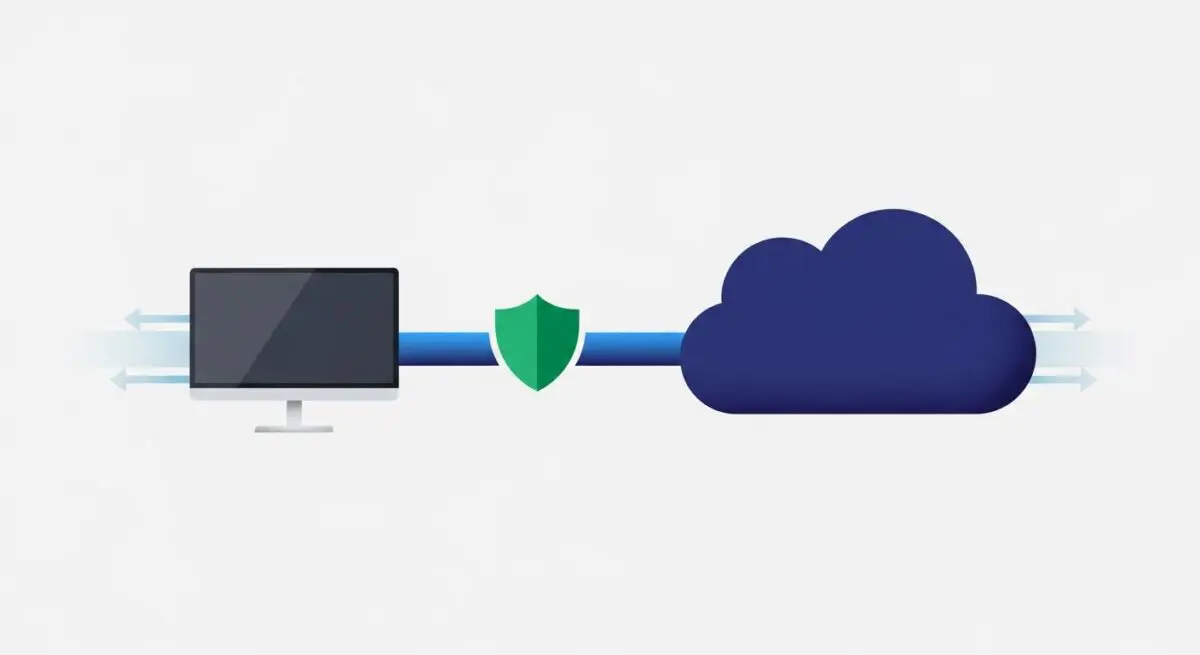
A Cloud Access Security Broker (CASB) is a security policy enforcement point positioned between cloud service consumers and cloud service providers. It functions as a technical gateway that consolidates various types of security policy enforcement, including authentication, single sign-on, authorization, and credential mapping.
In a modern enterprise tech stack, the CASB serves as the primary mechanism for extending an organization’s internal security perimeter to the cloud. It addresses the inherent visibility gaps that occur when data moves outside the traditional corporate network into third-party managed environments.
Technically, a CASB can be deployed via API-based integrations or as a forward/reverse proxy. This flexibility allows it to monitor traffic, intercept data in transit, and apply governance rules to both managed and unmanaged devices accessing corporate cloud resources.
The Real-World Analogy
Think of a CASB as a specialized security detail assigned to a high-value diplomatic envoy traveling through international territories. While the envoy moves through various foreign jurisdictions (the cloud providers) that have their own local laws, the security detail ensures that the envoy’s specific protocols and safety standards are strictly maintained regardless of the location.
The security detail checks every person who approaches the envoy, inspects every package exchanged, and ensures that sensitive documents never leave the envoy’s sight. Even though the envoy is no longer within their home country’s borders, the security detail provides a portable, consistent layer of protection that travels with them.
How CASB Drives Strategic Growth & Market Competitiveness?
CASB implementation directly influences strategic growth by enabling the safe adoption of high-velocity cloud tools that would otherwise be blocked by compliance or risk management departments. By mitigating the risks associated with Shadow IT, organizations can empower departments to use the best-of-breed SaaS tools needed for rapid innovation.
From a data integrity perspective, CASBs protect the proprietary datasets that fuel AI-driven marketing and competitive intelligence. Ensuring that this data remains uncorrupted and confidential prevents competitors from gaining insights into an organization’s strategic maneuvers or customer acquisition strategies.
Furthermore, CASBs significantly reduce the potential for catastrophic financial loss associated with data breaches and regulatory non-compliance. By automating the discovery of sensitive data and enforcing encryption, companies lower their overall risk profile, which improves investor confidence and stabilizes long-term operational costs.
Strategic Implementation & Best Practices
- Implement a Multi-Mode Deployment: Utilize both API-based protection for data at rest and proxy-based enforcement for data in motion to ensure comprehensive coverage across all cloud interactions.
- Integrate with Identity Providers (IdP): Connect the CASB to existing IAM solutions to leverage context-aware access controls, such as geographic location, device health, and user role.
- Define Granular DLP Policies: Move beyond simple keyword matching by implementing advanced data loss prevention techniques like document fingerprinting and exact data matching (EDM).
- Monitor Shadow IT Continuously: Use CASB discovery features to analyze firewall and web proxy logs, identifying high-risk unsanctioned applications that may be leaking corporate data.
Common Pitfalls & Strategic Mistakes
One frequent error is failing to account for unmanaged devices, such as personal smartphones or home computers, which can bypass certain CASB configurations if not properly addressed through reverse proxy setups. This creates a significant blind spot in the security architecture.
Another mistake is the creation of overly restrictive policies that hinder employee productivity, leading users to find even more dangerous workarounds. Security teams must balance strict data governance with the operational needs of a modern, agile workforce to avoid internal friction.
Conclusion
A CASB is a critical architectural component for any organization operating in a cloud-first environment, providing the necessary visibility and control to protect digital assets. Implementing a robust CASB strategy ensures that data remains secure, compliant, and accessible only to authorized entities across the global cloud landscape.