Key Points
- Eradicating Documentation Decay: Autonomous agents eliminate massive productivity drains by seamlessly extracting context from live repositories during CI/CD cycles.
- The Trust and Verification Pivot: With developer trust in AI outputs dropping, capital is aggressively flowing into verified agents that use formal methods to prove code alignment.
- Self-Healing Architecture: The strategic deployment of stateful AI collaborators transforms documentation from a passive record into an interactive expert witness.
Table of Contents
The Core Friction: Curing Documentation Decay
According to McKinsey’s 2026 analysis, integrating AI-driven repository parsing and autonomous documentation has boosted software engineering productivity by up to 45% for early enterprise adopters. This staggering metric highlights a fundamental shift in how modern engineering teams operate at scale. The era of static, manually updated wikis is officially over as we enter the age of autonomous software documentation agents.
For decades, enterprise engineering teams have battled a crisis known as documentation decay. This friction occurs when technical wikis become obsolete within hours of a production push, leaving developers to navigate a maze of outdated instructions. It creates a massive productivity drain, forcing engineers to manually scaffold guides and investigate legacy codebase logic during onboarding.
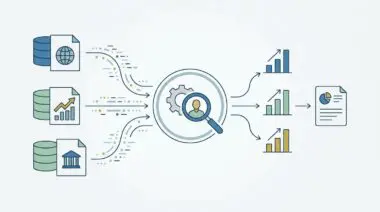
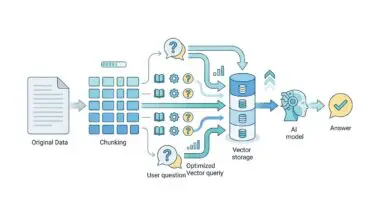
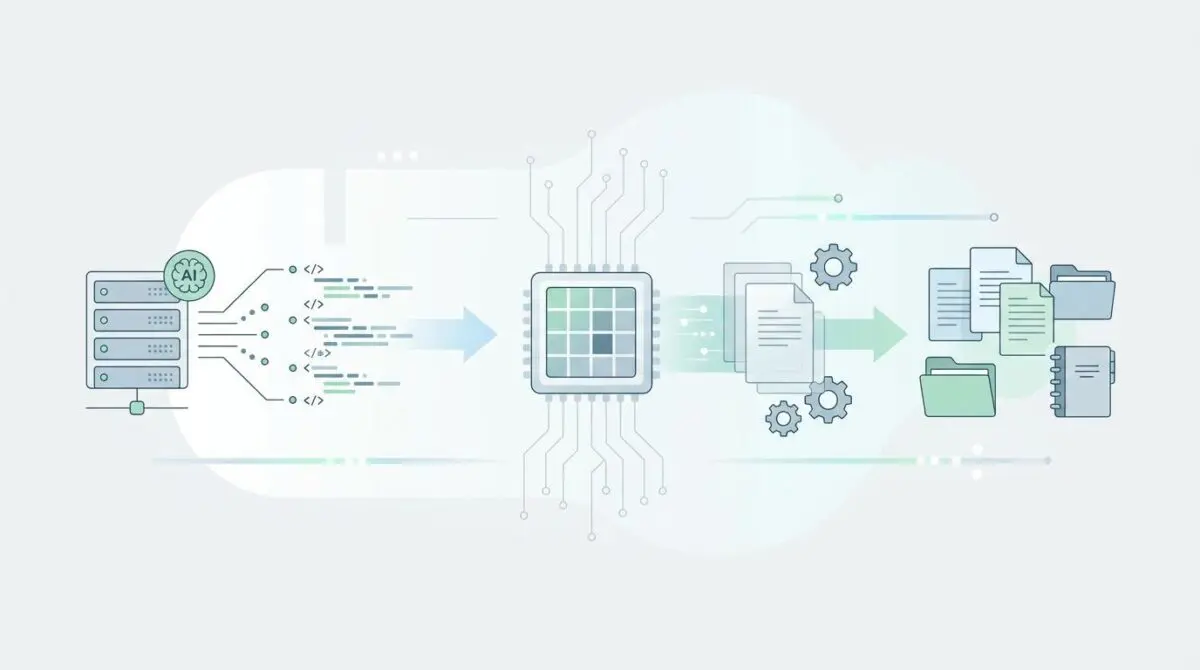
Autonomous software documentation agents solve this multi-billion dollar problem by automating context extraction directly from live repositories. They act as conversational knowledge digital twins that leverage the Model Context Protocol to seamlessly bridge the gap between human intent and machine execution. By maintaining a persistent, real-time link between source code and documentation, businesses can completely eliminate manual developer intervention.
Market Intelligence & Smart Capital
Venture capital is aggressively funding agentic DevOps platforms that promise to revolutionize code explainability and reduce enterprise friction. Smart money is flowing directly into context-aware retrieval platforms that eliminate human bottlenecks in software deployment. This massive capital influx is fundamentally reshaping the enterprise software landscape.
Market Intelligence & Data
Document AI Market Surge
The global Document AI market size is projected to reach $31.82 billion in 2026 at a CAGR of 64.6% as reported by Research and Markets.
Developer Workflow Integration
Stack Overflow’s 2025/2026 developer data reveals that 84% of professional engineers now utilize AI-integrated assistants for code documentation and explanation.
Cursor’s Revenue Landmark
The AI-native code editor Cursor reached $2 billion in annualized recurring revenue by February 2026, according to financial data reported by Crescendo.ai.
Embedded Agent Ubiquity
TechDogs reports that 40% of all enterprise applications will feature embedded task-specific AI agents for documentation and user support by the end of 2026.
The data reveals a clear trajectory toward total workflow integration and autonomous code management. Leading the charge is Anysphere, the company behind Cursor, which achieved a staggering $29.3 billion valuation in April 2026 following a massive $2.3 billion Series D round. This valuation is a testament to the market’s hunger for autonomous developer tools that deliver immediate ROI.
Major institutional players like SoftBank and Amazon are funneling billions into this autonomous explainability layer. They recognize that reducing the multi-trillion dollar global cost of technical debt is the next great frontier in enterprise software. The financial upside for early adopters of these documentation agents is simply too massive to ignore.
The Strategic Deep Dive: Trust and Verification
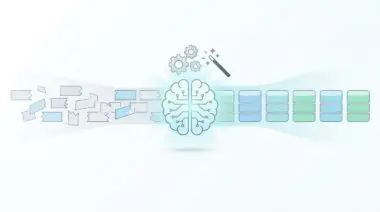
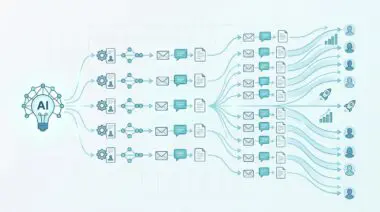
The industry has rapidly pivoted from static Markdown files to dynamic, multimodal artifacts that live alongside the codebase. During every CI/CD cycle, AI agents automatically regenerate UML diagrams, sequence flows, and interactive API sandboxes. This ensures that documentation always reflects the absolute current state of production without slowing down deployment velocity.
The Trust Paradox in AI Coding
Despite these incredible advancements, a critical market paradox has emerged in the developer ecosystem. A 2026 Gartner survey reveals that while 84% of developers have adopted AI-coding tools, trust in their output has dropped to 29%. This crisis of confidence is triggering a massive investment wave into verified documentation agents that use formal methods to prove code-doc alignment.
Enterprise leaders are realizing that generated code is a massive liability if it cannot be implicitly trusted and easily explained to new hires. Data from industry surveys confirms this behavioral shift, showing that 84% of professional engineers now utilize AI-integrated assistants for code documentation and explanation. This ubiquitous adoption demands a much higher standard of cryptographic verification.
Eliminating Trillion-Dollar Technical Debt
To combat this trust deficit, organizations are deploying agents that act as an interactive expert witness for every single line of code written. These advanced systems do not just passively describe functions and endpoints. They proactively detect logical inconsistencies and security vulnerabilities long before they reach the production environment.
The financial implications of this architectural shift are profound for scaling software companies. By deploying verified agents, enterprises are actively dismantling legacy technical debt while ensuring rapid onboarding. This strategic move has boosted total software engineering productivity by up to 45%, proving that autonomous documentation is a core driver of enterprise velocity.
The Executive Action Plan: Self-Healing Architecture
The next evolution of this technology is self-healing architecture, a concept that completely redefines software maintenance. In this paradigm, documentation transitions from a passive historical record into an active, stateful AI collaborator. Executives must pivot their engineering strategies immediately to embrace this autonomous future.
Strategic Trajectory
- Transition documentation from passive records into active, stateful AI collaborators.
- Adopt “Self-Healing Architecture” to automate the maintenance and updating of technical records.
- Deploy AI systems capable of proactively detecting logical inconsistencies within codebases.
- Integrate security vulnerability detection as a core feature of the documentation workflow.
- Establish an interactive “expert witness” model for real-time oversight of enterprise code.
Implementing this trajectory requires a fundamental shift in engineering culture and resource allocation. Founders and C-level executives must prioritize the deployment of verified agents across all development pipelines. This ensures that security vulnerability detection becomes a core, automated feature rather than an afterthought.
By establishing an interactive expert witness model, enterprises gain real-time, explainable oversight of their entire digital infrastructure. This proactive approach not only mitigates risk but drastically accelerates the onboarding process for new engineering talent. The end result is a leaner, faster, and infinitely more scalable engineering organization.
Conclusion: The Future of Code Explainability
Autonomous software documentation agents represent a paradigm shift in how we build, scale, and maintain digital infrastructure. By eliminating documentation decay and automating complex technical debt management, these systems empower engineering teams to focus purely on product innovation. The transition from passive wikis to active AI collaborators is no longer an option, but a survival imperative.
Enterprises that fail to adopt self-healing architectures will quickly find themselves outpaced by leaner, AI-native competitors. Smart capital has already made its multi-billion dollar bet on agentic DevOps and verified documentation platforms. Now is the time for visionary leaders to execute on this opportunity and redefine their engineering workflows.
Navigating the intersection of technology, capital, and market psychology requires a sharp strategy. To future-proof your business architecture and scale with precision, connect with Andres at Andres SEO Expert.
Frequently Asked Questions
What is documentation decay and how do AI agents solve it?
Documentation decay refers to the process where technical wikis and guides become obsolete immediately after code updates. Autonomous software documentation agents solve this by automating context extraction from live repositories, creating real-time links between source code and its documentation.
How much can autonomous documentation improve engineering productivity?
According to McKinsey’s 2026 analysis, the integration of AI-driven repo parsing and autonomous documentation has boosted total software engineering productivity by up to 45% for early enterprise adopters by eliminating manual intervention.
What is the Trust Paradox in AI-driven software development?
The Trust Paradox describes a market condition where developer adoption of AI tools is high (84%), but trust in the generated output is low (29%). This has triggered a shift toward verified documentation agents that use formal methods to prove code-doc alignment.
What is a Self-Healing Architecture in technical documentation?
Self-Healing Architecture is a paradigm where documentation acts as an active, stateful AI collaborator. It automatically regenerates multimodal artifacts like UML diagrams and sequence flows during every CI/CD cycle to reflect the absolute current state of production.
What is the projected market size for Document AI by 2026?
The global Document AI market is projected to reach $31.82 billion by 2026, representing a CAGR of 64.6%. This surge is driven by enterprise demand for agentic DevOps and autonomous code explainability layers.
How does the Model Context Protocol assist documentation agents?
The Model Context Protocol (MCP) bridges human intent and machine execution. It allows documentation agents to function as conversational knowledge digital twins, maintaining a persistent, real-time sync between developer intent and live repository logic.