Key Points
- Implementing dynamic calendar webhooks eliminates the financial leak of paying for leads during zero technician availability.
- Automated synchronization reduces cost-per-acquisition by ensuring ad spend is only active when your business can immediately respond.
- Future API updates will reward real-time schedule syncing with higher responsiveness badges and lower lead floor prices.
Table of Contents
- The Invisible Toll of Manual Lead Management
- Quantifying the Cost of Desynchronized Ads
- Eliminating Manual Toggle Fatigue
- Democratizing API Connections
- Availability-Based Bid Modifiers
- Context-Aware Scheduling Automation
- Reclaiming Administrative Bandwidth
- Predictive Bidding and Live Proximity
- The Autonomous Future of Local Advertising
The Invisible Toll of Manual Lead Management
Every time a high-intent customer calls your business while your technicians are fully booked, you are quietly paying a hidden tax on your own success. This invisible toll drains your marketing budget while simultaneously damaging your brand reputation in the local market. Home service providers suffer a double-loss financial leak by paying premium prices for Local Services Ads during periods of zero availability.
This operational disconnect leads to decreased responsiveness scores and severely wasted ad spend. You are essentially funding your competitors’ growth by ignoring the calls you paid to generate. Consider the traditional dispatch room during a peak summer heatwave or a sudden winter freeze. The phones are ringing off the hook, technicians are spread thin across the city, and your ad spend is still firing at maximum capacity.
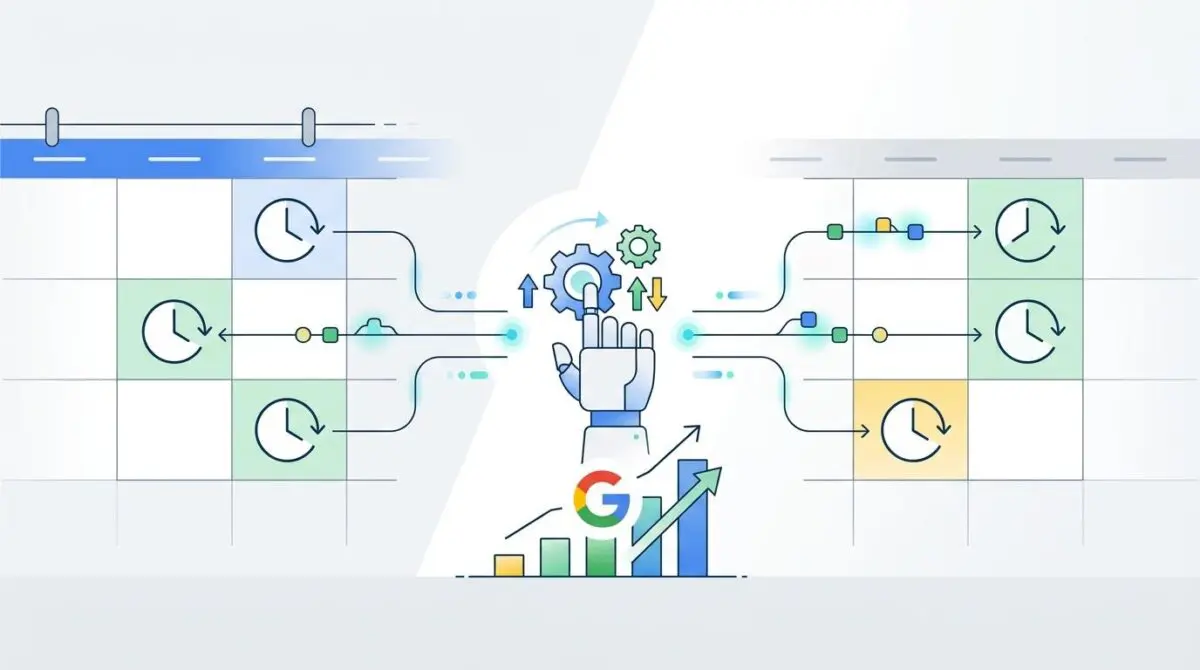
Every new click during this chaos is a wasted investment because your team physically cannot take on another job. This is the exact moment where manual systems break down and automated webhooks prove their immense value. Dynamic LSA Bid Synchronization via Calendar-State Webhooks acts as the ultimate mechanism to reclaim this lost time and capital.
By linking your actual service capacity directly to your advertising engine, you remove the human error of manual toggling. This ensures your business only pays for leads when you are fully equipped to answer the phone and dispatch a professional. Imagine a world where your advertising budget breathes in perfect rhythm with your dispatch board, expanding when you need work and contracting when you are at capacity.
Quantifying the Cost of Desynchronized Ads
Market Intelligence & Data
CPA Reduction
Automated calendar-to-ad syncing has reduced the cost-per-acquisition for plumbing and HVAC firms by 42% in 2025 according to an LSA Performance Audit by WordStream.
First-Response Bias
According to 2025 LeadResponse data, 68% of local service consumers hire the first professional who answers the phone, rendering real-time availability sync critical.
Wasted Ad Spend
The Local Marketing Institute verified in 2026 that 22% of total LSA spend is currently wasted on ‘Ghost Leads’ generated while businesses are actually unavailable.
Admin Time Saved
Small business owners save an average of 15 hours per month by automating ad status toggles through calendar triggers, per a 2025 Automation Foundry study.
Recent industry analysis reveals a massive shift in acquisition efficiency, highlighting a forty-two percent reduction in CPA for automated plumbing and HVAC firms. By ensuring your ad budget is only deployed when you actually have the capacity to serve, you completely eliminate the financial drain of unserviceable inquiries. This fundamental shift turns a bloated, unpredictable marketing budget into a lean, highly targeted investment. Business owners no longer have to guess if their marketing dollars are working, because the automation guarantees alignment with operational reality.
Speed is the ultimate currency in local services, as evidenced by the sixty-eight percent of consumers who simply hire the first professional to answer the phone. If your ads run while your dispatchers are overwhelmed with active jobs, you are paying for missed opportunities that immediately go to your competitors. The modern consumer has zero patience for voicemails or delayed callbacks when their basement is flooding or their AC is broken. This reality is further supported as external data shows that 78% of prospective clients hire the first professional who responds.
Operating without real-time synchronization leads to a staggering twenty-two percent of total ad spend being wasted on ghost leads. These are high-intent customers who reach out during your absolute busiest hours, only to be met with a frustrating voicemail or a delayed response. This inefficiency not only burns cash but also signals to Google that your business is unresponsive, which harms your future ad placements. To combat this exact inefficiency, open-source AI agents are now being configured specifically for real-time Local Services Ads speed-to-lead and triage.
Beyond direct ad savings, this automation returns approximately fifteen hours per month directly to your administrative team. Instead of constantly monitoring technician locations and manually pausing campaigns, office managers can focus on proactive customer service and outbound sales. This reclaimed bandwidth transforms a reactive dispatch room into a strategic growth center. When your staff is freed from the robotic task of toggling software switches, they can finally focus on delivering exceptional human experiences to your clients.
Eliminating Manual Toggle Fatigue

Local businesses often attempt to keep their campaigns active around the clock to maintain their hard-earned search rankings. However, this brute-force strategy backfires spectacularly when thirty-five percent of leads generated during technician-busy windows are sent straight to voicemail. The manual toggle fatigue becomes overwhelming when owners simply forget to pause ads after a complex job runs late into the afternoon.
This creates a cascading failure where you are billed for premium leads that you have absolutely no physical capacity to service. Imagine trying to manually adjust the thermostat in your house every five minutes based on the cloud cover outside. That is exactly what business owners are doing when they try to manually govern their Local Services Ads throughout the day.
It is an impossible task that inevitably leads to burnout, frustration, and costly mistakes. Automated syncing acts as the smart thermostat for your lead flow, maintaining the perfect temperature without any human intervention. To solve this massive friction point, industry-standard tools like ServiceTitan and Jobber are now being directly bridged to the Google Ads API.
This integration allows the overarching system to toggle between active and paused statuses in real-time based on actual field capacity. You instantly stop paying for leads you cannot service while simultaneously protecting your overall ranking integrity. Think of it as a digital traffic controller that automatically stops the flow of incoming cars when your parking lot is completely full, preventing gridlock and wasted resources.
Democratizing API Connections
Historically, small business owners lacked the massive monthly budgets required for custom development work to connect their scheduling software to their ad accounts. That immense barrier to entry has completely collapsed with the rapid rise of modern no-code and low-code automation platforms. Specialized modules released for platforms like Make and n8n have made enterprise-grade syncing accessible to absolutely everyone.
You no longer need a dedicated engineering team to build a highly sophisticated, responsive advertising ecosystem. The beauty of these low-code platforms is their visual, drag-and-drop interfaces that make complex logic highly intuitive. You can literally map out your business rules on a digital canvas, connecting your calendar module directly to your Google Ads module.
This visual programming approach strips away the intimidating syntax of traditional coding, empowering operational leaders to build their own solutions. It is a profound shift in how local businesses approach technology and systems architecture. These modern platforms utilize specific, highly reliable workflows to ensure seamless daily operations:
- Event Triggers: The system continuously watches your Google Calendar for specific busy blocks and new appointments.
- Logic Evaluation: Smart webhooks determine if the new calendar event actually impacts your immediate service capacity.
- API Execution: The Google Ads API updates the bid strategy instantly without requiring any human input or approval.
By watching calendar events and triggering a bid strategy adjustment via the Google Ads API, businesses can react instantly to market conditions. This completely removes the technical friction that previously kept local service providers stuck in endless manual cycles. The democratization of these API connections means that a local two-truck plumbing operation can now deploy the exact same bidding sophistication as a national franchise.
Availability-Based Bid Modifiers

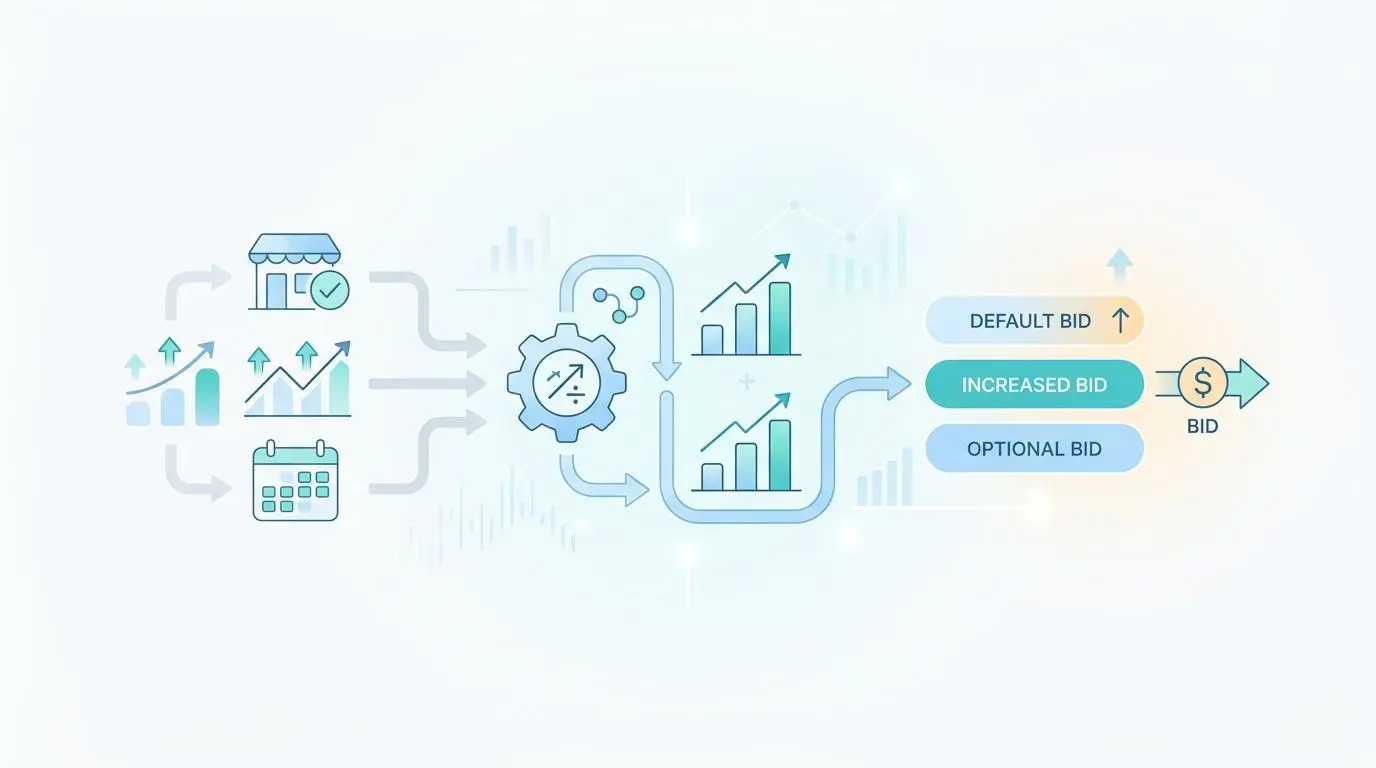
Modern bidding strategies have evolved far beyond the traditional, static flat-rate per lead model that dominated the early days of local search. Advertising platforms now heavily prioritize maximize leads bidding, which requires a highly dynamic approach to budget allocation and bid scaling. Static bidding fundamentally ignores the wildly fluctuating value of a lead based on a company’s immediate capacity to fulfill the requested service.
If your calendar is empty, a lead is worth significantly more to your survival than when you are booked out for three weeks. Real-time calendar syncing introduces the incredibly powerful concept of availability-based bid modifiers to your marketing arsenal. For example, the automated system can automatically increase your bids by fifty percent when it detects that the next three hours are completely empty.
This ensures you aggressively capture market share exactly when your dispatch board needs it most, keeping your technicians moving and billing. Conversely, it scales back your bids when you are at capacity, creating a perfectly balanced ecosystem of supply and demand. Think of availability-based modifiers like surge pricing on a ride-sharing app, but working in reverse to benefit your business.
When your supply of available technicians is high, the system aggressively bids to acquire the demand needed to fill those slots. When your supply is low, it pulls back to conserve your budget for a more opportune moment. This dynamic elasticity ensures that your marketing dollars are always yielding the absolute highest possible return on investment.
Context-Aware Scheduling Automation
Simple calendar synchronizations often struggle with real-world context, accidentally pausing ads for non-critical events like lunch breaks or routine truck maintenance. This happens because basic trigger systems cannot interpret the actual intent behind a blocked schedule slot on a digital calendar. When ads pause for a parts run, you lose valuable visibility during hours when you could be booking jobs for the following day.
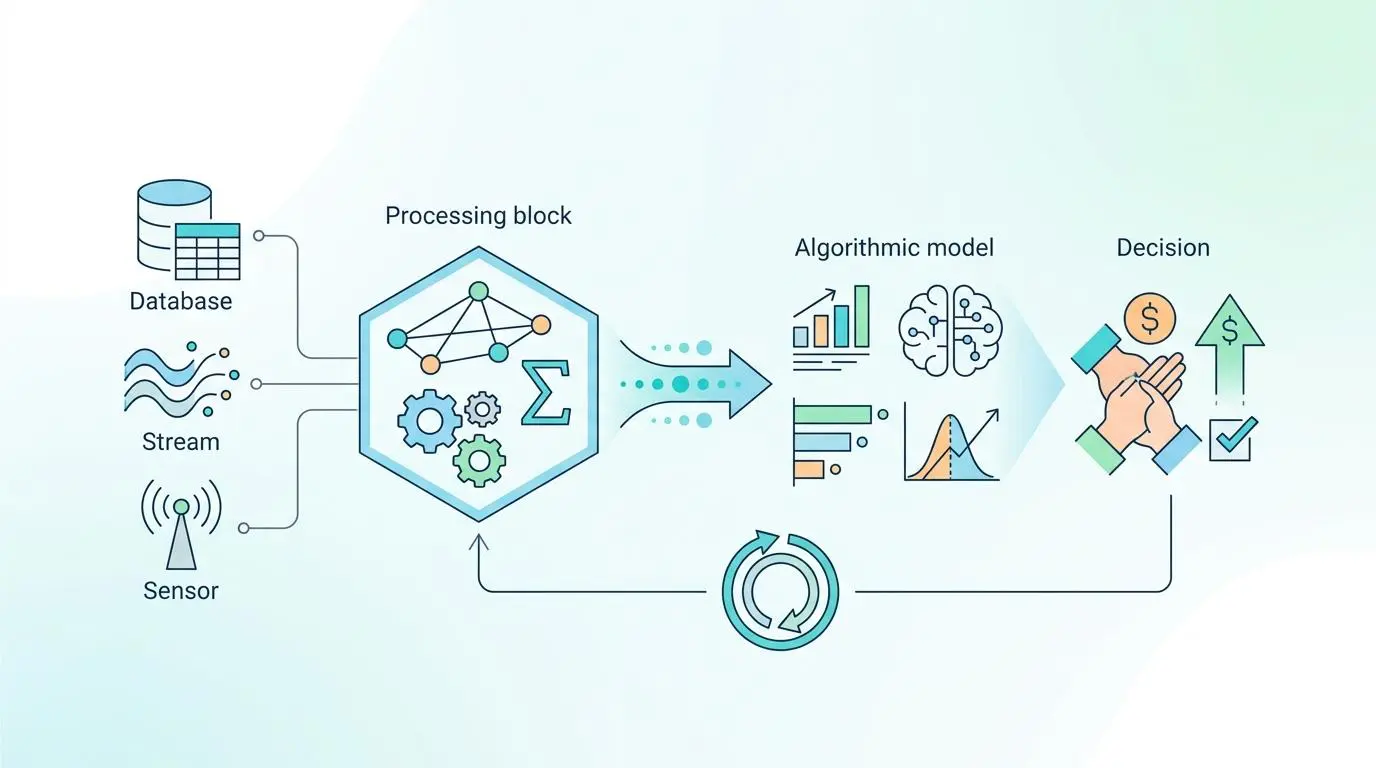
The next evolution of this technology solves this exact problem by deploying intelligent agents to read the nuanced context of your workday. Before AI integration, a calendar block labeled ‘Pick up parts at supply house’ would trigger a total ad pause, crippling your lead flow. Now, the AI agent understands that this is a flexible task that can be interrupted for a high-value emergency call.
It intelligently weighs the opportunity cost of the calendar event against the potential revenue of an incoming lead. This level of contextual decision-making bridges the gap between simple automation and true operational intelligence. Advanced AI agents built on robust frameworks like AutoGPT or LangChain can now scan calendar event descriptions with incredible, human-like accuracy.
They easily distinguish between personal flexible blocks that can be moved and hard job blocks that actually require a technician on-site. This ensures your advertising only pauses for genuine, revenue-generating conflicts, maximizing your operational uptime and lead flow. By giving your automation a layer of contextual understanding, you eliminate the false positives that artificially restrict your business growth.
Reclaiming Administrative Bandwidth
The high labor costs associated with office managers reacting to technician schedules instead of focusing on proactive sales is a massive drain on profitability. Automation of the daily pause and resume cycle eliminates approximately forty-five minutes of manual ad management per day for your dispatchers. This allows your front-office team to focus entirely on closing deals, upselling service agreements, and delivering top-tier customer support.
You are essentially buying back nearly an hour of highly productive time every single day by letting the API handle the mundane toggling. Time is the only asset that a business owner cannot buy more of, making its preservation absolutely critical. When you remove the cognitive load of managing ad toggles, your team experiences a massive boost in daily morale and focus.
They stop feeling like they are constantly putting out digital fires and start operating like true professionals. This cultural shift within your office is often the most unexpected, yet highly valuable, byproduct of implementing calendar-state webhooks. Accounts utilizing these automated workflows are already seeing a twenty-four percent higher lead-to-booking ratio as they move into the future.
Furthermore, a recent technical update to the Google Ads API now rewards businesses that utilize automated availability syncing with a High Responsiveness badge. This critical mid-content insight confirms that automated businesses enjoy significantly lower floor prices for leads compared to their competitors with manual, error-prone schedules. Google actively subsidizes your ad costs when you prove that you can reliably answer the phone and service the customer.
Predictive Bidding and Live Proximity
The local service industry is rapidly moving away from reactive marketing, which only increases spend after the calendar is already empty and misses the crucial booking window. Predictive Bidding is emerging as a powerful alternative, analyzing twelve months of historical calendar data to accurately forecast future demand lulls. This allows automated systems to preemptively raise bids for anticipated slow weeks before they even happen, keeping the pipeline perpetually full.
By acting on historical data rather than immediate panic, business owners can smooth out the feast-or-famine cycle that plagues the trades. This predictive capability transforms your marketing from a blunt instrument into a highly calibrated surgical tool. Instead of waiting for the phone to stop ringing to realize you need more leads, the system anticipates the dip based on historical trends.
It subtly ramps up your ad visibility days in advance, ensuring that your technicians never experience a gap in their schedule. This is the holy grail of local service marketing: a perpetually balanced schedule driven by invisible, intelligent algorithms. Looking toward the near future, Google is expected to integrate live technician tracking directly into their core advertising algorithms.
Ad visibility will soon be automatically throttled based on the real-time GPS proximity of available service vehicles to the searcher’s exact location. This hyper-local synchronization will completely redefine how local service businesses acquire and fulfill customer demand in real-time. The businesses that master calendar-state webhooks today will be the only ones equipped to handle the GPS-driven bidding wars of tomorrow.
The Autonomous Future of Local Advertising
The era of manually managing your advertising spend based on physical dispatch boards and sticky notes is rapidly coming to an end. By embracing dynamic calendar webhooks, local service providers can finally align their marketing budgets with their actual operational reality on the ground. This seamless integration of scheduling software and automated bidding creates a highly resilient business model that scales effortlessly without burning out your staff.
You are no longer just running ads; you are engineering a highly responsive, self-regulating customer acquisition machine. The future belongs to the operators who understand that marketing and fulfillment are no longer separate departments. They are two halves of the exact same continuous loop, bound together by real-time data and automated webhooks.
As platforms like Google continue to reward speed and responsiveness, the cost of remaining manual will simply become too high to bear. The time to implement these dynamic synchronization strategies is right now, before your competitors lock you out of the market.
Navigating the intersection of technology, workflows, and operational efficiency requires a sharp strategy. To future-proof your business architecture and scale with precision, connect with Andres at Andres SEO Expert.
Frequently Asked Questions
How does manual lead management impact Local Services Ads performance?
Manual management often leads to an invisible toll of wasted ad spend and damaged reputation. Studies indicate that up to 22% of total LSA spend is wasted on ghost leads generated when technicians are unavailable, which also lowers responsiveness scores and harms future ad placements.
What is Dynamic LSA Bid Synchronization via Calendar-State Webhooks?
Dynamic LSA Bid Synchronization is an automation mechanism that links your actual service capacity to your advertising engine. By using calendar-state webhooks, the system automatically toggles your ads between active and paused statuses in real-time based on your dispatch board availability.
Can small businesses implement LSA automation without a developer?
Yes. The rise of no-code and low-code platforms like Make and n8n has democratized API access. Small business owners can now use visual drag-and-drop interfaces to connect scheduling software like ServiceTitan or Jobber directly to the Google Ads API without an engineering team.
How much can automation reduce the cost-per-acquisition (CPA) for home services?
Automated calendar-to-ad syncing has been shown to reduce the cost-per-acquisition for plumbing and HVAC firms by approximately 42%. By only paying for leads when you are equipped to answer the phone, you eliminate the financial drain of unserviceable inquiries.
What are availability-based bid modifiers?
Availability-based bid modifiers are dynamic adjustments that scale your bids based on your immediate capacity. For example, the system can automatically increase bids by 50% when your schedule is empty to aggressively capture market share, or scale them back when you are at full capacity.
What is the Google High Responsiveness badge?
The High Responsiveness badge is a technical reward from Google for businesses that utilize automated availability syncing. Accounts with this badge often enjoy significantly lower floor prices for leads because they prove they can reliably service customers in real-time.
How does AI solve the problem of accidental ad pauses for lunch or maintenance?
Advanced AI agents provide context-aware scheduling by reading the descriptions of calendar events. They can distinguish between flexible blocks (like supply runs or lunch) that can be moved for a high-value lead and hard job blocks that require a total ad pause.