Key Points
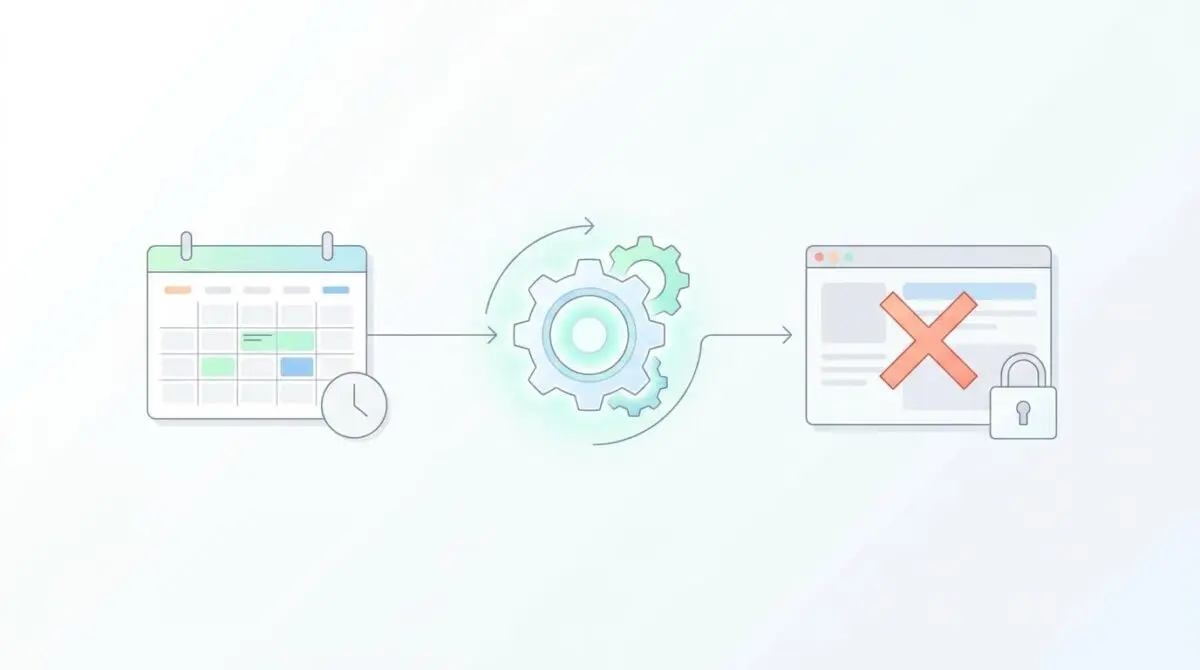
- Automated Enforcement: Linking Google Calendar to firewall webhooks reclaims over two hours of productive time daily by eliminating manual self-regulation.
- Contextual AI Agents: Modern focus tools analyze calendar event descriptions to proactively permit task-relevant websites while blocking pure distractions.
- Edge Security: Enterprise-grade blocking processes web traffic locally on the device, ensuring strict GDPR compliance and protecting corporate data.
Table of Contents
- The Invisible Tax on Mental Bandwidth
- Quantifying the Cost of Fragmented Attention
- Eradicating the Daily Friction of Attention Residue
- The No-Code Revolution in Time Management
- Eliminating the Hidden Costs of Manual Work
- AI-Agent Integration for Contextual Blocking
- Security Privacy and Edge Processing
- Reclaiming ROI Through Time-Saving Metrics
- The Biometric Future of Deep Work
The Invisible Tax on Mental Bandwidth
Every time you switch tabs to check an urgent message, you pay a silent, compounding tax on your most valuable asset. This invisible drain on mental bandwidth shatters momentum and turns a productive afternoon into a chaotic scramble. The manual effort required to constantly police your own attention is a losing battle against algorithms meticulously designed to distract.
Enter Calendar-Triggered Focus Mode Orchestration, the definitive system to reclaim your time and scale your output. By linking your daily schedule directly to automated firewall rules, you remove willpower from the equation entirely. This orchestration transforms your calendar from a passive itinerary into an active, relentless enforcer of deep work.
A 2026 report citing Harvard Business Review reveals that the average digital worker now performs 1,200 app and website toggles per day. This phenomenon has rendered manual focus nearly impossible for most professionals without automated intervention. By integrating these systems, you build an impenetrable fortress around your most critical cognitive tasks.
Quantifying the Cost of Fragmented Attention
Market Intelligence & Data
U.S. Economy Distraction Loss
According to a 2026 Gitnux report, workplace distractions and the resulting productivity loss cost the U.S. economy an estimated $650 billion annually.
Average Focus Session Duration
The 2026 State of the Workplace report by ActivTrak found that the average uninterrupted focused session has dropped to just 13 minutes and 7 seconds.
The Refocusing Penalty
Updated longitudinal studies in 2025 by Dr. Gloria Mark confirm that it still takes an average of 23 minutes to fully regain deep focus after a single digital distraction.
Annual Loss Per Worker
Recent 2026 data from Maker Stations indicates that digital interruptions cost individual businesses roughly $10,375 per knowledge worker per year in wasted time.
The staggering $650 billion annual loss to the U.S. economy highlights a systemic failure in how modern workspaces operate. This is not just an issue of employees slacking off; it is a structural flaw where constant connectivity actively sabotages high-level output. When distraction scales across an entire enterprise, the financial bleed becomes a massive, unmanageable liability.
The reality that uninterrupted work now barely exceeds 13 minutes is a glaring red flag for operational efficiency. This fragmentation is exactly why the average knowledge worker toggles between apps and websites 1,200 times daily. Every single toggle acts as a micro-interruption, resetting the cognitive momentum needed for complex problem solving.
Once that momentum is broken, the recovery period is painfully slow and mentally exhausting. Science proves that it still takes an average of 23 minutes to fully regain deep focus after a simple notification pulls you away. This refocusing penalty means a quick five-minute detour to check a social feed actually destroys nearly half an hour of productive capacity.
For individual businesses, the math translates to a brutal $10,375 annual loss per knowledge worker. This metric finally puts a hard dollar figure on the elusive concept of digital debt and shallow work. By automating focus, leadership can directly recover this lost capital and reinvest it into true, uninterrupted innovation.
Eradicating the Daily Friction of Attention Residue
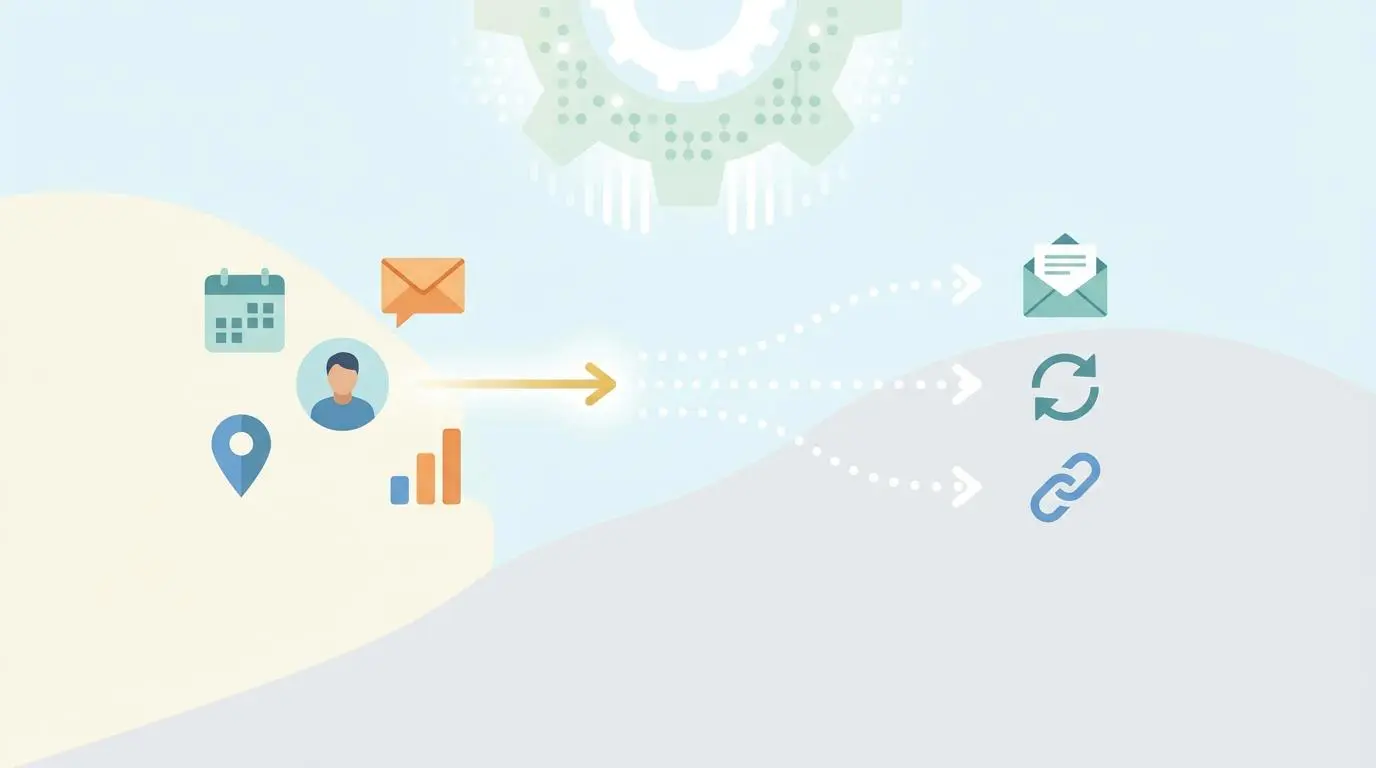
Transitioning from shallow, administrative tasks to deep, analytical focus is notoriously difficult due to a phenomenon known as attention residue. Your brain is still partially processing that last email thread while you try to write complex code or build a financial model. The real-world friction here is the massive refocusing gap triggered by the mere urge to check a distracting site.
Thankfully, tools like Freedom.to and Cold Turkey Blocker now feature robust APIs designed to intercept these urges before they derail your day. By configuring simple webhooks, you can instantly deploy system-wide firewall rules the moment a scheduled deep work session begins. This ensures your digital environment matches your cognitive intentions.
Modern workflows leverage Google Calendar focus time events as the ultimate, foolproof trigger for these blocks. This guarantees that the manual willpower usually required to close YouTube or LinkedIn is completely replaced by automated, structural enforcement. Your calendar essentially becomes the remote control for your digital discipline.
The No-Code Revolution in Time Management

Historically, traditional site blockers were rigid, requiring manual toggling and failing to distinguish between scheduled deep work and casual browsing. This lack of flexibility often forced users to abandon the tools entirely when urgent operational issues arose. Today, Relay.app and Zapier have shattered these limitations by introducing native focus time triggers specifically for Google Workspace.
In 2026, these platforms empower users with human-in-the-loop exceptions, adding a critical layer of operational agility. A focus block can now be temporarily bypassed if an urgent Slack message containing a specific keyword, like critical, is detected. This ensures that deep work does not come at the expense of organizational emergencies.
For those needing even more granular control, platforms like Make.com allow users to sync calendar metadata directly to local scripts. These automated scripts can modify host files or tweak browser extension settings in real-time, providing a highly customized, distraction-free environment tailored to the exact minute.
Eliminating the Hidden Costs of Manual Work

Relying on sheer willpower to manage digital distractions inevitably leads to severe digital exhaustion. Cognitive fatigue sets in rapidly because the constant self-regulation required to stay on task acts as a heavy, invisible weight. In a hyper-connected environment, deciding not to click a notification consumes a finite mental resource that depletes as the day progresses.
Recent 2026 research paints a grim picture, revealing that 79 percent of workers cannot maintain focus for even 30 minutes without an external interruption or a self-imposed distraction. This constant battling against digital urges leaves employees drained before the afternoon even begins. The result is a workforce operating at a fraction of its true intellectual capacity.
Automating this process via calendar triggers completely removes the cognitive load of deciding to focus. By outsourcing this discipline to an automated workflow, you preserve your mental energy for the actual complex tasks that drive business value. You stop fighting your browser and start executing your vision.
AI-Agent Integration for Contextual Blocking
One of the biggest frustrations with legacy blockers is their binary nature, which often over-blocks highly useful resources. A developer might be locked out of a crucial YouTube tutorial, forcing them to disable the focus mode entirely and lose all momentum. The rise of agentic focus orchestrators in 2026 has elegantly solved this binary friction.
These advanced AI agents do not just blindly block sites based on a static, unforgiving list. Instead, they dynamically analyze the content of your current project by extracting context straight from the Google Calendar event description. This allows the system to understand exactly what you are trying to achieve during that specific hour.
Using real-time reasoning, the agent determines if a specific website is genuinely task-relevant. If your calendar invite says development deep work, the agent will permit access to technical tutorials while ruthlessly blocking unrelated entertainment. This contextual awareness represents the pinnacle of personalized productivity automation.
Security Privacy and Edge Processing
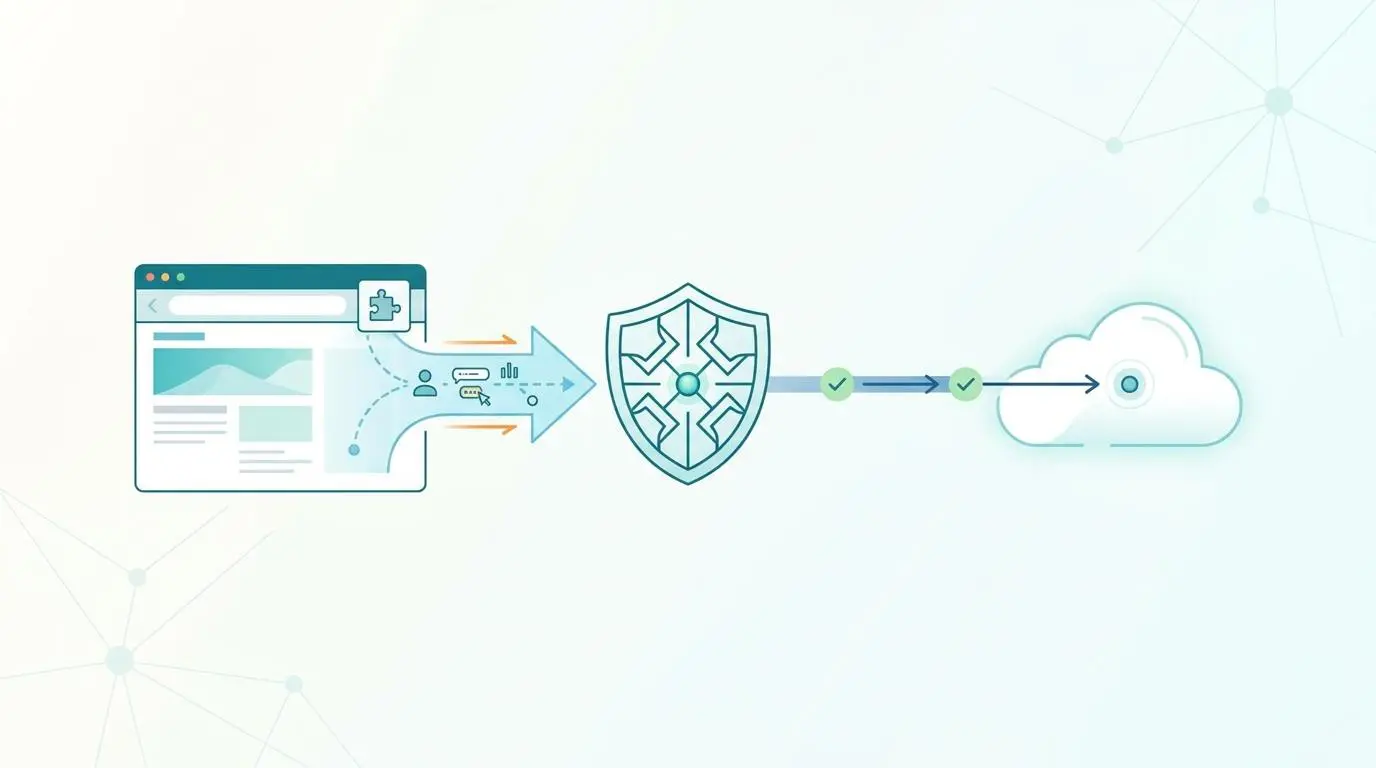
Giving third-party automation platforms broad read and write access to browser history and active tabs presents a massive security risk for enterprises. Corporate IT departments are rightfully hesitant to route all employee web traffic through an external cloud server just to filter out social media. Modern focus automation has adapted by pivoting heavily toward local-first browser extensions.
In 2026, enterprise-grade focus tools prioritize strict GDPR compliance by processing all site-blocking logic on the edge. This means the analysis happens directly at the device level rather than on a remote, vulnerable server. The automation logic is pushed down to the endpoint, ensuring maximum speed and privacy.
By keeping web traffic analysis strictly local, these automated systems ensure that sensitive corporate data never leaves the company secure perimeter. Employees get the benefit of hyper-focused workflows without compromising organizational security or violating strict data compliance regulations.
Reclaiming ROI Through Time-Saving Metrics
For years, management struggled with the inability to quantify the financial impact of shallow work and digital debt on the bottom line. Distractions were viewed as an inevitable cost of doing business rather than a solvable operational leak. However, implementing automated focus blocks provides hard data that changes this narrative entirely.
These systems have been proven to reclaim an average of 2.1 hours of highly productive time per day for knowledge workers. By eliminating the heavy switching costs, employees can sustain uninterrupted flow states for much longer periods. This dramatic increase in output transforms the daily operational rhythm of an entire team.
At a fully-loaded hourly rate of $120, reclaiming those two hours represents a staggering yearly saving of over $60,000 per senior employee. Calendar-Triggered Focus Mode Orchestration is no longer just a clever productivity hack; it is a highly measurable driver of enterprise profitability and scale.
The Biometric Future of Deep Work
The next frontier of workplace productivity is rapidly approaching with the advent of biometric-aware focus orchestration. Soon, wearable devices tracking heart rate and pupil dilation will feed real-time cognitive data directly back into your calendar. If the system detects your cognitive load peaking, it will automatically extend your focus session to fiercely protect your flow state.
This means firewall blocks will proactively escalate to ensure you are not derailed by upcoming, non-essential meetings or sudden notifications. The calendar will transform from a static scheduling tool into a living, breathing guardian of your mental bandwidth. The future of work belongs to those who automate their environment to serve their deepest focus.
Navigating the intersection of technology, workflows, and operational efficiency requires a sharp strategy. To future-proof your business architecture and scale with precision, connect with Andres at Andres SEO Expert.
Frequently Asked Questions
What is Calendar-Triggered Focus Mode Orchestration?
Calendar-Triggered Focus Mode Orchestration is an automated system that links your daily schedule directly to digital firewall rules. By using calendar events as triggers to block distracting websites and apps, it removes the need for manual willpower and ensures your environment is optimized for deep work.
How much does digital distraction cost businesses annually?
Research from 2026 indicates that workplace distractions cost the U.S. economy roughly $650 billion every year. For individual companies, this results in an estimated loss of $10,375 per knowledge worker annually due to productivity drainage and fragmented attention.
What is the refocusing penalty and why does it occur?
The refocusing penalty is the time required to regain deep focus after an interruption, which averages 23 minutes. This occurs because of “attention residue,” a phenomenon where the brain continues to process the distracting stimuli even after you have returned to your primary task.
Can automated focus blocks accommodate urgent work emergencies?
Yes. Modern no-code platforms like Relay.app and Zapier allow for “human-in-the-loop” exceptions. These systems can be configured to bypass a focus block if specific criteria are met, such as receiving a Slack message containing an urgent keyword like “critical.”
How do AI agents improve contextual blocking compared to legacy tools?
Unlike traditional blockers that use binary, static lists, AI agents analyze the context of your calendar event descriptions. This allows the system to distinguish between a distracting site and a task-relevant resource, such as allowing a technical tutorial while blocking entertainment during a development session.
Is automated focus orchestration secure for enterprise use?
2026 enterprise-grade focus tools prioritize security by using edge processing and local-first browser extensions. This ensures that web traffic analysis happens on the device level, maintaining GDPR compliance and preventing sensitive corporate data from leaving the secure perimeter.