Key Points
- Transitioning to an AI-Augmented Remote Collaboration Ecosystem eliminates the cognitive drain of the toggle tax by unifying disparate apps into a single interface.
- Agentic AI and computer-using agents automate complex cross-platform workflows to replace manual administrative tasks with autonomous execution.
- Consolidating fragmented SaaS subscriptions into a centralized Enterprise Work OS recovers lost productive time and drives millions in financial savings.
Table of Contents
- The Invisible Cost of Fragmented Work
- The True Price of Digital Friction
- Curing Meeting Inflation With Unified Workspaces
- From Generative Chat to Agentic Execution
- Embracing Asynchronous-First Communication
- The Financial Logic of an Enterprise Work OS
- Solving the Loneliness Paradox Through Digital Wellness
- Predictive Tasking and the Future of Agile
- The Dawn of Living Workstreams
The Invisible Cost of Fragmented Work
Beneath the surface of every modern enterprise lies an invisible tax on human focus, quietly draining millions of dollars in lost productivity each year. We have spent the last decade adopting specialized software for every conceivable task to make remote work possible. Yet, instead of creating a frictionless utopia, we inadvertently built a labyrinth of disconnected dashboards that punish our attention spans.
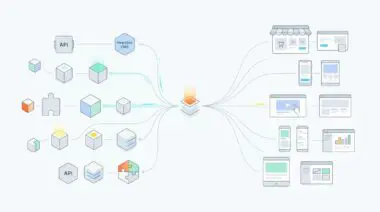
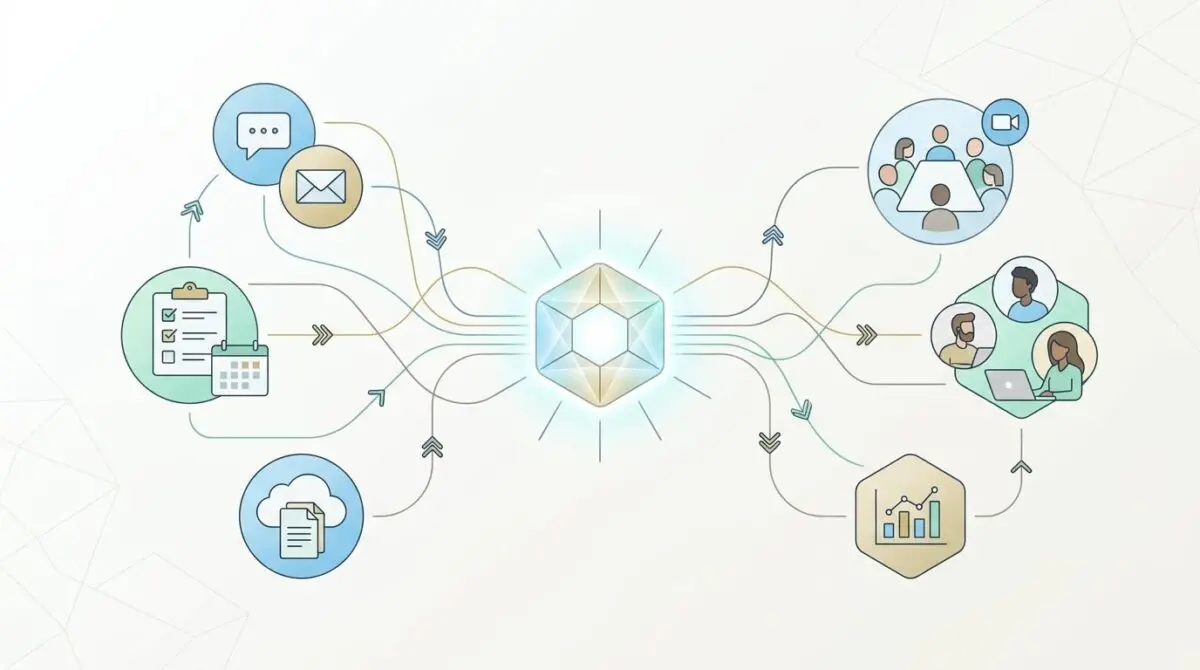
The solution to this operational chaos is the adoption of an AI-augmented remote collaboration ecosystem. This modern architecture fundamentally changes how distributed teams interact by weaving disparate applications into a single, intelligent fabric. Rather than forcing humans to act as the manual bridge between different software tools, this ecosystem allows the technology to adapt to the worker.
The True Price of Digital Friction
Market Intelligence & Data
Daily App Toggles
The average digital worker in 2026 switches between apps and websites 1,200 times per day, costing the U.S. economy $450 billion annually, according to Speakwise research.
Global Remote Workforce
Gartner’s 2026 Future of Work report estimates that 32% of the global workforce now operates in a remote or hybrid capacity at least part-time.
Productivity Loss
According to 2026 data from WaymakerOS, context switching and fragmented tool ecosystems consume up to 40% of an employee’s total productive time.
Hybrid Dominance
A February 2026 Gallup poll found that 52% of remote-capable U.S. employees now work in a hybrid environment, confirming the permanent shift away from the traditional office model.
The sheer volume of application switching has reached critical mass, fundamentally breaking human concentration. When employees find themselves toggling between apps up to 1,200 times a day, they pay a massive cognitive penalty. This continuous disruption fractures deep work and creates a staggering economic drain on modern businesses.
Simultaneously, the geographical distribution of talent continues to expand, with nearly a third of the global workforce operating outside the traditional office. Industry data highlights that remote and hybrid models are no longer temporary accommodations but structural realities. This permanent shift demands software that bridges physical distance without relying on constant synchronous interruptions.
Unfortunately, legacy tech stacks were never designed for this distributed reality, leading to severe operational bottlenecks. Fragmented tool ecosystems can easily consume nearly half of an employee’s productive capacity on any given day. This 40% productivity loss is the direct result of information silos, where workers spend more time hunting for data across tabs than actually executing meaningful tasks.
This inefficiency becomes even more pronounced when we consider the dominant work model of the modern era. Recent industry polling confirms that 52% of remote-capable U.S. employees now work in a hybrid environment, blending home and office routines. To support this fluid workforce, companies must deploy an AI-augmented ecosystem that seamlessly synchronizes context across any device or location.
Curing Meeting Inflation With Unified Workspaces
Knowledge workers today are drowning in a phenomenon known as meeting inflation. Remote employees frequently attend significantly more syncs than their in-office counterparts, desperately trying to stay aligned with their teams. This overcompensation for physical distance creates a schedule so packed with calls that actual project execution becomes impossible.
This constant need for real-time validation destroys the ability to achieve a flow state. Every interruption to jump on a quick call or check a disparate project board can derail a worker’s focus for nearly half an hour. When context switching ruins deep focus, the quality of creative and analytical work plummets dramatically.
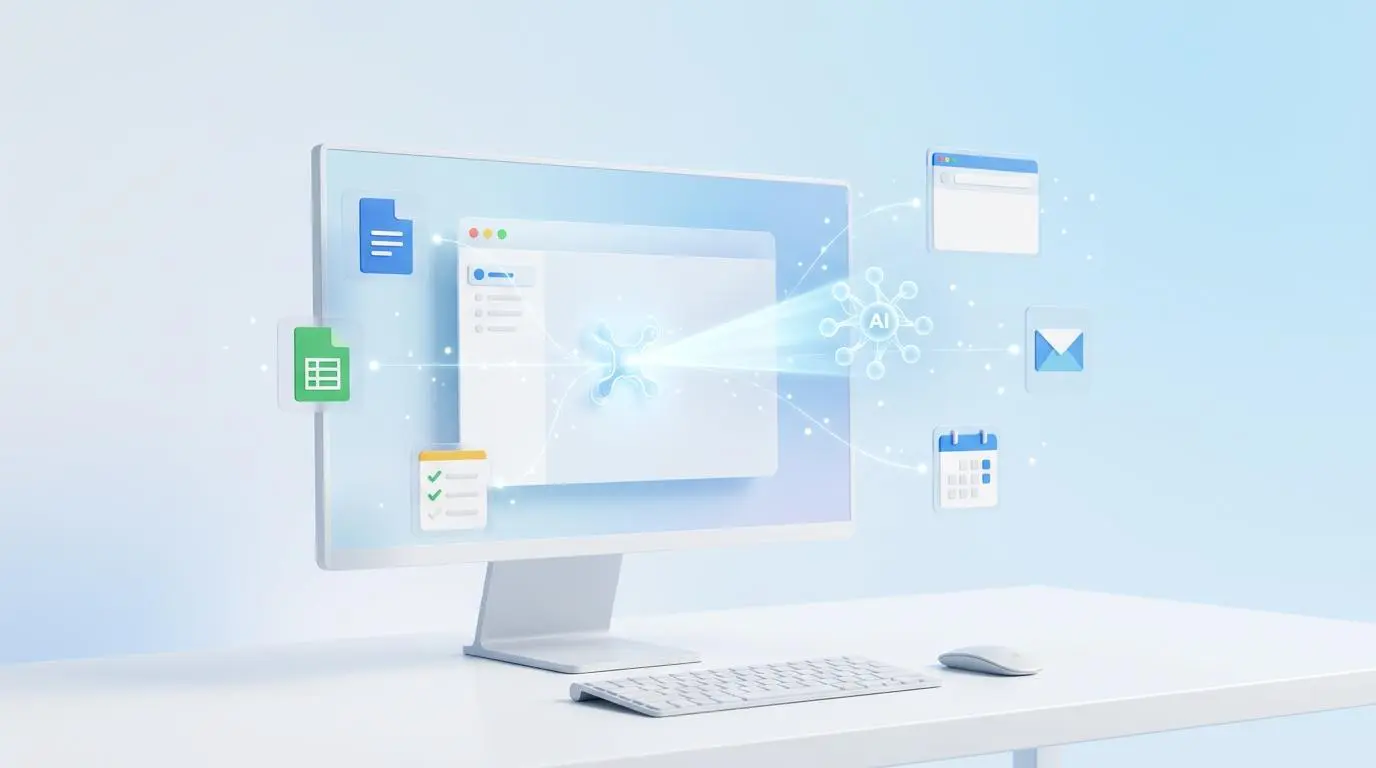
To combat this, platforms like Slack and Microsoft Teams are transforming into unified workspaces. By embedding document editing and complex task management directly into the conversational stream, these platforms eliminate the fatigue of constant app switching. Workers can now collaborate on a living document without ever leaving their primary communication hub.
From Generative Chat to Agentic Execution
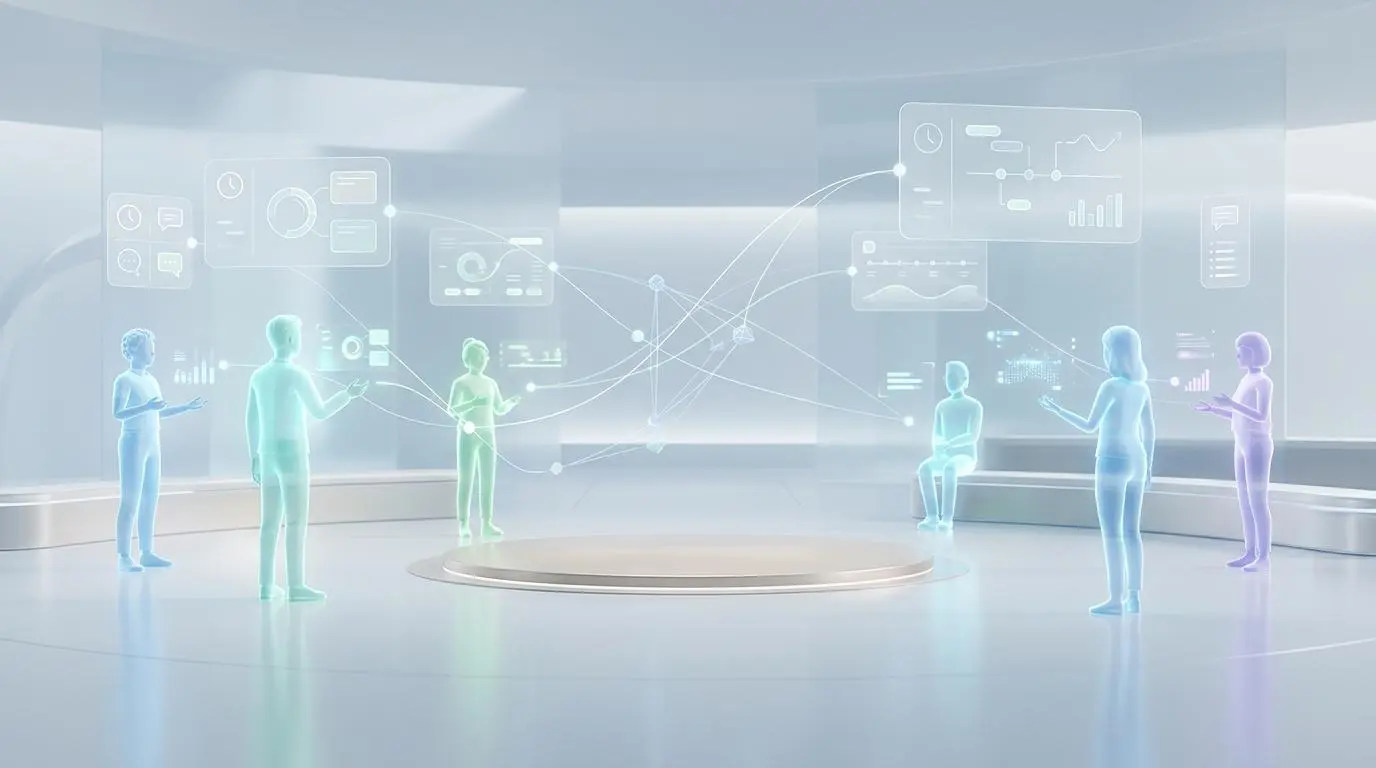
The true leap forward in collaboration software is the transition from simple generative AI to powerful agentic AI. We are moving past AI that merely summarizes meeting notes to intelligent systems that autonomously execute follow-up tasks. Collaboration tools previously only hosted conversations, but AI now executes the manual work-about-work that used to follow a meeting.
In May 2026, Microsoft launched ‘Computer-using agents’ in Copilot Studio, allowing AI to interact directly with desktop applications and websites through the user interface. This effectively bridges the gap between modern SaaS and legacy systems that lack APIs, according to the Microsoft 365 AI Workplace Update. It represents a monumental shift in how software integrates with older enterprise infrastructure.
Tools like ClickUp AI now leverage these capabilities to perform complex, cross-platform workflows seamlessly. Instead of humans doing the manual data entry, an AI agent can listen to a Slack discussion and immediately update the corresponding CRM records. This autonomous execution removes the friction of administrative overhead from the daily workflow.
Embracing Asynchronous-First Communication
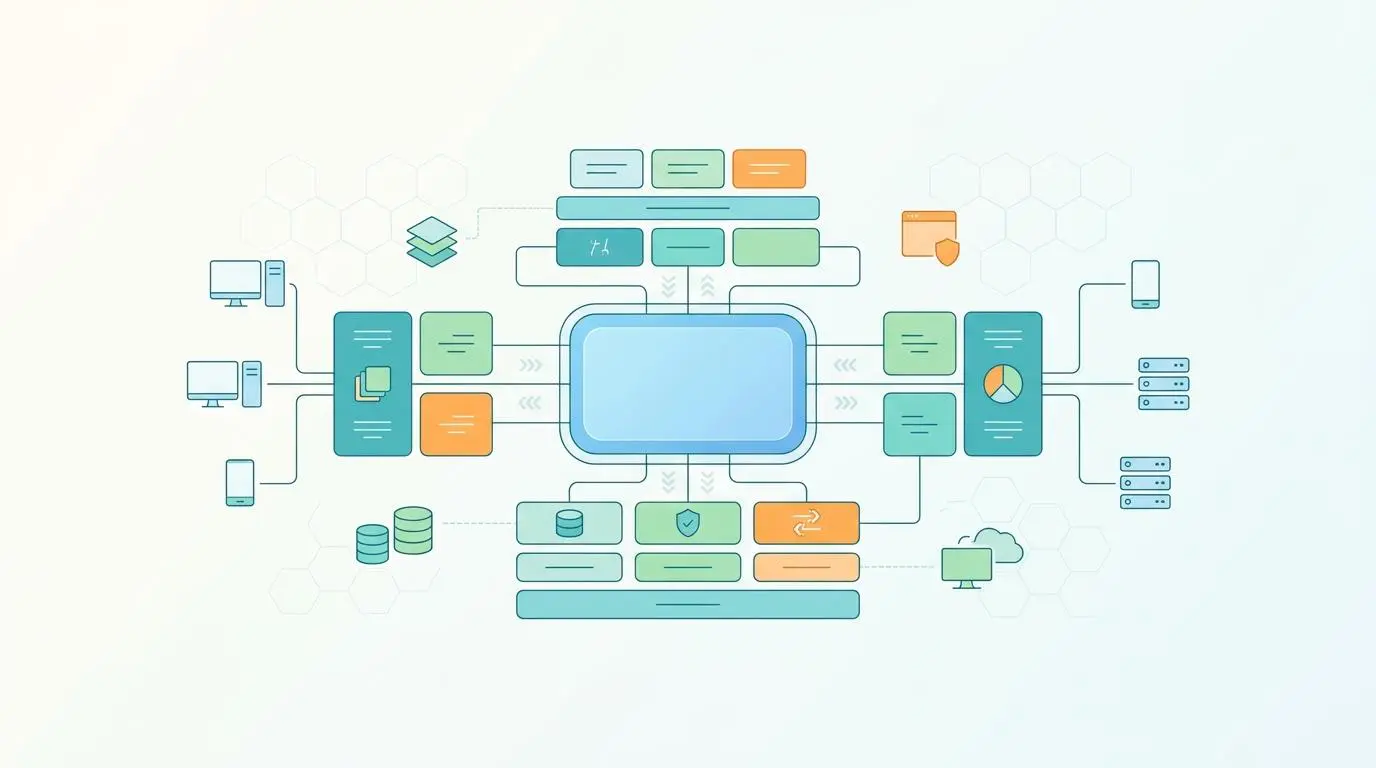
The traditional reliance on synchronous communication is breaking down under the weight of global time zones. Coordinating real-time meetings for distributed teams has become incredibly expensive and logistically frustrating. Zoom fatigue is a very real physiological response to the unnatural demands of back-to-back video conferences.
Asynchronous-first communication is rapidly emerging as the new standard for high-performing remote organizations. Teams are utilizing video-first update platforms like Loom to share rich context without demanding immediate attention from their peers. This allows colleagues to consume information and respond at a time that aligns with their personal peak productivity hours.
Innovations from platforms like BridgeApp are pushing this even further by introducing digital twin avatars. These AI-driven proxies can represent an employee in non-critical sync meetings, delivering status updates based on real-time data. This ensures the team stays informed while the actual human remains completely focused on deep, uninterrupted work.
The Financial Logic of an Enterprise Work OS
Beyond the daily frustration of fragmented tools lies a massive financial liability for growing organizations. Paying for dozens of individual SaaS seats creates a bloated tech stack filled with overlapping features and duplicate licensing. This fragmented spending often obscures a massive amount of wasted capital, hidden behind information silos.
Companies are realizing that managing multiple disconnected subscriptions is an unsustainable financial model for scaling operations. The administrative burden of provisioning, securing, and auditing 15 different applications drains IT resources and inflates operational budgets. It is a completely inefficient way to run a modern digital business.
Consolidating the tech stack into an Enterprise Work OS like Monday.com or Notion offers a powerful remedy. Mid-sized companies adopting these unified platforms are projected to save millions annually simply by recovering lost productive time and streamlining their software expenditures. A single, unified platform provides absolute visibility and dramatically lowers the total cost of ownership.
Solving the Loneliness Paradox Through Digital Wellness
Despite being hyper-connected through endless virtual meetings, a significant portion of the remote workforce experiences profound isolation. This loneliness paradox reveals that more screen time does not equate to meaningful human connection. Workers feel disconnected from the overarching mission of the company, leading to a severe drop in morale.
The expectation of a constant digital presence creates a toxic culture of being always on. This relentless pressure inevitably leads to digital burnout, high employee turnover, and a severe drop in creative output. When the boundary between the home and the office dissolves entirely, the cognitive health of the workforce suffers.
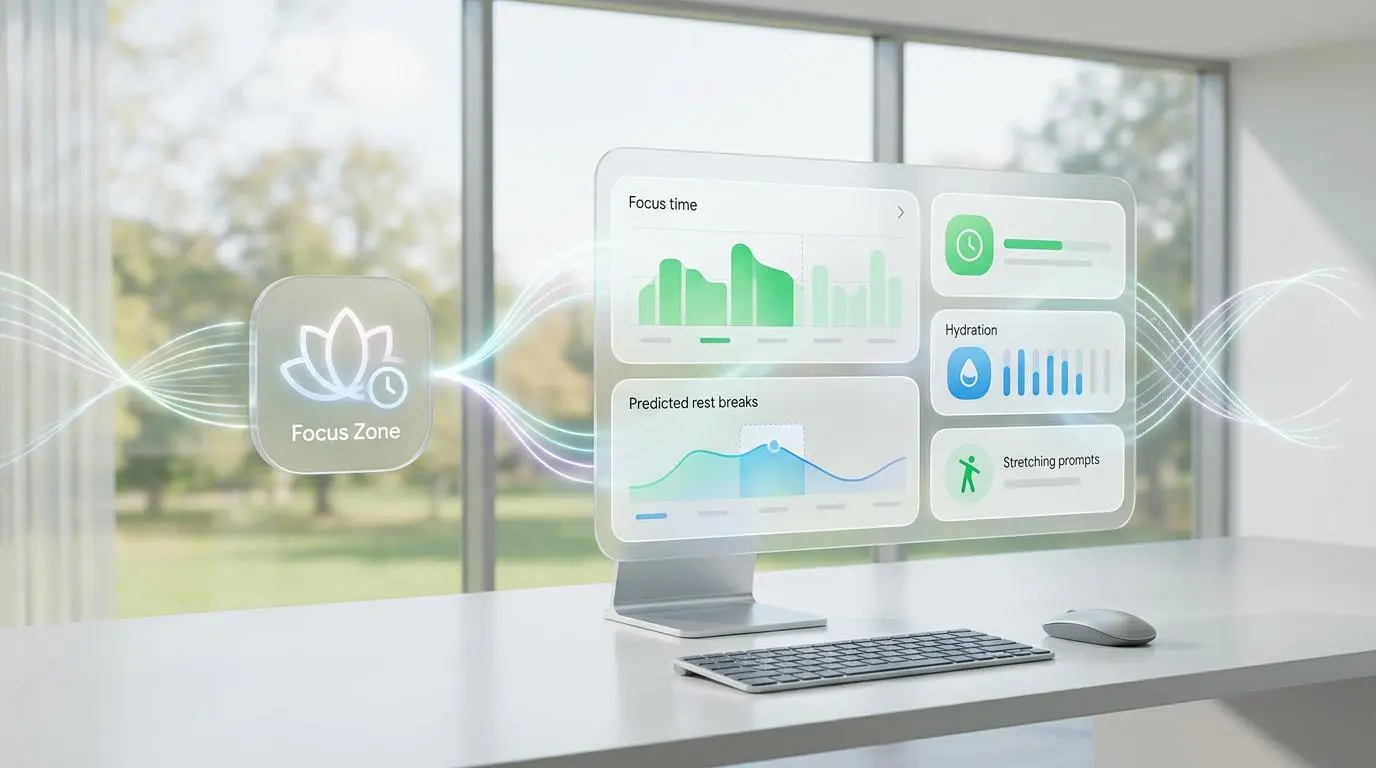
Modern collaboration suites are addressing this by integrating digital wellness features directly into the ecosystem. Platforms like Microsoft Viva now automatically block notifications during off-hours and schedule dedicated deep work sessions. By algorithmically protecting the mental health of the workforce, these tools ensure long-term sustainability in a remote environment.
Predictive Tasking and the Future of Agile
The bottleneck in scaling distributed agile teams has always been the manual setup and maintenance of project management boards. Scrum masters and product managers spend countless hours manually translating creative ideas into actionable tickets. This administrative overhead slows down sprint velocity and delays product shipping.
By late 2026, the industry is shifting toward predictive tasking to eliminate this administrative burden entirely. The collaboration suite will act as an active participant in the planning phase rather than a passive recording tool. Software will anticipate the needs of the team before a human ever clicks a button.
Future AI systems will analyze recorded brainstorming sessions and autonomously build the entire project roadmap. These intelligent agents will assign owners and set realistic deadlines based on the historical velocity of the team. This completely automates project setup, allowing human workers to focus exclusively on execution and innovation.
The Dawn of Living Workstreams
The static dashboard is rapidly becoming a relic of the past, making way for dynamic, intelligent environments. We are entering the era of living workstreams, where AI agents autonomously move tasks through the pipeline and resolve resource conflicts without human oversight. This evolution transforms collaboration software from a simple utility into a strategic partner that actively drives projects forward.
By eliminating the toggle tax and automating the mundane, businesses can finally unlock the true potential of their remote talent. The future of work is not about working harder within broken systems, but about leveraging AI to create frictionless operational ecosystems. Organizations that embrace this shift will outpace their competitors in both speed and employee satisfaction.
Navigating the intersection of modern technology, software architecture, and business growth requires a sharp strategy. To future-proof your tech stack and scale with precision, connect with Andres at Andres SEO Expert.
Frequently Asked Questions
What is the toggle tax and how does it impact enterprise productivity?
The toggle tax refers to the cognitive and financial drain caused by workers switching between multiple disconnected applications. Research shows the average worker toggles apps 1,200 times daily, leading to a 40% loss in productivity and costing the U.S. economy approximately $450 billion per year.
How does agentic AI differ from standard generative AI in collaboration tools?
Unlike standard generative AI that focuses on summarizing or creating content, agentic AI can autonomously execute tasks. This includes interacting with desktop applications and websites to update CRM records, manage workflows, and perform administrative work-about-work without direct human intervention.
What are the benefits of transitioning to an asynchronous-first communication model?
An asynchronous-first model reduces meeting inflation and Zoom fatigue by prioritizing non-real-time updates through platforms like Loom or unified workspaces. This allows distributed teams to collaborate across time zones more efficiently while protecting employee deep-work hours from constant interruptions.
How can an Enterprise Work OS improve a company’s financial bottom line?
An Enterprise Work OS, such as Monday.com or Notion, consolidates fragmented tools into a single platform. This reduces costs by eliminating overlapping SaaS licenses and recovering lost productive time, providing a lower total cost of ownership and better visibility for scaling organizations.
What role do digital twin avatars play in modern remote collaboration?
Digital twin avatars act as AI-driven proxies for employees in non-critical sync meetings. They can provide status updates and represent a worker based on real-time data, allowing the actual human employee to remain focused on high-value tasks instead of attending redundant calls.
How do AI-augmented ecosystems address digital burnout and employee wellness?
AI-augmented ecosystems integrate wellness features that automatically block notifications during off-hours and schedule dedicated time for deep focus. By algorithmically protecting the mental health of the workforce, these tools help prevent the loneliness paradox and long-term burnout associated with remote work.