Key Points
- Occupancy Intelligence AI-driven heatmaps and predictive climate control eliminate ghost heating to directly lower utility costs.
- Predictive Maintenance Transitioning to sensor-agnostic IIoT devices enables autonomous asset monitoring to slash unplanned downtime expenses.
- Knowledge Digitization Natural language copilots digitize tribal knowledge to allow junior technicians to query complex manuals instantly.
Table of Contents
- The Hidden Tax of Static Facilities
- Quantifying the Efficiency Revolution
- Eliminating Ghost Heating with Occupancy Intelligence
- Agentic AI and Dynamic Climate Control
- Predictive Maintenance and IIoT ROI
- Breaking Data Silos with No-Code Dashboards
- Digitizing Tribal Knowledge with AI Copilots
- The Autonomous Future of Facility Operations
- Pioneering Energy-as-a-Service Ecosystems
The Hidden Tax of Static Facilities
The hidden tax of operating commercial real estate today is paid in empty, brilliantly lit rooms and perfectly conditioned air blowing over vacant desks.
Facility management remains plagued by ghost heating in empty offices. This bleeds capital while hybrid work schedules render traditional 9-to-5 assumptions entirely obsolete.
Beyond the utility waste, the operational reality is grim when a critical chiller fails unexpectedly. Such failures can incur a staggering $260,000-per-hour cost for unplanned downtime.
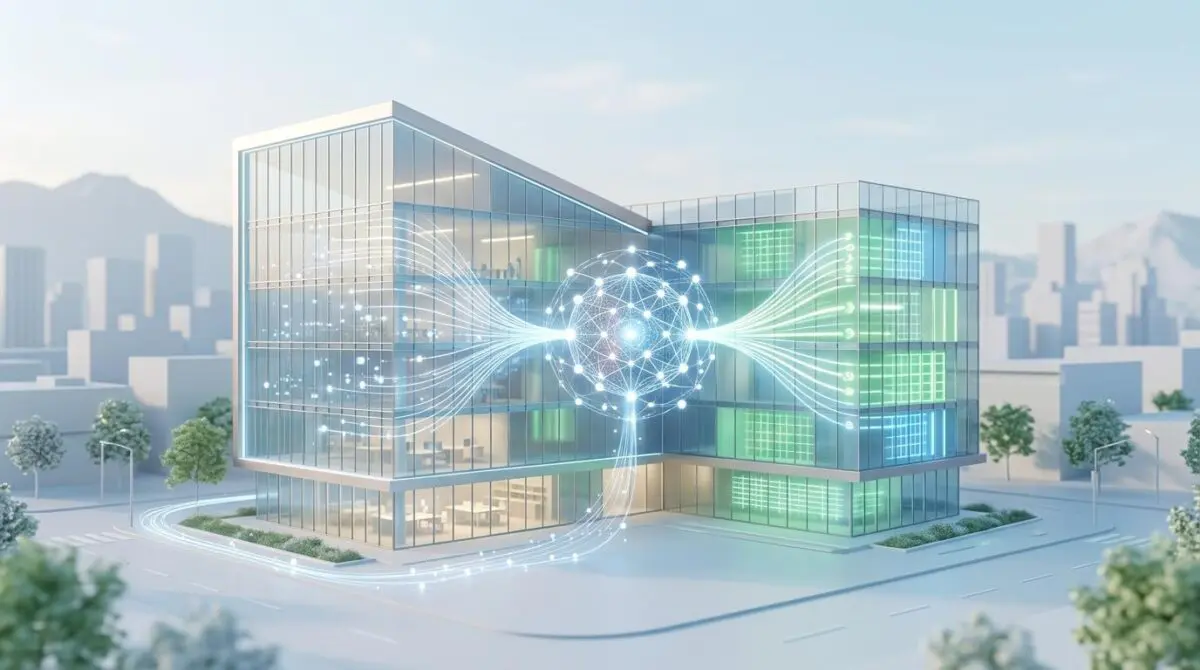
AI-Powered Smart Building Management Systems (SBMS) are emerging as the definitive solution to modernize these aging infrastructures. By shifting from reactive schedules to data-driven automation, these systems secure operational continuity and dramatically scale efficiency.
Quantifying the Efficiency Revolution
Market Intelligence & Data
AI Smart Building Market Size
According to a 2026 Vertex AI Search report, the global market for AI in smart buildings and infrastructure is projected to hit nearly $65 billion this year.
Maintenance Cost Reduction
According to a 2026 Factory AI CFO Guide, organizations transitioning to AI predictive models are achieving maintenance OpEx savings of up to 30%.
Utility Spending Savings
According to a 2026 Gitnux Market Data report, AI-driven energy optimization now saves commercial real estate owners an average of 15% on total utility costs.
Space Utilization Gain
According to a 2026 Gitnux industry report, AI-powered space utilization analytics have improved overall building efficiency by 18% compared to traditional manual tracking.
The staggering $64.95 billion valuation of the AI smart building market underscores a massive shift in how commercial properties are managed. This capital influx is not just about installing flashier thermostats.
It represents a fundamental restructuring of the built environment to address global sustainability mandates. Considering that commercial real estate is responsible for roughly 40% of global CO2 emissions, property owners are rapidly deploying intelligent systems to meet aggressive decarbonization targets.
Transitioning from reactive repair models to AI-driven predictive maintenance fundamentally alters a facility’s bottom line. Organizations leveraging intelligent sensor networks are consistently achieving maintenance OpEx savings of up to 30% within their first few quarters of deployment.
This drastic reduction in overhead frees up capital for further technological investments. It prevents facilities from constantly bleeding their budget on emergency repairs.
The 15% reduction in total utility spending is a direct result of algorithms replacing human guesswork in energy management. AI-driven optimization continuously analyzes micro-adjustments across HVAC and lighting zones.
This ensures that power is only consumed where it is actively needed. Such granular control creates a compounding financial benefit that static, rule-based systems simply cannot match.
Achieving an 18% gain in space utilization efficiency proves that smart buildings do more than just save energy. They actively optimize human workflows by analyzing real-time movement and occupancy patterns.
Facility managers can consolidate active teams onto specific floors while powering down unused wings. This intelligence allows enterprises to right-size their real estate portfolios, avoiding the massive costs associated with leasing unnecessary square footage.
Eliminating Ghost Heating with Occupancy Intelligence

Most commercial buildings still run on static schedules that blindly heat and light empty floors based on outdated 9-to-5 assumptions. This rigid approach completely ignores the volatile reality of modern hybrid work shifts.
As a result, facilities experience massive utility waste and uncomfortable environments for the few employees actually in the office.
Facilities managers are often blind to real-time space utilization, forced to guess how many people will show up on any given Tuesday. Modern tools are changing this paradigm by utilizing advanced occupancy heatmaps.
These platforms ingest data from motion sensors and Wi-Fi access points to dynamically stop wasting energy on zero-occupancy zones. By visually mapping exactly where employees congregate, these systems allow managers to restrict climate control to active areas only.
Agentic AI and Dynamic Climate Control
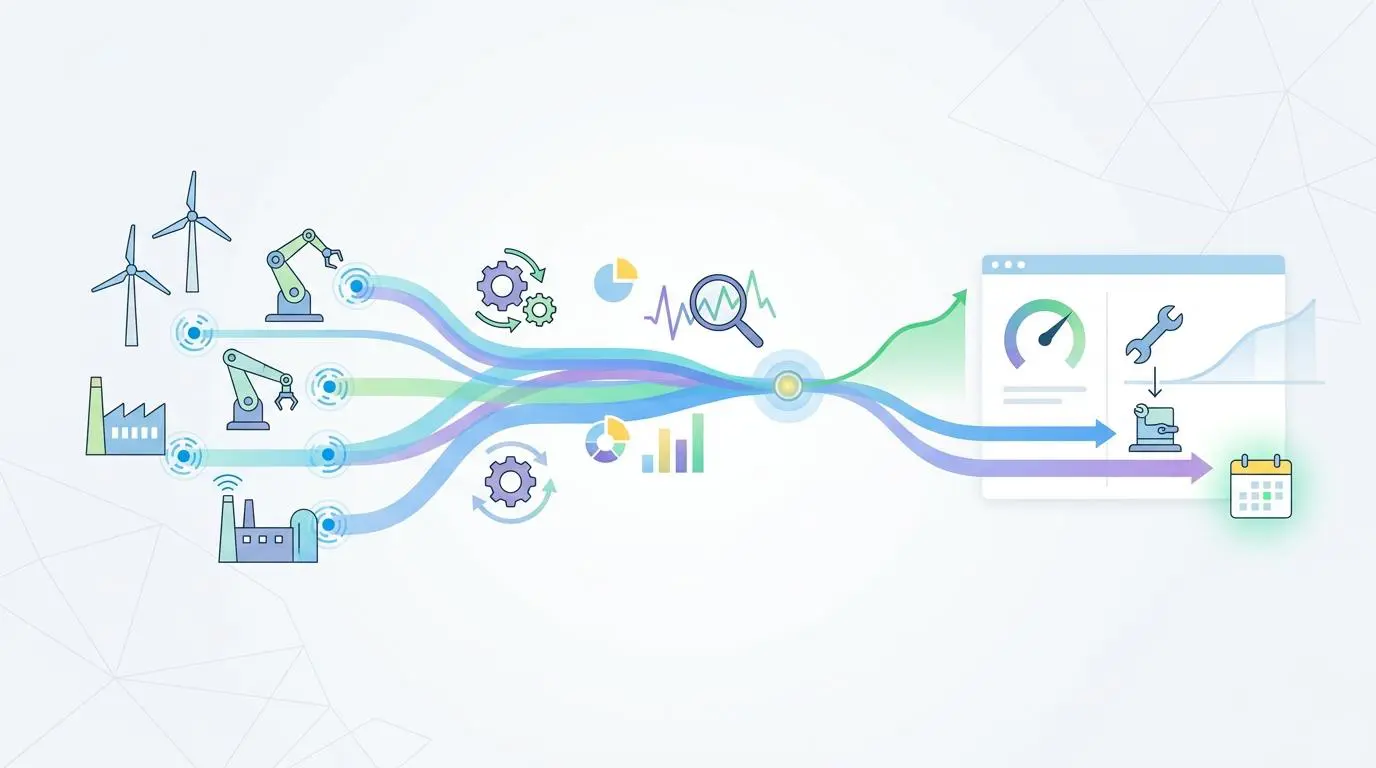
Static, rule-based automation simply cannot adapt to the volatility of modern office attendance or sudden weather shifts. When a cold front hits or an entire department works remotely, legacy systems continue churning out pre-programmed responses.
This lack of adaptability ends up wasting immense amounts of power.
The industry is now shifting toward Agentic AI, moving far beyond simple sensors to enable truly autonomous adjustments. Advanced systems now use machine learning to continuously optimize HVAC loads.
This software cross-references hyper-local weather forecasts with live staff density metrics. It adjusts temperatures before humans even notice a change is needed.
This proactive approach ensures optimal comfort while drastically reducing the baseline energy load of the entire structure.
Predictive Maintenance and IIoT ROI
Historically, high upfront hardware costs and months-long implementation times blocked smaller enterprises from realizing meaningful smart building ROI. Facilities were forced to wait for equipment to break before fixing it.
This reactive approach inevitably led to catastrophic system failures and exorbitant emergency repair bills.
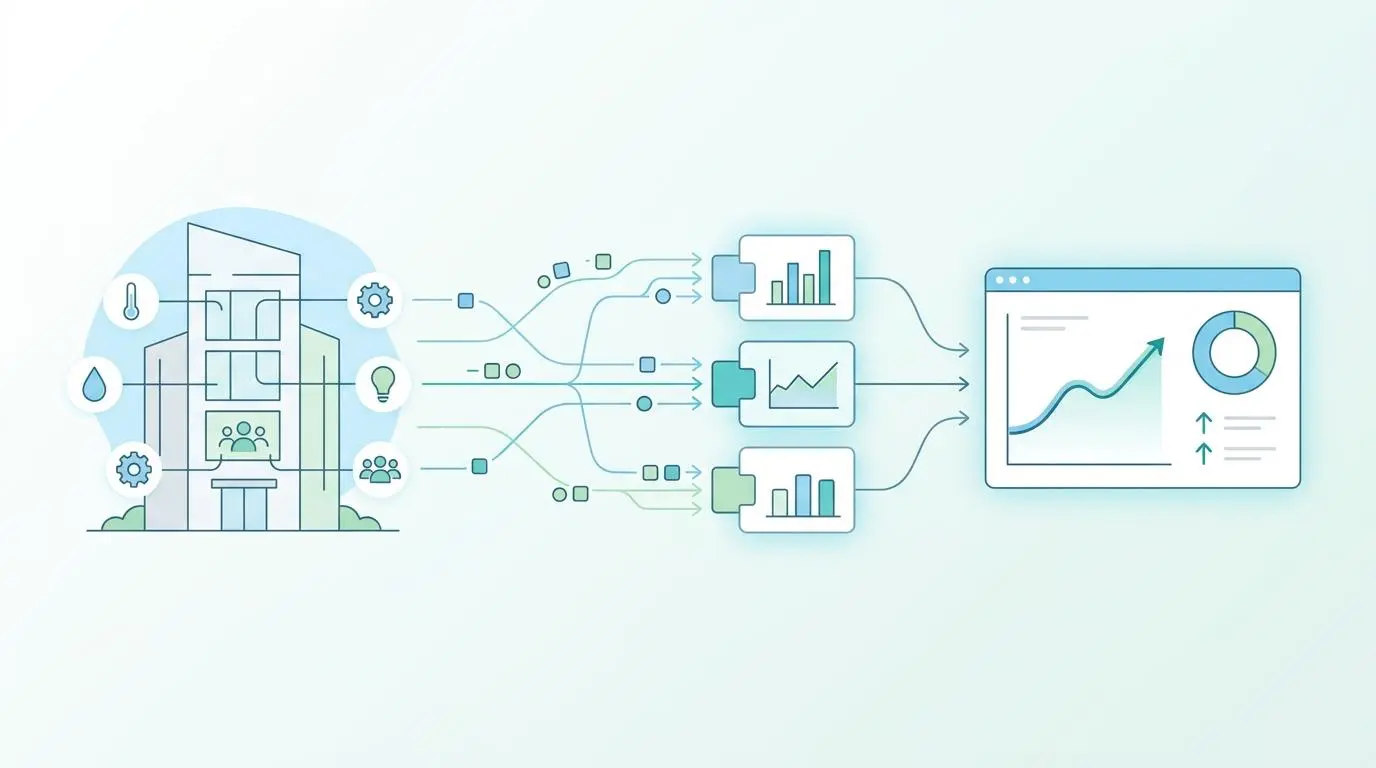
Today, transitioning from these reactive models to AI-driven predictive maintenance is yielding positive returns within a single business quarter. Modern platforms enable rapid deployment to monitor critical asset health.
This allows teams to upgrade their capabilities without requiring a complete overhaul of existing infrastructure.
By utilizing sensor-agnostic Industrial Internet of Things (IIoT) devices, these systems detect minute vibrational anomalies or temperature spikes in aging chillers.
This allows maintenance teams to replace a failing $50 bearing during planned downtime, rather than replacing a $50,000 motor after a mid-summer meltdown.
Breaking Data Silos with No-Code Dashboards

The integration gatekeeper has long been the primary obstacle for facility modernization. Fragmented tech stacks make it incredibly difficult for non-technical staff to see a unified, accurate view of overall building performance.
While many business leaders have adopted workplace management tech, a staggering one-third still struggle with severe data silos. These disconnects often occur between their energy monitors and maintenance software.
To solve this, the market is aggressively moving away from fragmented spreadsheets toward intuitive, no-code dashboards.
These unified interfaces allow facility managers to drag and drop widgets, creating custom views that correlate utility spikes directly with specific equipment health.
By democratizing access to complex building data, operational teams can make rapid, informed decisions without waiting on IT to run custom SQL queries.
Digitizing Tribal Knowledge with AI Copilots
Aging equipment and a dwindling pool of experienced senior engineers are creating a massive knowledge gap for junior facility teams.
When complex legacy machinery fails, newer technicians often spend hours hunting through dusty, outdated binders just to find a simple troubleshooting sequence.
AI-powered semantic search for operations and maintenance manuals is revolutionizing this workflow by digitizing decades of paper-based tribal knowledge.
Field technicians can now ask plain-English questions and receive step-by-step instructions with direct citations from physical manuals.
AI Maintenance Copilots utilize natural language processing to help technicians query massive technical documents instantly.
This immediately reduces documentation errors by up to 68% and actively closes the skilled labor gap.
The Autonomous Future of Facility Operations
Manual work order management currently causes severe operational delays that escalate minor, easily fixable issues into catastrophic structural failures.
Waiting for a human to notice a puddle, log a ticket, and dispatch a plumber is an archaic workflow that modern real estate can no longer afford.
The next evolution of facility management is true autonomous building operations. In this near-future state, AI detects a subtle water pressure drop and immediately validates the leak via localized computer vision.
It then auto-dispatches the nearest qualified technician to resolve the issue.
The system automatically updates compliance logs and adjusts adjacent water valves to mitigate damage, all with zero human intervention.
Pioneering Energy-as-a-Service Ecosystems
By the end of 2026, we will witness the full maturation of Energy-as-a-Service models. Buildings will no longer be passive consumers of electricity.
Instead, they will act as autonomous nodes on the smart grid.
These intelligent structures will seamlessly sell excess energy back to the utility provider in real-time during peak demand, driven entirely by AI-predicted occupancy drops.
This transforms real estate from a static operational cost into a dynamic, revenue-generating asset.
Navigating the intersection of modern technology, software architecture, and business growth requires a sharp strategy. To future-proof your tech stack and scale with precision, connect with Andres at Andres SEO Expert.
Frequently Asked Questions
What is “ghost heating” in commercial facility management?
Ghost heating refers to the inefficient practice of climate controlling empty office spaces based on outdated, static 9-to-5 schedules. In the era of hybrid work, this leads to significant utility waste as systems heat or cool vacant floors without regard for actual occupancy.
How much can organizations save by switching to AI predictive maintenance?
Organizations transitioning from reactive repair models to AI-driven predictive maintenance can achieve maintenance OpEx savings of up to 30%. These systems use IIoT sensors to detect equipment anomalies early, preventing costly emergency repairs and reducing unplanned downtime.
What role does Occupancy Intelligence play in smart building efficiency?
Occupancy intelligence uses motion sensors and Wi-Fi access points to create real-time heatmaps of building usage. This allows Smart Building Management Systems (SBMS) to dynamically adjust HVAC and lighting, ensuring energy is only consumed in active zones, which improves space utilization by an average of 18%.
What is Agentic AI in the context of HVAC control?
Agentic AI enables autonomous system adjustments by cross-referencing live staff density with hyper-local weather forecasts. Unlike static rule-based systems, Agentic AI proactively optimizes HVAC loads before humans notice a change is needed, ensuring comfort while reducing the baseline energy load.
How do AI Copilots address the skilled labor gap in facility engineering?
AI Maintenance Copilots digitize decades of paper-based “tribal knowledge” and technical manuals. Using natural language processing, they allow technicians to query complex documentation instantly via plain-English questions, reducing documentation errors by up to 68%.
What is the Energy-as-a-Service (EaaS) model for smart buildings?
Energy-as-a-Service transforms buildings into autonomous nodes on a smart grid. Using AI to predict occupancy drops, these structures can sell excess energy back to utility providers in real-time, transforming real estate from a static operational cost into a revenue-generating asset.