





Key Points
- Replacing legacy tracking systems with self-healing pipelines eliminates manual screening bottlenecks and identifies passive candidate intent.
- Deploying predictive performance analytics removes the gut-feeling gamble by assigning data-backed success probabilities to new hires.
- Leveraging internal talent marketplaces uncovers hidden adjacent skills within your existing workforce to drastically improve retention ROI.
Table of Contents
- Drowning in the Applicant Noise Crisis
- Validating the Shift Toward Smart Recruitment
- Replacing Legacy Systems with Self-Healing Pipelines
- Eliminating Top-of-Funnel Administrative Bottlenecks
- Transforming Gut Feelings into Predictive Analytics
- Mining Your Internal Talent Marketplace
- Erasing the Timezone Tax in Global Hiring
- Auditioning Talent Through Digital Twin Environments
- The Dawn of Talent-on-Demand Operations
Drowning in the Applicant Noise Crisis
The harsh reality of modern recruitment is that hyper-accessible application channels and generative AI resumes have completely broken the traditional hiring funnel. We are currently facing a massive signal-to-noise crisis across nearly every major industry. This overwhelming flood has triggered a staggering 400% increase in applicant noise, burying human recruiters under mountains of unqualified data.
Consequently, organizations are suffering from a 60% increase in costly mis-hires as fatigue sets in and decision-making quality plummets. Manual screening processes simply cannot keep pace with the sheer volume of automated applications flooding corporate inboxes daily. To survive this operational bottleneck, forward-thinking leaders are pivoting to a highly advanced strategic framework.
By implementing Autonomous Talent Intelligence (ATI), organizations can filter out this noise and scale their hiring operations with surgical precision. This shift transforms a chaotic administrative burden into a streamlined, predictive engine for sustainable business growth.
Validating the Shift Toward Smart Recruitment
Market Intelligence & Data
Efficiency Gains
According to the 2026 LinkedIn Global Talent Trends report, 68% of recruiting leaders state that Generative AI has successfully reduced their time-to-hire by over two weeks compared to 2024 levels.
Retention ROI
A 2025 Deloitte Human Capital study found that organizations using AI-driven internal mobility platforms see 3.5x higher employee retention rates over a 24-month period.
Market Valuation
A 2026 IDC Market Forecast estimates the total spend on AI-enabled recruitment technologies will reach $4.8 billion annually as enterprises pivot toward autonomous talent intelligence.
Candidate Preference
Data from a 2025 Greenhouse Candidate Experience survey shows that 82% of job seekers prefer interacting with automated scheduling and status updates over waiting for human feedback.
When analyzing the data from the recent LinkedIn Global Talent Trends report, it becomes clear that generative AI is no longer just an experimental tool. The staggering 68% efficiency gain reported by recruiting leaders translates directly to massive operational cost savings. By shaving over two weeks off the standard time-to-hire, companies can capture top-tier candidates before competitors even schedule a first-round interview.
The financial impact of internal mobility is equally profound, as evidenced by the 3.5x higher retention ROI over a 24-month period. Organizations that deploy AI-driven internal platforms stop bleeding institutional knowledge to competing firms. Instead of paying premium acquisition costs for external hires, they cultivate and retain their most valuable existing assets.
This massive shift in resource allocation explains the projected $4.8 billion market valuation for AI-enabled recruitment technologies by 2026. Enterprise leaders are recognizing that manual sourcing is an unsustainable drain on capital and human bandwidth. Consequently, they are aggressively redirecting budgets toward autonomous intelligence to build resilient, future-proof workforce infrastructures.
Finally, the 82% candidate preference for automated systems shatters the myth that job seekers demand constant human interaction. Modern professionals value speed, transparency, and respect for their time above all else. By integrating automated interview scheduling features, companies deliver a frictionless candidate experience that elevates their employer brand.
Replacing Legacy Systems with Self-Healing Pipelines
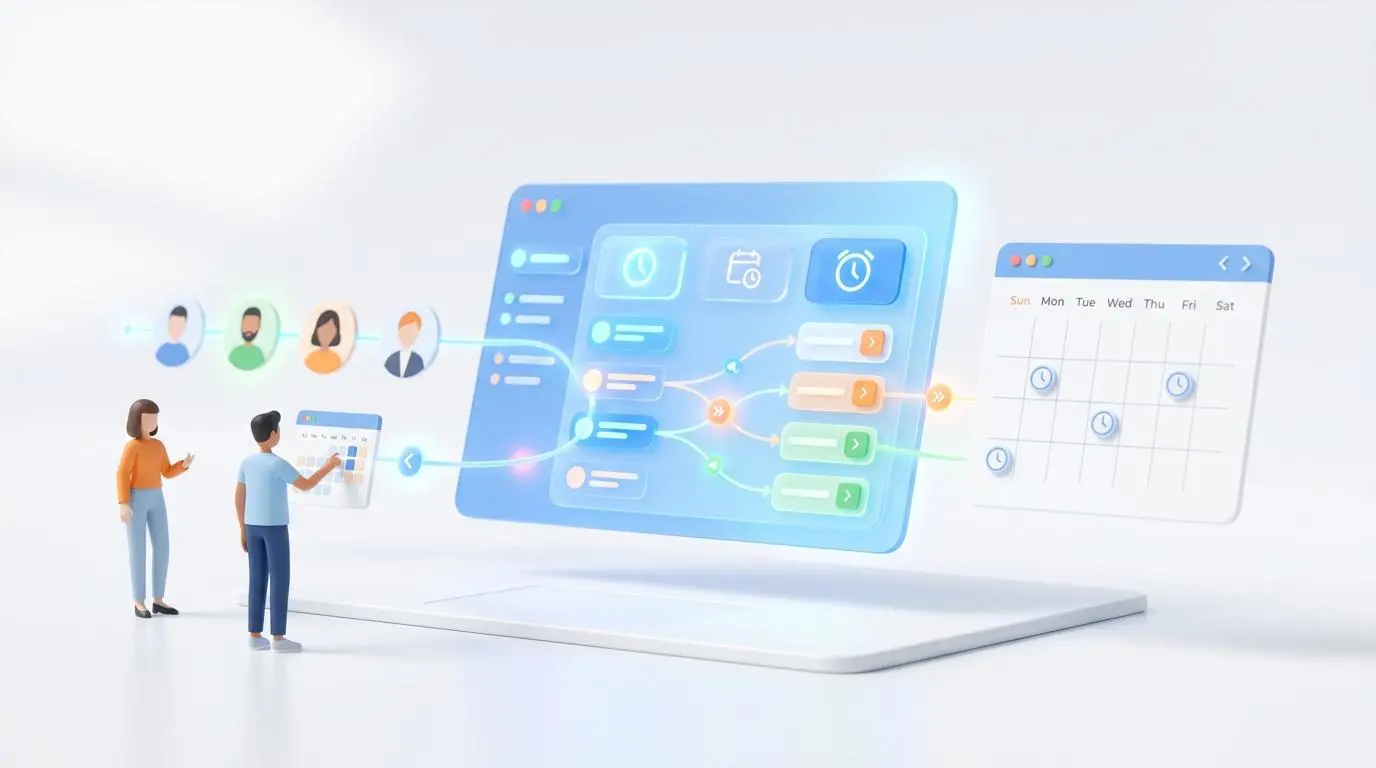
Manual resume screening currently consumes an average of 23 hours per single hire. This massive administrative bottleneck prevents rapid scaling in hyper-competitive sectors like Green Energy and AI Engineering. Legacy tracking systems simply cannot handle the sheer volume of modern applicant data efficiently.
To combat this, enterprise leaders are replacing keyword-based filters with self-healing talent pipelines. These advanced systems utilize sophisticated graph database technology to dynamically map candidate skills rather than relying on static resume keywords. This creates a fluid, adaptable talent pool that constantly updates itself based on real-time market trends.
Tools like Beamery and Eightfold.ai are pushing this boundary even further by leveraging next-generation neural networks. These platforms can now identify passive intent in top-tier candidates before they even submit an application. By engaging talent proactively, companies can secure critical skills before the competition is even aware those candidates are looking.
Eliminating Top-of-Funnel Administrative Bottlenecks

Administrative tasks currently account for a staggering 65% of a recruiter’s workweek. This operational drag stalls strategic workforce planning and prevents recruiters from building high-touch relationships with vital candidates. The manual coordination of calendars and initial screenings is a massive waste of human potential.
Hyper-automation of these top-of-funnel tasks has rapidly moved from an experimental luxury to a baseline operational standard. Leading platforms like Paradox and Phenom are now achieving 95% automation across the entire interview coordination lifecycle. This includes seamless scheduling, initial automated screening, and instantaneous background verification.
By removing these tedious administrative hurdles, talent acquisition teams are instantly transformed into strategic business partners. Recruiters can finally focus their energy on closing high-value candidates and advising executive leadership on long-term workforce planning. This shift fundamentally redefines the operational ROI of the modern HR department.
Transforming Gut Feelings into Predictive Analytics
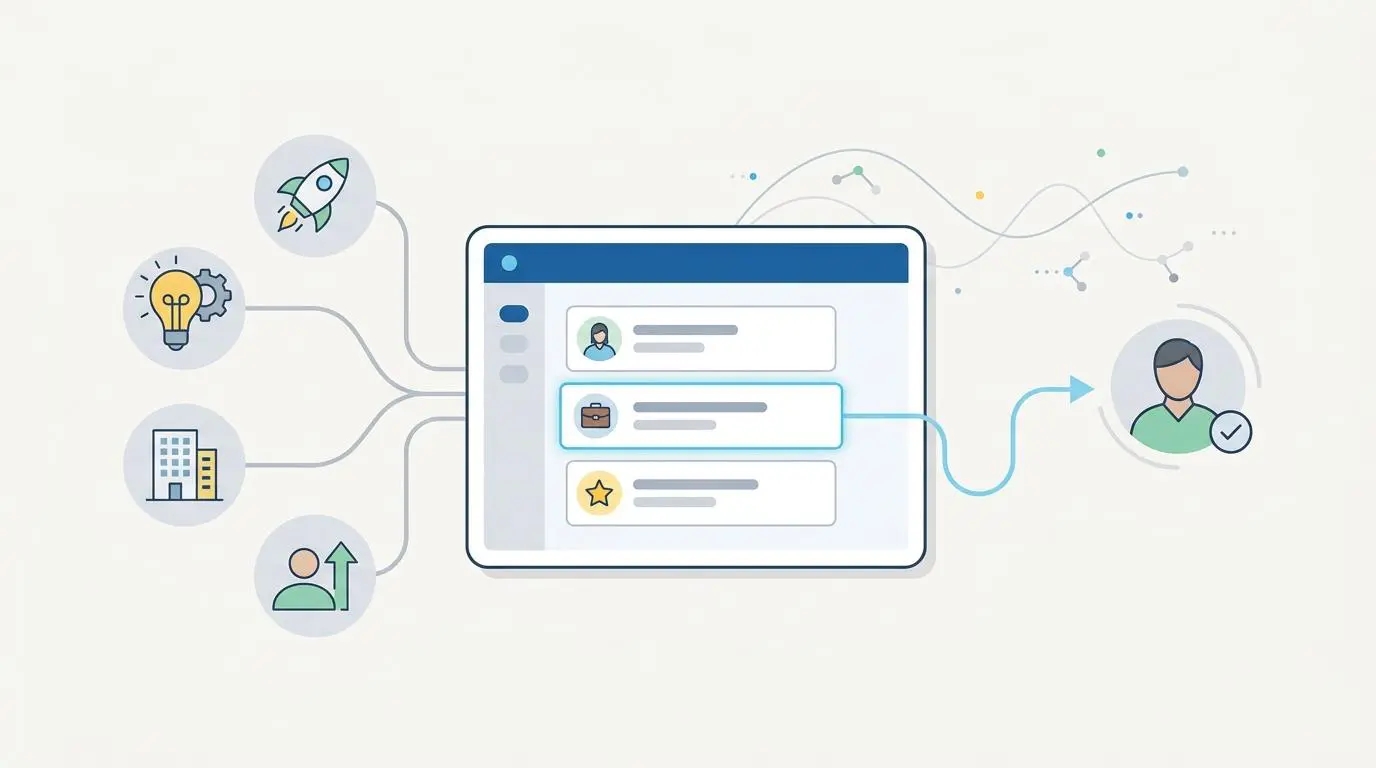
Executive leadership often views hiring as a gut-feeling gamble rather than a highly calculated, data-backed investment. This subjective approach inevitably leads to high turnover rates and massively wasted onboarding capital. Relying on human intuition to scale a complex organization is an inherently flawed growth strategy.
Predictive performance analytics now allow forward-thinking companies to assign a definitive success probability score to every applicant. By cross-referencing a candidate’s digital footprint with internal high-performer benchmarks, platforms like Visier provide real-time ROI modeling. This allows department heads to understand the exact financial impact of every new hire before an offer letter is drafted.
Furthermore, a 2025 study by the Josh Bersin Academy revealed that autonomous sourcing has led to a 32% increase in neurodiverse hiring. Advanced AI models are now specifically configured to ignore traditional social cues that often trigger subconscious bias in human recruiters. This ensures that hiring decisions are based entirely on capability and predictive success rather than superficial interview performance.
Mining Your Internal Talent Marketplace
Companies routinely lose their top-performing talent simply because employees cannot see a clear, accessible path for internal growth. Meanwhile, recruiters waste massive budgets searching externally for specific skills that are already present within the organization. This disconnect represents a profound failure in workforce optimization.
Internal Talent Marketplaces have rapidly evolved to become the primary source for 40% of enterprise hires in 2026. Platforms like Gloat and Fuel50 utilize advanced AI to continuously map the capabilities of your existing workforce. They identify current employees whose adjacent skills make them perfect candidates for newly created roles.
This internal mobility strategy drastically reduces the need for expensive external sourcing campaigns. It also creates a deeply engaged workforce that understands their long-term career trajectory is actively supported by the company. Ultimately, mining your internal talent marketplace is the most cost-effective way to scale operations.
Erasing the Timezone Tax in Global Hiring
The timezone tax inherent in global hiring creates massive operational delays during the interview scheduling phase. These logistical bottlenecks often cause top-tier remote talent to accept competing offers while simply waiting for a video link. In a globalized economy, speed is the ultimate competitive advantage.
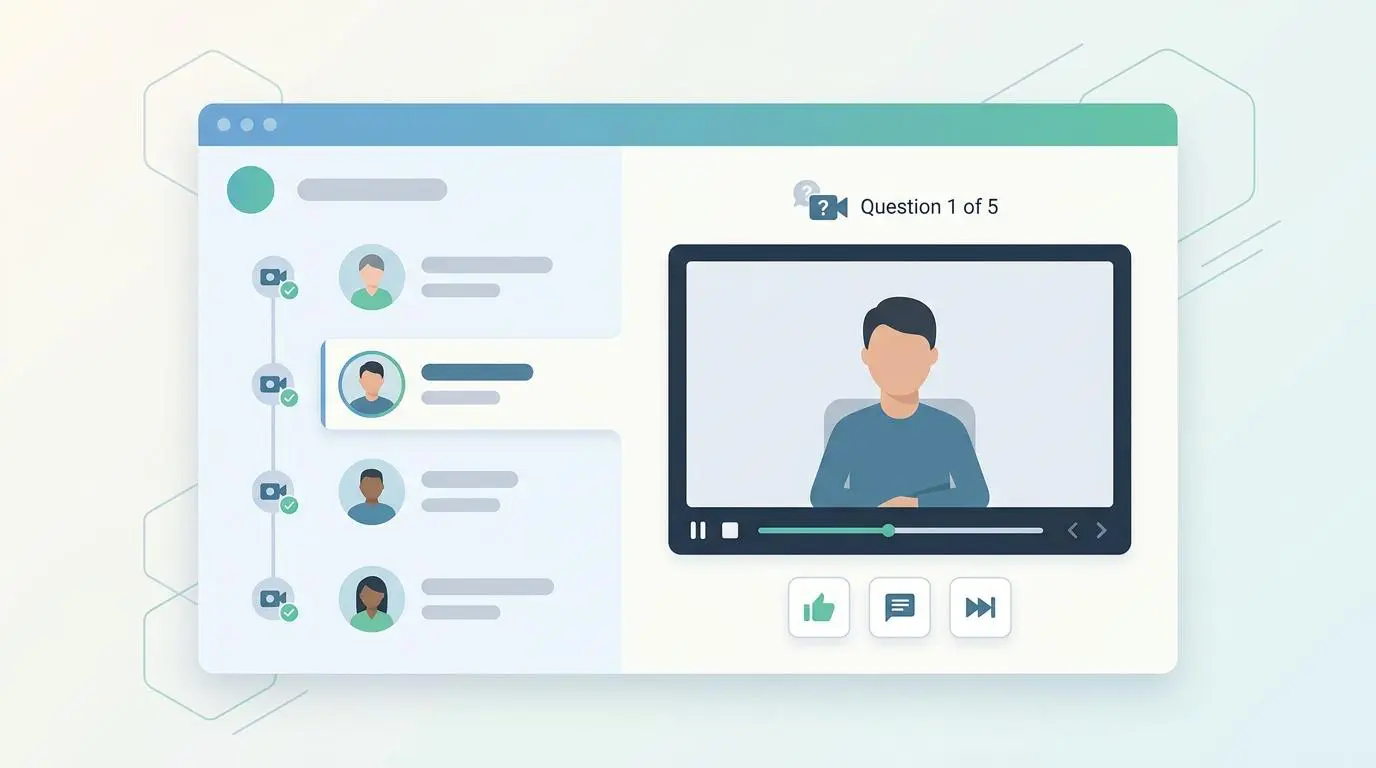
To eliminate this friction, asynchronous video interviewing tools have undergone a massive technological evolution. Updated platforms now utilize cultural alignment sentiment analysis to deeply evaluate candidate responses without requiring real-time interaction. This allows global teams to assess cultural fit and operational tempo entirely on their own schedule.
By removing the need for real-time timezone alignment, companies can source the absolute best talent from anywhere on the planet. This asynchronous approach respects the candidate’s time while dramatically accelerating the overall time-to-hire. It is a critical operational upgrade for any business managing a distributed, remote workforce.
Auditioning Talent Through Digital Twin Environments
Standard interviews have historically proven to be incredibly poor predictors of actual, on-the-job performance. The traditional question-and-answer format heavily favors charismatic individuals over technically superior candidates who may lack polished presentation skills. This systemic flaw consistently results in underperforming teams.
We are now witnessing the rise of digital twin interviews, a revolutionary approach that fundamentally changes candidate assessment. In this model, candidates interact with a highly sophisticated AI replica of a hiring manager within a secure sandbox environment. They are asked to perform job-simulated tasks that perfectly mirror the daily realities of the role.
This technological leap shifts the hiring paradigm entirely from passive interviewing to active auditioning. Decision-makers can observe exactly how a candidate solves complex problems in real-time, removing all guesswork from the equation. It is the ultimate validation of technical competence and operational readiness.
The Dawn of Talent-on-Demand Operations
By late 2026, the entire industry will undergo a massive structural shift from traditional recruitment services to a fluid talent-on-demand model. AI agents will continuously scout, pre-vet, and maintain active relationships with a global talent pool on behalf of your organization. Traditional job postings will become completely obsolete as roles are filled via algorithmic matching before they are ever publicly listed.
This autonomous future means that building a world-class team will no longer be a reactive scramble, but a continuous, seamless operational flow. Companies that embrace this intelligence will drastically outpace their competitors in both innovation and execution. The future belongs to those who automate the mundane to elevate the strategic.
Navigating the complexities of business growth, team leadership, and market positioning requires a razor-sharp strategy. To scale your operations and build a resilient brand architecture, connect with Andres at Andres SEO Expert.
Frequently Asked Questions
What is Autonomous Talent Intelligence (ATI) in recruitment?
Autonomous Talent Intelligence (ATI) is a strategic framework that uses advanced AI to filter applicant noise and scale hiring with precision. It replaces manual screening with predictive engines to help organizations manage the massive influx of automated applications and reduce the risk of costly mis-hires.
How much can AI improve recruitment efficiency and time-to-hire?
Recent data indicates that Generative AI can reduce time-to-hire by over two weeks, representing a 68% gain in efficiency. This acceleration allows companies to secure top talent before competitors and significantly lowers the operational costs associated with traditional manual sourcing.
What are the benefits of an internal talent marketplace?
Internal talent marketplaces use AI to map the skills of an existing workforce, leading to 3.5x higher employee retention rates. This strategy reduces external sourcing costs and preserves institutional knowledge by providing employees with clear, AI-supported internal growth paths.
How does AI help reduce subconscious bias in hiring?
Autonomous sourcing platforms can be configured to ignore traditional social cues that often trigger human bias, focusing instead on objective capability. This data-driven approach has been shown to increase neurodiverse hiring by 32% by prioritizing predictive performance over superficial interview traits.
What are digital twin interviews?
Digital twin interviews are job simulations where candidates interact with an AI replica of a hiring manager in a secure sandbox. This shifts the recruitment process from passive questioning to active auditioning, allowing employers to validate technical competence and real-time problem-solving skills.
How do asynchronous video interviews eliminate the timezone tax?
Asynchronous tools allow global teams to evaluate candidates without needing real-time alignment across different timezones. By using cultural alignment sentiment analysis, companies can assess remote talent on their own schedules, significantly accelerating the hiring lifecycle for distributed workforces.