Key Points
- Proactive Retention: Leveraging autonomous AI agents to identify exit intent and orchestrate real-time interventions significantly reduces customer churn.
- Zero-Latency Insights: Adopting modern data architectures eliminates traditional warehousing delays, enabling immediate strategic pivots based on live consumer behavior.
- Dynamic Interfaces: Transitioning to generative UI ensures digital experiences adapt instantly to individual user contexts, boosting engagement and conversion rates.
Table of Contents
- The Burden of Generic Interactions
- The Cost of Stagnant Customer Journeys
- Anticipating Needs Before They Arise
- Engineering Empathy in Digital Spaces
- Eliminating Latency in Customer Insights
- Unifying the Fragmented Brand Vision
- Accelerating Iteration Without Human Friction
- Adapting to the Infinite Context
- The Invisible Interface of Tomorrow
The Burden of Generic Interactions
Imagine a loyal customer logging into your platform to urgently resolve a billing error. Instead of a swift resolution, they encounter a cheerful but entirely useless chatbot offering a generic sales promotion. This frustrating scenario perfectly encapsulates the modern personalization paradox.
Modern consumers demand instant, highly tailored experiences at every digital touchpoint. However, they increasingly reject invasive data harvesting and generic, high-latency automated support. Failing to resolve this tension actively pushes your audience toward competitors.
To survive this shift, businesses must completely pivot their operational strategies. The ultimate framework to overcome this hurdle combines predictive hyper-personalization with generative UI. Anticipating needs and dynamically adapting interfaces allows brands to eliminate friction and scale successfully.
The Cost of Stagnant Customer Journeys
Market Intelligence & Data
Real-Time Intent Recognition
A 2026 Salesforce State of Service report reveals that nearly three-quarters of leading enterprises now use AI to predict customer needs before a query is even submitted.
Global CX Technology Spend
According to the IDC Worldwide Customer Experience Spending Guide for 2025, global investment in CX-related hardware, software, and services has reached record levels to combat declining brand loyalty.
Churn Reduction via Predictive AI
McKinsey & Company’s 2026 Global Banking Report notes that institutions using advanced behavioral modeling have seen a significant drop in customer attrition compared to traditional peers.
Privacy-First Personalization
Gartner’s 2026 Top Strategic Technology Trends report indicates that the vast majority of consumers now only engage with brands that provide high-value personalization without utilizing third-party cookies.
A staggering 72% of leading enterprises now leverage AI to forecast customer needs before a single keystroke occurs. This shift marks the death of reactive support and the rise of proactive problem-solving. Tools like Salesforce Agentforce autonomous agents spearhead this movement by seamlessly managing the entire customer lifecycle.
Global investment in CX technology has hit $1.8 trillion, making the stakes for retaining consumer attention higher than ever. Brands are pouring capital into infrastructure designed to prevent declining loyalty in a fiercely competitive digital landscape. This massive spend underscores a simple truth that outdated interfaces are a severe financial liability.
Institutions adopting advanced behavioral modeling are already witnessing a 15% reduction in customer attrition. Identifying exit intent early allows companies to intervene with targeted solutions that salvage the relationship. This predictive capability effectively transforms potential churn into moments of reinforced trust.
Meanwhile, 84% of consumers demand high-value personalization without the privacy risks associated with third-party cookies. To achieve this delicate balance, engineering teams are rapidly adopting zero-copy data architectures. This allows organizations to analyze live behavior securely and instantly while bypassing the latency of traditional data warehousing.
Anticipating Needs Before They Arise

Legacy systems operate heavily on historical data, creating a fundamental flaw in modern service delivery. This reliance means customer experience strategies remain inherently reactive rather than predictive. When customers experience unresolved friction, this lag in response time leads directly to high churn rates.
Modern autonomous agents have moved far beyond simple script-based chatbots. These sophisticated tools now manage the entire customer lifecycle through real-time journey orchestration. They actively monitor behavioral signals to identify exit intent before the customer even considers leaving.
Intervening at the exact moment of hesitation allows brands to offer dynamic solutions that keep users engaged. This proactive approach saves the immediate transaction while building long-term loyalty. It ultimately transforms a potentially negative experience into a powerful retention mechanism.
Engineering Empathy in Digital Spaces

Consumers often feel dehumanized by standard, rigid automation workflows. Brands failing to mirror human empathy in their digital interfaces rapidly lose psychological trust and brand equity. To combat this, the rise of Emotional AI allows systems to analyze vocal cues and facial micro-expressions.
These real-time analyses enable support systems to adjust their tone and offerings instantly. Furthermore, behavioral economics principles like the Peak-End Rule are being automated directly into the user journey. This ensures every digital interaction ends on a high psychological note, leaving a lasting positive impression.
Interestingly, the concept of frictionless frustration is reshaping how we design these digital journeys. Making a process too easy can actually lower long-term brand recall. To counter this, brands intentionally insert meaningful micro-moments of friction to increase dopamine rewards upon task completion.
Eliminating Latency in Customer Insights

Decisions based on 24-hour-old data are entirely obsolete in today’s rapid digital economy. Consumer trends now shift in a matter of minutes based on viral social triggers and real-time events. Relying on traditional ETL processes means you are always reacting to yesterday’s market.
The shift to zero-copy data architectures is revolutionizing how leadership teams approach analytics. Leveraging platforms that allow direct querying of live data enables CX teams to analyze customer behavior instantly. This eliminates the massive latency previously caused by moving and copying data across warehouses.
With zero latency, brands can trigger hyper-personalized offers the exact second a user shows buying signals. This agility ensures that marketing and support efforts are always perfectly timed. It serves as the ultimate competitive advantage for scaling operations efficiently.
Unifying the Fragmented Brand Vision
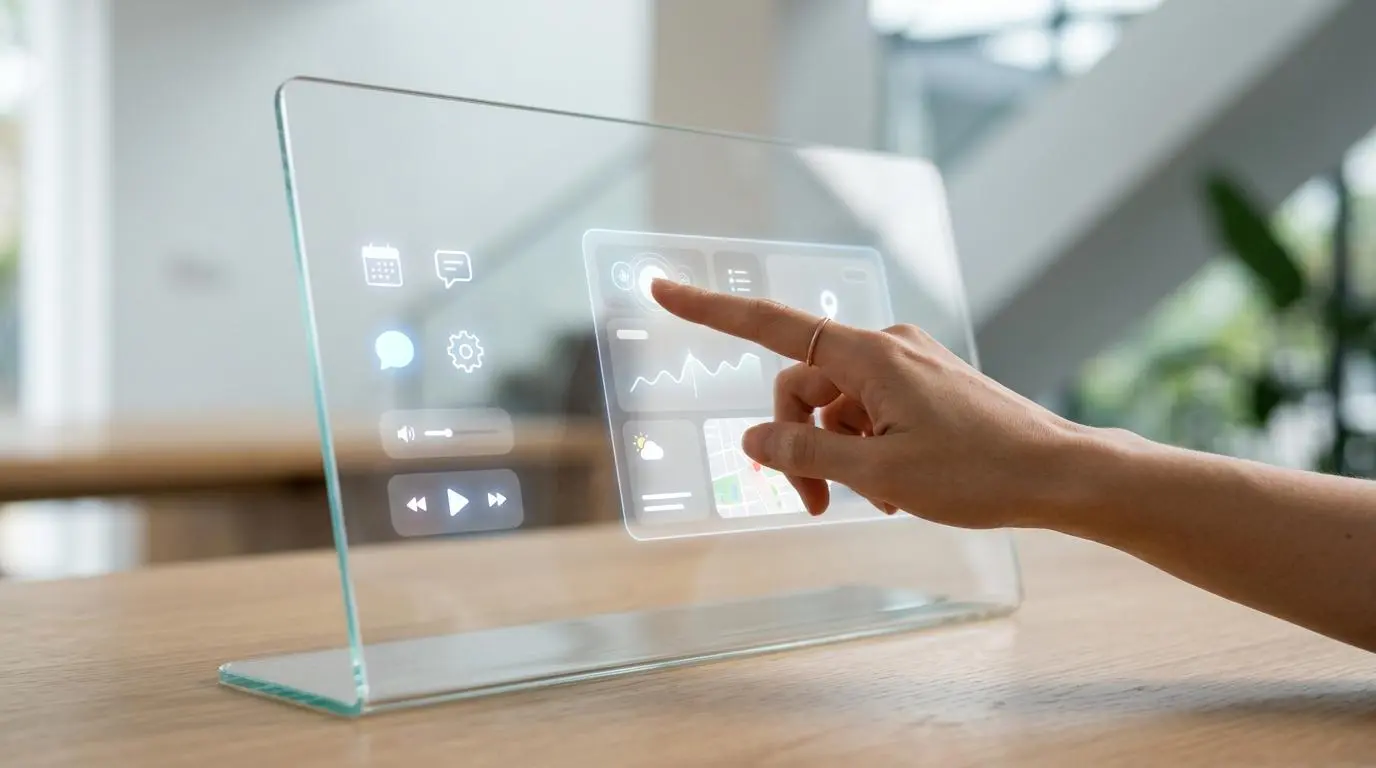
Siloed leadership between Marketing, IT, and Support creates a deeply fragmented customer journey. When departments operate independently, the resulting brand experience lacks a unified strategic vision. This internal friction inevitably bleeds out into the customer’s digital experience.
To solve this, the Chief Experience Officer role has evolved into a Digital Orchestrator position. This leader manages the critical intersection of AI ethics, data privacy, and brand voice. They ensure every automated touchpoint feels like a seamless extension of core company values.
Centralizing this authority allows companies to break down internal barriers and align their growth metrics. The result is a cohesive, trustworthy brand architecture that deeply resonates with users. Strong leadership remains the glue holding advanced automation strategies together.
Accelerating Iteration Without Human Friction
Traditional A/B testing is simply too slow and expensive for modern rapid iteration cycles. Waiting weeks for statistical significance prevents companies from staying competitive in a fast-paced market. Brands desperately need a way to validate ideas instantly without risking their live user base.
Forward-thinking companies are now utilizing synthetic personas to solve this critical bottleneck. These AI-generated customer segments allow product teams to run millions of UX simulations per hour. They can prototype, test, and refine new features in a completely simulated environment.
This means a new interface can be perfected before a single human user ever interacts with it. It dramatically reduces development costs while ensuring a flawless product launch. Innovation becomes a continuous, frictionless cycle rather than a risky gamble.
Adapting to the Infinite Context
Static apps and traditional websites are rapidly becoming a significant barrier to conversion. They are fundamentally incapable of adapting to the infinite variety of individual user contexts. A one-size-fits-all interface unfairly forces the user to do the heavy lifting.
The emergence of Generative UI completely flips this outdated paradigm. Interfaces no longer exist in a fixed state; they are dynamically generated in real-time. The layout, text size, and navigation adjust instantly based on the user’s accessibility needs and technical proficiency.
If a user’s immediate intent shifts, the interface morphs to serve that new goal seamlessly. This level of hyper-personalization removes all cognitive load from the consumer. It creates an intuitive environment where conversion becomes the most natural outcome.
The Invisible Interface of Tomorrow
The future of customer experience points toward the total disappearance of the traditional screen. We are moving rapidly toward ambient, voice-and-gesture-based interactions integrated seamlessly into our physical environments. Wearable AR and IoT devices will soon make brand interaction entirely invisible yet omnipresent.
In this near future, the brands that win will be those mastering predictive orchestration today. Building robust data architectures and empathetic AI systems now prepares your business for a screenless world. The ultimate customer experience is one where technology fades away, leaving only pure value.
Navigating the complexities of business growth, team leadership, and market positioning requires a sharp strategy. To scale your operations and build a resilient brand architecture, connect with Andres at Andres SEO Expert.
Frequently Asked Questions
What is predictive hyper-personalization in customer experience?
Predictive hyper-personalization is an advanced operational framework that utilizes AI to anticipate customer needs and dynamically adapt digital interfaces in real-time. By identifying intent before a user even submits a query, brands can eliminate friction and provide proactive solutions that improve retention and engagement.
How do zero-copy data architectures benefit personalization and privacy?
Zero-copy data architectures allow organizations to analyze live customer behavior securely and instantly without the latency associated with traditional data warehousing. This approach enables high-value personalization while meeting consumer demands for privacy by bypassing the need for intrusive third-party cookies.
What is Generative UI and how does it function?
Generative UI refers to digital interfaces that are not static but are instead generated in real-time based on the user’s specific context. The layout, navigation, and content adjust instantly to match an individual’s accessibility needs, technical proficiency, and immediate intent, significantly reducing cognitive load.
How does Emotional AI improve automated customer interactions?
Emotional AI analyzes vocal cues and facial micro-expressions during digital interactions to mirror human empathy. This allows support systems to adjust their tone and offerings instantly, helping brands build psychological trust and ensure that every interaction ends on a high note, following the Peak-End Rule.
What role do synthetic personas play in product development?
Synthetic personas are AI-generated customer segments used to run millions of UX simulations per hour. They allow product teams to prototype, test, and refine new interfaces in a completely simulated environment, accelerating iteration cycles and reducing development costs without risking the live user base.
Why is the Chief Experience Officer role evolving into a Digital Orchestrator?
The evolution to a Digital Orchestrator is driven by the need to unify fragmented visions between Marketing, IT, and Support. This leader manages the intersection of AI ethics, data privacy, and brand voice, ensuring that automated touchpoints feel like a cohesive extension of core company values.