




Key Points
- Hybrid Retrieval Architecture: Combining dense embeddings with BM25 and metadata grounding bypasses CMS contextual noise to drastically improve RAG accuracy.
- Information Gain Focus: Prioritizing unique statistical data and expert verification over legacy domain authority secures persistent LLM citations.
- Share of Model (SoM) Dominance: Tracking real-time AI sentiment via Perplexity and OpenAI APIs prevents hallucinated brand mischaracterizations from community platforms.
Table of Contents
The Illusion of Search Visibility
The harsh truth about modern search is that ranking at the top of traditional organic results no longer guarantees human eyeballs.
We are witnessing the devastating reality of the AIO Click-Gap, where organic click-through rates plummet by 61 percent despite holding premium legacy positions.
Search engines have transformed from passive librarians into active synthesizers that intercept the user journey.
If your technical architecture relies on long-form narrative flow, you are effectively invisible to the machines that now curate the internet.
The extreme volatility of probabilistic LLM retrieval means that only a fraction of brands maintain citation persistence across identical prompts.
To survive this paradigm shift, engineering teams must completely rebuild their approach and embrace Generative Engine Optimization (GEO).
GEO serves as the ultimate architectural solution for the AI-first web.
It shifts the focus from keyword density to semantic entity resolution, vector database ingestion, and structured data pipelines.
By structuring data specifically for LLM consumption, brands can reclaim their visibility inside generative interfaces and bridge the synthesis gap.
Quantifying the LLM Retrieval Collapse

The transition toward AI-synthesized answers is accelerating faster than traditional SEO frameworks can adapt.
As of early 2026, data confirms that Google’s AI Overviews have achieved a 48% footprint across all search queries.
This massive penetration marks the definitive end of the experimental phase for generative search.
When nearly half of all queries bypass the traditional ten blue links, the underlying retrieval mechanisms dictate the winners and losers of digital commerce.
Legacy fixed-size token splitting fails miserably in this environment, capturing only a fraction of the necessary context during ingestion.
Conversely, benchmark data proves that implementing semantic chunking with metadata filtering increases RAG retrieval accuracy to a staggering 60 percent.
This massive performance delta highlights the immediate need for infrastructure upgrades across enterprise websites.
Engineering teams must pivot toward metadata-enriched pipelines to ensure their content is accurately mapped and retrieved by language models.
Architecting for the Answer-First Paradigm
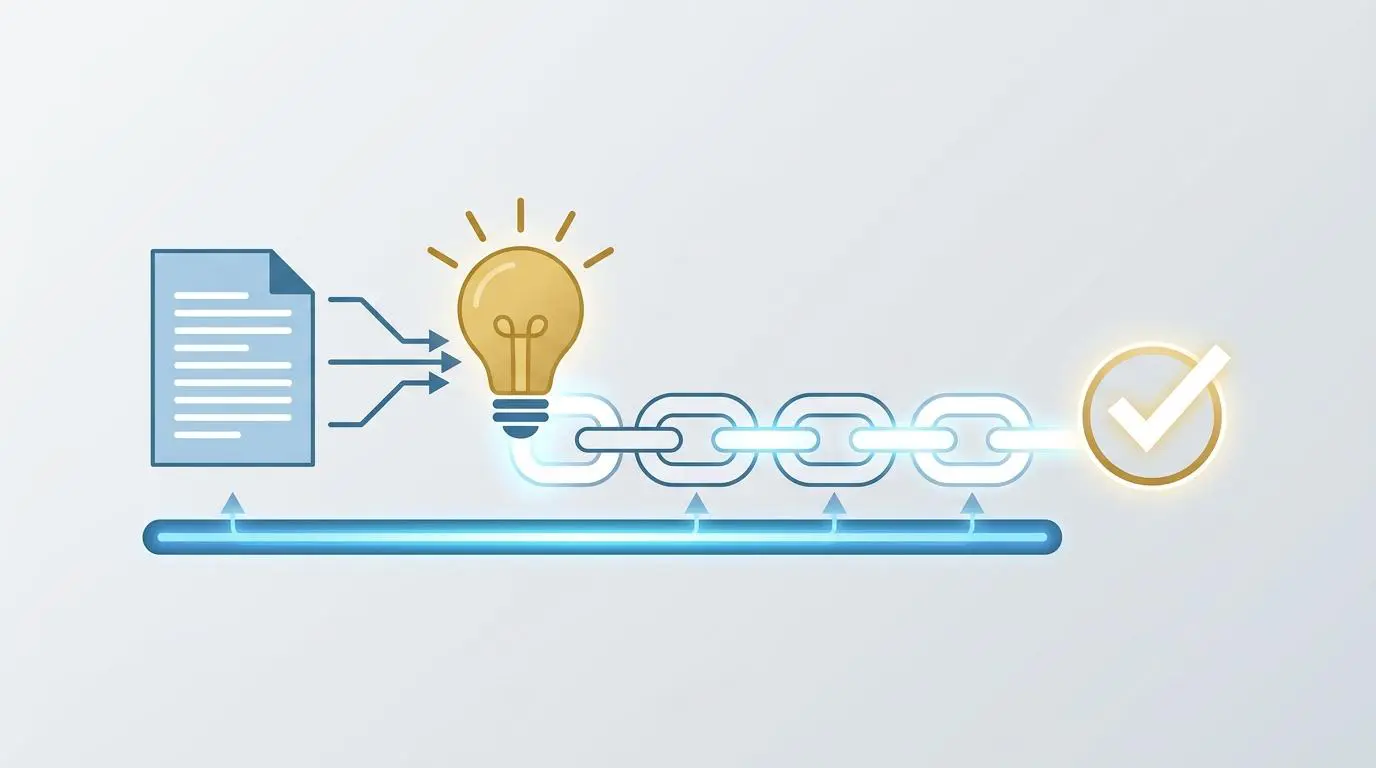
The expansion of AI Overviews has fundamentally altered how search engines extract and present information to the end user.
Google’s introduction of the Search Mode API now surfaces curated citation nodes designed to explore new angles dynamically.
Optimization requires content to be formatted for immediate, answer-first extraction rather than gradual storytelling.
This structural shift is necessary to satisfy the complex, multi-step reasoning chains utilized by advanced models like GPT-5.4 and Gemini 2.5.
The traditional SEO focus on long-form, narrative-driven content is actively failing in this ecosystem.
Generative engines prioritize modular, high-density semantic blocks over sprawling editorial pieces that bury the core facts.
When websites fail to modularize their data, they suffer from immediate citation exclusion.
Furthermore, the 20 percent persistence rule identified by AirOps research in January 2026 reveals a startling vulnerability for legacy brands.
Due to the non-deterministic nature of LLM decoding, content appearing in an AI response has only a one-in-five chance of being cited again in consecutive identical queries.
To beat this volatility, content must be anchored by high-density entity triplets that establish unbreakable semantic relationships.
These structured triplets force the probabilistic engine to repeatedly recognize and retrieve the core facts, ensuring brand persistence.
Eradicating Contextual Noise in Vector Space
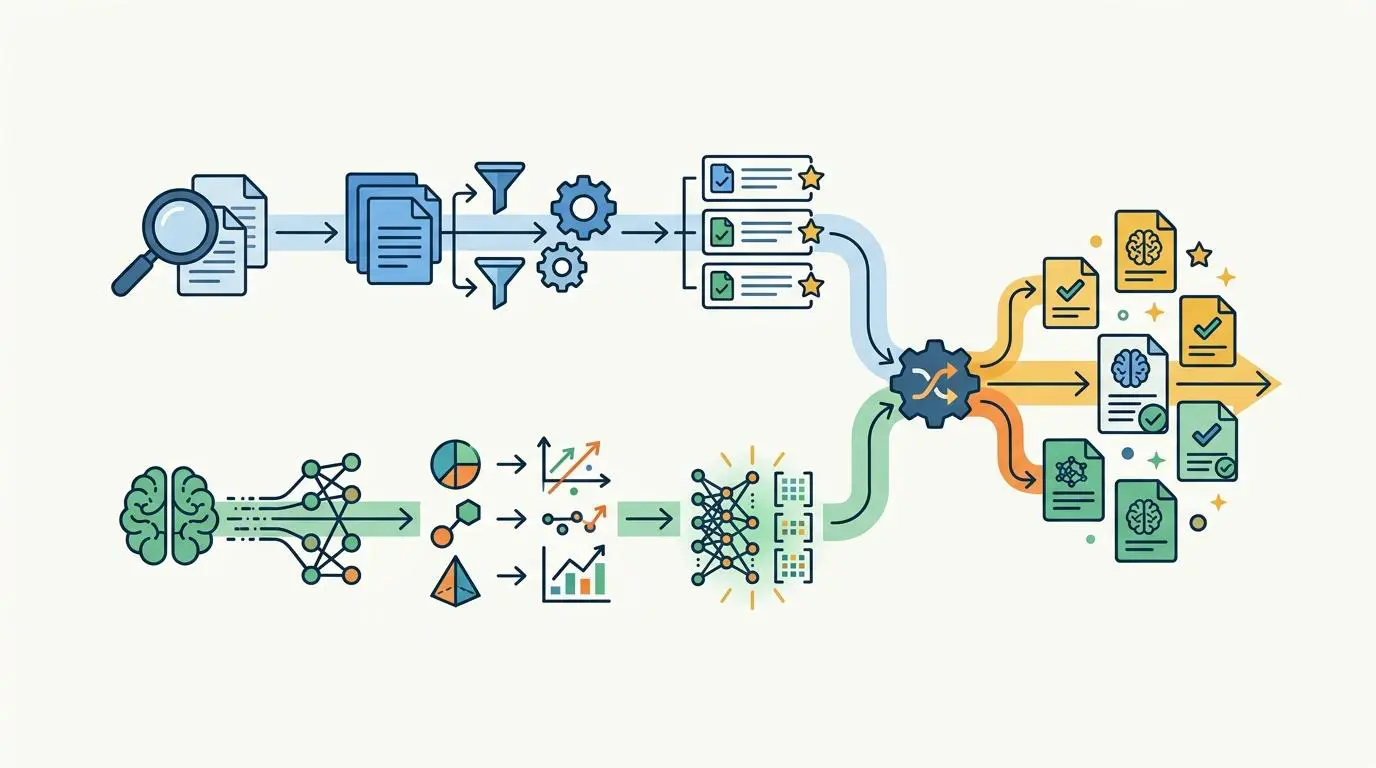
Modern Retrieval-Augmented Generation (RAG) pipelines have evolved far beyond basic vector similarity matching.
In 2026, top-tier architectures utilize hybrid retrieval, seamlessly combining dense embeddings with traditional BM25 sparse scoring.
This dual approach successfully captures exact technical terms that vector-only search algorithms frequently overlook during the retrieval phase.
APIs like Pinecone Serverless and ChromaDB now support advanced metadata grounding to enforce strict source validation.
This feature allows architects to forcefully bind LLM attribution to specific brand entities, ensuring the model knows exactly where the data originated.
However, standard content management systems actively sabotage this process by generating massive amounts of contextual noise.
Headers, footers, and injected advertisements dilute the quality of vector embeddings during the ingestion phase.
This noise causes retrieval systems to skip high-value brand content when chunking the data into the vector database.
To fix this, engineering teams must deploy clean, headless content delivery APIs.
These APIs strip away all non-essential DOM elements before the LLM crawler arrives, ensuring only high-signal text is vectorized.
Engineering the Authority Paradox Pipeline
Securing a citation in an AI Overview requires a completely different trust framework than legacy search algorithms.
Recent studies indicate that including highly specific statistics increases AI visibility by 37 percent.
Similarly, embedding verified expert quotations adds a 30 percent citation boost during the synthesis phase.
Search engines now deploy verification APIs like FactCheck-GPT to pre-validate source credibility before rendering an answer.
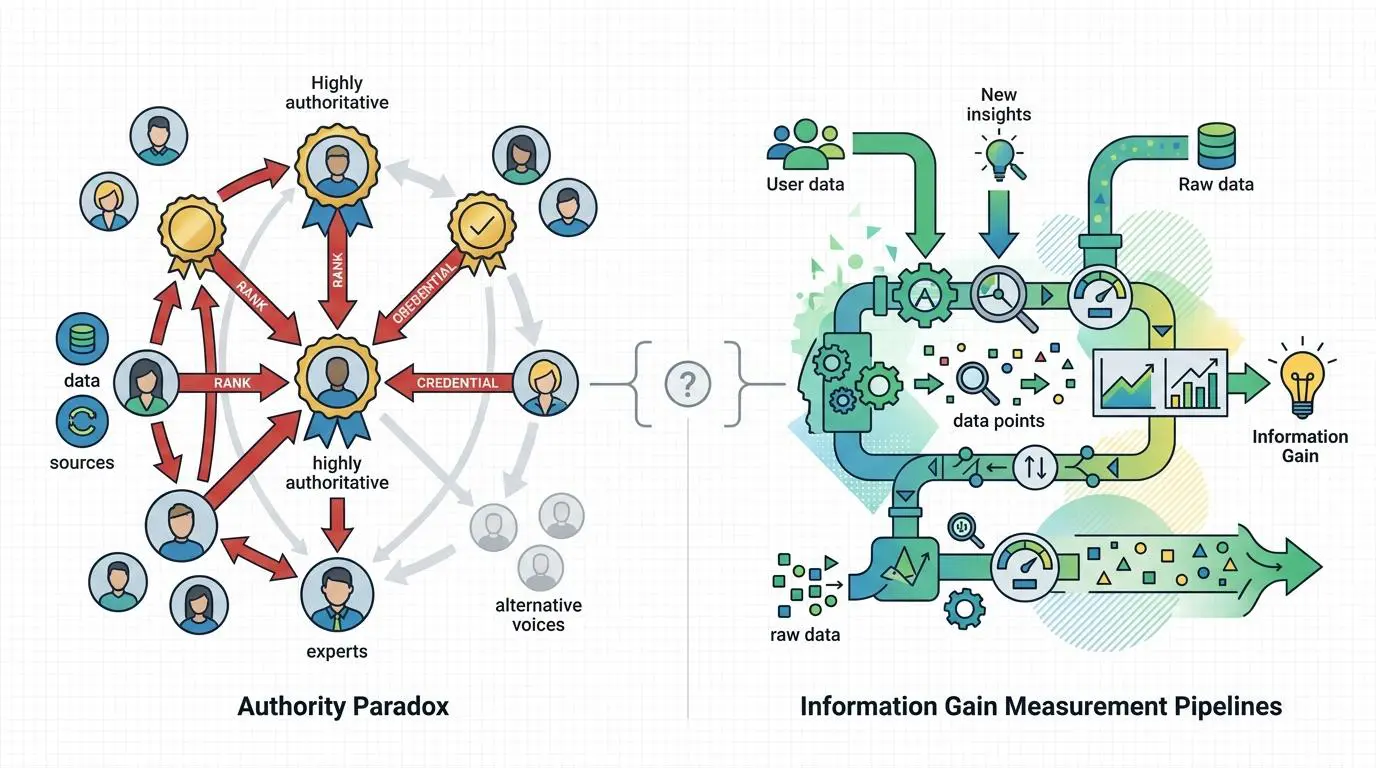
This creates what architects call the Authority Paradox in modern search ecosystems.
High domain authority metrics like DR or DA no longer guarantee that an LLM will mention your brand.
Instead, the driving force behind LLM source selection is Information Gain.
Generative models actively seek out unique, non-redundant data points that add net-new value to the synthesized response.
If your content merely echoes the consensus, the model will bypass your site entirely in favor of the primary source.
Brands must engineer pipelines that continuously feed original research and proprietary datasets directly into the LLM ingestion layer.
Defending Share of Model Against Hallucinations
Share of Voice is a dead metric in the era of generative search.
It has been entirely replaced by Share of Model (SoM), which quantifies exactly how often and how accurately an LLM recommends your brand.
Tracking this requires automated monitoring via the Perplexity and OpenAI Sentiment-Stream APIs.
These specialized endpoints allow brands to monitor how language models describe their competitive positioning in real-time.
This surveillance is critical because LLMs frequently generate hallucinated sentiment during complex query resolutions.
A brand can easily be mischaracterized based on outdated training data or isolated negative trends.
Currently, community platforms like Reddit and Quora command over half of total AI citations.
If a negative narrative takes hold in these forums, the LLM will confidently synthesize that bias into its final output.
Proactive GEO strategies must continuously inject positive, highly structured counter-narratives into the model’s ingestion pathways.
By flooding the vector space with authoritative, schema-backed corrections, brands can successfully override sentiment drift.
The Dawn of Agentic Interface Optimization
By 2027, the landscape of Generative Engine Optimization will evolve into Agentic Interface Optimization (AIO).
The focus will shift dramatically from providing synthesized answers to executing autonomous tasks.
Websites will no longer function as passive document repositories waiting to be read by humans.
Instead, digital properties will transition into API-first Agent Nodes designed explicitly for machine-to-machine communication.
These nodes will utilize standardized Web-Action-Schema (WAS) protocols to interface directly with autonomous AI agents.
This architecture will allow agents to perform complex shopping, booking, and data analysis tasks entirely within the search interface without requiring a single human click.
Navigating the intersection of Generative Engine Optimization, AI Search architecture, and workflow automation requires a sharp strategy. To future-proof your brand’s visibility in LLMs and scale with precision, connect with Andres at Andres SEO Expert.
Frequently Asked Questions
What is Generative Engine Optimization (GEO)?
Generative Engine Optimization (GEO) is a technical framework designed to make content discoverable and citable by AI models and generative search engines. It involves restructuring data for LLM consumption through semantic entity resolution, vector database ingestion, and structured metadata pipelines rather than traditional keyword density.
What is the AIO Click-Gap in modern search?
The AIO Click-Gap refers to the 61 percent drop in organic click-through rates caused by AI Overviews synthesizing answers directly in the search interface. This phenomenon intercepts the user journey, making traditional top-ranking positions invisible as users receive information without clicking through to the source website.
How does semantic chunking improve AI retrieval accuracy?
Unlike legacy fixed-size token splitting, semantic chunking organizes content based on contextual meaning and metadata filtering. This approach has been proven to increase Retrieval-Augmented Generation (RAG) accuracy to 60 percent by ensuring that LLM ingestion layers capture the full context of technical information.
How can brands improve their citation persistence in LLMs?
Citation persistence can be improved by anchoring content with high-density entity triplets—structured fact sets that establish unbreakable semantic relationships. This strategy helps overcome the 20 percent persistence rule by forcing non-deterministic LLMs to consistently recognize and retrieve the same core facts across identical prompts.
What is Information Gain and why is it critical for SEO?
Information Gain is the value added by unique, non-redundant data points that a model cannot find elsewhere. In the AI-first web, LLMs prioritize sources that provide original research, proprietary datasets, and verified statistics over content that merely repeats the existing consensus.
What is Share of Model (SoM) monitoring?
Share of Model (SoM) is a metric that quantifies how often and how accurately an LLM recommends a brand. It is monitored using specialized sentiment-stream APIs to track brand positioning in real-time and defend against AI hallucinations or negative narrative drift within the vector space.