Key Points
- Vector-Ready Chunking: Pre-processing site content into semantically chunked metadata prevents lost-in-the-middle retrieval errors during LLM inference.
- Real-Time Schema Automation: Dynamic entity resolution tools eliminate brand fragmentation across Gemini and Claude by injecting high-dimensional relational context.
- Trifurcated Bot Management: Segregating training crawlers from real-time citation bots prevents the AI crawl budget crisis and saves massive server bandwidth.
Table of Contents
- The Synthesis Gap: Why LLMs Ignore Your Website
- Decoding the 2026 Generative Retrieval Metrics
- Engineering Citations for Gemini and Perplexity
- Vector-Ready Layouts and Semantic Chunking
- Real-Time Schema Injection and Entity Resolution
- Taming the AI Crawl Budget Crisis
- The Dawn of Agent-to-Agent Commercial Routing
The Synthesis Gap: Why LLMs Ignore Your Website
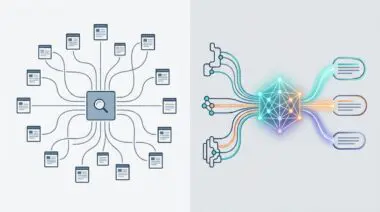
Currently, your brand pays an invisible tax in lost digital real estate whenever a Large Language Model fails to synthesize your keyword-dense HTML.
Industry experts refer to this technical friction as the Synthesis Gap.
Traditional websites are built exclusively for human readers and legacy web crawlers.
They fundamentally lack the high-dimensional relational context that modern AI engines require.
When a user queries platforms like Perplexity or SearchGPT, the engine does not read your webpage like a human.
Instead, it queries a vector database for mathematical representations of your text.
If your text lacks structured context, your vectors will lack proximity to the user’s actual intent.
Consequently, your content is simply ignored during the Retrieval-Augmented Generation phases of AI Overviews.
To bridge this divide, forward-thinking technical SEOs are deploying Autonomous Semantic Entity Enrichment.
This architectural shift transforms flat text into a dynamic, machine-readable knowledge graph.
By enriching entities autonomously, you ensure LLMs can instantly verify and cite your facts without expending excess compute power.
Decoding the 2026 Generative Retrieval Metrics
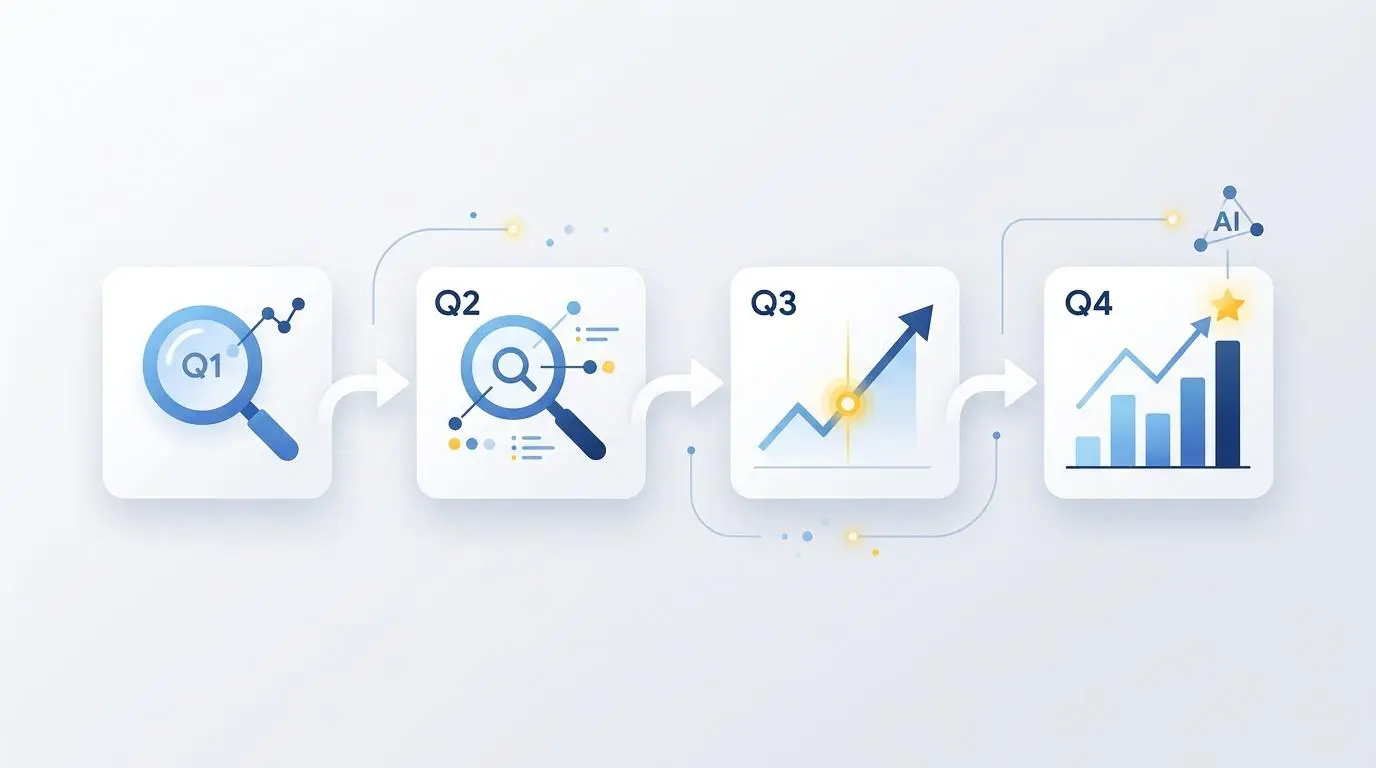
According to a Q1 2026 analysis of 21.9 million searches by Conductor, one-quarter of all queries now trigger a generative AI summary.
This 25.11% trigger rate marks a dramatic and irreversible shift in how search engines present information.
It fundamentally cannibalizes traditional organic traffic for historically top-ranking pages.
In fact, this architectural shift aligns perfectly with the recent Ahrefs study showing a 58% drop in organic CTR for Position 1 results when an AI Overview is present.
To counter this severe visibility loss, brands must pivot their focus toward securing highly visible sidebar citations.
Data from Digital Applied in early 2026 indicates that sidebar citations in conversational AI interfaces achieve a 6% to 10% click-through rate.
This performance is highly lucrative and comparable to organic Google positions 4 through 10.
Gaining these specific citations requires strict adherence to modern crawler protocols and semantic structuring.
You can see the foundation of this architectural shift detailed in OpenAI’s official documentation on OAI-SearchBot and GPTBot.
Mastering these metrics is the first step toward dominating the new generative search landscape.
Engineering Citations for Gemini and Perplexity
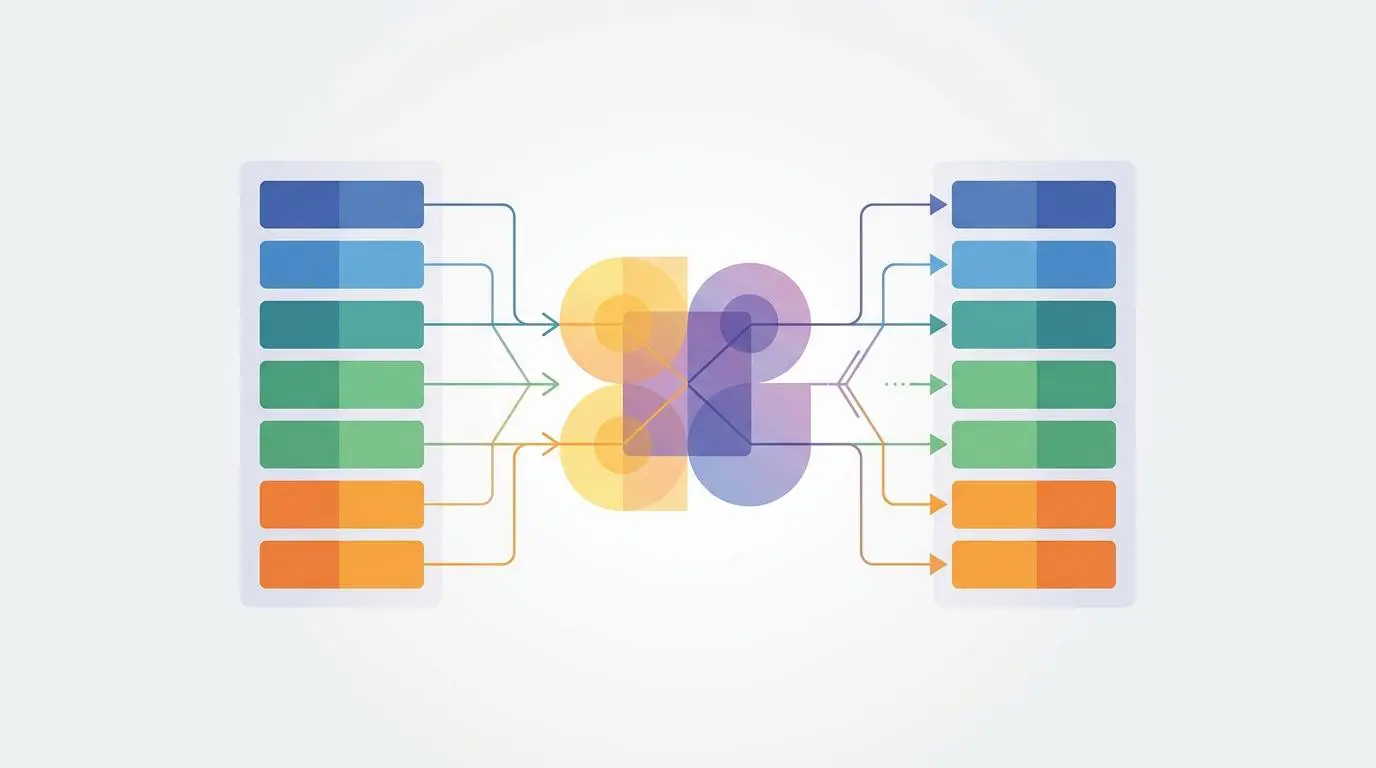
As of mid-2026, AI Overviews trigger in approximately 25.11% of all Google searches across the web.
This represents a massive 4x increase from the early months of 2025.
Brands are seeing a staggering 34.5% drop in traditional organic CTR for Position 1 results.
This real-world friction necessitates a fundamental shift in technical search strategy.
The ultimate goal is no longer ranking first, but rather being cited first by the underlying LLM.
Optimization now relies heavily on a precise technical practice known as Citation Engineering.
This involves the deliberate inclusion of structured comparisons and data-rich lists within your raw HTML.
APIs powering Gemini and Perplexity heavily prioritize these specific formats for rapid synthesis.
Citation Engineering requires a deep understanding of how LLMs parse HTML tables and bulleted lists.
When you provide a structured comparison, you are essentially spoon-feeding the model pre-processed logic.
The model does not have to expend expensive compute power to deduce the differences between two products.
It simply retrieves your pre-formatted data and cites your domain as the authoritative source.
Vector-Ready Layouts and Semantic Chunking
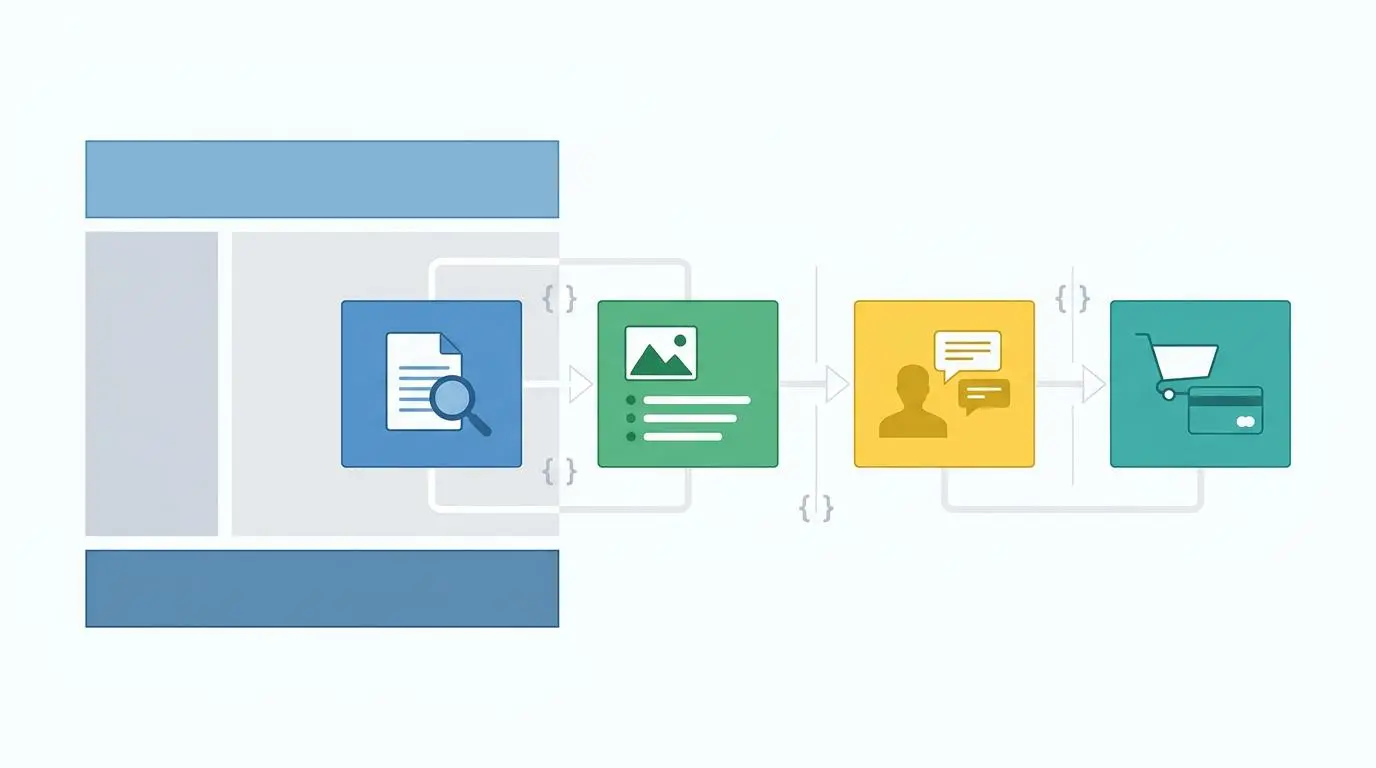
Modern sites are rapidly moving toward Vector-Ready layouts to accommodate rapid AI ingestion.
In this advanced architecture, content is pre-chunked with highly specific, machine-readable metadata.
This includes structured section headers, precise page numbers, and exact publication dates.
These elements directly aid Retrieval-Augmented Generation pipelines in platforms like SearchGPT and Claude.
Large context windows are proving incredibly inefficient and costly in 2026.
Unoptimized, bloated content significantly increases LLM inference costs during the retrieval phase.
More importantly, it results in severe lost-in-the-middle retrieval errors.
This occurs when the model’s attention mechanism misses critical brand facts buried deep within unformatted text.
Retrieval-Augmented Generation relies on a strict sequence of ingestion, embedding, and retrieval.
If your paragraphs are too long, the embedding models dilute the core topic of the text.
Semantic chunking solves this by breaking content into discrete, hyper-focused nodes of information.
Each node is tagged with metadata, allowing the LLM to pull exactly the sentence it needs without pulling the surrounding noise.
Real-Time Schema Injection and Entity Resolution
Technical SEO has officially and permanently shifted from strings to things.
Google’s Knowledge Graph now manages over 800 billion facts, demanding exact precision from webmasters.
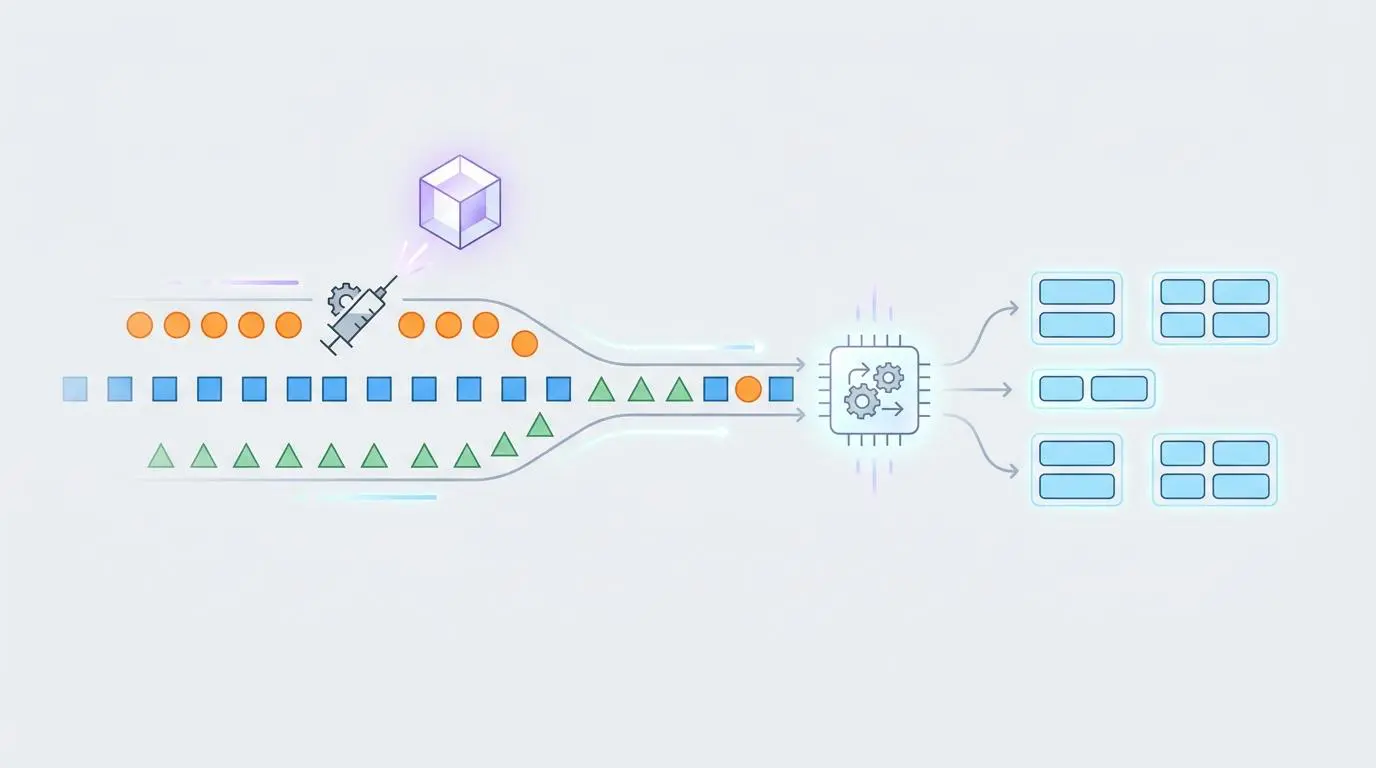
Automated tools like Alli AI and Botify now perform real-time schema injection directly at the edge.
This defines entities and their complex relational attributes instantly for seamless LLM ingestion.
Manual schema management simply cannot keep pace with 2026’s dynamic LLM indexing requirements.
Failure to automate these entity definitions leads directly to severe brand identity fragmentation.
Your brand might be perfectly understood by Gemini, but completely hallucinated by Claude.
In the 2026 search landscape, Entity Co-occurrence has replaced keyword ranking as a primary KPI.
Technical SEOs now track how frequently their brand is mentioned alongside specific industry concepts within LLM outputs.
This tracks the mathematical distance between your brand entity and target topic entities in the vector space.
If your automated tools inject JSON-LD connecting your brand to a specific concept, the Knowledge Graph hardcodes that relationship.
When an LLM generates an answer about that concept, your brand becomes the mathematically inevitable citation.
Taming the AI Crawl Budget Crisis
The 2026 technical landscape requires a highly specific, trifurcated robots.txt strategy.
You must explicitly allow Google-Extended for Gemini and AI Overviews to ensure visibility.
Simultaneously, you must permit GPTBot for model training and OAI-SearchBot for real-time citations.
However, you must aggressively rate-limit unmanaged and redundant crawlers like PerplexityBot.
Unmanaged AI crawlers can easily consume up to 25 GB of daily bandwidth on mid-sized sites.
This creates a severe Crawl Budget Crisis for technical engineering and DevOps teams.
Aggressive training bots deplete server resources before real-time citation bots can index your latest content.
Every time an AI bot hits your server, it executes JavaScript to render the DOM.
This rendering process is computationally expensive and slows down the experience for human users.
When fifty different AI startups scrape your site simultaneously, your Time to First Byte skyrockets.
A trifurcated robots.txt strategy acts as a digital traffic cop for your infrastructure.
It ensures that only bots capable of driving real-time traffic are granted unrestricted access to your server.
The Dawn of Agent-to-Agent Commercial Routing
By 2027, the primary focus of technical search will shift entirely to Agent-to-Agent SEO.
Websites will be optimized not for human readers, but for autonomous AI agents.
These agents will perform multi-step commercial transactions entirely on behalf of human users.
This leverages the 2026 Agentic Ecommerce frameworks seen in Shopify and Google’s Gemini Enterprise Agent Platform.
Imagine a scenario where a user tells their AI assistant to find and purchase the best enterprise software.
The AI assistant will not read blog posts or watch marketing videos.
It will query the APIs of various platforms, read their structured semantic entities, and compare features autonomously.
If your site is not built for Agent-to-Agent routing, you will not even be considered in the transaction.
Preparing your architecture today ensures your brand becomes the default choice for these autonomous systems.
Navigating the intersection of Generative Engine Optimization, AI Search architecture, and workflow automation requires a sharp strategy. To future-proof your brand’s visibility in LLMs and scale with precision, connect with Andres at Andres SEO Expert.
Frequently Asked Questions
What is the Synthesis Gap in AI search?
The Synthesis Gap refers to the technical friction where LLMs fail to synthesize website content because it lacks the high-dimensional relational context and structured data required for vector database proximity and Retrieval-Augmented Generation (RAG).
How can brands recover traffic lost to AI Overviews?
To counter the 58% drop in traditional organic CTR for top results, brands must pivot to Citation Engineering to secure sidebar citations, which in 2026 achieve click-through rates between 6% and 10%.
What is Citation Engineering for Gemini and Perplexity?
Citation Engineering is the technical practice of including structured comparisons, data-rich lists, and pre-formatted logic within HTML to allow LLMs to easily retrieve and cite a domain as an authoritative source without expending excess compute power.
Why is semantic chunking necessary for vector-ready layouts?
Semantic chunking breaks content into discrete, hyper-focused nodes tagged with metadata, which prevents ‘lost-in-the-middle’ retrieval errors and reduces LLM inference costs by allowing models to pull exact information rather than bloated, unformatted text.
How does Entity Co-occurrence impact technical SEO in 2026?
Entity Co-occurrence has replaced keyword ranking as a primary KPI, measuring the mathematical distance between a brand and specific industry concepts in vector space to ensure the brand becomes the mathematically inevitable citation in generative answers.
What is a trifurcated robots.txt strategy for AI bots?
A trifurcated robots.txt strategy manages crawl budgets by explicitly allowing Google-Extended and OAI-SearchBot for visibility, permitting GPTBot for model training, and aggressively rate-limiting unmanaged crawlers to protect server resources and rendering speeds.