




Key Points
- Real-Time Synchronization: Linking stack data directly to combustion controls prevents NOx spikes and eliminates the catastrophic lag of quarterly reporting.
- AI Copilot Integration: Digitizing tribal knowledge through AI agents ensures junior technicians can execute complex, EPA-compliant exhaust calibrations flawlessly.
- Automated Leak Detection: Deploying IoT micro-sensors across all cooling assets neutralizes the administrative nightmare of tracking expanding refrigerant mandates.
Table of Contents
- The Hidden Cost of Reactive Exhaust Management
- The Financial Impact of Atmospheric Intelligence
- Shifting from Quarterly Guesswork to Real-Time Action
- Preserving Tribal Knowledge with Industrial Copilots
- Bypassing False Positives in Harsh Exhaust Environments
- Automating Leak Detection for Mid-Sized Cooling Assets
- Turning Environmental Data into a Margin Finder
- Preparing for Orbital Methane Tracking and Hyperspectral Imaging
- The Dawn of Autonomous Environmental Operations
The Hidden Cost of Reactive Exhaust Management
The hidden tax of manual emissions tracking is silently draining industrial profitability long before regulatory agencies ever step foot on your facility.
Relying on outdated quarterly spreadsheets means your factory constantly operates in the dark. By the time a critical exhaust spike is manually detected, the damage to both the atmosphere and your bottom line is already done.
To eliminate this catastrophic lag, forward-thinking operators are turning to AI-Enhanced Continuous Emissions Monitoring Systems (CEMS) and Predictive Emissions Monitoring Systems (PEMS). These intelligent architectures act as the central nervous system for your factory exhaust, instantly bridging the gap between toxic emission spikes and operator response.
Implementing these advanced monitoring frameworks is no longer just about avoiding multi-million dollar penalties. It is about reclaiming thousands of lost hours and securing uninterrupted operational freedom. When your factory self-corrects in real-time, engineering teams can finally focus on scaling production instead of chasing leaks.
The Financial Impact of Atmospheric Intelligence
Market Intelligence & Data
Market Scale
The global industrial emission monitoring and control system market is projected to reach $8.4 billion in 2026 according to a Global Market Insights Inc. report.
Enforcement Surge
The US EPA concluded 2,127 civil enforcement cases in fiscal year 2025, the highest count in nine years, as detailed in their March 2026 annual results report.
Regulatory Penalties
Combined civil and criminal penalties from EPA enforcement actions exceeded $1.2 billion in 2025, signaling a more aggressive stance on emissions data falsification according to the 2026 EPA Enforcement Summary.
Automation Savings
The 2026 shift to automated NOx sensor-based monitoring is estimated to save American farmers $4.4 billion annually in repairs and lost productivity according to the U.S. Small Business Administration.
The staggering $8.4 billion valuation of the industrial emission monitoring market by 2026 underscores a massive shift in manufacturing priorities. Facilities no longer treat environmental compliance as an afterthought. Instead, they heavily invest in automated architectures to completely eliminate the manual guesswork of exhaust management, rapidly accelerating the deployment of intelligent sensor networks across legacy plants.
This technological arms race is directly fueled by a sharp increase in regulatory scrutiny, highlighted by the 2,127 civil enforcement cases concluded recently. Manual data entry and delayed reporting cycles are now massive liabilities that invite immediate audits. Regulators actively target the exact operational gaps that manual processes create, making automation the only reliable shield against this unprecedented wave of enforcement.
Financial exposure has never been higher, with combined penalties exceeding $1.2 billion for facilities caught falsifying or mismanaging emissions data. The margin for human error has effectively shrunk to zero. To navigate these strict new standards, compliance teams must rely on the US EPA Official Guidance to align automated workflows with federal expectations, ensuring every data point is instantly verifiable.
Beyond risk mitigation, the transition to automated monitoring unlocks massive capital retention, driving an estimated $4.4 billion in annual savings. By replacing faulty legacy sensors with advanced predictive systems, agricultural and industrial operators drastically reduce unnecessary vehicle and equipment shutdowns. Data verified by the U.S. Small Business Administration confirms that eliminating false positive triggers directly translates to uninterrupted productivity, proving smart environmental automation is a profound driver of operational profitability.
Shifting from Quarterly Guesswork to Real-Time Action
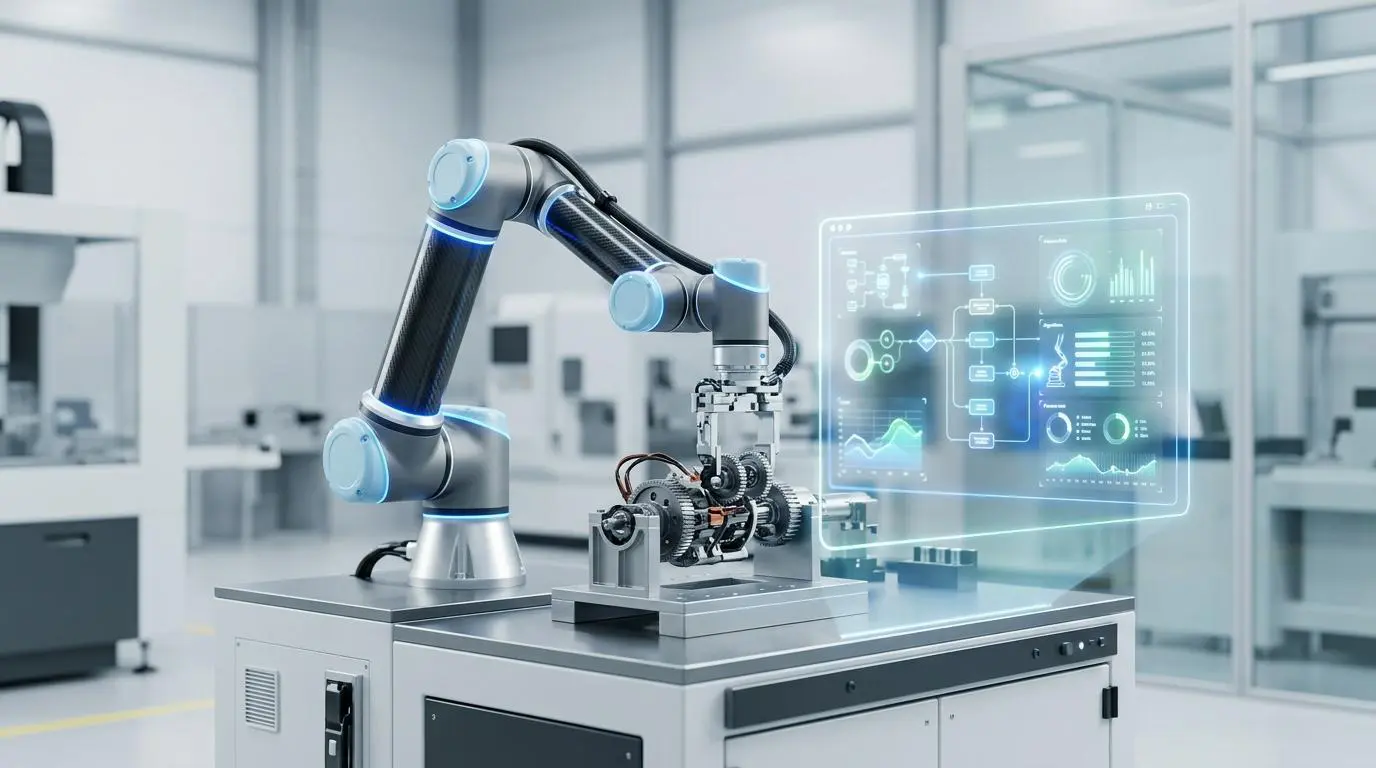
Legacy plants have historically relied on quarterly reporting to satisfy environmental mandates. This reactive approach creates a catastrophic vulnerability for modern industrial operations. By the time a quarterly report identifies a severe exceedance, the facility has already incurred months of liability.
Furthermore, this delay guarantees that massive amounts of fuel are wasted through highly inefficient combustion. The 2026 mandates now require real-time atmospheric intelligence to keep operations online. Industrial automation platforms like Siemens MindSphere and ABB Ability are stepping in to bridge this critical gap.
These systems directly link raw stack data to your combustion efficiency controls. When an anomaly is detected, the system does not just log a warning in a database. It automatically throttles exhaust parameters to prevent dangerous NOx spikes before they trigger a shutdown, transforming compliance into a proactive operational advantage.
Preserving Tribal Knowledge with Industrial Copilots
A silent crisis is unfolding on the factory floor as senior engineers retire and take decades of tribal knowledge with them. Junior staff are frequently left to manage and calibrate complex scrubber systems during volatile weather events. Without deep historical context, these new technicians struggle to maintain compliance when atmospheric variables shift unexpectedly.
This knowledge gap directly leads to improper calibrations and sudden compliance failures. To solve this, leading vendors like Factory AI and Benchmark Gensuite are deploying advanced Industrial Copilots. These AI agents utilize Retrieval-Augmented Generation to instantly access historical maintenance logs and regulatory frameworks.
They effectively digitize the intuition of your most experienced engineers. When a sensor detects an anomaly, the Copilot automatically transcribes technician safety feedback and cross-references it with live data. It then generates an automated, EPA-compliant work order with exact calibration instructions, ensuring flawless execution from all team members.
Bypassing False Positives in Harsh Exhaust Environments

The harsh reality of industrial exhaust environments is that sensor fouling and hardware failures are inevitable. During the DEF Crisis of 2025, software-induced vehicle deratements paralyzed logistics and agricultural production nationwide. Faulty triggers forced heavy machinery into limp mode, causing catastrophic delays across multiple supply chains.
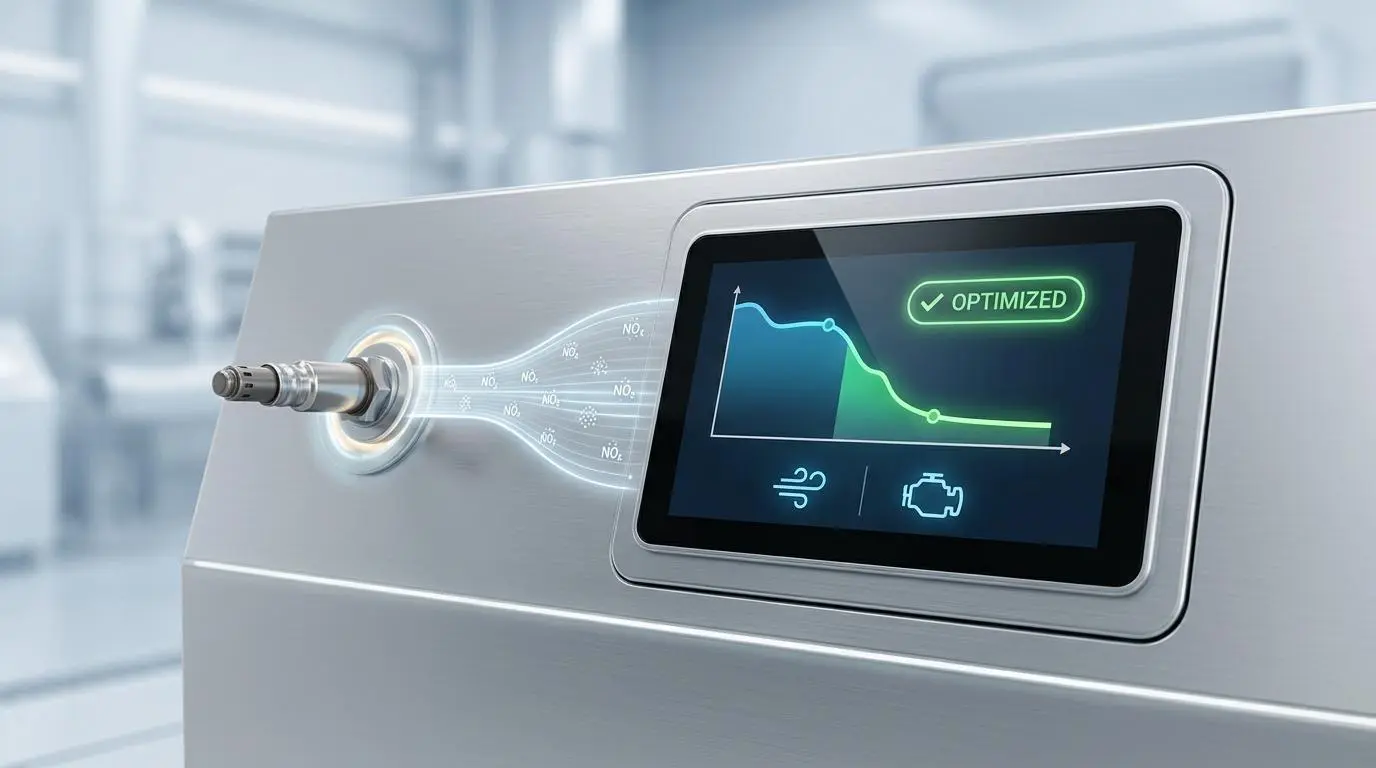
These false positive shutdowns highlighted the severe limitations of relying on outdated Urea Quality Sensors. In a major deregulatory shift, new guidelines allow manufacturers to bypass these fragile systems entirely. Operators can now rely solely on robust NOx sensor technology to maintain continuous compliance.
By integrating these advanced NOx sensors with real-time logic controllers, facilities can filter out environmental noise and sensor fouling. The automated system intelligently distinguishes between a true emission spike and a simple hardware glitch. This prevents unnecessary limp mode triggers and keeps your critical logistics moving efficiently.
Automating Leak Detection for Mid-Sized Cooling Assets

Regulatory scopes are expanding rapidly, pulling thousands of previously unmonitored facilities into strict compliance frameworks. The latest refrigerant rules have drastically lowered the applicability threshold for leak detection. Systems with just 15 pounds of charge now require the same rigorous oversight as massive industrial cooling towers.
Manual tracking of these small-scale cooling assets is an administrative nightmare that almost guarantees non-compliance. Technicians simply cannot physically inspect every mid-sized refrigeration unit frequently enough to satisfy the new mandates. This expanded audit surface area leaves mid-market facilities highly exposed to sudden enforcement actions.
Automated IoT leak detection sensors eliminate this vulnerability entirely. By wiring these micro-sensors into a centralized dashboard, facilities receive instant mobile alerts the moment a refrigerant leak begins. This automated oversight ensures that every asset, regardless of size, remains perfectly aligned with federal thresholds.
Turning Environmental Data into a Margin Finder
Managing thousands of environmental data points across disparate spreadsheets creates massive administrative overhead. This manual compliance loop drains resources and obscures valuable operational insights. However, forward-thinking operators are rapidly shifting automated emissions monitoring from a traditional cost center to a powerful margin finder.
Modern enterprise asset management platforms like Oxmaint and Hexagon EAM are revolutionizing this workflow by standardizing key data streams:
- Live Ingestion: Automatically capturing raw stack data without human entry.
- Audit Formatting: Structuring data into instantly verifiable compliance reports.
- Loop Automation: Reducing the time required for limited assurance audits by up to 60 percent.
Environmental teams can finally stop chasing down missing spreadsheet cells. Instead, they can focus their energy on optimizing fuel consumption and driving facility-wide efficiency.
Preparing for Orbital Methane Tracking and Hyperspectral Imaging
The era of honor system reporting is officially coming to an end. We are entering an age of true atmospheric intelligence, where external oversight is absolute. Hyperspectral gas cloud imaging and satellite monitoring now provide facility-level methane footprints directly from orbit.
This external visibility creates a massive legal exposure for industrial firms relying on estimated emissions data. The gap between what a facility manually reports and what orbital sensors actually detect is a major red flag for auditors. If your internal data does not perfectly match the satellite telemetry, you are inviting an immediate investigation.
To survive this new paradigm, facilities must implement predictive architectures that mirror external sensor capabilities. By cross-referencing internal exhaust data with live satellite feeds, operators can detect and resolve methane leaks before they are officially flagged. This proactive alignment is the ultimate defense against orbital scrutiny.
The Dawn of Autonomous Environmental Operations
The transition toward autonomous compliance represents the ultimate evolution of factory management. Soon, factory exhaust systems will be fully integrated with local air quality indexes and predictive weather models. Facilities will automatically throttle production or adjust scrubbers based on real-time atmospheric conditions and shifting wind patterns.
This level of automation ensures that operations stay within fluctuating permit limits without any human intervention. Embracing this technology today guarantees that your facility will thrive in the hyper-regulated landscape of tomorrow.
Navigating the intersection of technology, workflows, and operational efficiency requires a sharp strategy. To future-proof your business architecture and scale with precision, connect with Andres at Andres SEO Expert.
Frequently Asked Questions
What are the benefits of AI-Enhanced Continuous Emissions Monitoring Systems (CEMS)?
AI-enhanced CEMS and PEMS eliminate reporting lags by acting as a central nervous system for factory exhaust. They provide real-time atmospheric intelligence, allowing systems to self-correct and prevent toxic emission spikes before they result in multi-million dollar penalties or operational shutdowns.
How much are EPA penalties for industrial emissions non-compliance?
In fiscal year 2025, combined civil and criminal penalties from EPA enforcement actions exceeded $1.2 billion. With over 2,127 enforcement cases concluded, the margin for human error in manual data entry has effectively shrunk to zero, making automated reporting a necessity for risk mitigation.
What is the threshold for mandatory refrigerant leak detection?
Recent regulatory shifts have lowered the applicability threshold for leak detection significantly. Systems with as little as 15 pounds of refrigerant charge now require the same level of rigorous oversight and automated monitoring as large-scale industrial cooling assets.
How do Industrial Copilots solve technical talent shortages?
Industrial Copilots use AI and Retrieval-Augmented Generation (RAG) to digitize the tribal knowledge of retiring senior engineers. They provide junior technicians with instant access to historical maintenance logs and automated, EPA-compliant work orders for complex scrubber calibrations.
Why is manual emissions tracking considered a financial risk for factories?
Manual tracking relies on outdated quarterly spreadsheets which create a “hidden tax” of delayed detection. By the time a leak is identified manually, the facility has already incurred months of liability, wasted fuel, and potential regulatory audits due to the lack of real-time visibility.
How does orbital satellite tracking impact methane reporting accuracy?
Satellite monitoring and hyperspectral imaging now provide absolute external visibility of facility-level methane footprints. Any discrepancy between a facility’s manual reports and orbital sensor data serves as a major red flag for auditors, necessitating the use of predictive internal architectures to ensure data alignment.