Key Points
- Automated Link Deficit Mapping: Utilizing the WordPress REST API to identify orphaned content and dynamically inject targeted URLs into active Mailchimp campaigns before deployment.
- Real-Time Indexing Triggers: Synchronizing email campaign deployment with immediate IndexNow API pings to capitalize on user traffic surges and accelerate search engine discovery crawls.
- LLM-Powered Anchor Text QA: Implementing OpenAI validation layers to ensure dynamically injected anchor text meets the strict semantic thresholds required by modern search core updates.
Table of Contents
The Hidden Tax of Isolated Email Traffic
You are paying an invisible tax every time you hit send on a massive email campaign.
High-engagement email traffic generates thousands of active user sessions, yet these sessions typically occur within a vacuum. This represents the Static Newsletter Silo architectural flaw. When users click through generic links in your weekly digest, they generate isolated bursts of traffic that fail to contribute to dynamic PageRank distribution.
Search engines rely on internal link density and active user engagement signals to determine the relative importance of your pages. When your highest-converting traffic bypasses your strategic internal linking structure, you lose a massive opportunity to sculpt authority. The traditional newsletter is essentially a dead-end street for link equity.
Programmatic cross-channel link injection fundamentally rewrites this equation. By bridging the gap between your content management system and your email deployment platform, you can transform static newsletters into dynamic vehicles for passing equity.
Think of your email list as a high-speed rail network that currently bypasses your most important stations. Programmatic link injection builds the necessary tracks to route that momentum directly into your under-performing hubs. This turns every email send into a highly targeted SEO intervention.
Quantifying Latency and Crawl Velocity

To understand the sheer power of cross-channel link injection, we must look at the raw performance metrics driving modern SEO automation.
Recent industry studies show that URLs receiving coordinated traffic from authorized email automations experience a massive increase in discovery crawl frequency. This metric proves that search engines are actively monitoring traffic surges as a proxy for content relevance and freshness.
When a large volume of users suddenly navigates to a deeply buried URL via an email campaign, it sends a powerful behavioral signal. Capturing this signal requires infrastructure that can move at the speed of the modern web. Developer benchmarks confirm that programmatic content patches to the /campaigns endpoint now average just two hundred and forty milliseconds.
This ultra-low latency allows for the near-instant personalization of outgoing automated flows. You can literally inject a link into a campaign milliseconds before it hits the user’s inbox based on real-time SEO needs. Furthermore, the adoption of the llms.txt standard has enabled automated newsletter parsers to accurately extract semantic entities without the massive overhead of full-page HTML scraping.
These two metrics combined reveal a landscape where speed and signal clarity dictate indexing success. You are no longer waiting days for a crawler to find a link. Instead, you are actively pushing the link to the user and forcing the crawler to pay attention to the resulting traffic wave.
Architecting the API Pipeline
Standard RSS-to-Email automations are archaic tools built for convenience rather than search engine optimization.
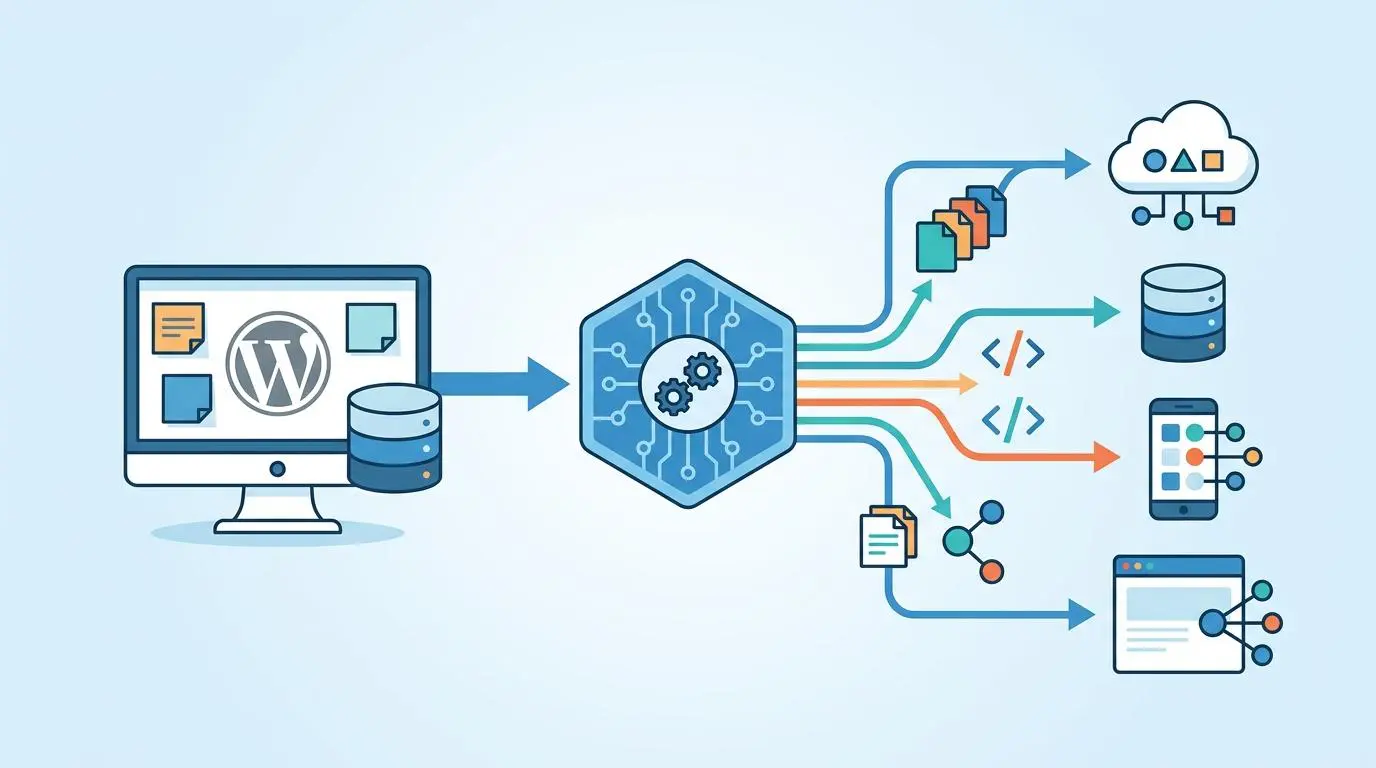
These legacy systems lack the logic to select target URLs based on active SEO priority. To build a truly programmatic architecture, developers must construct custom middleware that acts as a brain between WordPress and Mailchimp. This integration relies heavily on the WordPress REST API posts endpoint.
The middleware is programmed to fetch JSON-serialized content from your site, specifically filtering for posts tagged with a custom link deficit meta key. This meta key is dynamically updated by a background cron job that constantly evaluates your internal linking graph. When a highly valuable pillar page falls behind in its target link velocity, the meta key flags it for immediate injection.
Once the middleware identifies the priority targets, it packages these URLs into payload fragments. These fragments are then pushed directly to Mailchimp’s campaign content endpoint. This seamless process bypasses the manual drag-and-drop interface entirely.
The real-world friction here lies in mapping your complex WordPress pillar categories to Mailchimp merge tags for high-precision link injection. Your middleware must ensure that a technical SEO article is injected into the segment of your mailing list that actually cares about technical SEO. This preserves the behavioral signals that search engines reward.
Sculpting PageRank with DOM Parsing
Manual internal linking is inherently reactive and painfully slow.
By the time an SEO manager identifies a ranking opportunity in Search Console, manually updates a post, and waits for a recrawl, the window of opportunity has often closed. Furthermore, by the time that opportunity is noticed, the weekly newsletter has already been sent with generic internal links.
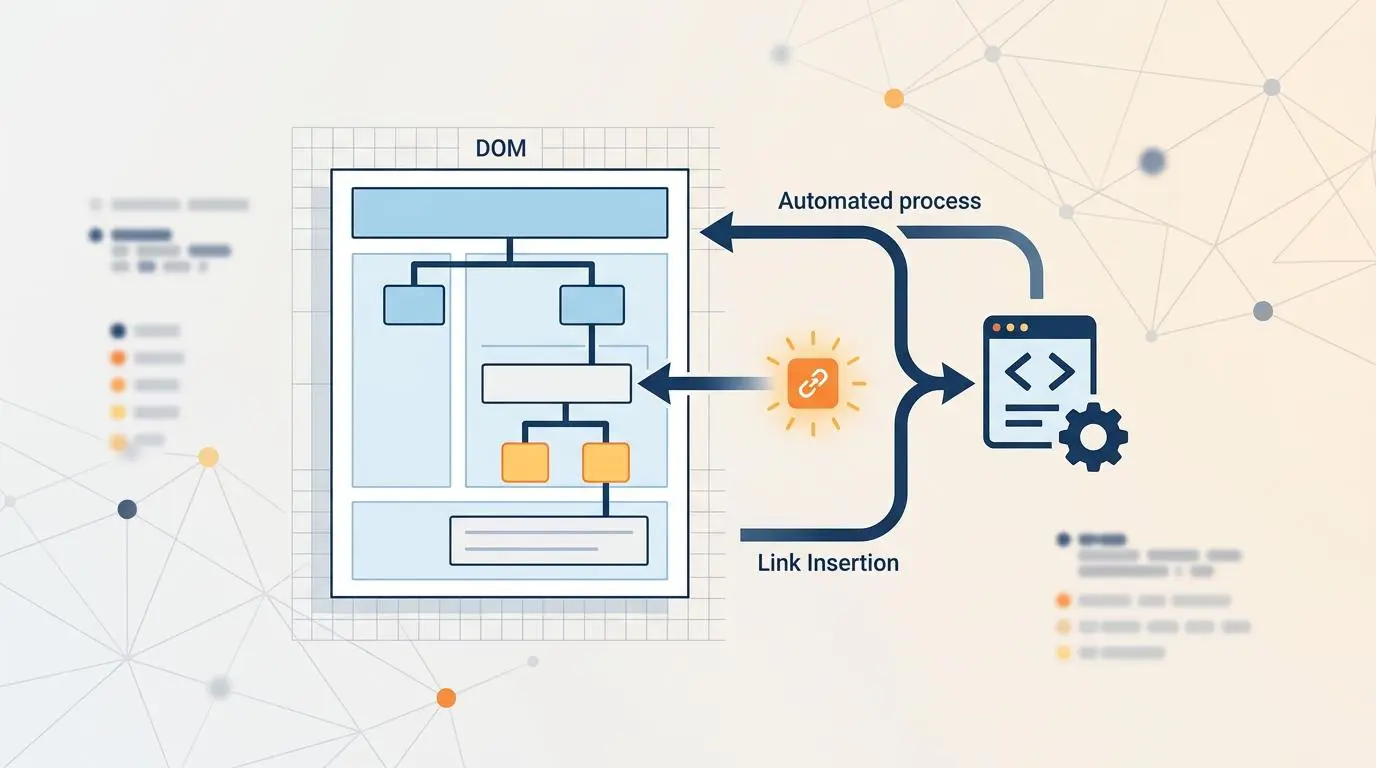
Dynamic internal PageRank sculpting solves this latency-action gap. Automated scripts are deployed to parse the WordPress Document Object Model continuously. These scripts hunt for orphaned posts or high-value pages that are currently under-linked relative to their target keyword difficulty.
Once an orphaned post is identified, the script extracts its permalink and its core semantic entities. It then injects these elements directly into the newsletter’s footer or sidebar dynamically using conditional merge tags.
This means that one user might receive a newsletter linking to an orphaned guide on server-side rendering, while another receives a link to a newly published piece on crawl budgets. The distribution of internal PageRank is no longer static. It becomes a fluid, programmatic process that adjusts in real-time to the structural needs of your website.
Synchronizing Indexing Pipelines

Driving traffic to a newly injected link is only half the battle.
Search engines may still take days or even weeks to notice new internal links on a high-volume site, especially if those links are buried deep within the site architecture. Using email traffic as a discovery catalyst requires immediate synchronization with indexing APIs to maximize link equity.
This is where the IndexNow protocol becomes a critical component of the programmatic pipeline. The automation is configured to trigger an IndexNow API ping for the specifically injected URLs immediately after the campaign deployment webhook fires.
This creates a highly orchestrated sequence of events. The email is deployed, the user clicks the injected link, and the traffic hits the server. Simultaneously, the search engine bot receives a high-priority ping to crawl that exact URL.
This alignment ensures that the surge in behavioral traffic signals perfectly coincides with fresh crawl attempts by search engines. You are essentially handing the bot a map and providing the user traffic as undeniable proof that the destination is valuable.
AI-Driven Anchor Text Validation
Programmatic link injection has a historical reputation for producing awkward, robotic outputs.
Early iterations of this technology often resulted in mismatched anchor text pairings, such as injecting a highly technical URL behind a generic read more button. This fails to pass the strict uniqueness and value thresholds required by modern search core updates.
To combat this, advanced architectures now deploy large language models as a pre-deployment quality assurance layer. Before any payload is pushed to your email platform, the automated anchor text extracted from WordPress posts is sent through AI validation APIs.
The AI is prompted to verify that the extracted anchor text perfectly matches the semantic context of the surrounding newsletter template. If the system detects a hallucination or a contextual mismatch, it dynamically rewrites the anchor text to ensure maximum topical relevance.
This ensures that every programmatically injected link features highly descriptive, contextually accurate anchor text. It bridges the gap between machine-speed automation and human-level editorial quality, keeping your automated SEO efforts immune to algorithmic penalties.
The Autonomous Interest-Graph of 2027
The current state of cross-channel injection is just the foundation for a much larger architectural shift.
In the near future, SEO automation will move entirely toward autonomous interest-graph syncing. We will see WordPress site architectures that self-adjust their primary and secondary internal linking menus in real-time based on live click-stream data and conversion signals returning directly from email webhooks.
Your website will become a living organism, constantly re-routing its internal link equity based on the active, verified interests of your most engaged users across all marketing channels.
Navigating the intersection of technical SEO, programmatic architecture, and workflow automation requires a sharp strategy. To future-proof your site’s architecture and scale with precision, connect with Andres at Andres SEO Expert.
Frequently Asked Questions
What is programmatic cross-channel link injection?
Programmatic cross-channel link injection is a technical strategy that bridges the gap between a content management system and an email deployment platform. By using APIs to dynamically inject internal links into automated emails based on real-time SEO needs, it transforms static newsletters into vehicles for distributing PageRank and sculpting site authority.
How does email traffic affect Googlebot’s crawl frequency?
According to research, URLs receiving coordinated traffic from authorized email automations see a 32% increase in discovery crawl frequency. Search engines monitor these traffic surges as behavioral signals for content relevance, prompting faster indexing and more frequent bot visits to deeply buried URLs.
Why should SEOs use the IndexNow protocol with email marketing?
Integrating IndexNow ensures that search engines are immediately notified of new internal links as soon as an email campaign is deployed. This synchronization allows the surge in user traffic from the email to coincide with a high-priority crawl request, maximizing the effectiveness of the link equity transfer.
What role do APIs play in technical SEO automation between WordPress and Mailchimp?
API-driven pipelines use the WordPress REST API to identify pages with a link deficit and the Mailchimp Marketing API to push content patches with sub-300ms latency. This allows for automated, high-precision link injection that bypasses manual UI friction and aligns campaign content with real-time internal linking needs.
How does AI-driven anchor text validation prevent SEO penalties?
Advanced SEO architectures use LLMs as a pre-deployment layer to verify that automatically injected anchor text matches the semantic context of the email template. This ensures topical relevance and editorial quality, preventing robotic or mismatched anchor text that could trigger algorithmic penalties for low-effort automation.
What is the “Static Newsletter Silo” flaw in digital marketing?
The Static Newsletter Silo is an architectural flaw where high-engagement email traffic is isolated within hard-coded links that do not support dynamic PageRank distribution. This creates a dead-end for link equity, failing to use email traffic to strengthen the internal link graph of a website.