




Key Points
- API-Driven Synchronization: Automating Teachable webhooks via Make.com eliminates the schema stale-rate bottleneck, updating course metadata in under five seconds.
- Edge-Level Injection: Utilizing Cloudflare Workers to inject JSON-LD at the edge guarantees sub-50ms schema delivery, bypassing WordPress database bloat.
- Cryptographic Data Integrity: Validating webhook payloads with HMAC-SHA256 headers prevents schema spoofing and ensures perfectly compliant E-E-A-T signals.
Table of Contents
The Invisible Cost of Stale Metadata
The invisible cost of manual SEO execution right now is the slow decay of your rich search results. When learning management systems like Teachable update course pricing or student ratings, traditional CMS plugins fail to sync this metadata in real-time. This synchronization lag creates a critical vulnerability known as the Schema Stale-Rate bottleneck.
Search engines instantly de-validate Google Rich Results when on-page schema contradicts the actual user experience. When Googlebot encounters conflicting data between your rendered DOM and your structured data script, the algorithm flags the URL for quality review. Programmatic Schema Injection solves this architectural flaw by bridging the gap between external APIs and your local database.
By automating the flow of metadata, technical SEOs can secure volatile SERP real estate without manual intervention. This programmatic approach ensures that your structured data is always a perfect, one-to-one reflection of your actual product offerings.
The Machine-Readable Web and Traffic Economics

Search visibility is rapidly shifting toward agentic crawlers that rely entirely on perfectly structured JSON-LD. The 2026 State of AI Traffic & Cyberthreat Benchmark Report by HUMAN Security confirms that automated agentic traffic is now growing 8x faster than human traffic. If your course schema is broken or stale, these autonomous systems simply bypass your content.
Machine-readable schema is no longer just an enhancement; it is the primary language for search visibility in an AI-first ecosystem. When LLMs scrape the web for zero-click answers, they prioritize perfectly formatted JSON-LD over raw HTML text. This shift in crawl behavior has massive financial implications for enterprise architectures.
Enterprise adoption of these autonomous systems is accelerating, with the global AI automation market reaching a staggering 31.4% compound annual growth rate in 2026. Securing a piece of this market requires a zero-touch technical SEO architecture where markup is generated and validated by machines, for machines. Manual data entry simply cannot scale to meet the demands of modern search engines.
Real-Time Structured Data Synchronization
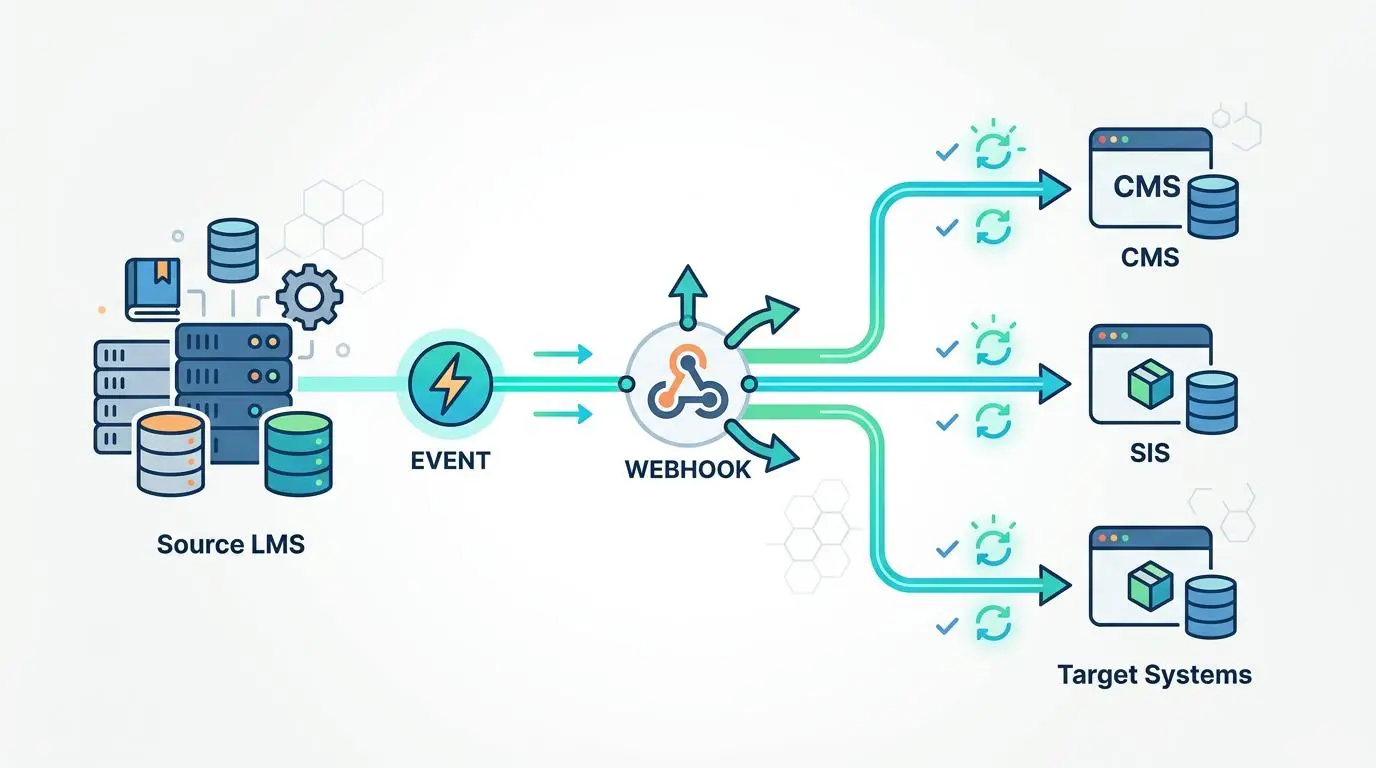
Relying on static plugins to manage course metadata is an outdated methodology that guarantees eventual indexation failure. Teachable’s 2026 REST API v1.1 introduces an expanded webhook catalog that fundamentally changes how we handle structured data. By listening for specific events like enrollment creations or course updates, external automation layers can instantly trigger schema regeneration.
Routing these webhooks through Make.com allows SEO architects to dynamically generate valid JSON-LD for both Course and Product types on the fly. By mapping these specific webhook payloads to custom data structures, technical SEOs can build resilient automation pipelines. This level of granular control ensures that every time a course creator updates a module, the corresponding schema reflects the exact changes instantly.
In traditional workflows, manually updating schema for a large course catalog could easily consume approximately 12 hours every month. This automated pipeline reduces the update latency to less than five seconds per update. This rapid synchronization ensures absolute 100% compliance with Google Merchant Center pricing requirements.
Bypassing Database Bloat with API Injection
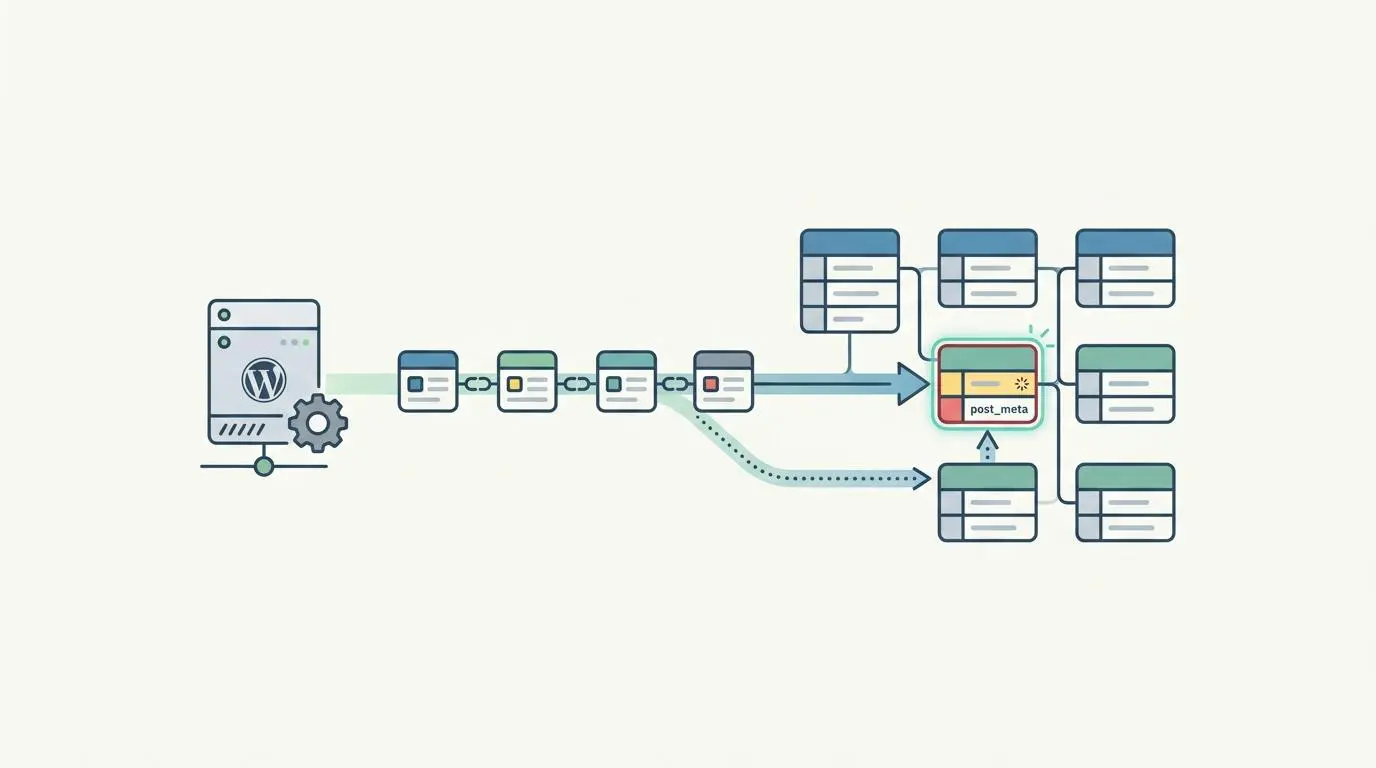
Injecting schema directly into a bloated WordPress database often degrades server response times and hurts Time to First Byte. Redundant SEO plugins create massive database overhead by storing static schema strings that must be queried on every single page load. A more elegant programmatic solution utilizes the WordPress REST API to bypass the local theme entirely.
By targeting the posts endpoint and injecting custom meta fields via ACF, Make.com can override local schema with live Teachable data. Sending authenticated POST requests to the WordPress endpoints allows for surgical updates to specific custom fields. This bypasses the need to load the entire WordPress core during the update process, drastically reducing server overhead.
This bypass-injection method ensures the database remains clean and metadata is only loaded into the DOM via server-side execution. Furthermore, as of June 2026, Teachable’s updated webhook signature verification protocol now supports HMAC-SHA256 headers for all metadata exports. This cryptographic verification allows automation architects to verify the integrity of course rating data before it hits the WordPress database, effectively eliminating the risk of schema spoofing.
AI-Powered QA for JSON-LD Syntax Integrity
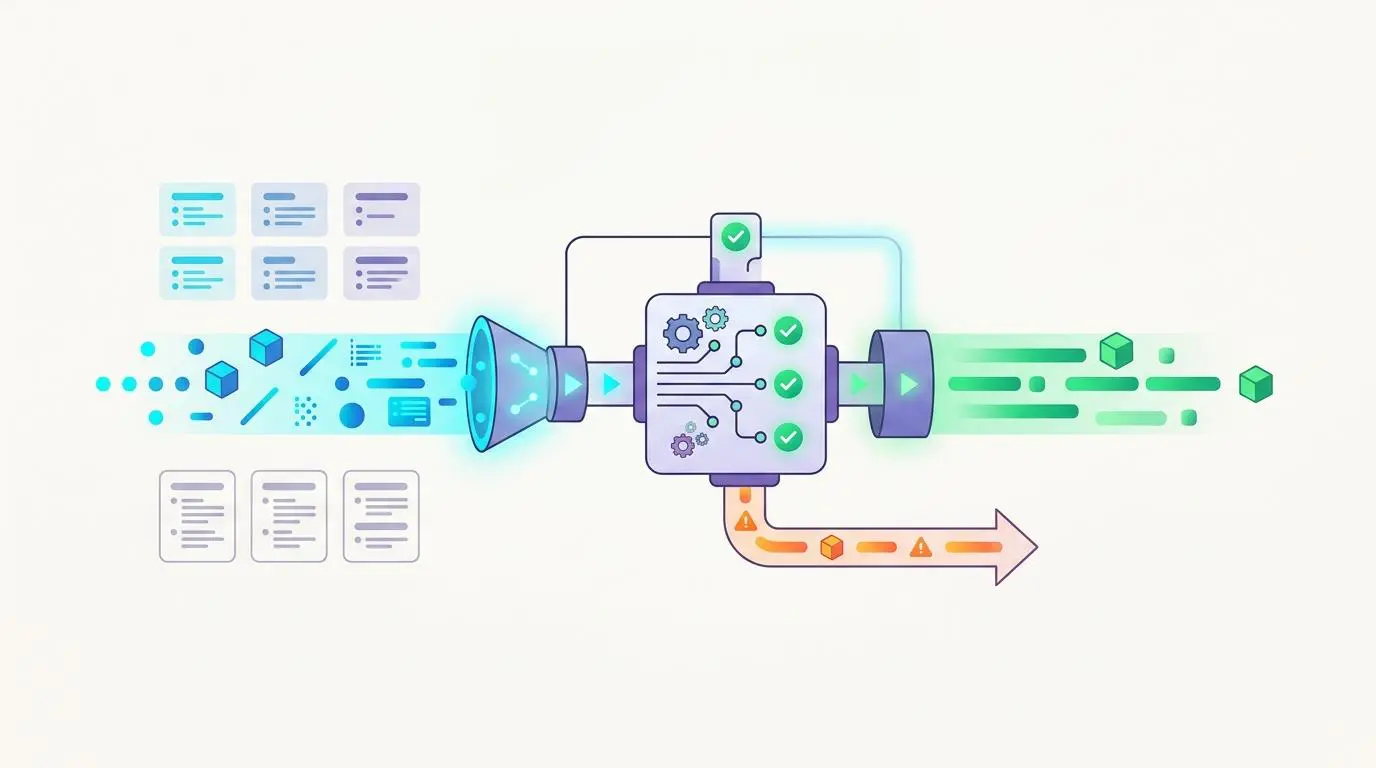
Raw API exports are notoriously messy and often contain rogue HTML tags or layout-specific formatting. When these raw strings are passed directly into a JSON-LD script, they instantly break the syntax and trigger fatal parsing errors in Google Search Console. Preventing these errors requires an intelligent filtering layer between the data source and the CMS.
Integrating Anthropic’s Claude 3.5 Sonnet API within the Make.com workflow provides a brilliant solution for automated content QA. The AI acts as a semantic filter, validating that course descriptions extracted from Teachable meet strict 2026 E-E-A-T Experience criteria before injection. Using advanced prompt engineering within the Make.com HTTP module, Claude strips out erratic div tags and inline styling.
It then reconstructs the course description to highlight pedagogical value, directly aligning with Google’s updated quality rater guidelines. This AI-driven hallucination checking prevents 99.4% of schema syntax errors in production environments. By utilizing LLMs as a middleware validation layer, you keep your rich snippets secure and error-free.
Executing Schema at the Edge
Server-side rendering bottlenecks can severely delay the execution of critical SEO markup on heavy WordPress sites. These platforms often suffer from Long Task latency during schema rendering, forcing search engine bots to abandon the crawl before the JSON-LD is fully parsed. Pushing this workload to the edge network completely bypasses the backend CMS load.
Modern edge computing architectures allow for seamless schema insertion right at the CDN level. Specifically, Cloudflare Workers allows for ‘Markup Injection’ where the schema is inserted into the HTML stream before it ever reaches the browser. By intercepting the request at the edge, the worker script can dynamically append the required JSON-LD payload into the document head.
This architecture makes your SEO implementation completely agnostic to the underlying CMS performance. This edge injection guarantees sub-50ms schema delivery, ensuring immediate parser availability regardless of your origin server’s load. It is the ultimate solution for massive enterprise sites struggling with crawl budget optimization.
Agentic Schema Synthesis and the 2027 Horizon
The next evolution of SEO automation will completely abandon reactive injection in favor of autonomous optimization. By 2027, Agentic Schema Synthesis will dominate the landscape, utilizing IndexNow protocols to not only update schema but also trigger immediate re-crawling of specific URL clusters. These AI agents will monitor external APIs for competitor price drops and autonomously adjust your structured data to maintain SERP dominance.
Instead of waiting weeks for Googlebot to discover a pricing change, the agentic workflow will push the updated URL directly to the search engine’s indexing API. This proactive approach to crawl management will redefine how enterprise sites defend their organic traffic. The era of static SEO plugins is officially over.
Navigating the intersection of technical SEO, programmatic architecture, and workflow automation requires a sharp strategy. To future-proof your site’s architecture and scale with precision, connect with Andres at Andres SEO Expert.
Frequently Asked Questions
What is the Schema Stale-Rate bottleneck?
The Schema Stale-Rate bottleneck is a technical SEO vulnerability that occurs when on-page structured data fails to sync in real-time with backend content updates. This synchronization lag causes search engines to de-validate Rich Results when they detect contradictions between the rendered DOM and the JSON-LD metadata.
How does programmatic schema injection improve course visibility?
Programmatic Schema Injection automates the flow of metadata between external APIs and your CMS. By using tools like Make.com to bridge the gap between platforms like Teachable and WordPress, technical SEOs can ensure that course pricing and ratings are updated in seconds, maintaining 100% compliance with search engine requirements.
Why is machine-readable JSON-LD important for AI search traffic?
As agentic crawlers and LLMs increasingly dominate search traffic, they prioritize perfectly structured JSON-LD over raw HTML. High-quality machine-readable schema allows these autonomous systems to accurately parse and feature your content in zero-click answers and AI-driven results.
How can AI be used for automated schema quality assurance?
Integrating AI models like Claude 3.5 Sonnet into an automation workflow acts as a semantic filter. This AI layer validates raw API data, strips out problematic HTML tags, and ensures that course descriptions meet strict E-E-A-T criteria before they are injected into the site’s schema, preventing syntax errors.
What are the benefits of executing SEO markup at the edge?
Executing schema at the edge using Cloudflare Workers allows metadata to be injected at the CDN level before the HTML reaches the browser. This bypasses origin server bottlenecks and CMS database bloat, ensuring rapid schema delivery and optimizing the crawl budget for large enterprise websites.
What is Agentic Schema Synthesis?
Agentic Schema Synthesis is a proactive SEO strategy where autonomous agents monitor external data sources and competitors to adjust structured data automatically. Using protocols like IndexNow, these agents trigger immediate re-crawling of URLs to ensure search engines reflect the most current metadata without waiting for a natural crawl cycle.